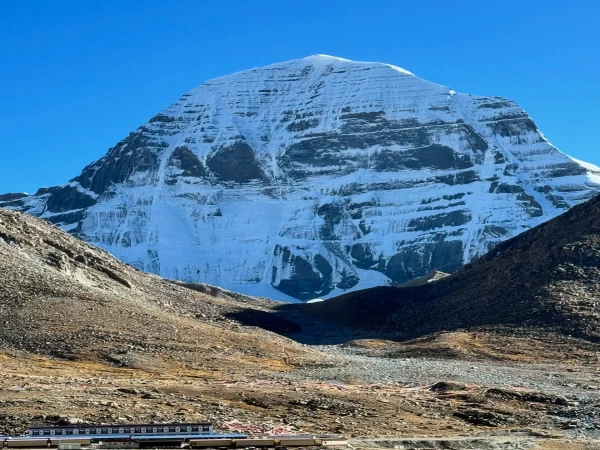
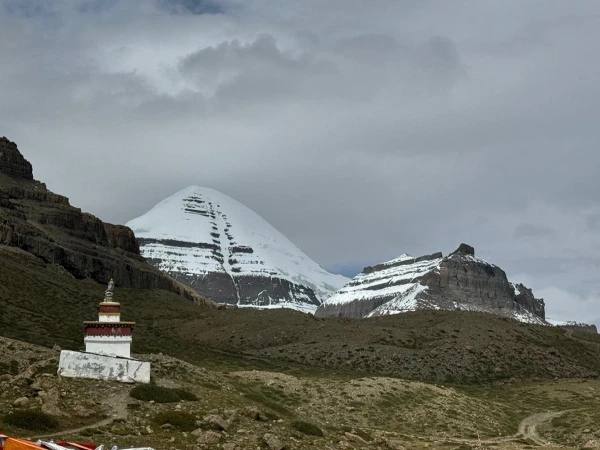
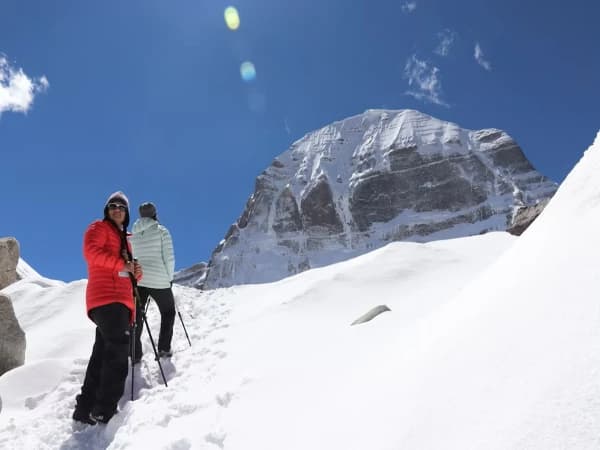
If you are planning the Kailash Mansarovar Yatra or the Kailash Parikrama (Kora), the biggest obstacle you will encounter on this trip is not only the long travel distance, nor the rough terrain, but altitude sickness. Altitude sickness can be avoided and managed with some practical tips based on our experience, and we provide the necessary information on how to help with acclimatization, what to look for as symptoms, and what not to ignore.
Altitude sickness occurs when your body has not yet had the chance to adjust to the decrease in oxygen as a result of climbing to a higher altitude. On this yatra, you quickly reach above 4000m - 5000m (above sea-level), and even healthy travelers may experience altitude sickness then. However, there is no need to go through the agony of your experience with altitude sickness.
Our collective experience as a group of passionate high altitude travelers tells us, though, there are many preventative actions you can take to greatly reduce your chances of catching altitude sickness. These include ascending slowly, resting well, drinking plenty and eating the right types of foods. We also provide information on when it is appropriate to take medications, why it is dangerous to skip acclimatization days, and how to learn to recognize your body's own signals of decline.
Many individuals under-rate the elevation of the Kailash region. This is not merely a long journey; it is also a high-elevation mountain pilgrimage with many areas exceeding 4000 meters. However, you will be able to successfully complete this sacred journey without allowing altitude-related illness to limit your enjoyment by taking these steps to be well-prepared for your trip.
This guide will provide you with enough information to feel confident both prior to and during your yatra. Regardless of whether this is your first pilgrimage or your fifth, being aware of how to remain healthy while above the 4000-meter mark will help to ensure that you have a safer, more enjoyable, and spiritually fulfilling experience.
How to Avoid Altitude-Related Illness While Performing the Kailash parikrama and Yatra?
The most important thing to remember is: Do not rush to high elevations. Your body must acclimatize to the altitude and the low barometric pressure that you encounter when you reach Mt. Kailash. Research has proven that if pilgrims fly to Mansarovar Lake (4550 m) directly, approximately 35% of them will become ill due to altitude.
The best way to avoid this situation is to allow your body to acclimatize to lower elevations before continuing to higher elevations; therefore, we recommend spending 2 nights in Kathmandu (1300 m), 1-2 nights in Simikot (2910 m), and at least 1 night in Taklakot (3800 m) prior to travelling to Mansarovar.
Water is the next most helpful way to avoid altitude sickness. During the yatra, drink 3 - 4 liters of water each day. The air at high altitudes tends to be dry, so getting dehydrated will make altitude sickness even worse. You should also avoid drinking alcohol and caffeine completely, as these two substances dehydrate the body and make it more difficult for your body to breathe.
Taking a prescription medicine called Diamox (acetazolamide) can help your body acclimatize to high altitudes. You should begin taking 125 - 250 mg of this medicine twice per day at least 24 hours prior to arriving in Simikot and continue taking it for two days after you reach the highest point of your trip. Always check with your doctor before taking this medicine, because some people are allergic to it.
Take your time walking around the parikrama and be mindful of your footsteps, especially while walking up Dolma La Pass, which is approximately 5,630m high.
Eat well-balanced meals that contain plenty of carbohydrates, and try not to eat heavy dinners, especially just prior to parikrama day. Even if you are not hungry, eat something at every meal.
Do not jump into Mansarovar Lake on your first day for a holy dip in the lake, because the cold water will increase the likelihood of developing pulmonary edema (a very serious condition) due to the combination of high altitude and cold water.
Listen to your body carefully. If you get a headache, feel lightheaded, or have nausea, tell your guide right away and rest. Do not ignore any of these small types of symptoms because altitude sickness can progress quickly and get very serious very fast.
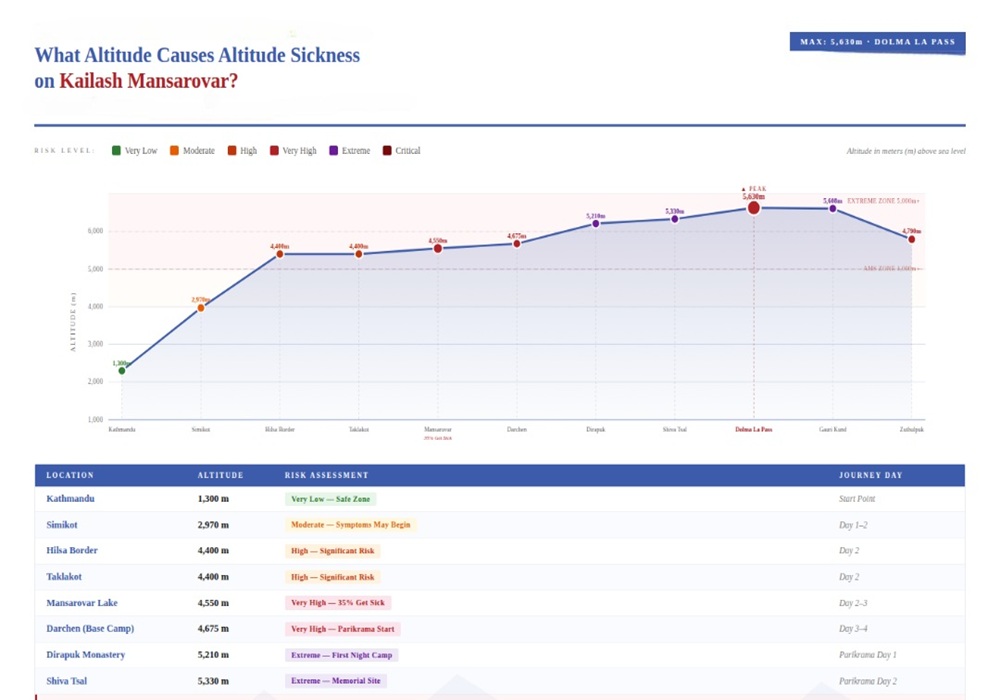
What Altitude Causes Altitude Sickness on Kailash Mansarovar?
Kailash Mansarovar Yatra and Parikrima AMS elevation profile
Location
Altitude
Altitude Sickness Risk
Day of Journey
Kathmandu
1,300m
Very Low - Safe Zone
Start Point
Simikot
2,970m
Moderate - Symptoms May Begin
Day 1-2
Hilsa Border
4,400m
High - Significant Risk
Day 2
Taklakot
4,400m
High - Significant Risk
Day 2
Mansarovar Lake
4,550m
Very High - 35% Get Sick
Day 2-3
Darchen (Base Camp)
4,675m
Very High - Parikrama Start
Day 3-4
Dirapuk Monastery
5,210m
Extreme - First Night Camp
Parikrama Day 1
Shiva Tsal
5,330m
Extreme - Memorial Site
Parikrama Day 2
Dolma La Pass
5,630m
Critical - Highest Point
Parikrama Day 2
Gauri Kund Lake
5,608m
Extreme - Sacred Lake
Parikrama Day 2
Zuthulpuk Monastery
4,790m
Very High - Second Night
Parikrama Day 2
Altitude sickness typically begins at 2,500 meters above sea level, but on the Kailash Yatra, you will be experiencing elevations from 4,400 to 5,630 meters well above an altitude considered safe. Therefore, many pilgrims have experienced AMS as they reach Darchen at an altitude of 4,560 meters/14,960 feet, the base camp and starting point for the Kailash Mansarovar pilgrimage circuit in Tibet.
Research indicates that altitude sickness begins to affect individuals at an elevation above 2,500 meters; there are cases of sensitive individuals suffering symptoms as low as 1,500 meters.
In addition, your journey includes crossing Simikot (2,970 meters in elevation), where you may begin experiencing some early symptoms. But by the time you reach Taklakot and Hilsa, 4,400 meters in elevation, the risk of altitude sickness will significantly increase.
According to researchers, medical studies have shown that pilgrims flying to Mansarovar Lake (4,550 metres) have developed altitude sickness at a rate of approximately 35%. At Darchen (the starting point for your parikrama), you will already be entering the danger zone at 4,675 metres.
The key altitude of Dolma La Pass at 5630m is the highest point of the entire parikrama and is also where altitude sickness will hit you most severely.
At this altitude, about 40% of the amount of oxygen available at sea level is available; in addition, there are two additional high-altitude locations on this trek that you will encounter prior to reaching Dolma La Pass, which are Shiv Tsal at 5330m and Dirapuk monastery at 5210m. Even fit and healthy trekkers struggle with the amount of available oxygen, as the body does not have enough oxygen available to function efficiently.
The danger of visiting Kailash specifically lies in the fact that you will be visiting high-altitude locations during your stay at Kailash and will be subjected to these extreme elevations for an extended period of time.
The body has to produce additional red blood cells to carry oxygen efficiently to organs and tissues. Climbing to a high altitude and having to travel for a number of days until the body is able to acclimatize can lead to an elevated risk of developing altitude sickness; unfortunately, the majority of the pilgrims do not allow their bodies to acclimatize to the elevation.
The sudden increase in elevation from Kathmandu (1300m) to Mansarovar (4550m), which is an elevation increase of 3250m in a period of 1 or 2 days, can be dangerous to your health and well-being.
What Are the 3 Stages of Altitude Sickness?
Stage
Altitude Range
Yatra Zones
Stage 1 (AMS)
3,000 to 4,000 m
Kerung / Saga / Mansarovar
Stage 2
4,500 to 5,000 m
Darchen, Dirapuk
Stage 3 (HAPE/HACE)
Above 5,000 m
Dolma La Pass (near to 5,630 m)
There are three stages of altitude sickness, with the critical nature of each stage increasing consecutively from the least critical (stage 1) to the most critical (stage 3). The majority of pilgrims to Kailash Mansarovar will experience stage 1 (acute mountain sickness, normally referred to as AMS). There are also several cases that will progress from stage 1 to stage 3 (high altitude pulmonary edema, normally referred to as HAPE). Studies have shown that roughly 24% of Kailash's pilgrims will develop AMS, while roughly 11% will develop HAPE upon arrival at high altitude and direct flight access.
Stage 1: Acute Mountain Sickness (AMS) - The Mild Stage
This is the most common form of altitude illness and usually occurs within the first 4–36 hours of arrival at high altitude. The majority of pilgrims will experience AMS while they are at Kailash Mansarovar (4,550 m) and on their parikrama journey. Pilgrims at these locations will have difficulty adapting to their body's low-oxygen environment.
Some possible AMS symptoms may include:
Headache (always the case with AMS)
Nausea or vomiting
Fatigue / Weakness
Dizziness (Lightheaded)
Loss of appetite
Problems sleeping
Shortness of breath when active
24% of Kailash pilgrims flying directly experience AMS. Those aged 8 to 20 and older than 60 are more prone to this risk. If your score is 3 or greater on the Lake Louise scoring system for headaches, as well as at least one other symptom, then you most likely have AMS.
Most pilgrims will experience some level of AMS from either Mansarovar Lake or Darchen. Many times, symptoms will worsen during nighttime hours, but many will go away within 24-72 hours if you do not ascend further above that level so you are able to acclimatize.
Stage 2: High Altitude Cerebral Edema (HACE) - The Brain Swelling Stage
Cerebral edema (HACE) is a dangerous and severe condition that can develop during altitude sickness (AMS). It takes place when there’s a buildup of fluid in your brain that causes swelling. Generally, this occurs between one and three days after you reach a high altitude, but it may develop within twelve hours if you continue to go up after already having a mild case of AMS.
Look for critical symptoms below:
A headache that is severe, nagging and does not respond to any pain medication.
Altered mental state (confused).
Difficulty walking in a straight line (loss of coordination-ataxia).
Unbalanced and stumbling (as per the catwalk test).
Extreme fatigue and tiredness.
Progressing into a coma/stupor.
Hallucinations or other irrational behavior.
Fortunately, reports indicate HACE to be rare for the Kailash Mansarovar, according to the study. However, all seven participants, having made the ascent from a lower elevation, had the potential for developing HACE. All 37 individuals in this study had zero cases. Although this does not mean that HACE cannot occur, the area of Dolma La Pass (5,630m) poses the highest risk of developing HACE should there be a continuation of parikrama after having developed severe altitude sickness.
The rate of mortality after coma secondary to HACE is greater than sixty percent (60%), requiring immediate descent and/or oxygen.
Stage 3: High Altitude Pulmonary Edema (HAPE) - The Lung Fluid Stage
Stage 3 of altitude sickness is High Altitude Pulmonary Edema (HAPE), which is the most prevalent form of altitude-related fatality. HAPE is marked by massive amounts of fluid leaking into the lungs, making it nearly impossible to breathe. HAPE will typically develop between 2 and 4 days following arrival at high altitudes, but most often occurs during the overnight stay on the second night after arrival.
Listed below are symptoms of HAPE:
Shortness of breath while resting or sleeping
Dry cough and subsequently possible development of pink/frothy sputum in the cough
Tightness or feeling of congestion in the chest
Severe fatigue
Heart rate greater than 110 beats per minute
Respiratory rate greater than 20 breaths per minute
Lips or fingernails are blue in color
Crackling sound in the lungs during breathing
According to a study of approximately 11% of pilgrims who fly directly to Mansarovar, it was found that those individuals who take a holy dip into freezing cold water in the Mansarovar Lake had a significantly higher incidence of developing HAPE. The exposure to freezing cold water combined with the reduced barometric pressure from the higher elevation contributes to the development of HAPE.
Kailash is particularly dangerous if someone develops HAPE while on the parikrama (especially in the Dolma La Pass area) because of the height (approximately 4550m) that has already been attained and the difficulty of descending after one develops HAPE. Younger people under 20 years appear to be more susceptible to developing HAPE.
Altitude Headache - The First Symptom of Altitude Sickness
One of the first symptoms of Altitude Sickness (AMS) is a headache associated with a change in atmospheric pressure and a reduced availability of oxygen upon each breath. Altitude Headache Altitude headaches usually develop 4-12 hours after reaching an altitude of around 2500-3000 meters, and are typically more severe per hour (especially at night).
Due to reduced oxygen delivery to your brain due to hypoxic conditions (low oxygen), blood vessels in the head will dilate or enlarge and subsequently increase intracranial pressure (pressure inside the head). This increased intracranial pressure from the dilated blood vessels creates pain in the head (headache).
A throbbing and/or pressure-like sensation can be present on both sides of the head or in the back of the head, depending on the severity of the headache. This headache may be worsened at night, compared to during the day, and in the early morning. Likewise, this headache will generally become worse upon bending forward or leaning down to the ground.
Headaches can also be experienced along with other AMS early symptoms such as fatigue, dizziness, nausea, and/or sleep problems.
Altitude Sickness Diarrhea and How Long Does It Last?
Altitude sickness-related diarrhea is known to occur in high-altitude journeys such as the Kailash Mansarovar Yatra, but one should know what causes it and how long it lasts.
High on the mountain, less oxygen in the blood messes with digestion, appetite and gut movement. Other factors, such as dehydration, food hygiene, and an abrupt change in diet during the pilgrimage journey, may multiply the risk of loose motion.
It appears that high altitude symptomatology affects a significant proportion of people, close to half. Research indicates that 30–70% of those who visit high altitudes suffer from stomach issues, which can cause nausea, vomiting or diarrhea.
In one study of hikers at Everest, approximately 36 percent developed diarrhea, so it’s not uncommon at high-mountain elevations. A lot of reviews also mention that altitude-induced diarrhea is usually not just associated with AMS, but also with hygiene and environmental exposure.
Typical time frame for the onset of symptoms of altitude illness following rapid ascent prior to reaching the summit is generally 24–48 hours. Mild altitude symptoms typically resolve in 12 – 48 hours with adequate rest, hydration, and cessation of ascent.
Mild altitude-related diarrhea in Kailash Yatra typically lasts 1 – 3 days. If diarrhea lasts longer than this, is severe, and accompanied by elevated temperature and/or dehydration, this is more likely to be due to an infectious illness rather than an altitude-related presentation.
It is our belief that in the Kailash Yatra, the majority of diarrhea cases are due to a combination of altitude stress and inadequate travel hygiene. Therefore, good prevention (consuming clean drinking water, ascending slowly, and maintaining adequate hydration) will help prevent the majority of diarrhea cases.
Which Age Group Is More Prone to Altitude Sickness?
Altitude Sickness Relation to Kailash Yatra Age Group
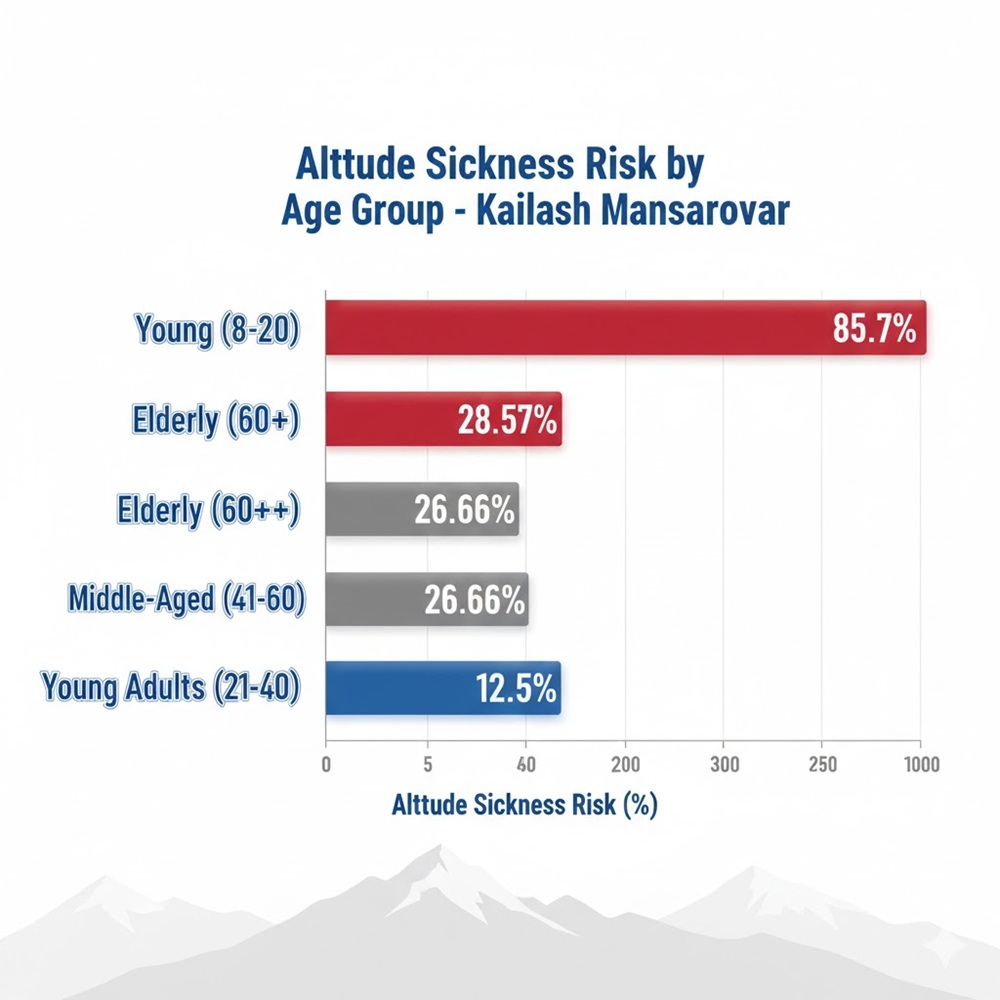
The two most at-risk age groups for developing altitude sickness are young people (age 8-20) and older adults (age 60+). The safest age group for travelers is between 21 and 40 years. The differences in risk between the various age brackets on the way to Kailash Mansarovar can be dramatic and have potentially serious consequences.
Young People (Ages 8-20) - Highest Risk Group
Based on the statistics from Kailash, this age bracket has the highest incidence of altitude-related illness. Of the 7 young pilgrims who attempted to reach Kailash, 6 (85.70%) experienced serious altitude-related sickness. This means that more than 90% of young pilgrims who are at a higher risk for developing altitude sickness experienced an altitude-related illness!
Young bodies are still developing and have higher metabolic rates, which means they need more oxygen at a time when oxygen is scarce. What's really concerning is that teenagers and children are especially prone to HAPE (fluid in the lungs) the deadliest form of altitude sickness. Even at lower altitudes around 2,835 meters, 28% of children develop symptoms.
If you're planning to bring your child or teenager to Kailash, think very carefully about this decision. You'll need extra acclimatization days, constant monitoring, and honestly, you should question whether this extreme journey is appropriate for their age at all.
Young Adults (Ages 21-40) - Safest Group
High altitude travel is nothing short of ideal for young adults aged 21-40. An estimated 1 out of 8 (12.5%) in this age group developed altitude sickness while in Kailash, providing this group with the lowest risk for experiencing altitude sickness compared to all other age groups. You are at your physical peak, fully matured and can deal with low levels of oxygen much better than other age groups.
If you fit within this age category and are in decent physical shape, you will need to balance yourself in terms of acclimatization, but you will have a significantly greater chance of completing the Kailash parikrama successfully than individuals in any other age group.
Middle-Aged Adults (Ages 41-60) - Moderate Risk
The middle-aged adult group (ages 41-60) will likely develop moderate at-risk symptoms at Kailash, with approximately 26.66% of them developing symptoms.
Middle-aged adults are not as likely to fall ill as those under 40 or over 80 (very young and elderly), but you should be aware of your overall health, overall physical fitness, as well as any other medical issues that might put you at risk for being ill at altitude, such as hypertension, diabetes, and cardiovascular disease.
Elderly Travelers (Ages 60+) - High Risk Group
Elderly travelers (over 60 years of age) will experience a significantly higher rate of developing altitude sickness at high elevations. For example, 28.57% of the elderly pilgrims (2 out of 7) who traveled to Kailash experienced being ill due to altitude sickness. The consequences of altitude sickness can be more severe for older adults than for younger individuals.
To allow adequate time for their bodies to acclimatize to extreme elevation, older adults will experience increased strain on their hearts and lungs trying to compensate for high altitude. And if they have preexisting medical conditions, the extreme elevation combined with the exertion involved will likely put them at a higher risk of injury or illness than a person who is healthy and at a lower risk from being at high altitudes.
The recovery time is also extended significantly due to the combination of freezing temperatures, workload, and crossing passes at over 5,600 meters, which will significantly increase the risk of serious life-threatening injuries or illnesses.
Chances of Getting Altitude Sickness from Different Countries and Landscapes
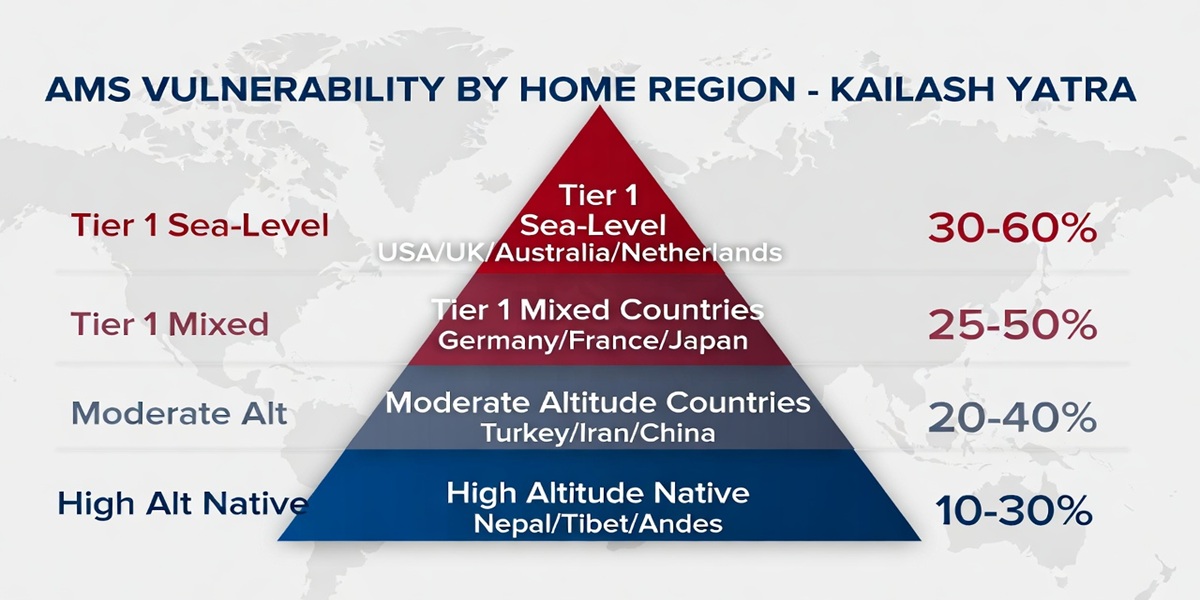
AMS changes on Kailash Yatra Based on Different countries landscapes
Country / Region Type
Example Countries
Typical Home Landscape
Estimated AMS Chance on Kailash Yatra
Tier 1 Sea-Level Developed Countries
USA, UK, Australia, Netherlands
Mostly sea level
High (30–60%)
Tier 1 Mixed Elevation Countries
Germany, France, Japan
Mixed low–mid elevation
Medium-High (25–50%)
Moderate Altitude Population Countries
Turkey, Iran, parts of China
Some high plateau regions
Medium (20–40%)
High Altitude Native Regions
Nepal hills, Tibet, Andes regions
Regular high altitude exposure
Lower (10–30%)
Altitude and topography, rather than where you are from, shape the most critical aspect of how you enjoy your journey to Mt. Kailash;
In addition, there is much medical evidence to show that ocean-level travelers have a higher risk than travelers residing at low- or high- elevations.
In a review of the epidemiology of acute mountain sickness (AMS), the risk is 27% for low-elevation residents and 8.4% for people at elevations above 1,000 meters. This is significant because the pilgrimage to Kailash begins at over 4,500 meters, which means that the possibility of developing AMS will be much higher, given the elevation of Kailash.
Further, the speed of travel can also affect the risk for the development of AMS significantly. Directly flying to extremely high elevations offers no acclimatization time for the body to adjust to altitude or oxygen deprivation.
Individuals who have spent their lives at high elevations or plateaus possess better innate adaptation to hypoxic conditions (i.e., oxygen deprivation) than individuals at low elevations, and thus are less likely to develop AMS symptoms when ascended rapidly.
Finally, pilgrims to Kailash who are residents of low-elevation countries (i.e., the Kailash Yatra from United States, the United Kingdom, Australia, and European lowlands) tend to have a greater likelihood of altitude sickness than those who live at high elevations. Conversely, residents of mountainous regions tend to experience a decreased risk for AMS. However, nobody has complete immunity.
Does Everyone Get Altitude Sickness?
No, “everyone” doesn’t get altitude sickness. Many who travel to high altitude do so without symptoms, but a large percentage still feel it and that’s if they go up too quickly.
According to medical information, altitude sickness (Acute Mountain Sickness – AMS) occurs in about 25% to 43% of individuals between the heights of 2,500 m and 4,300 m; more than 60% at over 6,000 m.
In trekking studies, the risk also seems to rise with altitude. For instance, AMS cases are about 10% at 3,000–4,000 m, yet may reach up to close to 50% around 4,500–5,000 m.
Neither fitness nor age is the most important factor. The biggest risk comes from:
Fast ascent
No acclimatization
High sleeping altitude
Previous history of AMS
In other words, you should expect altitude sickness, but it is not a given. Many travelers make it through their high-altitude journeys without incident thanks to suitable acclimatization.
Which Is The Helpful Medicine to Prevent Altitude Sickness on Kailash Yatra?
In high altitude travels like a Kailash Yatra, the most common medicine used as prevention against mountain sickness is Acetazolamide (Diamox). It is commonly used as it can help your body more rapidly acclimate to lower elevations. Medical guidelines state that the way acetazolamide works is that it increases your rate of respiration and allows you to adjust to altitude sooner, thus decreasing your chances of developing Acute Mountain Sickness (AMS) as well as decreasing the symptoms of AMS.
Numerous clinical studies have validated the use of acetazolamide for the prevention of AMS. In fact, large-scale reviews of clinical studies demonstrate that those taking acetazolamide have significantly lower occurrences of developing AMS than those taking a placebo, making it one of the most effective medicines for the prevention of AMS.
According to medical guidelines, the typical dosing of acetazolamide for prevention is approximately 125mg twice daily, starting 1 day before ascent and continuing for the first 2 days at altitude.
There are other medications; however, they are generally only available for specific use:
Dexamethasone - alternative or emergency prevention/treatment
Ibuprofen - limited effective prevention
Nifedipine or similar drugs - primarily for the treatment or prevention of high altitude pulmonary edema (HAPE).
It is essential to understand that medicine is recommended, but slow ascent and acclimatization are the most absolute means of protection against altitude sickness.
Day No
Location
Altitude (m)
Diamox Dose (mg)
Tablets Per Day
AM Time
PM Time
Total Daily mg
1
Kathmandu → Kyirung
2700
125 mg × 2
2
7:00 AM
7:00 PM
250
2
Kyirung Rest
2700
125 mg × 2
2
7:00 AM
7:00 PM
250
3
Saga
4450
125 mg × 2
2
7:00 AM
7:00 PM
250
4
Paryang → Mansarovar
4600
125 mg × 2
2
7:00 AM
7:00 PM
250
5
Darchen
4570
125 mg × 2
2
7:00 AM
7:00 PM
250
6
Dirapuk
5000
125 mg × 2
2
7:00 AM
6:00 PM
250
7
Zuthulpuk
4800
125 mg × 2
2
7:00 AM
6:00 PM
250
8
Return Saga
4450
125 mg × 2
2
7:00 AM
6:00 PM
250
9
Return Kyirung
2700
125 mg × 1 (optional)
1
7:00 AM
125
10
Return Kathmandu
1400
Usually Stop
0
0
Supplements to Prevent Altitude Sickness on Kailash Yatra If You Are Vegetarian Meals Diet
Most of your meals while you’re on your Kailash Yatra will be vegetarian mostly due to the fact that this is a holy location and local cuisine features many types of vegetarian fare, which is also lighter and easier to digest when you’re at an elevated altitude.
The key factor in preventing altitude sickness is good acclimatizing, hydrating, and pacing yourself. You may also benefit from using several supplements and/or natural nutrients as a way to support your body during your hike.
Antioxidants & vitamins
Antioxidants are substances like vitamin C or vitamin E that protect the cells in your body from oxidative damage caused by the decrease in oxygen at higher elevations. In addition to providing antioxidant protection, these vitamins will also assist your immune system.
You can obtain these vitamins in capsule form or via your diet you will find many of these antioxidants in your diet, such as citrus fruits and nuts, which are good for the body.
Traditional & Herbal Supplementation
Many herbs, including Ginkgo Biloba & Rhodiola Rosea, have been shown to promote improved circulation & help your body adapt better to thin air. Another example of a traditional herb used in high-altitude environments to assist with oxygen utilization & endurance is Cordyceps; all three can be purchased in nutrition stores or online as vegetarian-friendly capsules or teas.
Functional Plant-Based Foods
Simple plant-based foods (like beet juice) that are high in nitrates will help provide more oxygen to the body through improved blood flow; therefore, minimizing fatigue at high altitude. Additionally, drinking herbal teas (such as ginger & mint) will promote comfort within your digestive tract & energy levels.
Most pharmacies, health food stores, and/or online retailers carry these herbal supplements (vegan/vegetarian options are often available). As stated earlier in this article, along with properly paced, adequately hydrated, and nutritionally balanced meals, these products can help support good acclimatization on the Kailash Yatra; additionally, these products should be considered adjuncts to not substitutes for proper pacing and resting.
Cures for Altitude Sickness with Proven Methods for Kailash Yatra and Parikrama
Return to Where You Started
It’s a golden rule of altitude safety. Your body needs to get back up to the same elevation it was at when it started exercising in order to fully recuperate. If you descend back to Kathmandu (1,300m) after visiting Kailash, your symptoms will go away as the oxygen normalises.
You're Almost Definitely Safe After You Cross Dolma La Pass
After you’ve crossed the highest pass, Dolma La Pass at 5,630 meters (18,471 feet) and descended to Zuthul Puk, the hardest part is over. Your body has now adapted past the most dangerous elevation, and on descent, there is immediate relief as your lungs see an increase in oxygen.
Diamox Has Side Effects
Yes, Diamox does the trick, but at what cost: Tingling in my fingers and toes, frequent urination, flat-tasting carbonated beverages. These are normal. However, 2 participants (out of 37 Kailash pilgrims) were allergic to it, so do try it before your trip.
Drink 3-4 liters of water a day
This is non-negotiable. Altitude sickness is so much worse with dehydration. Drink, even if you don’t feel thirsty. Carry a water bottle all the time, and monitor your consumption.
Eat Your Meals Properly
Eat high-carbohydrate meals, even if you don't feel hungry. Your body’s metabolic rate increases by 50% at elevation. Depriving this patient of food would result in feebleness and an increase in symptoms.
Avoid Daytime Naps
Go to bed at the same time if you slept during the day, as symptoms of altitude are worst at night. Keep active during the day so that your sleeping returns to normal and that oxygen saturations are better while you are asleep.
No Medical Certificate Needed, But in Good Physical Condition
India doesn’t ask for medical certificates for the Kailash Yatra, but you should honestly evaluate your fitness. Uncontrolled diabetes, heart disease and lung conditions put people at risk for traveling, which can be deadly to those who are in immunodeficient populations.
Altitude Sickness Team Support Included in Kailash Yatra Packages from Nepal
When you book a Kailash Yatra package from Nepal, you’re not going alone into the wild. Licensed inbound tour operators give mandatory medical assistance and safety gears while on the trip. Here’s precisely the assistance you can anticipate when altitude sickness takes hold.
Oxygen Cylinders Are Available
All the standard Kailash tours from Nepal should provide portable Oxygen cylinders. Your guide can administer oxygen right away if you are having trouble breathing, exhibit signs of HAPE or experience acute altitude sickness.
This can be a life-saver, particularly at Dolma La Pass (5,630m), which has dangerously thin oxygen levels. But oxygen is for emergencies; it's not acclimatization.
Oximeter and Thermometer Provided
A pulse oximeter is taken by your tour team to read your SpO2. Typical oxygen levels at sea level are 95-100%, but on Kailash, the range is often 85-90%. If your SpO2 falls under 80% or your heart rate rises above 110 bpm, this indicates serious trouble. Thermometers provide a means of detecting fever, which can be a sign of high-altitude pulmonary or cerebral edema.
Basic Medicines Available
Touring companies also carry necessary medications such as Diamox (Acetazolamide), Dexamethasone for severe AMS/HACE, Nifedipine for HAPE, painkillers/anti-nausea meds and antibiotics for stomach ailments. The results of the Kailash study show that standard care includes basic drugs.
With that said, bring your own medications do not entirely rely on tour supplies.
Claims First, Payment Second
The financial bottom line: you take a helicopter evacuation or any type of advanced medical treatment, and you have to pay in advance. Tibetan tour operators, like hospitals, demand full payment in advance of the service.
You can always claim your insurance later, but take cash (preferably in dollars) or pay anything over your usual credit limit to cover these worst-case scenarios. Evacuations from Kailash in an emergency can cost between $5,000 and $15,000.
All Meals Are Vegetarian
This is applicable to all Kailash tours from Nepal. Vegetarian meals are served on all days (packed breakfast, lunch and dinner). They usually serve rice, dal, vegetables, chapati and simple Tibetan big dishes for meals. Protein bars, supplements. While there are healthy options to eat here, carry protein bars and supplements for that energy recharge during the challenging parikrama.
Some of the Kailash yatra packages where these supports are included are mentioned below:
Understanding Kailash Yatra Altitude Sickness Helicopter and Rescue
The only definitive "cure" for severe altitude sickness is to descend to a lower altitude and get medical care. If someone is diagnosed with serious altitude sickness (especially HAPE or HACE), the first step to saving that person's life is to descend and get help immediately. Medical professionals are trained to make decisions on the proper course of action; if your symptoms worsen, a guide or operator will decide if you need to be evacuated.
Emergency helicopter rescues are generally not available in the Tibetan/Kailash region due to local restrictions. Evacuation from Tibet is typically done by road, or first evacuating you to the Nepal side. Due to the restrictions placed on helicopter evacuations from Tibet, the usual procedure is to evacuate you to the nearest lower altitude and then arrange for an airlift to be made from Nepal if needed.
It is imperative to purchase travel and medical insurance that covers high-altitude transfer and helicopter rescue costs before undertaking the Yatra. Without this insurance, you will be responsible for paying for your own high-altitude transfer or helicopter evacuation.
Does Altitude Sickness Go Away on Its Own on Kailash Yatra?
Altitude sickness can resolve on its own if the sufferer ceases to ascend and stays at that elevation for 24 to 72 hours from the time symptoms are experienced. Do not continue to climb or ignore any of the above-mentioned symptoms during this period. Be advised that if you disregard the previous instructions, or if you continue your ascent, then mild altitude sickness (AMS) can easily progress to severe altitude sickness (HACE) or severe pulmonary edema (HAPE) within 12 hours of your initial AMS symptoms.
When Altitude Sickness Resolves Naturally
If you feel Mild symptoms of Acute Mountain Sickness (AMS) at Mansarovar Lake (4,550 m) or Darchen (4,675 m), such as headaches & nausea, dizziness, fatigue, then rest at the same elevation until your symptoms have improved. Your body will acclimatize, and you will feel better 24-78 hours after your arrival. Therefore, having an extra day of rest at Darchen before starting your parikrama (the circumnavigation of Mount Kailash) gives you time for your body's adaptation (increased red blood cell production and increased changes to your breathing pattern).
Research data on pilgrims at Mount Kailash indicates that mild AMS symptoms were improved through adequate rest, hydration, and medication. If your Lake Louise score is 3 or higher, rest completely, drink 3-4 litres of fluids, take Diamox, and do not ascend further until your symptoms have resolved; this is your body adapting to the altitude through rest.
When Altitude Sickness Does NOT Go Away
It is very dangerous to ascend to higher altitudes if you have altitude sickness (AMS) because of the following:
You keep ascending: If you continue your trek after developing altitude sickness. For example, if you have AMS symptoms at Darchen and then push yourself to trek to Dira Puk (5,000m) the next day, you are likely to get worse, not better.
You develop HACE or HAPE: If you develop HACE or HAPE, both require immediate descent and medical treatment. HACE (swelling of the brain) and HAPE (fluid in the lungs) will not fix themselves at altitude and must be treated.
You ignore early warning signs: According to research conducted on Kailash pilgrims, 11% of pilgrims developed HAPE, and after developing HACE, who progress to a coma, 60% of those will die. Therefore, if you wait for either HACE or HAPE to "go away" on their own, these could be classified as medical emergencies.
If you do not heed early-warning symptoms. A mild headache can progress to severe AMS in a matter of hours, confusion can become HACE, and slight shortness of breath can become full-blown HAPE with the production of pink foamy sputum.
FAQS
What are the first signs of altitude sickness?
The very first symptom is always a headache; you can't have altitude sickness without it. In addition to the headache, you'll have at least one of these: nausea or vomiting, extreme fatigue, dizziness or a loss of appetite.
These symptoms generally develop 4 to 12 hours after ascent to higher elevations such as Mansarovar Lake.
How can I prevent altitude sickness while doing the Kailash Kora?
Walking extremely slowly during the parikrama is what makes the Pole Pole method 1/2 of your normal speed, especially climbing to Dolma La Pass. 3-4 litres of water per day, and take the Diamox as prescribed, no alcohol or sleeping pills.
Best of all, allow an extra day to acclimatize in Darchen before beginning the 52km walk.
Is it safe for senior citizens to go to Mount Kailash?
Seniors in their 60s have a 28.57% chance of altitude sickness at Kailash, so it's doable with serious preparation. You need to obtain clearance from the doctor, which can be done after ECG, lung function tests and an itinerary that has 1-2 more days for acclimatization at Kyirung, Saga and Darchen.
Be honest about what kind of shape you're in if you have heart disease, uncontrolled blood pressure or COPD, this trip is not safe.
Yes, you should start taking Diamox (acetazolamide) 125-250 mg two times per day, starting at least 24 hours prior to arrival in Kyirung, which is the first town in Tibet.
You will feel some side effects from taking Diamox, including tingling fingers and toes, as well as an increase in the frequency of urination. Both of these side effects are completely normal and are ways that your body tells you that Diamox is working.
Before taking Diamox, consult with your doctor to ensure that you will not have an adverse reaction while on your pilgrimage. Two of the thirty-seven pilgrims who joined the previous pilgrimage were found to be allergic to Diamox, and they had to use Dexamethasone as an alternative.
What should I do if I get sick at Dolma La Pass?
You should immediately descend from Dolma La Pass; descending even 500 meters (approximately 1,500 feet) to Zuthul Puk will prevent the development of death due to high altitude sickness.
Do not attempt to wait until your symptoms improve, but instead descend immediately following notification of your guide. At Dolma La Pass (5,630 meters above sea level), the worsening conditions will accelerate the speed of an altitude sickness-related death.
Be sure to alert the guide to your condition immediately and use supplemental oxygen (if available). Descend as quickly and safely as you can.