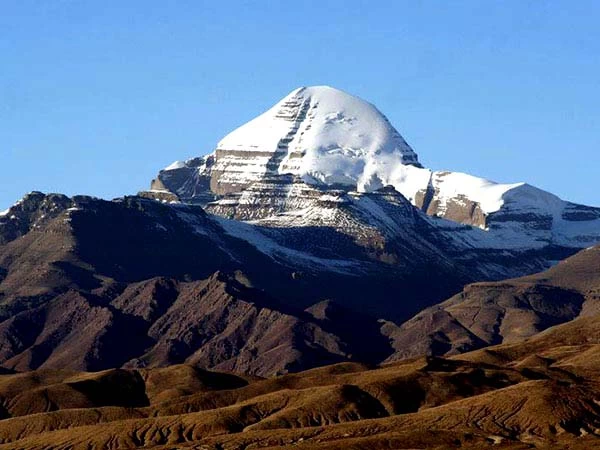
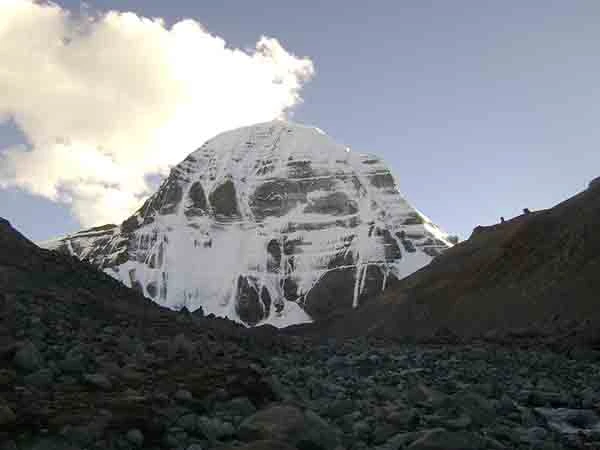
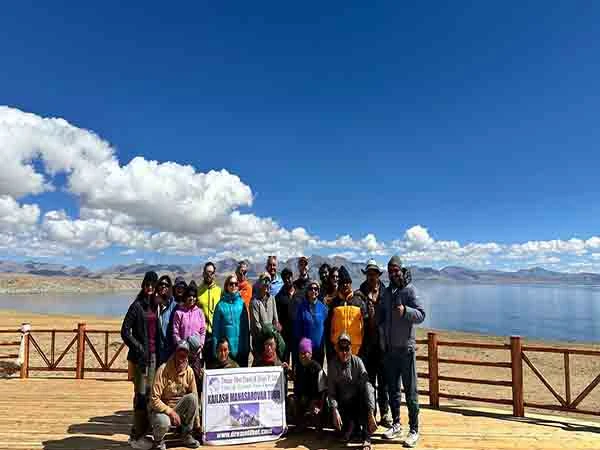
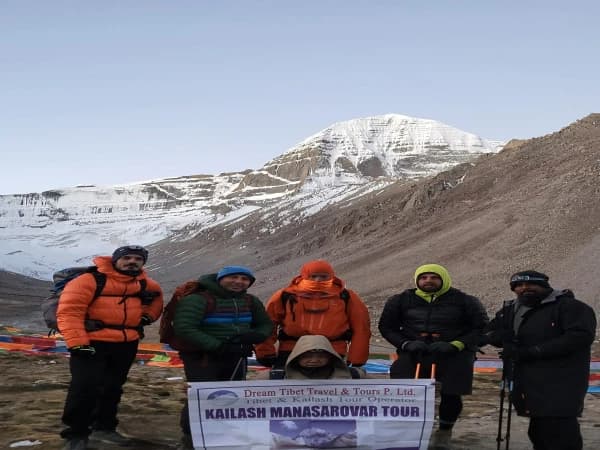
Performing Puja and Havan in Kailash Mansarovar has immense spiritual significance for devotees. You can perform various rituals. These include Lakhbatti, Rudri, Shraddha, Chema Yachana, and Tarpan when you visit the place. These rituals are generally conducted by devotees when they are lining up by the shore of the Mansarovar Lake, as devotees do not perform any ritual in front of Kailash Mountain. The organizers of your trip will arrange for pandits or priests to assist in the rituals.
If you do not wish to join a puja or a havan, you may not be allocated a priest with you. The number of priests is based on the size of the groups. The majority of pandits are Aryan Bahun. They are also known as Suddha Bahun.
While planning the puja, it is important to note that the puja samagri will not come in the package. You have to pay extra for it. After your arrival at Kailash Mansarovar, priests will assist you in conducting your puja near the lake. Pujas are done in the morning. They happen particularly at the time of your arrival at the site. Many Indian devotees perform their puja on Purnima (Full Moon Day) because it is very auspicious for them. When it is time for the full moon, organizations conduct puja and havan according to this tradition.
The devotees assemble either with their families or with a group and listen to instructions from priests. Then they pray devotedly. The ceremony involves lighting lamps, reciting mantras, and offering prayers to the holy fire. The rituals are done for purification and gratitude. They help devotees connect with the spiritual. You can also do Shraddha for the ancestors. Lakhbatti allows making offerings to the family members. Tarpan is for offering water. All of the ceremonies have a symbolic value and spiritual content.
For Buddhist devotees, there is another important religious site nearby called Chiu Gompa Monastery. Plus Chiu means water. This monastery is situated on top of a water source. The religious practices of Buddhist devotees might be more inclined to monastic rituals and meditations at Chiu Gompa Monastery instead of puja at Lake Mansarovar. Also, Jains go to Kailash Mountain for their own religious purposes.
In short, doing puja and havan in Kailash Mansarovar requires planning with your travel agency. You'll need to arrange a priest and materials for doing puja and havan at the appropriate times. During a full moon for instance you'll find it especially auspicious to perform these religious activities by the holy lake.
How to perform Puja at Kailash Mansarovar?
If you're interested in doing the puja in Kailash Mansarovar, most of the preparations will be taken care of by the tour company that you hire. Also, they help in hiring a priest who knows the rituals and mantras to be performed. They help in doing the different steps of the puja and walking you through each of them. Plus, they prepare the site of the puja, usually near Mansarovar Lake. This is considered to be a very sacred site.
You normally conduct the puja by the lakeside. Many people opt to conduct their puja when the occasion feels special, such as during a full moon. So this is because it's considered a time when more blessings can be obtained.
As for the actual ritual ceremony, you and the priest will be chanting mantras. You'll be presenting flowers, incense, water, and lighting lamps. Also, you can provide spiritual food materials and make special presentations to the fire during a havan fire ceremony for added spiritual significance. Or you can choose a simple prayer ceremony without fire. Sometimes it's encouraged by your tour group to bring along some items for a personalized puja ceremony.
You don't have to navigate this all alone. For those open to a particular ceremony or ritual, the company will assist in coordinating with priests or guides intimately familiar with the traditions.
Aspect
Details
Location of Puja
Near Mansarovar Lake, not at Mount Kailash directly
Who Arranges
Your travel company and guides help organize the puja
Priest Support
Pandits can be arranged if you want them
Main Activities
Chanting, offerings, lights, incense, fire ritual (havan)
Best Time
Often planned for auspicious days like full moon
Items to Bring
Incense, flowers, water, diya, fruits if you want extra offerings
Types of Puja and Havan Permitted around Kailash Mansarovar Area
Rudrabhishek (The Ultimate Shiva Ritual)
Duration: 2-4 hours
Best performed: Morning, preferably on Purnima (full moon day)
Conducted by: Aryan Bahun pandits (Suddha Bahun)
Location: In front of Mansarovar Lake only
Altitude: Approximately 15,000 feet
Primary mantra: Sri Rudram from Yajurveda
The final ritual of worship performed during the Kailash Mansarovar journey is the Rudrabhishek of Shiva. This ancient ritual requires bathing the Shiva Lingam, preferably an oval-shaped smooth stone found on the shores of the lake, with Panchamrit and the chanting of the Sri Rudram Vedic chant.
It is an Indian custom to arrive at Mansarovar Lake during Purnima and perform pujas on the morning of the next day, when the religious energy is at its peak. Aryan Bahun pandits are hired by the travel operator according to the size of the group, and the cost of puja samagri packets is extra.
The ritual begins with Sankalpa. After the purifying ceremony, the Lingam is kept on the Brahmanya and Vethali. Abhishek has eleven cycles or 121 pours (abhisheka with the sacred materials), along with the chanting of Sri Rudram.
All of these substances have specific meanings: milk is for purity, yogurt for prosperity, honey (for example) for the divine sweetness in recovery from illness, ghee for victory, and sugar for happiness. After Abhishek, Havan is done with aahuti and parts of the Shri Lalita sahsra nam are recited. Concluding rituals. After this comes Purnahuti and prayers, during which material is drowned in the Mansarovar Lake.
Maha Mrityunjaya Havan
Length: 1.5 to 3 hours
Chief deity: Lord Shiva as Mrityunjaya or Conqueror of Death
The Fire Ritual is performed with the Maha Mrityunjaya Mantra. Since the Yatra takes place at a high altitude, pilgrims perform the Fire Ritual for a safe journey home. Also since the Fire Ritual provides protection, it's believed to be more potent at the home of Lord Shiva.
It starts with Ganapati Puja. Then it's followed by Kalash Sthapana and the worship of Agni. The recitation of the Maha Mrityunjaya Mantra is accompanied by offerings into the fire. The number can range from 108 for general protection to 10,008 for the highest merits.
Prayers involve the protection of the family and all beings. So the Havan ends with Purnahuti and the distribution of the holy ash as a protective charm.
Lakhbatti (Lighting 100,000 Lamps)
Meaning: 100,000 lamps
Duration: 3-6
Best time: Evening
Participants: Group
Set against Mount Kailash, the waters of Mansarovar are ritualistically illuminated by the Lakhbatti tradition. Through this act, pilgrims, Pandits (priests), and people who assist them (Guides) come together in a spirit of community. In late afternoon, thousands of small candles or oil lamps (called Lakhbatti) will light up the area, creating an incredible sight against the darkening backdrop of the mountain.
Materials Needed
Thousands of earthen diya lamps and metal lamps, large amounts of ghee, cotton wicks, matches/lighters, platforms, wind screens, and organizing containers.
How It's Performed
The teams get ready hours before the sun sets. Some are preparing wicks while others are putting ghee into lamps. Lighting lamps at 15,000 feet with heavy winds makes it quite difficult; hence, lighting each lamp is a success in itself. The pilgrims are reciting mantras while lighting lamps in rows. Thousands of lamps shimmering on the lake of Mansarovar with the silhouette of Kailash in the background make it the most beautiful experience of the journey.
Tirth Shraddha (Ancestral Rites)
Purpose: Ancestors' souls should have a peaceful passage
Duration: 2 to 4 Hours
Significance: The main pilgrimage purpose for most
Timing: Morning after arrival
Function: Ancestors' souls should have a peaceful passage
Duration: 2 to 4 Hours
Significance: The main pilgrimage purpose for most
Mansarovar is one of the holiest sites on Earth. So Shraddha is performed here as an offering to ancestors. The ceremony is performed to ensure a smooth passage and liberation of ancestors' souls from the cycle of rebirths. The offerings made at this site are most potent. And they reach their ancestors as a fulfillment of their descendants' religious obligation.
Items to be brought
Black sesame seeds, barley, kusha grass, rice balls or pinda, cooked rice and lentils, ghee, milk, water of Mansarovar, flowers, tulsi leaves, a piece of white cloth, vessels, dakshina, articles for the feast.
How It's Performed
The pandit creates sacred space after a purifying bath while facing south. Sankalpa mentions the ancestors. Water offering, sesame offering, flower offering, and grass offering are done. The offering of rice balls symbolizing food is done for different generations of ancestors.
Tarpan is done on the edge of the lake. Food is given to crows and cows, or messengers of ancestors, Brahmins, and finally members of the family. The sacred space provides pilgrims with a sense of calmness as they've done their duties.
Tarpan (Offering of Water)
Type: Daily devotional practice
Duration: 15-30 minutes
Recipients: Devas, Rishis, Pitrus
Benefits: Unlimited spiritual benefit with Mansarovar water
Tarpan is the ritual of daily offerings of libations to Gods, Sages, and Ancestors. The use of the sacred water of Mansarovar gives one infinite merits. So it's an act of recognizing one's relation with the divine order, the lineage of Sages, and the Ancestors.
Materials needed: Mansarovar water, black sesame seeds, kusha grass, copper pot, white thread, cloth, rice grains.
Items Required
Mansarovar water, black sesame seeds, kusha grass, copper vessel, white thread, cloth, rice grains.
How It's Performed
It's conducted at the edge of the lake in the morning facing the east. After the purification process, the hands are filled with water and sesame seeds. The offerings are made in the three fold way. Also they're made to the Devas, the Rishis, and the Pitris, respectively, towards the east, north, and south. While the offering is made, mantras or the names of the forefathers are chanted. And the water is poured into the Mansarovar.
Chema Yachana (The Prayer of Forgiveness)
Meaning: Prayer of forgiveness
Timing: After returning to Mansarovar or initiating parikrama
Length: 30 minutes to 1 hour
This prayer is for the forgiveness of sins, both known and unknown, before commencing the journey of Kailash Parikrama. So the prayer recognizes the limitations of humanity and any unintentional wrongdoing during this difficult journey.
Materials Needed
Mansarovar water, common flowers, incense sticks, rice grains, a piece of white cloth, prayer beads or optional
How It's Performed
It's done alone or in groups. The devotees sit by the shore facing the Kailash. After the period of silent contemplation, the devotees chant forgiveness prayers. These target Shiva, the mountain, the lake, and all beings. The devotees use the water which is poured back as if it were being offered to the gods. Also others choose to prostrate as a sign of surrender.
This puja is done to appease the nine planets, which are responsible for human life and destiny. The significance of Yatra makes it imperative to perform this puja. So it ensures favorable planetary positions regarding climatic changes and spiritual development in life. The puja assumes significance because it's conducted at an altitude where Mansarovar is situated. And it has
Items Required for Ritual
Grains, including nine types, colored cloths, including nine, ghee, sesame oil, havan kund, colored flowers, precious stones if available, incense, camphor, rice, barley, sesame seeds, fruits, sweets, puja samagri.
How It's Performed
The pandit arranges the havan kund and Navagraha mandala. The planets are invoked separately by their respective mantras. Om Suryaya Namaha for the Sun and similar mantras for other planets. The offerings made to planets include white rice for the Sun.
For the Moon, white flowers. For Mars red things. And similar offerings for other planets. The mantras of planets are repeated 108 times along with offerings of oblation to them. Particular care is taken of the Saturn, Rahu, and Ketu planets. So the final aim of the worship is to take blessings of all planets for spiritual growth, health, and a safe journey.
Ganesh Puja & Vishwaksena Aradhana
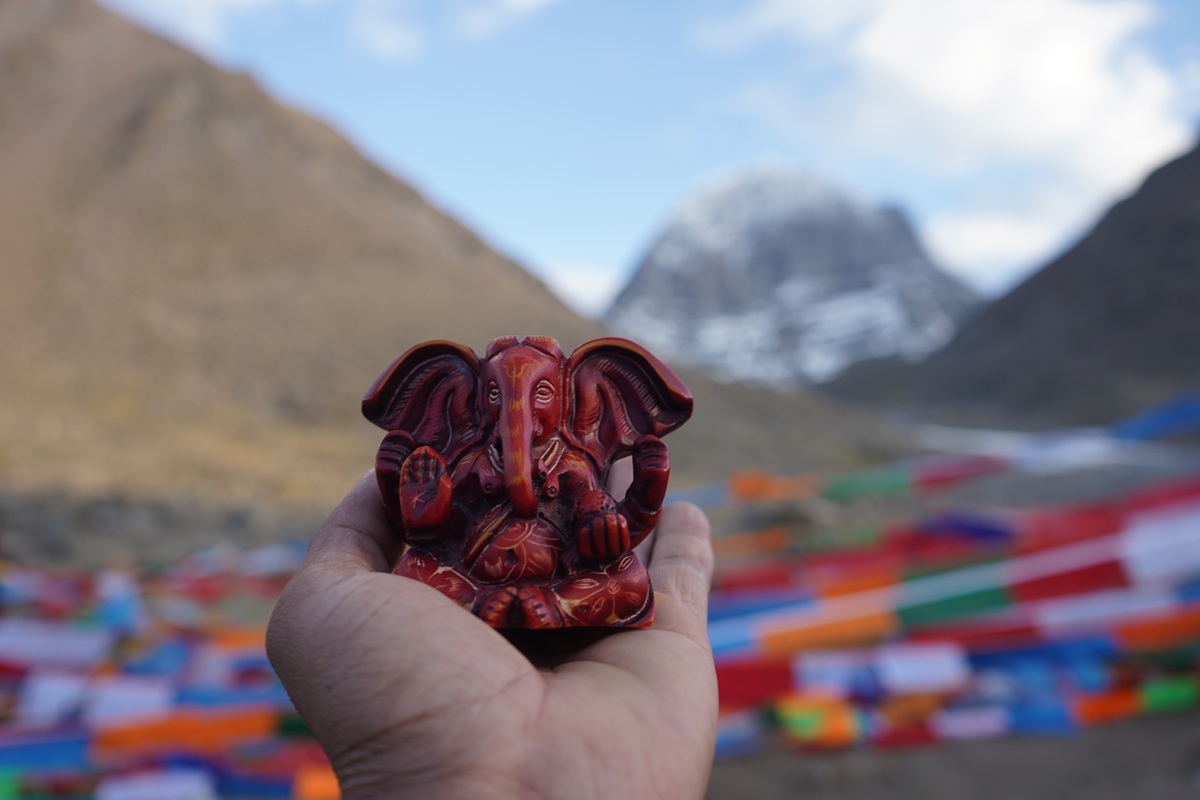
Ganesh Idol in front of Mount Kailash
Purpose: Remove obstacles before rituals
Timing: Very first morning ritual
Duration: 30-45 minutes
Vedic insight: All ceremony starts by removing obstructions
This is the preliminary ritual to ensure the havan goes smoothly and the trekking days are safe. Ganesha is the remover of obstacles. And Vishwaksena is the one who clears the path spiritually. This ritual is performed to overcome all obstacles in the physical, mental, and spiritual aspects before going.
Things Needed
Ganesha idol or image, modak or laddu, durva grass, red flowers, red sandalwood, red thread, coconut, incense, camphor, rice, turmeric, fruits, ghee
How It's Performed
From pre-dawn, when the first light touches Kailash, the pandit sets up an altar to face east. Prayers following traditional worship include a request to Ganesha to remove obstacles. Durva grass is offered accompanied by mantras. The deity is offered sandalwood, flowers, incense, and lamps. Modak sweets are offered with devotion.
Om Gam Ganapataye Namaha is chanted 108 times. Then, following Ganesha worship, a short Vishwaksena Aradhana takes place. The rituals are finished with Ganesha Aarti and distribution of prasada. So this prepares devotees for the holy task that lies ahead.
Gayatri Havan
Key mantra: “Om Bhur Bhuvah Svah, Tat Savitur Varenyam..."
Objective: Purifying the mind and intellect
Duration: 1-2 hours
Best timing: Sunrise
Elevation effect: Amplification of a thousandfold of resonance
The Gayatri Havan is the practice of repeating the holy mantra of the Gayatri in the fire to cleanse one's mind. At an altitude of 15,000 feet, the vibrations of the mantra in the thin air reverberate in an unearthly manner amidst the mountains. The blend of elevation, holy geography, and the power of mantras leads to experiences where the divine light is able to enter one's consciousness.
This chanting rhythm promotes meditative states. The devotees feel this chanting as a vibration that enters their bodies. It's a purifying wave that cleanses their mental patterns and brings wisdom. So the ceremony ends with final offerings, prayers of gratitude, and distribution of prasad. Also, devotees continue to repeat this mantra silently during their stay at Mansarovar and Kailash Parikrama.
Aarti and Deep Daan
Timing: Sunset, concluding ritual
Elements: Lighting a lamp (Aarti) and floating a lamp on water (Deep Daan).
Duration: 30-60 minutes
Nature: Pure devotion ritual
Atmosphere: Most emotionally moving moment
The Aarti and Deep Daan represent the ending of the day as twilight descends on this holy scene. The entire community sits by the banks at this Bhakti in its aesthetic form. true 107. It is the emotional high point of their Mansarovar sojourn. Hundreds of lights on a spotlessly clean lake with the Kailash range in the backdrop make for a sight that exudes sublime beauty.
Things needed
A large aarti lamp, multiple wicks, small floating diyas, ghee or oil, cotton wicks, marigold or lotus flowers, incense, camphor, bell, conch shell, rose petals, leaf plates for floating lamps.
How It's Performed
As the sun sets, pilgrims begin to gather at the shore. The pandit readies the principal aarti lamp. And volunteers begin to set up hundreds of floating diyas. The sound of the conch shell rings out to begin the ritual. The bigger aarti lamp is moved in circular motions in front of Kailash and water. Also, it's accompanied by devotional songs, bells, and devotional chants such as Om Jai Jagdish Hare.
The diya is then handed to each of the pilgrims, who lights it, offers silent prayers to it, before gingerly casting it into the water. The earthen lamps float, making slow circles, aglow in a widening circle of water. With night falling, floating flames mirror rising stars above. So this marks an intensely devotional moment.
What is the Total Cost of Performing Puja on Mount Kailash Mansarovar Yatra?
The cost of doing pujas and havans in Kailash Mansarovar generally differs depending on the rituals that pilgrims wishes to do. These costs are in addition to the basic tour package cost. And they have to be organized through your tour agent.
The main cost components are payment to the pandits, puja samagri, and logistic expenses. The agency organizes the Aryan Bahun pandits according to the number of groups. For groups that don't perform puja, the pandits don't travel along with them. So this cuts down on expenses significantly.
The puja samagri package is required for all rituals. It needs to be paid for separately in addition to the tour package. This contains all requirements such as ghee, flowers, incense sticks, sacred threads, havan materials, and other puja requirements. These aren't available in the location of Mansarovar situated at 15,000 feet.
Ritual/Service
Estimated Cost (INR)
Details
Estimated Cost (USD)
Pandit Fees (per day)
₹5,000 – ₹15,000
Based on group size and ritual complexity
$54.8 – $164.2
Basic Puja Samagri Packet
₹3,000 – ₹8,000
Essential items for standard pujas
$32.9 – $87.6
Rudrabhishek
₹15,000 – ₹40,000
Premium ritual, extensive materials required
$164.2 – $438.0
Maha Mrityunjaya Havan
₹10,000 – ₹25,000
Fire ritual with 108–10,008 mantra repetitions
$109.5 – $274.7
Lakhbatti (100,000 Lamps)
₹20,000 – ₹50,000
Includes thousands of diyas and ghee
$219.0 – $547.5
Tirth Shraddha
₹8,000 – ₹20,000
Ancestral rites with food offerings
$87.6 – $219.0
Tarpan
₹1,000 – ₹3,000
Simple daily water offering
$10.95 – $32.9
Chema Yachana
₹2,000 – ₹5,000
Forgiveness prayer ritual
$21.9 – $54.8
Navagraha Shanti Puja
₹12,000 – ₹30,000
Nine planetary deities worship
$131.4 – $328.5
Ganesh Puja
₹3,000 – ₹8,000
Obstacle removal ritual
$32.9 – $87.6
Gayatri Havan
₹8,000 – ₹18,000
Purification fire ceremony
$87.6 – $197.1
Aarti and Deep Daan
₹5,000 – ₹12,000
Evening lamp offerings
$54.8 – $131.4
Complete Puja Package
₹50,000 – ₹150,000
All major rituals combined
$547.5 – $1,642.5
Pandit Dakshina (Donation)
₹5,000 – ₹20,000
Traditional offering to priests
$54.8 – $219.0
Important Note: All costs mentioned here are approximations that may fluctuate depending on the agency, year, or requirements. So it's essential to confirm all costs with your tour agent when you book.
Are Priests Provided During Kailash Mansarovar Pujas?
Yes, priests or pandits are also made available for Kailash Mansarovar puja rituals. But they're only for those who have specifically asked for puja-related rituals. The tour operator will also make arrangements for your pandits to be Aryan Bahun pandits. They're also referred to as Suddha Bahun pandits.
If you're not planning any pujas and havans at Mansarovar, you won't be able to have pandits with you in your team. This is an additional facility. And it has to be booked in advance at an extra cost, which isn't included in any basic package tour.
The priests provided are traditionally Aryan Bahun, who differ from other Bahun communities. Although there are Bahuns from Sikkim with varying physical characteristics living in the Dianis area, it is common for agencies to recruit Aryan Bahun pandits conversant with Vedic rituals to perform the Mansarovar rituals.
Thus, you need to inform the tour operator about your desire to perform certain rituals, such as Rudrabhishek and havans, when booking a tour.
No of pandits provided will be as per groups size and the types of rituals. Cost for pandit fees, puja samagri packets and dakshina (donations) is to be quoted separately thoroughly in your tour quotation before travel.
Otherwise, worshippers may find themselves having to make simple prayer offerings alone at home with their own puja items.
Performing Puja at Mount Kailash Status in 2026
According to the rules in 2026 for conducting puja and havan at Mount Kailash and Lake Mansarovar, there are protocols set by the local administration. Pilgrims may offer personal pujas here. And the site is also visited by various tour agents conducting the yatra. But some religious activities aren't permitted at Lake Mansarovar itself. Havan, burning of incense and puja by open fire at Lake Mansarovar aren't permissible under the existing environment protection guidelines at the holy spot.
Almost all tour operators have retained their 2026 itineraries for doing puja activities during a full moon phase in and around Mansarovar Lake. But this will take place in allocated open spots or camping sites organized by the agency. It will not be on the shores of the lake where burning incense or fire is banned. Devotees are allowed to collect water from Mansarovar Lake for puja activities like sprinkling or puja prayers. Activities like bathing are permitted on the shores of the lake in a respectful manner. But immersion in water bodies is banned.
2026 Full Moon (Purnima) Calendar
Can Be Performed
Cannot Be Performed
Private prayer and chanting mantras at holy sites
Hawan with open fire near Mansarovar Lake
Group prayers in earmarked spots facilitated by tour packages
Burning incense and samagri or Hawan (on the banks of the lake)
Obtaining holy water of Mansarovar for figurative rituals
Immersion in the lake (protected environment)
Showering in shore water (gathered)
Any open burning process around the lake shore
Pilgrimage circumambulation (Parikrama) around Kailash
Spontaneous fire ceremonies with no official sanction
Full Moon (Purnima) Dates in 2026 (Best Days for Puja at Kailash Mansarovar)
Month
Full Moon / Purnima Date (2026)
Significance / Note
January
3 January 2026 (Pausha Purnima)
First full moon of the year. Favorable for spiritual beginnings.
February
1 February 2026 (Magha Purnima)
Very good for devotional prayers and holy baths.
March
3 March 2026 (Phalguna Purnima)
Favorable day related to purification and renewal.
April
2 April 2026 (Chaitra Purnima)
It is suitable for deep meditation and mantra chanting.
May
1 May 2026 (Vaishakha Purnima)
Also known as Buddha Purnima, holds religious significance.
May
31 May 2026 (Adhika / Jyeshtha Purnima)**
Blue Moon: A rare occurrence, and when it appears blue.
June
29 June 2026 (Jyeshtha Purnima)
Peak Spiritual Energy for Mantra and Prayer.
July
29 July 2026 (Ashadha Purnima / Guru Purnima)
Blessings related to gurus and devotion to.
August
28 August 2026 (Shravana Purnima)
Tied to Raksha Bandhan; favorable for protection rituals.
September
26 September 2026 (Bhadrapada Purnima)
It is good for prayers of thanksgiving and gratitude.
October
26 October 2026 (Ashwin / Sharad Purnima)
Sharad Purnima - exclusively for night prayer vigils.
November
24 November 2026 (Kartik Purnima)
Very famous; best for puja and meditations.
December
23 December 2026 (Margashirsha Purnima)
Last full moon
Some of Suggested 2026 Kailash Mansarovar Yatra Itineraries Around Full Moon Dates
May Full Moon: Blue Moon Itinerary (31 May 2026)
Target Date: Reach Mansarovar on 31 May or Blue Moon for a solid spiritual puja and prayers.
How to Plan
Begin: Arrive in Kathmandu around 24 May 2026 or about a week to 10 days before.
Trek to Tibet: Depart on or around 27 May. Reach Mansarovar by 30 May.
Full Moon Day: 31 May, Perform planned Puja, Meditation, and Prayer in Mansarovar.
Mount Kailash Parikrama: Days that follow – begin Kora around Mt. Kailash.
Return: Begin returning home around early June or 4 to 6 days after the full moon.
This Blue Moon is quite rare. And it holds great religious significance in terms of praying, performing puja, mantra chanting, and devotional work in Mansarovar.
June Full Moon Itinerary (29 June 2026)
Goal: Reach Mansarovar Day on 29 June.
How to plan
Departure: Arrive Kathmandu ~20 June 2026 for permit and formalities.
Journey: Proceed towards Tibet/Mansarovar on 23–24 June.
Full Moon: 29 June: Meditate by the lake and do puja, spirit bath with chants.
After: Kailash Kora (circumambulation) and visit to Dirapuk, Zuthulphuk.
Return: Return in early July.
Why this works:
According to tradition, Late June is the best time for weather in general, with a good, problem-free climate.
July Full Moon : Guru Purnima Itinerary (29 July 2026)
Goal: Match your visit to Guru Purnima, which is immensely auspicious for devotion and blessings.
How to plan
Start: Arrive in Kathmandu ~18–20 July 2026.
Travel: Go to Mansarovar, so that you get there by 27–28 (July).
Guru Purnima: 29 July -puja by praying for spiritual directions and devotion
Return: Early August.
Why this works:
Guru Purnima with an emphasis on the gratitude that one should experience towards spiritual teachers and deep prayer.
August & September Full Moon Itineraries
28 August 2026 (Shravana Purnima): Great for protection spells, mantra japa and prayer offerings.
26 September 2026: (Bhadrapada Purnima): Ideal for thanksgiving observance and conclusion of yatra.
Planning tip:
Begin anywhere from 6-8 days ahead of your targeted full moon so you can accomplish permit work, travel, and acclimatization in a relaxed manner.
Full Moon Kailash Mansarovar Yatra With Puja Rituals Itinerary for 2026
Day 01: Arrival in Kathmandu, transfer to the Hotel
How Do Different Religions Perform Puja at Mount Kailash and Lake Mansarovar?
Hindu Worship at Mount Kailash and Lake Mansarovar
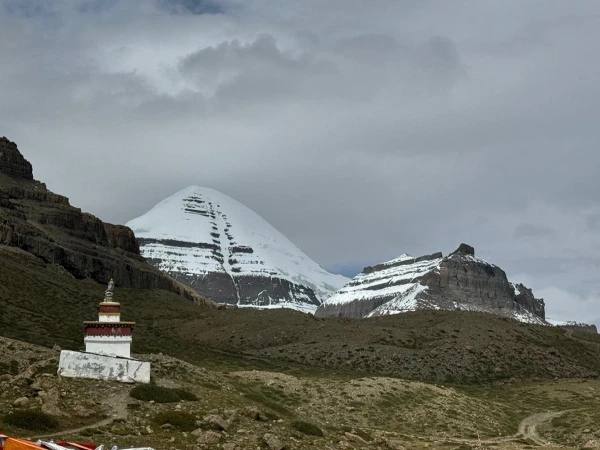
For the Hindus, the Mountain of Kailash is the heavenly dwelling of Lord Shiva and his wife and children. These include Shiva, Parvati, Ganesh, and Kartikeya. According to their belief, merely catching a glimpse of the Mountain of Kailash and taking dips in the Lake of Mansarovar is enough to cleanse the soul of its impurities. Also, it atones for its transgressions. The religious rituals include mantras, offerings, and prayers at the shores of the Lake of Mansarovar and at strategic religious sites. These include the offering of flowers, lighting diya lights, and group prayers.
The most sacred act of worship for Hindus is Kailash Parikrama or Kora. It involves a complete circuit around the holy mountain. The devotees perform the circuit in a clockwise motion. They repeat their sacred mantras and meditate as they proceed. So they feel that in every step they take, they're inching towards freedom.
Morning Puja for Indians
When Indian devotees arrive in Mansarovar, they normally dedicate the next day to special puja. Hindus always attempt to be present at Mansarovar on a full moon or Purnima day as it's considered very lucky. When it's Purnima, pujas and havans are conducted because it's believed that the religious potency is magnified during that period. So it's common practice among Indians to plan their visit such that they're present in the area during Purnima.
Buddhist Devotion at Kailash and Mansarovar
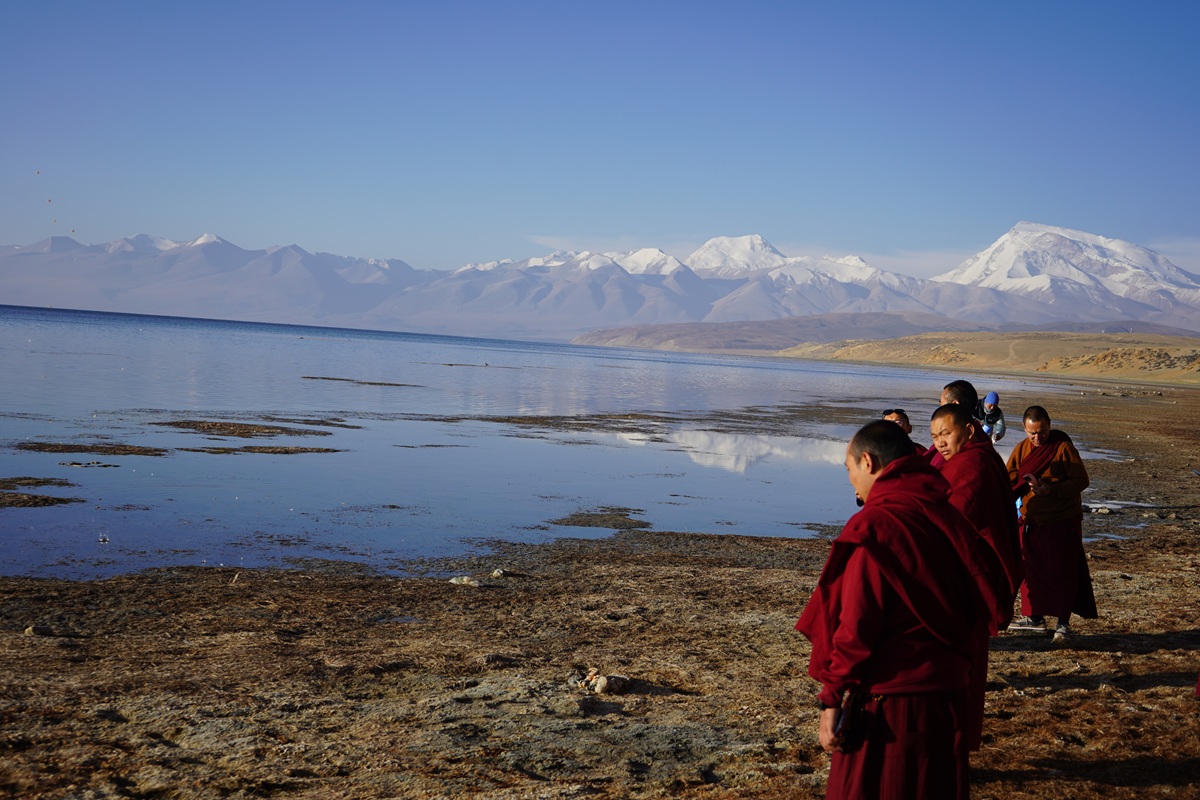
Monks Performing Rituals in Front of Mansarovar Lake
The Tibetans call their sacred mountain Kailash by the name of Kang Rinpoche or the Precious Jewel of Snow. Tibetans consider it the center of the world. It symbolizes enlightenment, compassion, and meditation.
Buddhists do the circumambulation ritual, or kora, around their sacred mountain of Kailash. But like the Hindus, they focus on mantras like Om Mani Padme Hum and meditation techniques. They don't focus on fire rituals.
At Chiu Gompa and other Buddhist shrines surrounding Mansarovar Lake, devotees give khatas or Buddhist prayer scarves. They also give mala beads and prayer flags as offerings. Also, they recite mantras such as Om Mani Padme Hum. They meditate and perform circumambulations around religious sites clockwise. This is their way of practicing faith. Some Buddhist sects offer grains or token offerings to shrines and monasteries near Mansarovar Lake. This pays homage to the sacred site.
Jain Rituals at Kailash
The Jains consider Mount Kailash to be Ashtapada, which marks the place of nirvana of their first Tirthankara, Rishabhadeva.
To come to this region means to pay a tribute of respect. Jains conduct prayer rituals, meditation, and reading of religious literature devoted to renunciation, purity, and liberation.
Their practice is subdued and reflective, respecting the site as the embodiment of the ultimate liberation of the spirit.
Jain pilgrims can take advantage of the opportunity available at Mansarovar Lake, where they can conduct silent prayers, engage in Samayika (a period of equanimity and meditation), as well as pay symbolic respect to the holy land.
They may circumambulate the holy lake or mountain with a mind reflecting on repentance from karmic interrelations and purification of emotions, and not while physically depositing ritual implements such as representations of wealth there.
One more traditional presence of flowers or incense is meditation, scripture reading, and walking meditations.
Bon Religion Practices
The indigenous Bon religion predates Tibetan Buddhism. It considers Kailash to be a source of religious power and a dwelling for gods such as the goddess of the sky, Sipaimen. Bon followers trek in a counter clockwise manner. This is contrary to Hindu and Buddhist followers. They have their unique ways of worshiping in this mountain by chanting ancient Bon scriptures.
Also they make offerings of incense or tokens to nature spirits and visit ancient meditation caves along their trek. In their religious activities in this mountain range, they focus on linking with cosmic powers and ancestors.
Understanding the The Puja Samagri Packet: Include and Exclude
Included Items
Basic Puja & Offering Material
Agarbatti, and Baby-safe incense sticks holder (modern guidelines don't advise open burning)
Small diya (candle) or lamp (battery, tealights are great for where there is no open flame allowed).
Camphor (for arati, where permitted)
Flower or petal ( dried, artificial is fine since fresh ones are hard to come by)
Offerings & Sacred Items
Fruits and Sweets (Prasad) could be offered too.
Holy water Bottle/Copper Lota Use to carry Mansarovar Water for philological purposes
Rice, Haldi, Kumkum for a tilak or a symbolic purpose
Scriptures & Devotional Tools
Any small scripture that you use for your faith (Gita, mantra book, prayer book)
Mala beads or rosary for chanting mantras
Supportive Ritual Tools
Bell, or other small prayer instrument, to signal worship hours
Clean piece of cloth or ritual mat to put items on a clean surface
Items Not Included in Puja Samagri Packet
Fire‑Oriented Items
A huge quantity of ghee or clarified butter for the havan fire (usually not allowed at Mansarovar directly)
Havan kund (fire pit) or ingredients that need to be cooked on an open flame.
Prohibited or Restricted Items
Big incense or charcoal (open fires are not allowed at the lake)
Non-degradable offerings, candles on metal bases.
Unsupported Ritual Equipment
Brass/metal havan samagri trays and firewood ( these are generally not required unless organised with a priest, as they have to be local council-approved)
Big ritual idols or figures
How Puja Samagri Is Usually Handled
Tour operators may provide a restricted puja kit on demand, but it is usually charged for and not included in the standard package.
Having a personalised puja kit gives you freedom for personal puja, mantra chanting and prayers, particularly at Mansarovar Lake and camp sites.
Large fire-based rituals (such as havan) may not be permitted onto the lakeside due to cleanliness and other local regulations.
Tips on Puja Samagri
Several pilgrims carry traditional items like holy leaves, kumkum, and small pictures of gods from their homes.
Some simple puja items can even be found in the local Tibet markets (such as Purang, Saga) if needed, but not all types of traditional Indian items are likely to be available.
Since some areas have bans on burning incense or havan fires in the proximity of Mansarovar (for environmental reasons), prepare for your puja accordingly and consult with your group leader or guide before you ignite anything.
Which Package Is Suitable for Adding Puja Rituals in the Kailash Mansarovar Yatra?
Package 1: Kailash Ashtapad Yatra (12 Days)
A special Jain pilgrimage that focuses on visiting Ashtapad - a place where Tirthankar Rishabhdevji reached nirvana. The trip comprises the Inner Kora of Mt.Kailash with a special permit for South Face visitation and offers 100% Satvik meals cooked by Jain friendly kitchen team.
Group Size
Cost per Person
2-3 Pax
Contact for pricing
Starting from
US$2,850 - $3,500
Includes
An exclusive kitchen to be behind that strictly follows the Satvik way of cooking and eating as per the Jain rites.
Special provisions for Samayik and Dhyana at the holy place
Concentrate more on spiritual practices at Serlung Gompa and Ashtapad darshan
Package 2: Kailash Manasarovar Small Group Tour (10 Days)
A budget small group tour from Kathmandu through the Kerung border. This is an inexpensive way for solo travelers to hop on fixed departures and share the cost of transportation & guiding.
Package 3: Kailash Mansarovar Yatra by Helicopter (14 Days)
A quick, more comfortable alternative that involves helicopter flights from Kathmandu to the Timure border. This option offers full board meals, along with Nepalese support staff catering services throughout the Kora.
Group Size
Cost per Person
4-5 Pax
US$3,500
6-10 Pax
US$3,400
Includes
Catering service with staff from Nepal to prepare ritual food.
The additional time gained from saving travel time can be devoted to spiritual practices.
Lake Mansarovar is reserved for meditation and worship, along with yoga in the morning.
Package 4: Luxury Mount Kailash Mansarovar Tour (15 Days)
Luxury 5-star experience with Hotel Marriott/Aloft stays at Kathmandu, Toyota Land Cruisers for exclusive use, catering staff using 100% mineral water, medical-grade oxygen assistance, and Sherpa support.
Group Size
Cost per Person
2-3 Pax
US$4,450
4-8 Pax
US$3,995
9-16 Pax
US$3,595
Includes
Hindu Priest available for Hawan/Puja at Lake Mansarovar (on request)
Private gourmet meal, customizable according to ritual dietary requirements (Sattvic/Jain/Vegan
Dedicated time at Lake Mansarovar for “Puja and holy bath”
High-end accommodations also ensure that privacy and comfort are provided to perform personal rituals
Flexible schedule with concierge assistance for spiritual practices, Best facilities for storing puja materials and ritual items