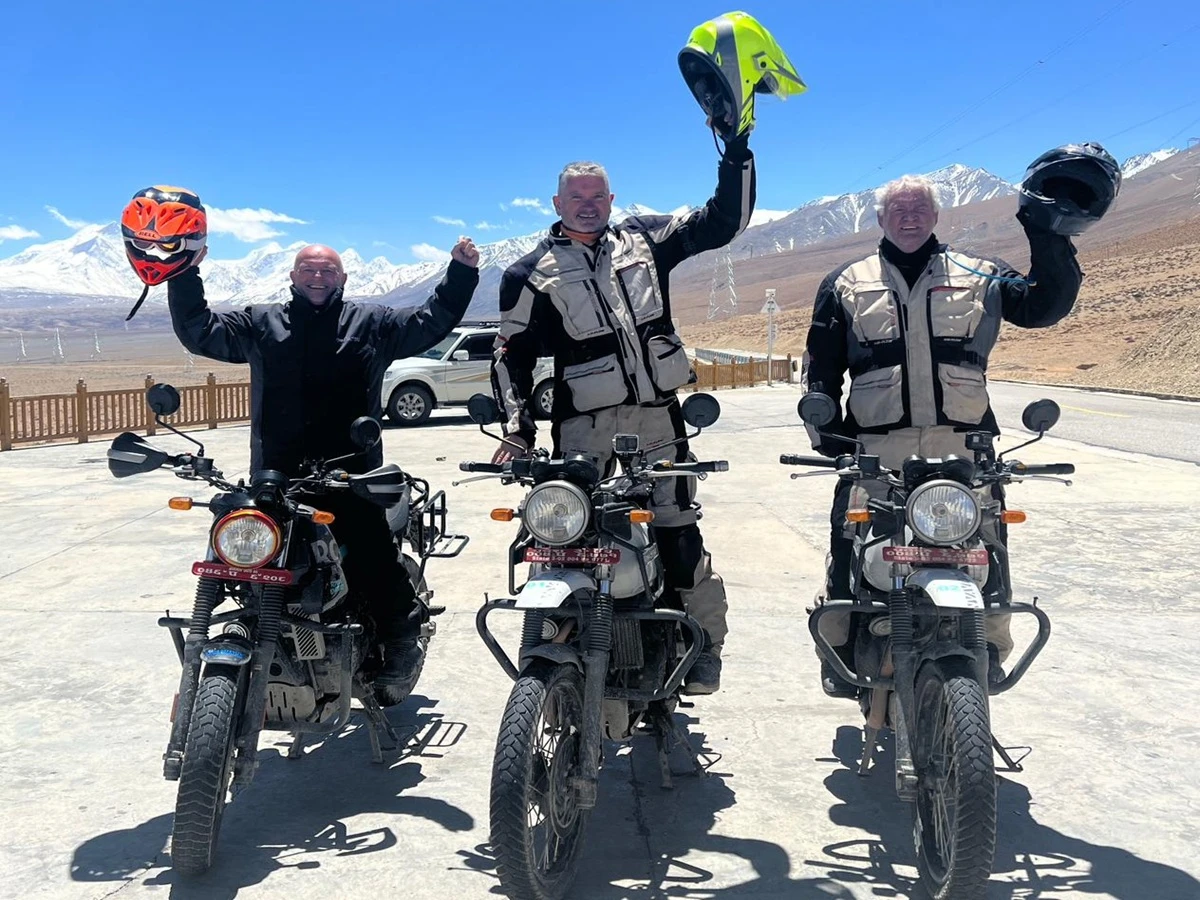
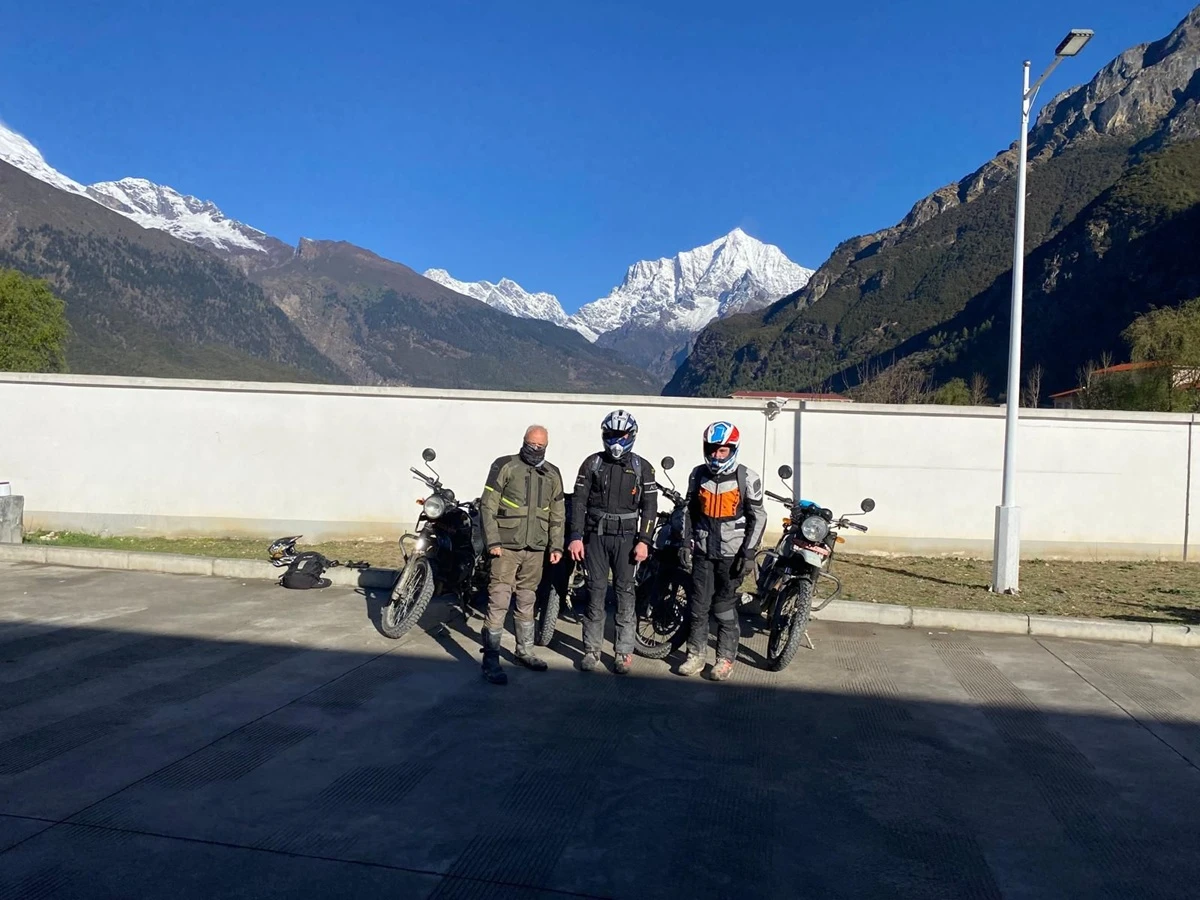
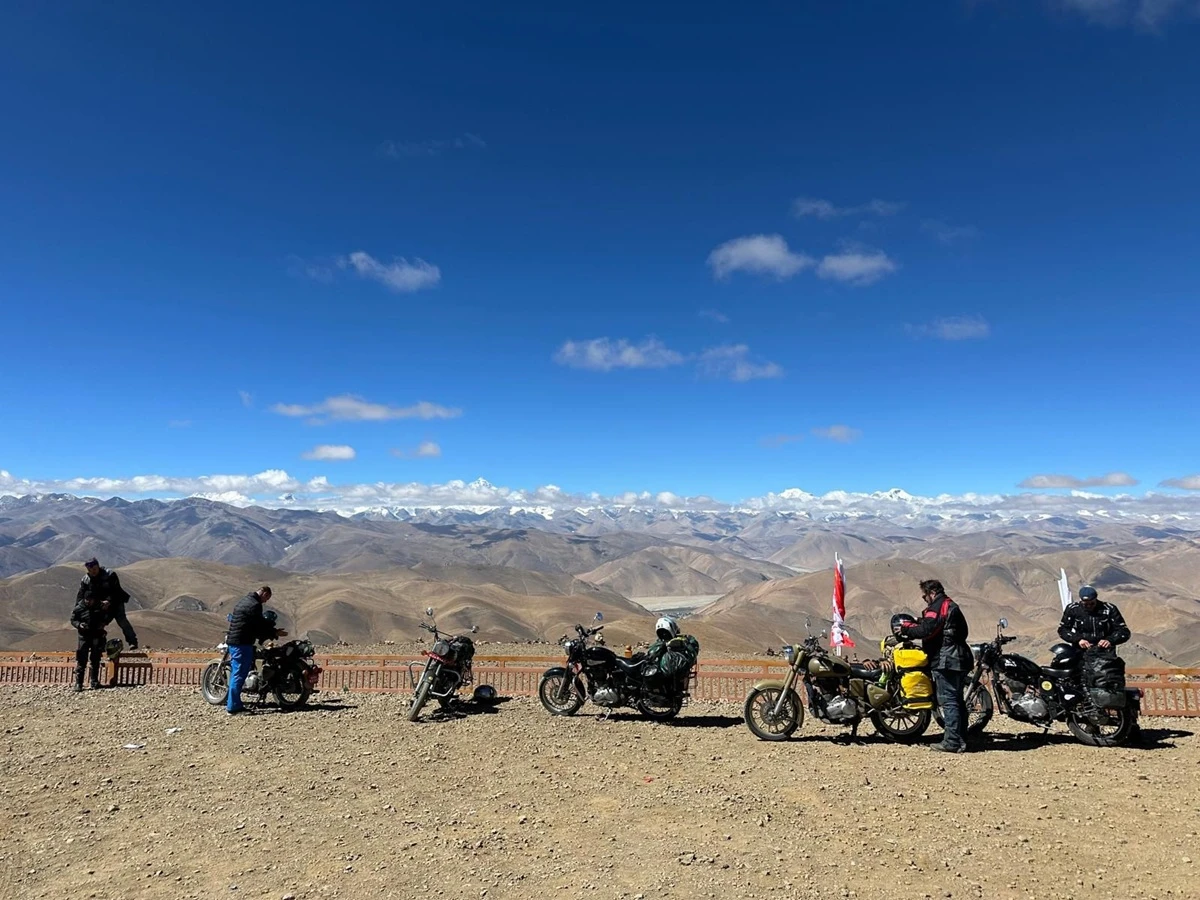
Tibet Motor Bike tour

Tibet Motor Bike Tour From Nepal 17 Days

Duration17 Days
Trip GradeModerate
Maximum Altitude5236m ( Gyatchu La Pass)
ActivitiesNatural and cultural sightseeing
Group Size4-15
StartsKathmandu
EndsKathmandu
Best TimeApril to June and August to November

Introduction to Tibet Motor Bike Tour 17 Days

The Tibet Motorbike Tour - 17 Days represents an amazing adventure where you will experience spectacular scenery and rich culture while enjoying the excitement of riding for long distances across the roof of the world. The Tibet Motorbike Tour is not simply a tour, it is a journey where you will discover ancient traditions, vast high-altitude plateaus, towering mountain passes and hidden monasteries that have provided a refuge for many spiritual seekers for hundreds of years.

You will be able to ride two wheels closer to the Tibetan soul while experiencing its vastness of open skies, wilderness and timeless horizon with every twist of the throttle.

Through the 17 days of riding, you will leave from the green valleys of Nepal and into the vast Tibetan plateau, from winding and lush rural roads to high passes at elevations beyond 5000 meters.

Each ride will have new challenges, new places, and experiences that change the definition of exploration on your bike. You will pass through valleys populated with traditional Tibetan villages, meet nomadic herders of yaks, and ride through some of the most remote regions with little chance of seeing other riders.

This tour is intended for riders who want adventure and culture together. Seasoned motorbike riders wanting to ride high in the mountains will have their epic moments on this trip. And so will inquisitive travellers who want to explore Tibet's incredible scenery at an enjoyable yet exhilarating speed. You'll be visiting sacred monasteries, historical towns and the beauty of Yamdrok Lake and the Everest area.

When it comes to planning your entire trip, our team takes care of everything. That includes permits, support vehicles, accommodation and guides. So you can enjoy being on a bike. The end result is a combination of adrenaline, culture, nature and inspiration in a way you can't imagine. You'll leave this epic 17-day journey having conquered some of the world's most well-known roads. And you'll carry life changes that will never leave you.

Highlights of All the Experiences you will Experience

  • 17-day expedition on motorcycles travelling overland through Nepal, Tibet and back again.

  • Scenic motorcycle trip through the Himalayas to the vast Tibetan Plateau.

  • Cross high mountain passes of over 5,000 metres in altitude.

  • Enjoy exhilarating high altitude riding on smooth paved highways in Tibet.

  • Visit ancient cities like Lhasa, Shigatse and Gyantse.

  • Visit famous sites like the Potala Palace and the Jokhang Temple.

  • Ride along the turquoise waters of Yamdrok Lake and alongside the Brahmaputra River.

  • Experience breathtaking views of the Himalayas, including Mount Everest.

  • Visit Rongbuk Monastery near the base camp of Mount Everest.

  • Learn about the Tibetan Buddhist faith and experience traditional Tibetan culture, including monasteries.

  • A combination of adventure motorcycling and sightseeing to experience various cultures.

Tibet Motor Bike Tour Facts

Fact

Details

Tour Name

Tibet Motor Bike Tour – 17 Days

Starting Point

Kathmandu, Nepal

Ending Point

Kathmandu, Nepal

Countries Covered

Nepal and Tibet (China)

Highest Riding Altitude

Above 5,600 m (Dolma La Pass)

Total Days

17 Days

Main Activities

Long-distance motorbike riding

Key Destinations

Lhasa, Shigatse, Everest Base Camp (Tibet side)

Major Passes

Gyatchu La, Karo La, Dolma La

Cultural Stops

Lhasa sightseeing & monasteries

Natural Attractions

Yamdrok Lake, Himalayan views

Guides Provided

Local Tibetan & Nepali guides

Permits Included

Tibet Travel Permit, route permits

Support

Backup vehicle for gear & safety

Tour Style

Small group adventure

Difficulty Level

Moderate to high (altitude)

Suitable For

Experienced riders & adventure travelers

Accommodation

Guest houses & hotels

Best Riding Season

Spring & Autumn

Start Price

Varies by season & inclusions

Navigating the G318: Riding the Highest Highway in the World 

Motorcyclists who consider this road an adventure ride, the ultimate adventure ride, are certainly correct, because this long, long travel from Shanghai to Nepal has some of the most unique and beautiful elevation changes on Earth. The Tibetan G318 lies within the largest continuous distances of land above 5,000 meters, with the highest point being the Gyatso La Pass at 5,220 meters above sea level (over 17,000 feet).

The engineering of this road is a new marvel, able to provide smooth, blacktop roads with no visible impediment to travel through the rugged terrain of the Himalayas. In addition, the weather changes dramatically when riding on a road such as this. Riding a road with this thin air, unable to predict weather changes, and being at elevations where there are sheer cliffs and trails requires an extreme amount of concentration and absolutely no ability for distractions whatsoever.

While riding through the legendary 72 turns of Nujiang, you're not simply on a road. You're on the lifeline that links the ancient monasteries of Tibet to the base of Mount Everest. The G318 is a challenge for any motorcyclist. It has long distances and a great view of the roof of the world. You'll be glad you chose to ride it.

What Is the Best Bike for a 17-Day Tibet and Nepal Tour?

If you are going on a 17-day motorcycle tour of Tibet and Nepal, selecting the proper motorbike is vital. You will travel at very high elevations where there are a variety of travelling conditions: high mountain passes, winding roads, rugged terrain, and very remote plains. Therefore, you will require a powerful, dependable, comfortable and useful motorcycle when travelling at such high altitudes.

Recommended Motorbikes for the Tour

Two great motorcycle options are available for this tour.

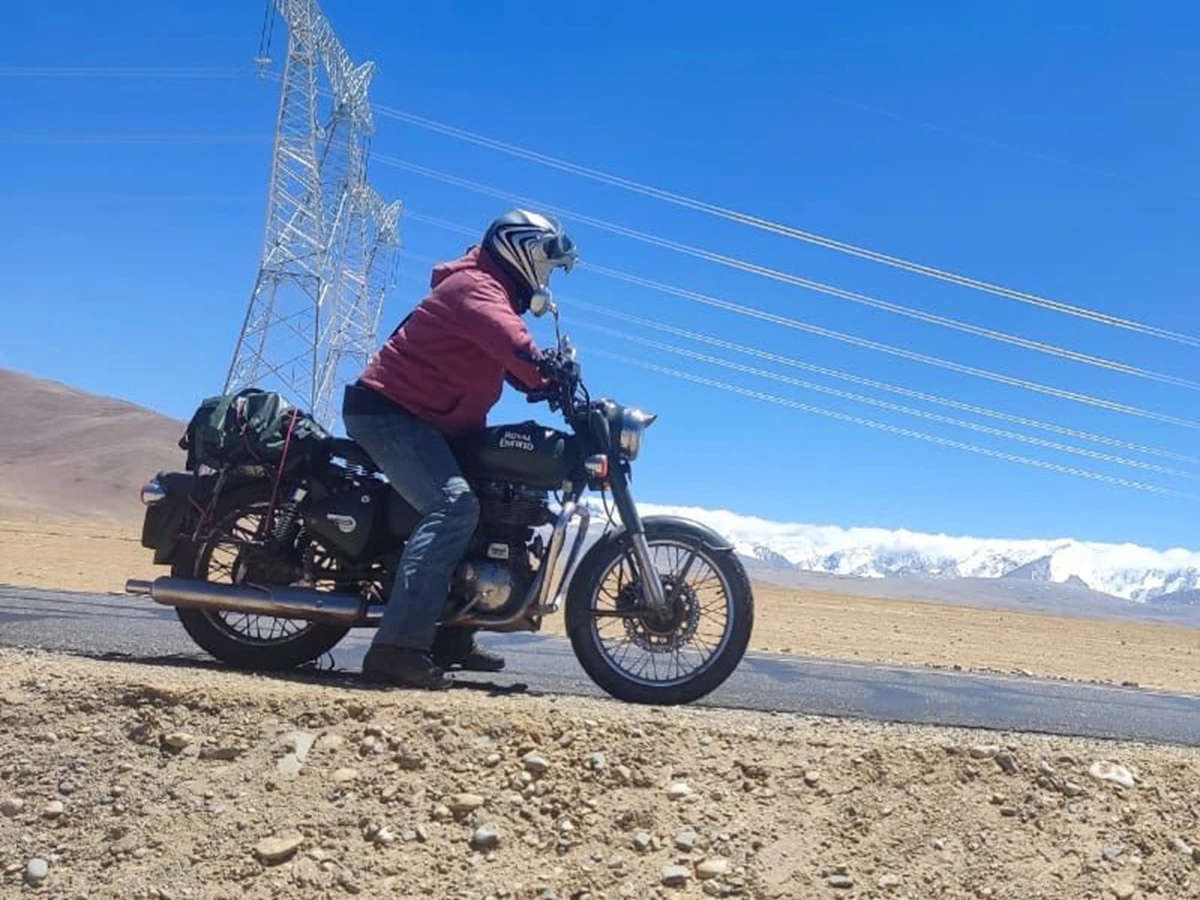
  • The Royal Enfield Classic 500 CC has an excellent combination of power and torque for steep climbs. And it's built ruggedly enough for unsafe or rough road conditions.

  • The Royal Enfield Himalayan 411 CC was specifically designed for mountain riding. It's balanced and comfortable during extended periods in the saddle.

Both motorcycles have sufficient power to meet the demands of the high Himalayas. Depending on your riding style and comfort level, you can select the model that suits you best.

You Can Use Your Own Bike

Of course, you may choose to ride your motorcycle. If you decide to bring yours, please provide us with a bike bill of sale and send us a picture of your motorcycle prior to travel. We will issue you motorbike permits using your bike's information.

It is important that you use a powerful motorcycle for this tour, as high-altitude riding will require a high-powered engine and an adequate amount of torque. Smaller motorcycles will likely have difficulty with steep passes and long climbs. By choosing a reliable motorcycle, you will have a more enjoyable, comfortable and safe ride throughout this amazing journey.

Who Can Join a Tibet Motorbike Tour? (License & Experience Requirements)

The Tibet Motorcycle Tour is available to motorcyclists who have appropriate documentation and relevant experience. Motorcyclists of all skill levels, from long-distance experienced to confident intermediate, should feel comfortable riding over mountain roads at high elevations. Here's what you'll want to know before joining.

Riding Experience

We suggest that motorcyclists have experience riding on mountain or highway roads. There are altitudes of over 5,236m. So altitude and physical fitness are just as important as your skill. We don't recommend this for beginner motorcyclists.

International Driving Permit (IDP)

Your IDP is required for a motorcycle tour to Tibet. It'll be your main form of identification when riding in Nepal or Tibet. And you won't be able to complete border exit or entry procedures without it. Don't leave home without it.

Temporary Chinese Riding License

At the start of our tours, each rider will be helped to get a temporary Chinese motorcycle license. It's a required document for riding in Tibet and is obtained at the border. The process is included in the normal procedures regardless of the length of your tour.

Places You will be Visiting on Your Tibet Motor Bike Tour in 2026/27

Kathmandu

The starting point for your entire journey is the bustling and lively capital of Nepal, Kathmandu. Once you arrive in Kathmandu, you are greeted by world-renowned heritage sites, such as Pashupatinath Temple, Swayambhunath (Monkey Temple), Boudhanath Stupa, and the ancient city of Patan, which all contain a rich history and an abundance of religious energy. Each of these sites is designated a UNESCO World Heritage Site.

Bhaktapur & Nagarkot

The Bhaktapur Durbar Square is considered one of the best-preserved ancient cities in Nepal, consisting of beautiful Newari architecture, courtyards, and temples that have existed for hundreds of years. Just outside the city of Bhaktapur is Nagarkot, a scenic hilltop retreat that provides visitors with stunning panoramic views of the entire Himalayan range and serves as the perfect and tranquil place to begin the journey of trekking at high altitudes.

Syaprubesi

Syaprubesi is a small town located along the edges of the Trishuli River and is at an elevation of 2,380 meters. Because Syaprubesi is an overnight stop in Nepal before continuing on to Tibet, visitors will have an opportunity to see how local village inhabitants continue their traditional ways of life while living among the lush green slopes of the Himalayas.

GYIRONG (KERUNG)

Gyirong (Kerung) is the border crossing between Nepal and Tibet, and where your journey into Tibet starts. The transition is dramatic as you ascend from a relatively lush Nepal (2,900m) to the barren plains of Tibet. This is also where all documents will be checked, including border crossing permits, before continuing to ascend the plateau.

TINGRI

Tingri is a small but important stop located at 4,300m on the Tibetan Plateau. The peak of Mount Everest (8,848m) can be seen (on clear days) to the east, with the peaks of Cho Oyu (8,201m) and Shishapangma (8,012m) also visible, making Tingri one of the best places to take a break along the entire journey (Tingri is also possible to set up a camp).

LHATSE

Lhatse is located at approximately 4,350m and is a major junction on the Tibetan Plateau. It is the point at which the route to Mount Kailash branches west, and serves as a reminder of Tibet's massive size and the numerous epic routes that can be found throughout Tibet.

Shigatse

Shigatse is the second biggest city of Tibet and is located at an elevation of 3900m. Shigatse has one of the most significant cultural attractions in Tibet, the Tashilhunpo Monastery, which is the traditional abode of the Panchen Lama; the grandeur of the huge buildings with gilded roofs, a massive statue of Buddha and well-decorated chapels are all sights to see while visiting.

Gyantse

Moreover, Gyatse lies on the ancient trade route and is located at an elevation of 3950m. The highlight of Gyatse is the Kumbum Stupa, a multi-tiered chorten or shrine that is one of only a few in the world and has several chapels that have been painted. Many of the features of Gyatse (the fields of barley grown outside of town and the unusual architecture) have not changed since they were first constructed, and give you a feeling that the town is almost timeless.

Lhasa

Lhasa, located at an elevation of 3650 m, is the spiritual capital of Tibet and is the emotional heart of the trip. The must-see sites in Lhasa include the Jokhang Temple, the Barkhor Bazaar, the Potala Palace and the two monasteries, Drepung and Sera, where the monks continue to debate as they have done for centuries.

Rongbuk & Everest Base Camp

The Rongbuk monastery is situated at 5100m and is the highest monastery on earth, providing the best views of Mount Everest's North Face on the planet. The trip continues to the Everest Base Camp, which is located at 5200m and is the pinnacle of the entire trip, and something that all bikers will have memories of for the rest of their lives.

Tibet Motorcycle Tour Cost 2026, 2027

Base Tour Price

  • Base Tour Cost (17 days) = $2,450 per person (4 to 6 riders)
  • Base Tour Cost (17 days) = $2,350 per person (7 to 10 riders)
  • Base Tour Cost (17 Days) = $1995 Per person (10 to 15 Riders)

Both options include accommodation, guide riding, support vehicle, most required permits and logistics. Pricing is reduced based on group size because costs are shared across multiple riders. So the more riders, the better the deal.

Single Supplement

If you'd prefer not to share a space, solo accommodation is available. But it does come at an additional charge of $490 USD. That covers the extra hotel cost for a single room at all hotels along the way.

Bike Charges

The visa bike hire charge for those who are not bringing their own bike is $1750 (USD) per bike. The cost of hiring a Royal Enfield 500cc (the most common bike model for high altitudes) for a whole tour is $4,150 (USD). This cost includes the cost of permits, support on tour and fuel.

Typical Total Costs

Each rider’s specific tour/package values include all charges related to a motorcycle tour in Tibet as well as all costs related to them (including permits, temporary driving license to operate a motorbike in China, fuel, guides and support) are generally in the $3,000-$6,000+ )US, regardless of total number of people in the group, choice of bike and inclusions.

Choosing an Epic 2-Week Tibet & Nepal Motorcycle Journey with Dream Tibet Travel and Tours

  • Our 18 years of experience in tourism to the Himalayas, particularly high-altitude tours and pilgrimages, allow us to provide you with a trusted experience.

  • We have helped thousands of happy riders and adventurers participating in a variety of tours to Tibet and Nepal.

  • Effective experts who have successfully completed numerous cross-border tours and have obtained all necessary permits and other logistical arrangements to help you travel from Kathmandu.

  • All costs of permits, travel paperwork for travel to Tibet, motorbike permits and obtaining a driver's license to travel in China are pre-arranged by us.

  • A friendly, English-speaking Tibetan tour guide and a Nepali mechanic will accompany you throughout the trip.

  • All accommodations will be in twin-share rooms and will include breakfast, as specified in your tour itinerary.

  • There is a transportation vehicle to assist you with luggage and to provide emergency assistance on the days you are riding.

  • No Middlemen - Price Transparency - Price To List

  • Government Registered And Based In Kathmandu - Easy Cross-Border Coordination

  • Professional Help From Beginning To End

  • Staff And Guides That Know The Terrain And High Altitude Culture

  • Safety And Assistance 24/7 Support

  • Well-Cooked And Healthy Meals In A High Altitude

  • Portable Oxygen For Acclimatization

  • A welcoming garland upon arrival, and a farewell shawl

  • Time Saving By Adjusting Weather And Schedules.
Itinerary

A trip's day-by-day itinerary shows all scheduled activities, travel, and important sights to see during the trip, so you know what to expect from the trip and how to enjoy it to its fullest. A good itinerary should balance a traveller's travel time, sightseeing, rest time, and logistics to ensure a smooth trip.

The experienced travel agents who developed the Tibet Motorbike Trip Itinerary (17-Day) have travelled these high-altitude roads and all of the cultural sites in Nepal and the Tibetan Plateau many times.

The itinerary is meant to guide riders through each part of their ride starting in Nepal travelling through Kerung (as you enter Tibet) and onto and throughout Tibet as well as point out all the beautiful lakes they pass by, remote villages they will go through and sacred sites they will see including the highlight of Base Camp at Mount Everest and all of the cultural sites they will visit in Lhasa, Tibet.

This itinerary provides a rider with safety and support while creating memories during one of the greatest motorcycle rides in the world.

Trip PlanExpand all
Max Altitude: 1400 m Meals: BreakfastAccommodation: Hotel

Dream Tibet and Travel will meet you at Tribhuvan International Airport and bring you to Hotel Jampa or Samsara Boutique in the heart of Kathmandu, where you'll have a chance to rest after your long flight, as well as do a short practice ride to get accustomed to the bike's controls and the local traffic.

You will also have dinner at the hotel from either the Nepali standard of dal bhat or a simple continental option, and your breakfast will be ready for you the next day. 

The streets surrounding your hotel in Thamel feature an abundance of shops, prayer flags and temple spires seen from very few rooftops. The streets are all paved. And while many are full of pedestrians and rickshaws, it makes for a very nice short practice ride. There are also many cafes within easy walking distance. Or you can sit on the terrace at your hotel and watch the lights of the valley.

Your overnight stay will allow you to relax and get your gear all ready for the trip. We will then gather all your paperwork and verify your route, as well as ensure that you are comfortable and ready to move forward on your journey.

Max Altitude: 1400 m Meals: BreakfastAccommodation: Hotel

Breakfast: either Hotel Jampa or Samsara Boutique will be served to you while we whisk you away on our private vehicles to Pashupatinath Temple, a riverside Hindu shrine where the colourful world of the sadhus and rituals is seen in action. After visiting the temple, you will climb to Swayambhunath to view the valley below and, of course, the stupa's magnificent painted eyes. The stone steps and narrow lanes will all be busy but not difficult to walk.

Lunch will be served at Bouddhanath Stupa, one of the largest stupas in the world, where you can spin the prayer wheels, while you have lunch at one of the cafes nearby that serve thukpa and momos. In the afternoon, you will be driven to Patan Durbar Square, where you can admire amazing wood carvings and palace courtyards while learning about the art of Newari craftsmanship.

You will be returned to your hotel for dinner. Our day has a balance of calm temple courtyards, crowded markets and urban roads; we will be with you at every site, ensuring our guests have full context and comfort at each stop along your journey.

Max Altitude: 1400 m Meals: BreakfastAccommodation: Hotel

After breakfast at your hotel in Kathmandu, we depart for Bhaktapur Durbar Square. It's the primary site of the living museum of Newari architecture. That includes the five-starred 55-Window Palace and the very high Nyatapola Temple. You'll reach these attractions by walking several short cobbled roads and through many crafts workshops. Think pottery, wood carving and more. But the trails can be very uneven. So wear supportive and comfortable walking shoes.

After lunch at a local eatery with local Newari food and tea, we travel up to Nagarkot. The road is paved and winding through beautiful pine forests, terraced fields and several small villages. We stop to enjoy the view at platforms along the road. The road to Nagarkot is good. But it's quite curvy. And as we gain elevation, fresh air and layers of hills begin to fill your view. If the skies are clear, the high peaks of the Himalayas will be illuminated as we watch the sunset. You'll be glad you had your camera ready.

Dinner at your hotel in Nagarkot includes soup and lots of local food. You'll enjoy the cool mountain air and the many lights of the valleys below. And tomorrow morning we ride back to Bhaktapur.

Max Altitude: 1400 m Meals: BreakfastAccommodation: Hotel

At your Nagarkot hotel, breakfast is served. That includes tea and local breads. Then you begin your ride down into Kathmandu along winding roads. This morning's ride takes you past small hamlets and terraced farming. And there are opportunities to stop at viewpoints and take photos of the valley and distant snow-covered mountains. The pavement is good. But there are some narrow spots. And you can expect significantly more traffic as you near the city limits.

You'll stop for lunch at a roadside teahouse on your way to town. Simple dishes like rice or noodles. It's a good chance to rest before arriving at your final destination.

In Kathmandu, you'll have time to check and service your bicycles, obtain the necessary permits and purchase any last-minute items. Kathmandu offers a wide variety of sights, sounds and experiences. You'll find temples and shrines alongside market streets and modern shops. And the pedestrian streets near your hotel offer a lively atmosphere that's easy to navigate on foot.

Dinner will be at either the Jampa or the Samsara Boutique hotel. It'll recharge your energy. Plus you'll receive assistance with documentation required for travel into Tibet and scheduling confirmation. So you'll be comfortable and prepared for the next phase of your journey.

Max Altitude: 2380m Meals: BreakfastAccommodation: Hotel

The Kathmandu Hotel provides breakfast to the entire group before you all get ready to travel from Kathmandu to Syaprubesi. This leg of the trip will include 135 km of riding along the eastern base of Mount Annapurna through the Trishuli corridor and Bhote Koshi corridor, which will take 6 – 7 hours (due to variable road conditions, changes in elevation and road conditions) as the road gets narrower and turns downriver gorge and terraced foothills.

Estimated time for lunch along the way is one hour at a roadside teahouse (each person will have his/her choice of simple Dal and rice or fried rice). Each teahouse will be in the immediate area where you will be stretched.

As you continue to gain elevation from Kathmandu to Syaprubesi, you will start to see a change in flora from subtropical to coniferous (pine & rhododendron), as you will see suspension bridges and farmland, and on clear days, distant views of the Langtang range.

The last portion of your trip (by vehicle) will be on a more local road where you’ll have access to more of the following facilities: basic store, lodging & dining & fuel. We will be geared to assist all group members in processing through the final steps of the immigration paperwork. 

Depending on group size, one of the following types of meals will be served: local momos, noodle soup, or stew for dinner. Overnight in Syaprubesi gives you a chance to have a full night’s rest prior to continuing onward journey to Nepal from either a border crossing or domestic flight out of Kathmandu.

Max Altitude: 2900m Meals: BreakfastAccommodation: Hotel

The Syaprubesi guesthouse provides breakfast prior to biking to the Kerung border crossing - a relatively short, but full day of riding. The terrain will be steeply climbing and will alternate between paved and unpaved roads, with possible detours and sections requiring walking due to rock falls. Once we arrive at the Nepal border immigration, you will complete your bike inspection and permit process, which can take a long time to complete. There will be food available for you to eat while you wait at small roadside tea shops that serve noodles and soup.

Once you have completed your exit paperwork from Nepal, you will bike up steep hills and narrow roads, past prayer stones and rhododendron, to reach Kerung. Once on the Chinese side of the border, you will experience a very dry and open landscape. At the Tibet border, you will have to complete the inspection and permit processes, which will take some time to complete.

You will have dinner at the Kerung hotel or guesthouse, where you will have traditional Tibetan food, like tsampa or stew, and stay overnight while we work on logistics and paperwork and allow you some time to rest before the long, flat plateau ride.

Max Altitude: 4,350m Meals: BreakfastAccommodation: Hotel

Breakfast will be served at the Kerunge Hotel as we embark on a long journey; we must ride across the Tibetan plateau. The Friendship Highway is paved but contains long straight stretches with occasional gravel, and due to the elevation increase, the air becomes thinner quickly. As we ride across the plateau, we will see thousands of nomad tents and yaks dotted across the vast open plains. As we pass through the plateau, we will get a good view of Cho Oyu and Shishapangma rising above the landscape, when weather conditions allow. We will stop along the side of the road to eat a simple meal consisting of Tibetan-style bread and butter tea.

After you pass from Tingri to Lhatse, you will find the terrain more barren and windswept, as well as more expansive in terms of sky. The roads to both areas are generally in good condition; however, they can be dusty or cold due to road conditions and sometimes have limited construction activities. Additionally, when you arrive in Tingri on a clear day, you will be able to view the northern face of Mount Everest.

Dinner will be prepared at the Tingri guesthouse; noodle soups and vegetable/herb-based local stews will be served. Staying overnight in Tingri supports the necessity to acclimatise. As we will monitor everyone for altitude sickness and allow for a sufficient period of time to rest before continuing, the additional day in Tingri prior to embarking on the next segment of this trip should not be considered an added expense.

Max Altitude: 3,900 m Meals: BreakfastAccommodation: Hotel

Tingri guesthouse breakfast will fuel you through a long and scenic ride to Shigatse. Early on, you go up Gyatchu La at around 5220 meters, the highest pass of this route, and the wind and shortage of oxygen require a careful way to ride.

The road now drops down over the broad plateau again, through meagre hillsides adorned with prayer flags and distant peaks on the horizon. Lunch in a tiny town consists of simple noodles and tea.

The highway is largely paved but is exposed to high winds and sudden weather; you pass the junction to Mount Kailash near Lhatse and see the land shift from a high plateau to broad river valleys around Shigatse. Cultural markers in the form of monasteries and mani walls are dotted along the way.

It’s a cosy and hearty dinner at a hotel in Shigatse. Overnight there, and the following day is spent visiting local sites to help the riders recover from riding solo for a long, high-altitude day.

Max Altitude: 3,950m Meals: BreakfastAccommodation: Hotel

Breakfast at Shigatse hotel, and after this, we visit Tashilhunpo Monastery (the seat of the Panchen Lama), famous for its huge Buddha and beautiful chapels. After breakfast, we will ride 90 Kms (60 miles) to Gyantse along smooth roads with little traffic, making for a pleasant and picturesque ride. We will stop for lunch at a local tea house close to the centre of Gyantse. The food will consist of traditional Canadian soups and bread.

Sightseeing in Gyantse includes Kumbum Stupa, which has many levels of painted chapels, and Phalkor Monastery, which is filled with beautiful murals. Surrounded by fields of barley and rolling hills, the charming town of Gyantse offers many opportunities for leisurely walks along the local streets.

Dinner will be at the hotel tonight, then overnight in Gyantse before continuing on to Lhasa.

Max Altitude: 3,650m Meals: BreakfastAccommodation: Hotel

We offer breakfast before you depart from your hotel in Gyantse for Lhasa all day. The route passes dramatic high passes like Karola, which provides views of glaciers, Kambala at 4749 meters and frigid air. Between the passes, you drop down onto the glittering turquoise Yamdrok-Tso Lake, whose milky waters offer an amazing contrast with the rocky hills. Lunch by the lake offers an opportunity to walk along its shore and take photos of the reflections of the snow peaks.

Riding past the Yarlung Tsangpo river valley means greener valleys and a feeling that you’re approaching civilisation, while roads are good but lengthy; consolidation back down this way. Prayer flags, mani walls and nomadic life in the highlands persist along the roadside.

A welcome dinner at a Lhasa hotel, after a long day. You’ll sleep there and be able to prepare for all the days of deep exploration in the capital that are about to come.

Max Altitude: 3,650m Meals: BreakfastAccommodation: Hotel

After breakfast at the hotel, you'll be taken in a comfortable van to Lhasa's most sacred sites. First is the Jokhang Temple. It's the spiritual epicenter of Tibet. It's surrounded by pilgrims making multiple prostrations and circling the temple. Then comes the Barkhor Bazaar, located adjacent to the Jokhang. Its shops are full of local handicrafts. Think jewellery, Tibetan turquoise and prayer beads. All available for purchase.

After lunch, we visit the towering Potala Palace. Then the Drepung Monastery, one of the three great monasteries of Lhasa. And the Sera Monastery, famous for its monk debating that takes place in their large courtyard.

You'll walk up and down stairs and on stone paths to reach each of these sites. But don't worry. The Dream Tibet and Travel guides will provide complete details about the significance of each site. They'll cover the rituals and history associated with each one. So all your questions will be answered.

Dinner at your hotel will complete your day of exploring the spiritual heart of Tibet. You'll remain in Lhasa overnight.

Max Altitude: 3900m Meals: BreakfastAccommodation: Hotel

Today’s ride to Shigatse will begin with breakfast at the hotel in Lhasa before heading onto our motorcycle ride to Shigatse via the scenic northern route (following the route on the map). The scenery consists of rolling pastures, small river valleys, mani walls, and many friendly villages. The surface of the road varies from paved highway to light gravel sections. A nice village tea house along the route will offer up warming Tibetan butter tea & bread for lunch.

As we get closer to Shigatse, we enter gentle foothills that then give way to larger river plains with monasteries and farmland dotting the horizon (dependent upon visibility of the distant snowcapped mountains) as we drive through. We will be driving at an easy pace to assist with acclimatisation to this high altitude, and there should be the opportunity for scenic stops along the way.

Dinner will be at our Shigatse hotel, where they serve good local stews. The motorcycles will be prepared for the next day, and we will be sufficiently rested for the continuing adventure ahead.

Max Altitude: 4,350 m Meals: BreakfastAccommodation: Hotel

After breakfast at the hotel in Shigatse, we travelled east to Tingri, traversing the vast and flat Tibetan plateau on a predominantly straight and wide asphalt road, which provided many miles of continuous sightseeing. 

The landscape is defined by small barley fields, shepherding tents, and large vistas; if the weather is good enough, Mount Everest might be visible just above the horizon. 

Lunch was simple but good and consisted of noodle soup with dumplings and bread, tea, a comfortable break, and an opportunity to observe potential high winds/crosswinds and animals along the road. The vegetation changed from river valleys to open steppe and was representative of high altitude summer vegetation. 

Tibetan villages along our route display prayer flags and chortens, both representative of the daily lives of Tibetans. Tonight we will stay at a guesthouse in Tingri and prepare for our detour to Mount Everest in the morning.

Max Altitude: 4,980 m Meals: BreakfastAccommodation: Hotel

Day 14 begins with breakfast at the guesthouse in Tingri. Then we set off for a rugged drive to Rongbuk Monastery. It sits at 5,100m on the northern side of Mount Everest. And we'll also visit Everest Base Camp at 5,200m. The drive will be mostly on gravel roads. Expect bumpy roads and lots of dust from the wind. But the drive will be steady and at a controlled pace to help alleviate altitude fatigue.

At Rongbuk Monastery, lunch will be simple. Tibetan stew or noodles. But the best part of the visit will be seeing the north face of Mount Everest rising above you from the monastery. Beautiful glacier tongues and colourful prayer flags flutter in the wind. It's an awe-inspiring view. You'll be glad every bumpy kilometre brought you here.

Once we return to the guesthouse in Tingri, dinner will be a warm bowl of soup. And you'll relax knowing you've just experienced one of the greatest days of the entire journey.

Max Altitude: 2300m Meals: BreakfastAccommodation: Hotel

Breakfast will be served at the guesthouse before descending the plateau to the border of Nepal at Kerung. You will leave the high plateau descending through large plains into many valleys with differing road surfaces - good tar, gravel, and areas being fixed.

You will stop for noodles/rice for lunch along the road to fill your energy reserves for the remaining part of the day. Once you are getting close to Kerung, you should expect more and more settlements and valleys lined with rivers, as well as checkpoints into the last part of Tibet (the border).

There are sections of the road that can be steep and narrow, but are all manageable with the assistance of an experienced guide. You will be provided with dinner at the Kerung guesthouse, which will either be traditional Tibetan food or Nepali food. You will stay overnight at the guesthouse while your permits are being processed, and the motorcycles will be prepared for the crossing to Nepal.

Max Altitude: 1400m Meals: BreakfastAccommodation: Hotel

Start the final day of this incredible journey with an early breakfast at Guesthouse Kerung, where the staff will help you process your exit from Tibet at the Nepal-Tibet immigration post. Once you have exited, you will have your final chance to say goodbye to your Tibetan teammates before entering Nepal for the final time.

The drive from Kerung to Kathmandu will take approximately seven to eight hours. You will travel downhill into lush, green valleys; along terraced hillsides; and through numerous market towns, as you continue the descent of almost 10,000 feet from Kerung to Kathmandu.

You will have a chance to sample a typical Nepali lunch of Dal Bhat or other simple curries on the way to Kathmandu, but again, the whole area will feel very familiar, especially after leaving the plateau.

When you arrive at your hotel (Hotel Jampa or Samsara Boutique), the hotel will prepare a place for you to store your bike. Your final meal will be at the hotel, and you will spend the night preparing for your departure.

Max Altitude: 1400m Meals: Breakfast

You're allowed time to shop in Thamel, visit a nearby temple, or relax on your hotel's terrace taking in the view of the valley, after breakfast served at your Kathmandu hotel. We arrange for an airport transfer (at least three hours prior to your flight) to allow for check-in and flight formalities.

Breakfast at your hotel includes eggs, porridge, and tea, while lunch will be up to you if you have time. You may find last-minute souvenir items at the streets and markets of the city, such as prayer flags, thangka paintings, and many locally made handicraft items, before heading to the airport.

Roads are paved and most often congested, so we recommend departing your hotel early. As you depart for home, we thank you for being part of "Dream Tibet and Travel" and wish you a safe transfer from our location, as well as the spirited memories of "high plateaus, monasteries, and Himalayan horizons".

Couldn't find what you're afterReach out to our travel experts.
Cost Details
Includes

  • PRIVATE TRANSPORTATION BY VAN/SMALL TRUCK
  • TIBET TRAVEL PERMIT AND E.B. C. PERMIT
  • ENGLISH SPEAKING TIBETAN GUIDE.
  • ACCOMMODATION ON TWIN SHARING ROOM BASIS
  • SIGHTSEEING AND MONASTERY ENTRANCE FEES AS PER OUR ITINERARY
  • MEAL PLAN: B/B BASIS
  • CHINESE DRIVING LICENSE
  • MOTORBIKE PERMIT
  • SUPPORTING TRANSPORTATION IN NEPAL PART
  • NEPALESE MECHANIC : SALARY, LODGING AND FOODING
  • BIKE HIRING CHARGE
  • CHINA/TIBET VISA FEE
Excludes
  • FUEL AND PERSONAL GEARS
  • PARTS REPLACEMENT CHARGE IN CASE OF DAMAGE
  • INSURANCE OF ANY KIND
  • PERSONAL EXPENSES SUCH AS A DRINK, TIPS & ETC.
  • ANY ADDITIONAL COST DUE TO NATURAL CALAMITIES AND UNFORESEEN CIRCUMSTANCE
Essential Information

When is the Best Month to Ride to Everest Base Camp?

May

May, the height of the pre-monsoon season, provides ideal riding conditions because of stable weather and clear skies with great views of Mount Everest. The temperatures are still cool, but manageable, and all the passes leading onto the plateau from the surrounding valleys are open and rideable.

June

June has the longest days of summer on the Tibetan side of the Himalayas, as well as relatively dry conditions before the arrival of monsoon rains. All roads to Rongbuk are still usable, and the terrain is becoming much greener because of the new growth of summer vegetation at higher altitudes.

September

September may be the best month for riding. The end of the monsoon season cleans the atmosphere of any dirt particles, leaving clear blue skies above the great Himalayan Mountains. Crowds are gone, the roads dry out quickly after the monsoon, and the north face of Mount Everest is now visible in razor-sharp detail.

October

In October, the riding conditions on the Tibetan plateau are very solid with crisp, bright golden light in autumn. Visibility is at a maximum for the year, and the entire region from Kathmandu to Lhasa to Mount Everest Base Camp is experiencing excellent riding conditions before winter forces the high mountain passes to close.

Avoid riding in July and August because of the disruption in Nepal caused by the monsoon, and do not ride from November to March due to the low temperatures and snow/ice, which creates dangerous and impassable roads on the Tibetan plateau.

Accommodation Facility

The accommodation for the Tibet Motorbike Tour has been arranged by Dream Tibet and Travel. It's based on 3-star standard twin-sharing rooms throughout the trip. They're chosen to allow you to rest comfortably after long days of riding on high-altitude terrain.

In Kathmandu, riders will be housed at either Hotel Jampa or Samsara Boutique. You'll find well-furnished rooms that are clean and spacious. Plus private bathrooms, hot showers and reliable internet service.

Inside Tibet, you'll stay in comfortable guesthouses and standard hotels in Shigatse, Gyantse, Lhasa, Tingri and Kerung. Most have heated rooms whenever possible. And heating makes a significant difference at altitudes greater than 4,000m. On cold nights at this altitude, you'll be glad that warmth is there. Twin-sharing arrangements let you stay with a companion and help reduce the overall cost of your accommodation.

In some more remote locations, such as Rongbuk and Syaprubesi, the guesthouses are basic. But they're clean and provide enough bedding and facilities for an adequate night's rest. Each accommodation has been pre-vetted by our operations staff. So you can count on safety, cleanliness and sufficient quality of rest for altitude recovery. You don't have to worry about where you're laying your head each night.

Meals Facility Provided Along the Tibet Motorbike Journey Route

The meals service (as on the trip) will be bed and breakfast accommodation, including breakfast at all participating hotels/guest houses. While in Kathmandu, the breakfast menu is normally eggs/toast/porridge/fresh fruit/tea or coffee. Breakfasts on the Tibetan side of the journey will normally be traditional Tibetan fare, i.e., tsampa porridge (cooked flour), butter tea, bread and basic egg dishes. All will serve the purpose of energising the long riding days ahead. The cost of lunch and dinner is not included, as this allows flexibility for participants to discover local tea houses and roadside cafés. 

On the Tibetan Plateau, typical local fare consists of noodle soup, momos, rice and hearty warming soups all inexpensive, filling and authentic. However, in the more remote areas around Rongbuk and Tingri, the food is basic, but filling. Nutritionists believe that riders should carry a small amount of snacks and plenty of water to consume whilst they are riding at high altitude. This is because of the scarcity of food stops and the high energy demands placed on the body when riding at high altitude.

What Documents are Required for Tibet Motor Bike Tour?

Tibet Motorcycle Tour requires certain documents to participate.

Passport Copy

A passport copy is required and must be received 30 days prior to starting the permit application process for Tibet travel and motorcycle riding.

Original Passport

Your original passport must be shown upon arrival in Kathmandu. It's required for visa application purposes.

Passport Photo

One passport size photo is required. It must have a white background, no glasses and no smile.

Visa Application

Complete your visa application before arriving in Kathmandu. Don't leave it until you get there.

International Driving License

To ride in Tibet, you must have a valid international driving license.

Bluebook Copy

Provide a copy of the bluebook page with the chassis number of the motorcycle. It's needed to verify its identity.

Motorcycle Photos

Front and rear pictures of the motorcycle are needed. They must clearly show the number for the permit application process. If you're renting the motorcycle through us, we'll arrange this for you.

Difficulty of Tibet Motor Bike Tour 17 Days

A 17-day biking tour will be a very challenging and physically demanding experience. You will travel on some of the highest roads in the world; the average elevation is approximately 4,000 m, and some of the highest peaks are over 5,000 m above sea level. At this elevation, you will experience little oxygen; therefore, you will have difficulty breathing normally, and your motorcycle will perform differently at high elevations.

Therefore, there is a real possibility of getting altitude sickness even if you are an advanced motorcyclist.

The terrain will vary greatly from long sections of paved road to rough unpaved roads, rocky trails, and gravel with steep mountain passes. Due to the remoteness of Tibet, few services and repair shops are available. You will need to be able to operate your motorcycle over a long number of miles each day and to cope with changes in riding conditions.

The weather can change quickly. Even during the summer, it is usually cold in the morning and evening. Therefore, you may encounter rain or snow when you are at high elevations. You will need to be physically fit and have endurance (be able to ride long distances) as well as having experience riding long distances and/or riding at high altitudes in order to successfully complete this tour.

How Do I Get a Tibet Motorbike Permit and Visa from Kathmandu?

Before motorbiking in Tibet, you need to obtain the necessary permits ahead of time. Dream Tibet and Travel provides an all-inclusive service out of Kathmandu. They'll assist with the preparation, submission and collection of required documentation on your behalf.

Group Visas for Tibet

According to current regulations from the Chinese Embassy in Nepal, at least 5 people in your group must apply together for a Tibet Group Visa. Your original passport must be submitted in Kathmandu. And the visa process will be completed within 5 business working days, Monday through Friday. Visa regulations change frequently. So always contact Dream Tibet for confirmation of current regulations before booking your trip.

Tibet Travel Permit

The Tibet Travel Permit (TTP) is the main entry document for all international visitors to Tibet. It's processed as part of your visa application. And you should apply for it at least 30 days before you plan to travel to Tibet. Don't leave it late.

Motorbike Travel Permit

In addition to the TTP, you'll also need a separate motorbike travel permit to ride in Tibet. It's processed using your driver's license and your motorcycle registration documents.

Everest Base Camp Permit

To access the restricted areas of the Rongbuk area surrounding Everest Base Camp, you'll need a separate entry permit. But don't worry. We'll take care of this for you as part of our inclusive tour package.

Chinese Driving License

You'll obtain a temporary Chinese driving license when you arrive at the border. And we'll assist you in obtaining this. It allows you to drive legally in all of Tibet.

Read More About Tibet

FAQs

Yes, our 17-day tour plan itself happens to include a trip to the Mt Everest North Face Base Camp (5,200m) through a Rongbuk Monastery visit. This is a fully paved route and can be accessed by seasoned adventure motorcyclists from the Kerung border.

Foreigners must travel in a guided group with an approved itinerary and licensed Tibetan guide. Though you need not book with others, a Leaders-led tour is arranged to adhere to local requirements.

We will set the first four days of the itinerary aside in Kathmandu for you to prepare your Chinese Group Visa and permit. At this time, you will also be doing sightseeing and test rides while the embassy is processing your passport for original endorsement.

The majority of it is high-quality asphalt with a good grip, and the highway to Lhasa is even brand new. It’s not without a few challenges, though, as you can expect steep mountain switchbacks and some sections of gravel shaken across the road on a windy day.

Yes, a 4WD backup vehicle accompanies the group to take care of your luggage, camping equipment (tents), all spares and extra baggage such as wheelchairs and emergency medical supplies. A professional mechanic accompanies the team, too, to take care of any technical problems on the road.

Riders will also climb several high-altitude passes, the highest being the Gyatso La Pass at 5,220 meters. The other highlights are Karola Pass (5,010m) and Everest Base Camp (5,200m).

Yes, we require that all riders have full travel insurance to include motorcycle riding and emergency high altitude evacuation. Make sure your policy has no altitude exclusion at or above 5,500 meters. We can supply the helmets, a well-fitted helmet and broken-in gloves that maximise your safety, so we recommend bringing your own. Comfort on the long days between Shigatse and Lhasa is a must with such a tight schedule.

No heavy bags to follow, simply take a tank bag for essentials and let our support vehicle do the rest. This means you can sit back, relax and appreciate the ride without all that heavy pannier gear making it difficult to handle your bike.

Our mechanic comes with a complete kit of spares and is able to service most jobs at the roadside. If a bike cannot be repaired on the spot, we have a backup motorcycle with us, or room in our support vehicle to continue the tour.

Unforgettable Travel Experiences
February 08, 2026
Unforgettable Tibetan Motorbike Tour

Such a great experience travelling with Dream Tibet Travel. They kept everyone safe, comfortable and motivated. We passed lakes, monasteries and Himalayan giants within arm’s length. Brilliant guides were friendly and informative. Everything was...

read more +
R
Rahul Singh
India
August 21, 2025
Perfectly Planned Himalayan Bike Journey

The best of both worlds on this tour. Dream Tibet Travel ensured we were well-equipped for high altitude and long days on the road. Every stop was stunning, from Gyantse to Lhasa and...

read more +
R
Rayford Nichols
United Kingdom
March 04, 2025
Epic Ride Through Tibetan Landscapes

Dream Tibet Travel arranged an unforgettable motorbike ride. Everything was well taken care of, from permits to hotels. We gained knowledge of the Shareb storied culture, beautiful lakes and endless plains. Both were great...

read more +
C
Cleo Greer
United States
Recommended for you
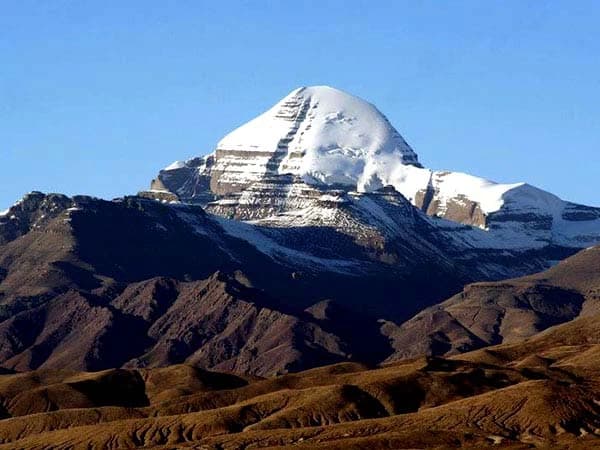
Kailash Manasarovar Small Group Tour
Tibet
Starting fromUS$1450US$1600
noimage
Tibet Near Kailash Mansarovar
Need Help? Call Us.+977 9851162422