Mount Kailash Tour By Flight 11 days

Mount Kailash Tour By Flight 11 days

Duration11 Days
Trip GradeModerate
Maximum AltitudeDolma La Pass, at approximately 5,630 m (18,471 ft)
ActivitiesTibetan sightseeing, Lhasa acclimatization, Lake Manasarovar visit, Mount Kailash Darshan, Kailash Kora, Dolma La Pass crossing, Gauri Kund visit, Darchen exploration, monastery visits, scenic Himalayan views, pilgrimage rituals
Group Size2 to 20
StartsLhasa, Tibet
EndsKathmandu, Nepal
Best TimeMay, June, July, August, September

Mount Kailash Tour By Flight 11 days Overview

Is it possible to make the Mount Kailash pilgrimage in 11 days without spending long hours on the road in the Tibetan Plateau? Yes – our 11-day Mount Kailash Tour by Plane is meant for all those who want to travel conveniently to western Tibet, allowing sufficient time for acclimatization as well as the entire Kailash Kora.

Our tour starts in Lhasa at an altitude of 3,650 meters. You will acclimatize to the altitude for two full days by visiting some of the major cultural attractions of Tibet, such as Drepung Monastery, Sera Monastery, Potala Palace, Jokhang Temple, and Barkhor Bazaar. You get to relax and enjoy the comforts of the St. Regis Lhasa Resort, which acts as a buffer zone between the lower and higher altitudes.

The flight from Lhasa Gonggar Airport to Gunsa Airport in Ngari on day 4 makes sure that you do not have to spend days traveling by road between the two locations but can feel the actual reward of this acclimatization plan.. The journey from Lake Manasarovar continues towards Darchen, where the trek of Kailash Kora starts, covering a distance of nearly 52 kilometers, which takes about three days. The trip winds through Dirapuk, ascending the Dolma La, which stands at around 5,630 meters above sea level, then proceeds toward Zutulpuk before returning back to Darchen.

The decision between flying or traveling by road is straightforward: the aerial option saves time but does not lessen the difficulty of the pilgrimage. The Kora is very strenuous, particularly on the Dolma La pass day.

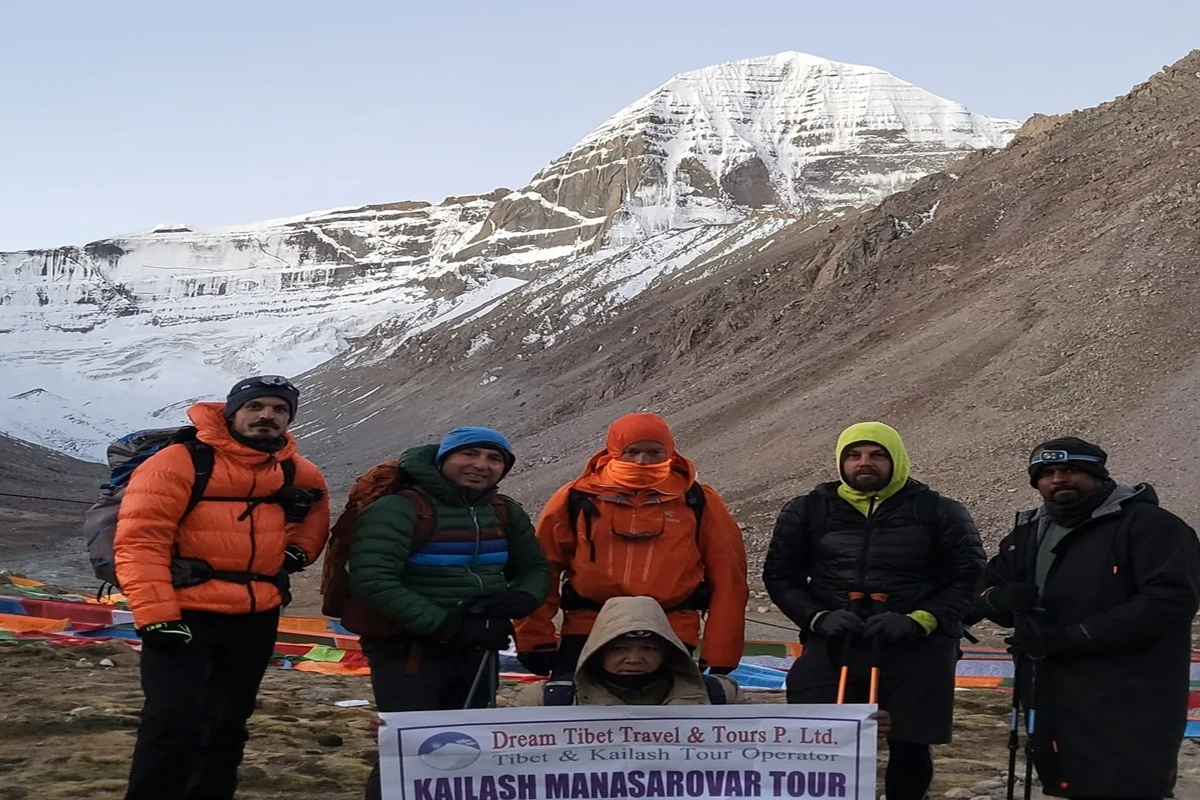
Dream Tibet Travel and Tours has a team of specialists working in Tibet, and our guides include Tenzin Nyima, Puchung, and Chime Tasi. The information we provide about our guides is genuine and you see full details of each guide at our team section too. We offer clear booking conditions according to which every one of our clients pays 20% of the total amount before the trip (however, we are flexible in case of our regular clients) and provides us with a copy of their passport for obtaining the necessary Tibet travel permit.

For the 11-day option, we advise travelers to consider the altitude issue, as the fast flight might seem appealing, though it does not take away the challenge of altitude sickness, as the speed of travel does not eliminate the challenge of altitude sickness.

We also ask travelers to get travel insurance in advance. Our rules stipulate that Dream Tibet Travel does not cover travel insurance in the tour price and reserves the right to refuse boarding of a passenger if he or she did not bring necessary insurance.

Also, cancellation policies are mentioned in advance. For trips to Kailash, the cancellation policy will be sent upon confirming the booking. Depending on the extra trip being taken, cancellation of travel plans may also include costs for the flight ticket, visa or accommodation. Should there be any changes to the course of travel due to unexpected events and no other alternatives could be found, we will refund any amount after deducting expenses incurred.

The evaluation of your travel plan, required documents and conditions will be performed before accepting your request for a reservation, as we believe that not all travelers are fit for one and the same trip program. For inquiries related to bookings and pre-trip issues, you may contact Dream Tibet Travel and Tours at +977 9851162422 via call/WhatsApp or contact our office in Kathmandu. 

Main Highlights

  • Avoid the arduous drive and reach Western Tibet in an efficient 11-day flight to Mt. Kailash Kora.
  • Two full acclimatisation days in Lhasa at about 3,650m to get accustomed to the altitude before your further travel to higher altitudes.
  • Sightseeing in Lhasa includes Potala Palace, Jokhang Temple, Barkhor Bazaar, Drepung Monastery, and Sera Monastery.
  • Enjoy the luxury accommodation at The St. Regis Lhasa Resort during your acclimatisation days in Lhasa.
  • Take a morning flight from Lhasa to Gunsa Airport, Ngari, followed by approx 3-4 hours drive toward Lake Manasarovar.
  • Witness the divine Darshan of Lake Manasarovar at about 4,557m and stay overnight near the lake.
  • Enjoy your first glance of Mt. Kailash while you drive from Manasarovar toward Darchen and Rakshas Tal.
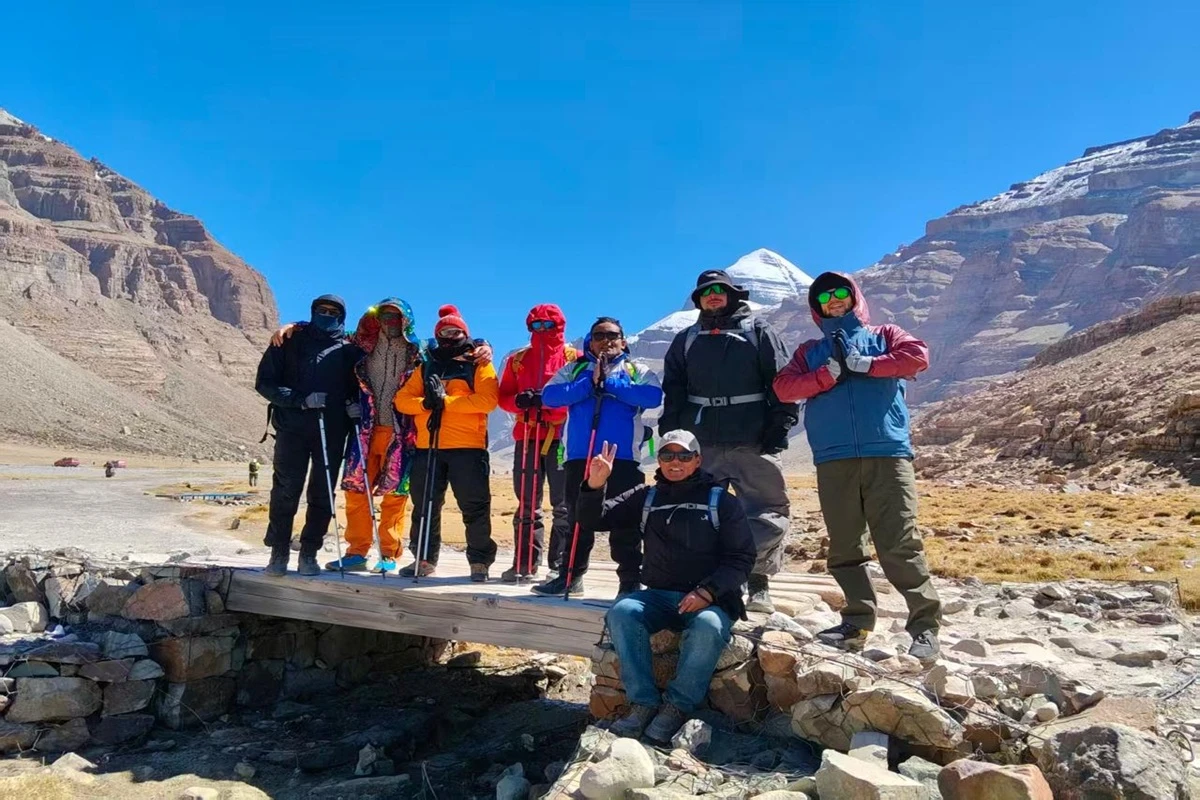
  • Complete a 3-day Mount Kailash Kora walk of approximately 52km around the sacred mountain.
  • Overcome the challenging and high Dolma La Pass at about 5,630m.
  • Stay in mountain guesthouses like Zutulpuk & Dirapuk to get an authentic experience of Kora!
  • Trace your steps back toward Saga and Kyirong, experiencing a noticeable change from the high Tibetan plateau to the greener Kyirong valley.
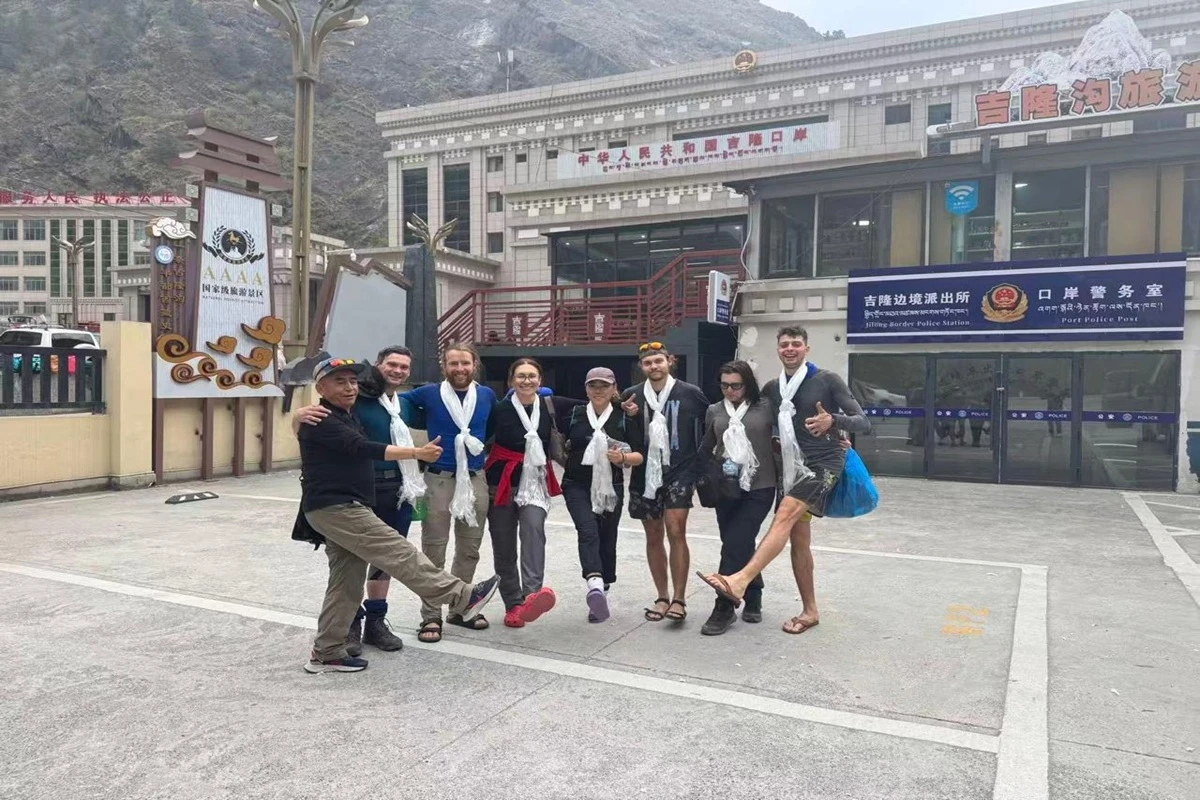
  • Finally, cross the Tibet-Nepal border at Rasuwagadhi and reach Kathmandu by road.
  • Get an English-speaking Tibetan guide throughout the tour in Tibet; Tenzin Nyima, Mr. Puchung and Chime Tasi are listed as team members of Dream Tibet Travel and Tours.
  • A smart and time-saving replacement for the Lhasa overland trip, which includes all the rituals of Lake Manasarovar, Darchen and Kailash Kora.

Kailash Mansarovar Tour By Flight Cost 2026/2027/2028

Arrangement for an 11-day flight-based Kailash journey to cost you about US$2,500 - US$3,000 per traveler; the final price will, however, be communicated after understanding your flight route and confirmation of the group arrangement. A prior payment of 20% is required while making a booking, and the remaining amount will be paid before the actual journey starts.

Charges regarding cancellation depend on the confirmed trip. For Kailash packages, charges may be incurred because reservations for permits, flights, hotels, and others are determined; the cancellation terms will be detailed along with the booking confirmation.

Our team found that travelers who have taken care while crossing Dolma La have stood a better chance of performing well during the toughest phase of their journey. Since we do not share verified completion percentages, we won’t come up with an estimate either; if trekkers opt out of completing the trek, they will return to Darchen with the help of our team. In this regard, please contact Ram Lamichhane at +977 9851162422; we will discuss your requirements and confirm the booking afterwards.

If group-joining departure dates are your preference, we can also provide other trekkers info booked on that departure when those are available so you can know with whom you will be traveling with before the actual pilgrimage begins.

Ram Chandra Lamichhane can be reached at +977 9851162422, where the team can work with you based on your specific situation prior to reservation. We at Dream Tibet will also release confirmed Mount Kailash departure dates in April-October for 2026 and May-October for 2027.

Why Choose Mount Kailash by Flight with Dream Tibet Travel and Tours?

  • Instead of simply crafting a schedule, we develop our itinerary in relation to the altitude at different stages. Travelers spend at least two full days in Lhasa before the flight to Ngari, allowing sufficient time for acclimatization.
  • We opt for the flight option because it makes the journey through Tibet’s highlands much easier. The flight from Lhasa to Gunsa eliminates several days of tiring land transfer over the Tibetan Plateau, which means that pilgrims have more time for the actual pilgrimage.
  • The identity of our Tibet team is a priority for Dream Tibet Travel and Tours, as the company openly names all its Tibetan guides engaged in work on the itinerary, such as Tenzin Nyima and Mr. Puchung, and does not hide behind an unnamed local team.
  • We take care of the complicated processes of obtaining permits. The Kailash route requires many permits apart from the regular Tibet entry documents, which do not need to be obtained on your own.
  • We do not claim the flight makes Kailash easy. Indeed, the traveler still has to deal with the 5,000 m-high altitudes in addition to the Dolma La Pass at 5,630 m. Thus, we do urge everyone to come prepared physically rather than use the flight as a convenient alternative to the Kora.
  • We are honest about what accommodation means. From comfy lodgings in Lhasa to quite basic guesthouses along the Kora route, we clearly specify what conditions the travelers will have.
  • We conduct a thorough screening of the practical aspects of your booking. Our booking process requires documentation, for instance, passport copies, while our terms state that travelers must have appropriate travel insurance.
  • We are always transparent when it comes to booking conditions. We usually ask for a fee of no less than 20% to confirm the trip, but there are exceptions for some repeat customers.
  • You receive not just a flight package but a full pilgrimage route. The travel package covers the entire route from Lhasa to Ngari, Lake Manasarovar, Darchen, the three days of Kora, Saga, Kyirong, and ending up in Kathmandu.
  • The evaluation of your travel plan, required documents and conditions will be performed before accepting your request for a reservation, as we believe that not all travelers are fit for one and the same trip program. For inquiries related to bookings and pre-trip issues, you may contact Dream Tibet Travel and Tours at +977 9851162422 via call/WhatsApp or contact our office in Kathmandu.

Lhasa Acclimatization and the Flight Route Support For Better Three-Day Kailash Kora

By spending time in Lhasa and having shorter travels, you are better prepared for the three-day Kora pilgrimage. The length of two full days in Lhasa gives your body a chance to be accustomed to high altitudes before heading to Tibet. This is important because at Dolma La Pass (5630 m), the Kora can only be made so slow that the pilgrims, though fit, conserve their breath and energy.

Another great advantage of the flight from Lhasa to Ngari Gunsa is that it gets you out of the car for a few days of extended driving, meaning that your energy levels are still relatively high before the walking begins. Flying doesn't solve the altitude issue; Ngari is already extremely high, and so we still take the altitude seriously once we have landed.

For a Kora, that combination means even though it’s more taxing to walk slowly than efficiently, walking at your own pace is going to make Dolma La pass on day 2 less grueling. That will allow for ample resting as well as conservation of energy, which are important for building stamina and walking well on a long distance.

How Does the 11-Day Mount Kailash Flight Tour Work?

  • Lhasa, on landing: We spend a period of time first in Lhasa for acclimating to the plateau as well as sightseeing; afterward go to western Tibet.
  • Drive towards Ngari: We utilize the service of a flight from Lhasa-Ngari Gunsa Airport instead of the full Lhasa--Kailash journey by land, making a greatly shortened access for the western Tibet trip.
  • Land transfer: Once on the ground with the flight at Gunsa Airport, our guides will lead you toward the Kailash-Manasarovar area by private vehicle. The flight covers the longest portion of the road; high-altitude driving is still necessary to reach the Kailash region.
  • Get access to the holy region: We move ahead towards Lake Manasarovar and Darchen (which is the major entry for Kailash Kora), and begin walking for the pilgrimage.
  • Complete the Kora: You perform the 3-day walk around Mt. Kailash, including the arduous trekking over Dolma La Pass.
  • Back to Tibet: At the end of the Kora, we travel the western Tibet land back towards Nepal border and then toward Kathmandu.

In short, we substitute the longest portion of the journey, driving by road, with flying while guaranteeing you the necessary pilgrimage experience.

Does Flying to Ngari Make the Mount Kailash Tour Easier?

Yes, flying to Ngari Gunsa Airport (NGQ) helps to save some time to reach the region, meaning you do not have to spend days in a vehicle sitting 6-9 hours for a drive. Ngari Gunsa is one such main airport to reach Kailash from Lhasa, which stands at a height of approx. 4,274 m. Darchen, the main base of Mount Kailash, lies around 200km from the airport, and land travel still continues upon landing.

We have based our itinerary on the Lhasa-Gunsa flight with overland travelling through Lake Manasarovar to Darchen, thereby skipping the laborious route to Kailash from Lhasa in land travelling time.

But this saves much more travelling time with faster reach to very high altitudes; hence, we would not quote this as an easy Kailash trip because reaching kailash and completing the pass is still in the schedule. The benefits include less travelling time in land transport, so one gets ample time to spend at the Kailash pilgrimage.

How close can you get to Mount Kailash?

Our 11 Day Mount Kailash tour by flight flies directly from Lhasa to Ngari Gunsa airport (NGQ), which is considered one of the nearest airports accessible to the Kailash region. Its distance from Mount Kailash on an estimated direct line is 165 km, whereas the road distance from the Ngari airport to Darchen (starting point for Kailash Kora) is about 200 km.

To better understand our flight tour, from Lhasa, Mount Kailash is about 1200km away in a direct line, but by road, on an approximate distance, it is about 1500-1800 km away on a very rough estimate, depending on the way you calculate the routes.

Coming from Kathmandu, there are traditional ways to reach Kailash via the Nepal-Kyirong overland trail, which is an approach from south of Kailash, and there is our flight tour where we fly directly from Lhasa to Ngari and then get on a road trip to Darchen before starting the Kora.
Itinerary
Trip PlanExpand all
Max Altitude: 3,650 m Meals: Breakfast, vegetarianAccommodation: The St. Regis Lhasa Resort

You will be greeted by your guide upon arriving at Gongkar Airport. It is a one-hour drive into Lhasa. Still, you are likely already beginning to feel the altitude, experiencing such symptoms as pressure in your eyes, thirst, or unusual tiredness for what is, admittedly, very little exertion. Even at 3,650 m, your body is on about 40 % less oxygen than if you're back home.

We'll check you into The St. Regis Lhasa, where the rooms are oxygen-supplemented; the employees are experts at spotting and addressing symptoms of AMS, and the food is fresh, safe, and prepared with your needs in mind. The first nights are the most expensive, yet the most important since your ability to acclimatize here influences the rest of the kora.

It is now time to rest for the whole of the day. Drink 3-4 Liters of water, consume a warm light meal and avoid any alcohol. Today is the day you will usually be started on acetazolamide (Diamox) should your doctor have prescribed it.

Practical reality/common mistake: Enthusiastic travellers feel 'fine' on arriving & urge guides towards the Potala Palace straight away. 3 hours later, they have painful headaches & impaired acclimatization. Rest day 1 is the cornerstone; it's an absolute must.

Stay at The St. Regis Lhasa Hotel for a perfect night's stay in Lhasa amidst the high altitude. The rooms provide oxygen support to ensure that you are comfortable as you start adapting to the high altitude of the city.

Max Altitude: 3,650 m Meals: Breakfast, vegetarianAccommodation: The St. Regis Lhasa Resort

We will begin the morning with some sightseeing to relax and continue to acclimatize our bodies to a city perched at a lovely 3650-3700 meters.

We'll visit Drepung Monastery (Tibet's most important Gelug monastery and one of the historically largest monastic institutions of Tibet), exploring traditional courtyards, praying halls, religious architecture, and much more while getting familiarized with the lifestyle of Tibetan Buddhist monastics.

The afternoon will see us visiting Sera Monastery (another Great Monastic University of Lhasa), where, if time permits, we get an opportunity to witness a famous debate between monks on philosophy.

In the evening, return to our hotel and take plenty of rest for acclimatization.

Evening at The St. Regis Lhasa Resort – Overnight stay here will allow you to relax from the hustle-bustle of the Drepung & Sera Monasteries visit today.

You can use this overnight time to rest up and acclimatise yourself more, as this is going to be one of the highest altitudes we’ll reach while on our trip, and also enjoy some great facilities that are available here. This would be perfect if you want a high-end base when you’re staying in Lhasa.

Max Altitude: 3,650 m Meals: Breakfast, vegetarianAccommodation: The St. Regis Lhasa Resort

After breakfast, we begin with the remainder of our must-see experiences in Lhasa. Our very first activity will be Potala Palace, the signature monument of this gorgeous metropolis. The Palace resides high up upon the summit of Red Mountain that stands gazing at the city that follows.

Built in direct correlation to the history of Tibetan Buddhism, the entire Potala Palace complex can be found on the Listed Historic Ensemble of the Potala Palace by UNESCO.

We’ll then head over to the Jokhang Temple, which is considered to be among the holiest places in all of Buddhism, particularly in Tibet. Once we’ve seen the temple, we can wander around the nearby Barkhor Bazaar, where the essence of traditional Tibetan culture, pilgrimage, and trade co-exist harmoniously within the ancient temple grounds.

You may want to take your time today to adjust to Lhasa’s altitude! Please remember that after each tour we suggest you give yourself a little bit of downtime for acclimatization and recovery, especially if you are coming from lower altitudes.

When done with our activities, we recommend heading back to the hotel to have some well-earned relaxation before starting off for tomorrow.

Overnight at The St. Regis Lhasa Resort.

Enjoy another comfortable night at the resort after visiting Potala Palace, Jokhang Temple and Barkhor Bazaar. With its location in the area of Barkhor, this resort gives convenient access to several of Lhasa's major cultural attractions.

Max Altitude: 4,557 m Meals: Breakfast, vegetarianAccommodation: Basic guesthouse near Lake Manasarovar

The day starts with an early departure to take a 7.00 am flight from Gongkar Airport to Ngari. As our aircraft ascends, you’ll watch a view over the Himalayan Chain – ridge upon ridge of snowy peaks which open to form part of Tibet. As far as your eyes can see, the Tibetan Plateau extends to the north into the limitless sky-perhaps the most beautiful scenery on earth viewed from a plane.

This flight is arguably the itinerary's only true advantage, cutting out 3-5 days of awful overland travel for a medically rational ascent. You still gain 850m in just under two hours, but your body notices it the second you land.

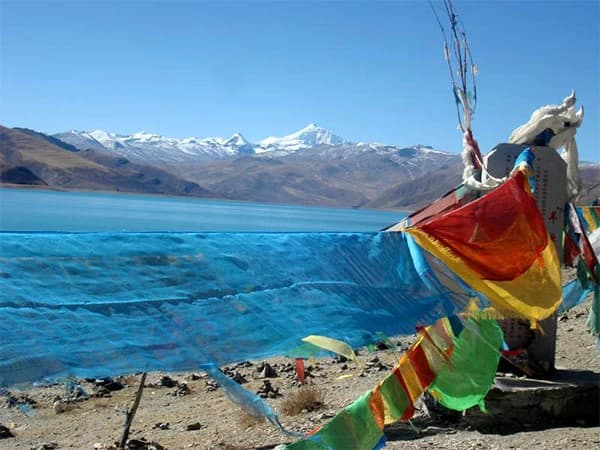
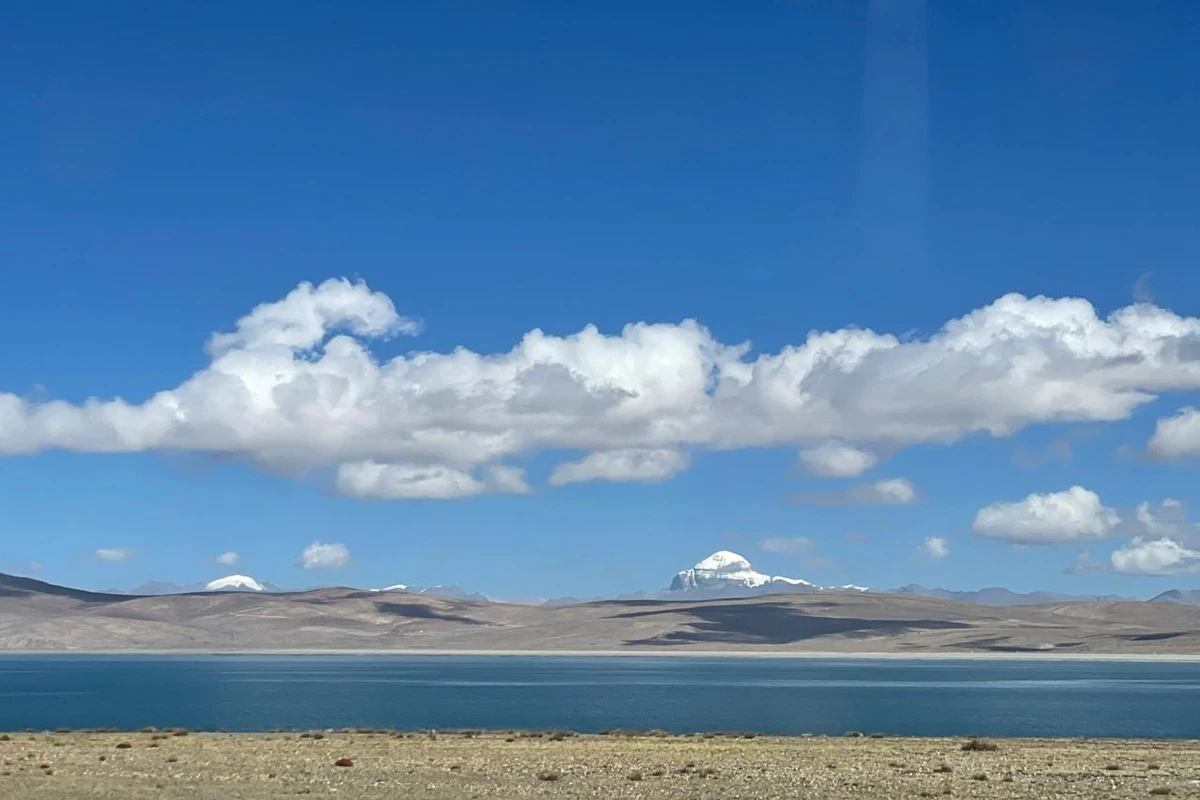
Your Tibetan guide will then welcome you upon arrival at Gunsa Airport, and we will then drive approx. 3-4 hours to the serene 4,557m Lake Manasarovar, one of the world's highest freshwater lakes and holy to 4 religions. Its intense turquoise waters turn cobalt when the shadows of clouds play on it, and you will be surprised by the refreshing cold emanating from the lake on reaching its shores.

We will stay at a basic guesthouse near the lake that requires wool blankets to keep from freezing, has squatters to share with for the bathroom, and a hot water supply we hope works. These are the rooms where comfortable people reveal what they're all made of.

Practical reality/common mistake: Avoid walking the lake shore upon arriving in the afternoon! Sleep for 3-4 hours.

Overnight at Hotel Himalayan Kailash in Darchen. This provides a more comfortable base before beginning the Kailash Kora. After arriving, you can organize your daypack, porter and yak arrangements with your guide while your main luggage remains safely stored at the hotel.

Max Altitude: 4,670 m Meals: Breakfast, vegetarianAccommodation: Hotel Himalayan Kailash, Darchen

We will take a slow start at Lake Manasarovar, when the sunrise is so spectacular that the entire water of this holy lake changes from pale blue to pink and golden, reflecting a complete and utter silence that can bring you to hear every single wave crash. While Hindus will do their ceremonial bath into these unbelievably icy depths right at sunrise, the experience itself, however, is not dependent on you being of Hindu faith.

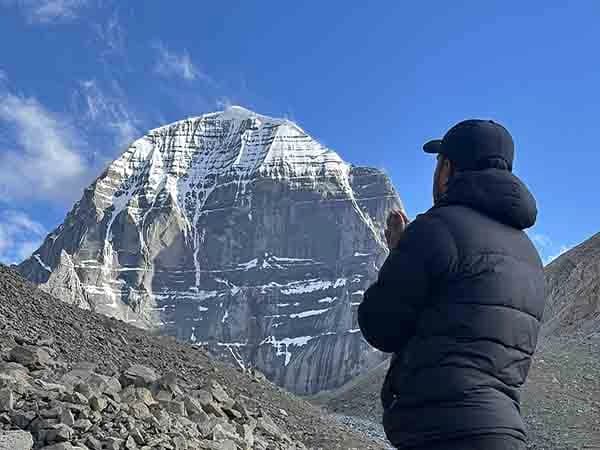
From there it will be an easy fifteen-minute drive due west to Rakshas Tal (Demon Lake)-black, saline and altogether grimmer than Manasarovar. En route you will get your first view of Mount Kailash (6,638m), almost literally a pyramid in black stone and snow, of sheer geometric perfection against the desert sky. This is invariably when the journey ceases to feel theoretical.

We then proceed 50-60 km to Darchen in 2-3 hours to check into the Hotel Himalayan Kailash. This afternoon will be spent efficiently; please pack your kora day-bag for the first time this evening and arrange for your porter & yak hire with your guide. All your main luggage will be stored in a locker at the hotel, as you will now be taking a day pack.

Practical reality/common mistake: Almost all tour packages are excluding the porter services (USD 20-35/day) and the yak hiring services (USD 25-50/day), plus meals at the Kora guesthouse. Budget for another US$300-500 per person on top of the given tour price.

Max Altitude: 5,000 m Meals: Breakfast, vegetarianAccommodation: Basic guesthouse in Dirapuk

Today we wake early at 6:30 – 7:00 am and walk from Darchen to Tarboche, where the 55-meter-high prayer flagpole sits in a prayer mill, which also includes juniper incense that sit along mani stone walls. It is customary to circumambulate this clockwise prior to undertaking the kora – it takes around ten mins so do it.

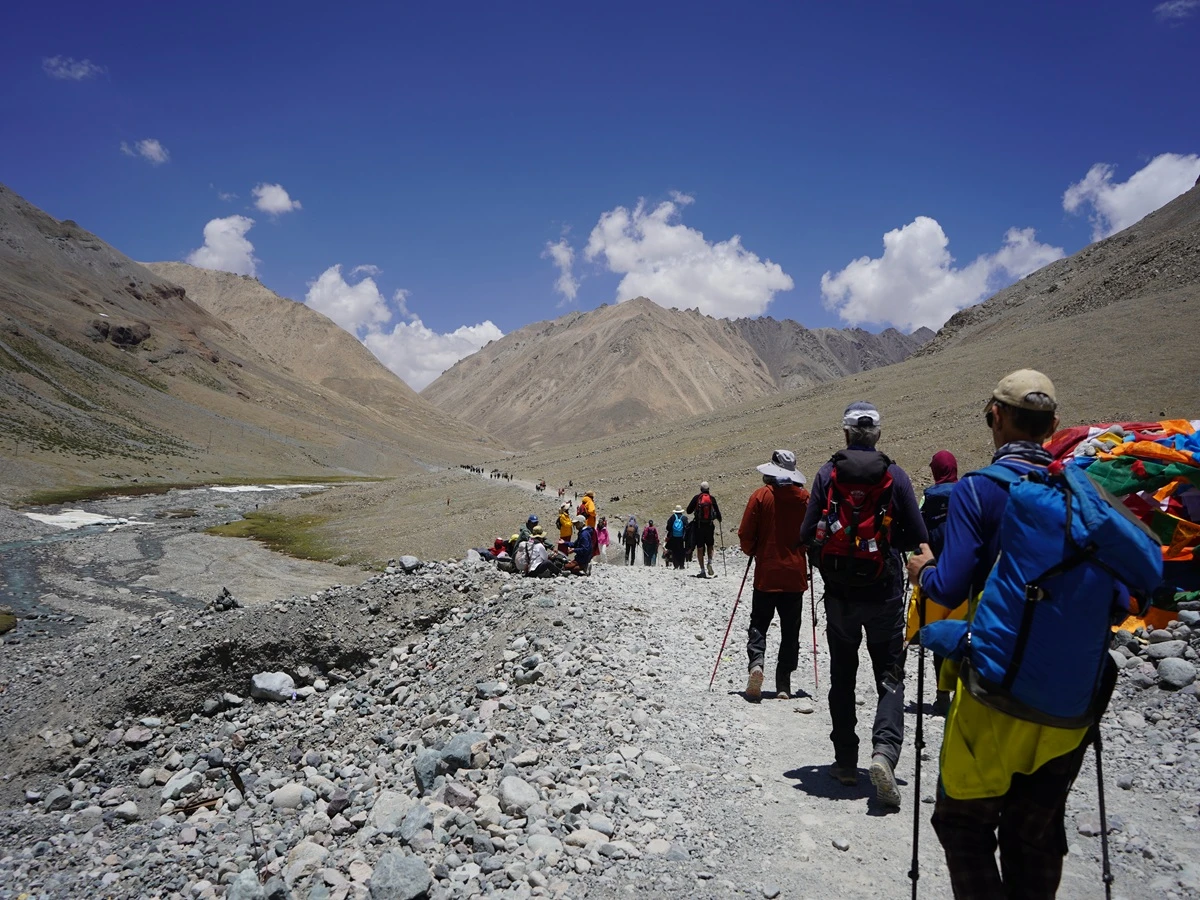
Following the Lha Chu river valley northward on a dirt path, river gravel and flat stone. Elevation change will be gentle and reasonable, around 200- 300 m over the full day. You'll get more and more views: the south face early in the morning, the west face in mid-morning, and then the north face appears at about 2–3 pm. You will finally reach Dirapuk at about the monastery, where the entire sky in the north is consumed with the north face; a spectacular scene makes everybody speechless.

We will spend a night in a guesthouse in Dirapuk, shared room with mud bricks, an outdoor pit-toilet and scarce light provided by solar cells. There will be no reliable hot water. As for dinner, it will be noodle soup and fried rice. But it's tasty and it will be more than good than today, food to live.

Practical reality/common mistake: Going too fast in the first 8 km will deplete your strength, which you will crave on the Day 7 climb up to Dolma La. Your guide will strongly insist on a slower gait; listen to them implicitly.

Max Altitude: 5,630 m Meals: Breakfast, vegetarianAccommodation: Basic guesthouse in Zutulpuk

Our day will kick off with a modest, early guesthouse breakfast, then we'll head out up into the Dolma La Pass-the challenging highest point of the kora and the physical and spiritual epicentre of the pilgrimage.

Over 8-10 kilometers of jumbles of rock and scree, we'll gain about 770 meters. Even more than the people trekking with you, a halt taken at almost every 20-30 steps is the norm! Don't feel weak – that is part of the process.

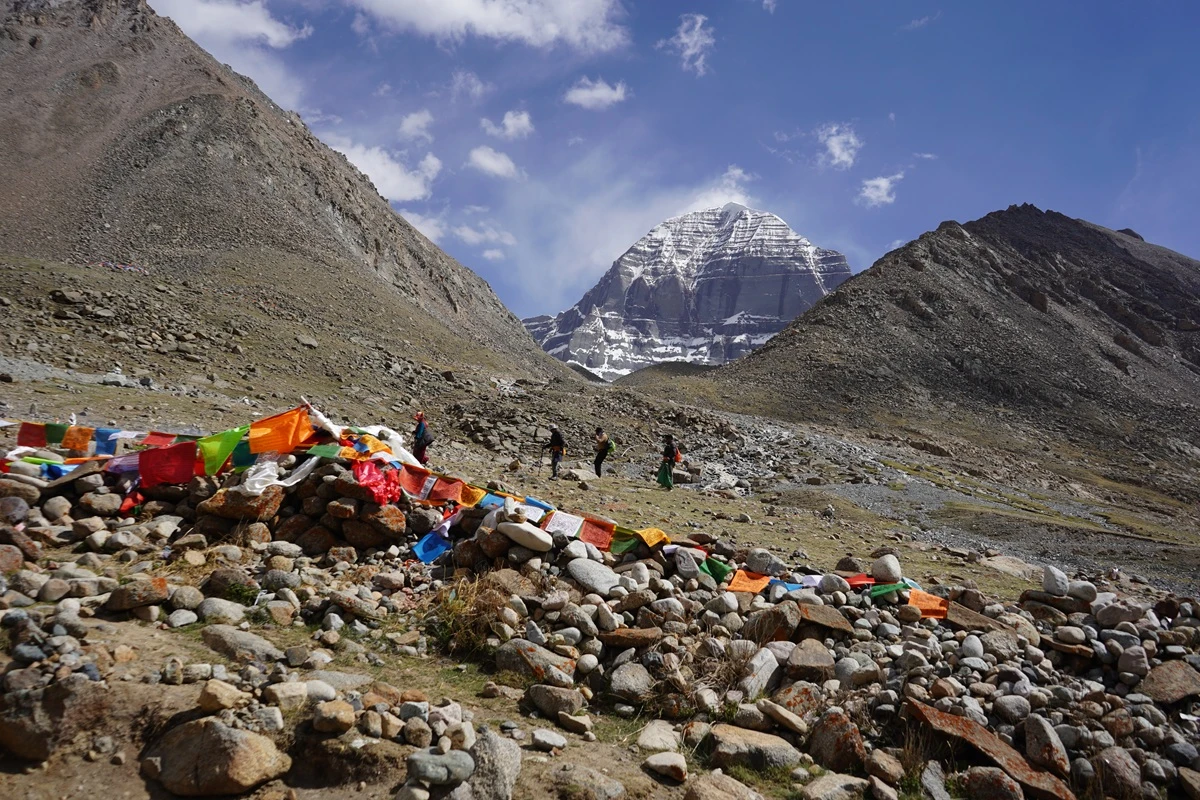
We’ll get into Dolma La 5630m completely covered from one side to another by colourful prayer flags. Always high, always very windy and very cold - pack full insulation to reach for it from your pocket. You’ll see tears running down the cheeks of other pilgrims. Even those who never bowed to anything all of their lives get out on all of fours in the soil, tears starting to fall.

Then we will be back 840 meters down to Zutulpuk along a steep, loose trail. We will be resting overnight near Zutupulk Monastery, where the legend Milarepa allegedly spent time practicing meditation and writing poetry in exile.

We will stay at a guest house in Dirapuk, which is basic but adequate, nestling peacefully against the cliff wall.

Max Altitude: 4,450 m Meals: Breakfast, vegetarianAccommodation: Hotel in Saga

We finish the kora with an additional 8- 10 km walk across the open Barkha plain back to Darchen. Following the sheer drama of day 7, it's surprisingly flat. Looking back at Kailash across the expansive plateau, many pilgrims find themselves unexpectedly moved during this section-a gentle decompression from three challenging days.

We arrive back in Darchen before noon, pick up your stored bags and have our first proper hot meal since the first night; we will begin driving 350-400 km east to Saga in 5-7 hours. The landscape is expansive, wide plateau of tall grass, valleys with rivers and faraway mountains and almost no people - get sleep in the vehicle if it can, you will need it.

We will stay overnight in Saga, and the hotel feels inordinately lux to have merely en-suite facilities, hot running water and restaurant food. It is in Saga that a lot of the physical and emotional meltdown usually hits as a backlash, once the kora-enabling adrenaline runs out.

Max Altitude: 2,700 m Meals: Breakfast, vegetarianAccommodation: Local hotel in Kyirong

We leave Saga this morning and head west for Kyirong Valley. It’s about a 6-8 hour drive; that arguably involves a more impressive change in altitude than at any other point on the trip as we pass over high altitude passes before we drop into the valley.

The terrain shifts so much that we appear to go through several hours of travel over few hours, from dry open plateau to alpine meadow, pine and rhododendron forest, roaring rivers and finally settling on the green and warm Valley floor which sits between 2,800m and 3,100m.

Almost immediately upon descending, you'll feel the change in your body. At Kyirong, the altitude's oxygen levels are 25-30% higher than at Dolma La. We will spend the night in Kyirong town, a small border village, a bit scruffy and solely for the border. Hotel basics provided, Chinese/Tibetan food available, warm feel of the lower valley a true relief after ten days on the plateau.

Max Altitude: 1,300 m Meals: Breakfast, vegetarianAccommodation: Hotel

We will start our morning drive to Rasuwagadhi, the border between Nepal & China, about 10- 15 km south of Kyirong. After our check out procedures on the China side we walk across the bridge, completed by our Nepal immigration - (budget 1-2 hrs this all). Only a Chinese guide comes with us. Better to arrange your Nepali car before coming to the China side.

We will then be scheduled to drive 5-7 hrs through the Trishuli River valley of Nepal to get to Kathmandu. The Nepali side turns up instantly; humidity is back, we hear birds singing, there is vegetation all around. This is quite a boost after ten days in the plateau.

We will land in Kathmandu, with the same traffic, noise and crowds that are as tiring as stimulating. Whatever religious belief you have, or don't have, what you've completed with all the pilgrims is true, and all the effort is well deserved.

Max Altitude: 1,300 m Meals: Breakfast, vegetarian

You will be transferred to the Tribhuvan International Airport to catch your flight to your onward destination. Add more time in the peak morning for check-in at the airport. Re-confirm with your guide that all the Tibet permits are duly filed before you bid farewell.

It's recommended that each family member experienced severe AMS during the trek to visit a doctor within 48 hours after reaching their respective homes in their country; especially if the breathlessness/persistent headaches do not improve at the higher altitude like that of Kathmandu.

Couldn't find what you're afterReach out to our travel experts.
Cost Details
Includes
  • Comfortable, private transport throughout the trip in Tibet, according to the itinerary.
  • Travelling permit required for tourism in the Tibet Autonomous Region.
  • Required permits for travelling in Tibet and China.
  • An English-speaking Tibetan guide during the trip.
  • Accommodation as stated in the itinerary on twin sharing basis.
  • Entrance fees for visiting tourist attractions and monasteries on the itinerary.
  • Food is provided on the basis of Bed and Breakfast (B & B).
  • Vegetarian full board meals, including lunch and dinner, can be provided as an optional service.
  • Domestic flight included in the itinerary from Lhasa to Purang.
  • Arranging an international flight from Kathmandu to Lhasa can be done upon request but at a different cost.
Excludes
  • Lunch and dinner until the full board option for meals is selected.
  • International flight to travel between Kathmandu and Lhasa is not covered unless you book them with us separately.
  • Travel insurance of any kind.
  • Personal expenses: such as drinks, beverages, laundry, phone calls, shopping, etc.
  • Tips and gratuities given to guides and drivers, etc.
  • Any additional expenses incurred due to natural calamities, adverse weather conditions, road blocks.
  • Any services, activities, permits, transport and expenses not mentioned explicitly in the Cost Includes section.
Add-ons & Options

Add-Ons Available at Additional Cost

Available optional extra add-ons at extra cost:

  • Kathmandu-Lhasa International Flight: USD $ 350-500 per person. It will depend upon the flight routes and the season.
  • Kathmandu-Lhasa-Kathmandu 2 x Vegetarian Full Board meals: USD $ 15-25 per person for each lunch and dinner meal,
  • Single Room Supplement: USD $ 250-400 per person (subject to availability with guest houses).
  • Extra oxygen cylinder for the entire trip: USD $ 50-100 per group for a set (for a group in case of need).
  • Horse /Mule assistance for Kailash Kora: USD $ 100-200 per person.
  • Additional night stay in Kathmandu: USD $ 40 - 100 per person per night, subject to selected accommodation.

(Prices are indicative and subject to change due to currency rate fluctuations, government fees and the prevailing international rates on airlines/hotels. Final costs will be calculated upon booking)

Essential Information

Best Time To Go On Mount Kailash Tour

The quality of your Mount Kailash Tour depends directly on timing. With its home in the isolated Ngari Prefecture region of western Tibet and standing at a height of 6,638 meters, this holy peak has notorious weather patterns, highly unreliable roads throughout the year and changing Chinese government permits.

There are mainly two seasons you can target to visit; Spring and Autumn, but during the monsoon and winter seasons, this tour becomes rather dangerous, and many people will wisely opt for otherwise.

Spring Season

When it comes to the Mount Kailash Tour, we consider Spring to be the one and only best season to visit: around the months of May and June, to be more specific. When Spring hits, the climate changes into the warmest months of the year; plateau roads start opening up, and there is a clarity to the mountains in Spring that we love about fall too.

Daytime temperatures in Darchen are often somewhere between 5 °C and 15 °C, so when it comes to kora walks, it really does feel lovely to get outside walking.

May features the Saga Dawa Festival, which is the holiest month on the Tibetan Buddhist calendar as it marks the Buddha's birth, death and enlightenment, all in one. During the Festival, Tibetans, Indians and Nepalese make their way into Tibet (or Nepal, if it's India) as millions of pilgrims make their kora at this time.

When it's alive it's absolutely transcendent. If there's nothing more important to you than to see the kora at its most "happening", it's got to be Spring.

Most days are cloudless, right through May and into early June until the monsoon season starts and drifts toward west Tibet. On mornings with no wind, Lake Manasarovar shows a perfect reflection of the mountains that surround it. There might still be snow on Dolma La Pass in early April and May; your guide will check, but otherwise it is passable with a good trekking company.

Autumn Season

The second favorite season to go on the Kailash tour is Autumn (September and October). By the end of August, the monsoon withdrew its grip on western Tibet.

Clear, unvarying skies and unbelievably crisp air continue and the mountains on which many a photographer's travel plans turn. Daytime temperatures for September in Darchen are between 5 °C and 12 °C and will slip by October as the winter arrives with great haste.

The kora trail is dry following the full walking season of the preceding months. It is therefore better defined, allowing the footing on boulder fields and on the Dolma La slope to be more predictable than late April, when meltwater may be expected.

The level of pilgrimage is not a patch on the pilgrimage of Saga Dawa; it is clearly more of a leisurely loop and suitable for families who favor a quieter approach. Lake Manasarovar in October is tranquil and isolated; if not icing over, it might be mirror-flat on an early, clear morning where you feel you could reach out and touch the reflection of the Gurla Mandhata.

November presents more of an unpredictable scenario, with the first snowfalls of early winter liable to cause Dolma La pass and roads across the plateau to be closed, without notice.

Off Season Tour To Mount Kailash Tour Include monsoon and winter season

During monsoon season (July-mid August), you can expect afternoon downpours and possibly hail, and you can also experience flash floods on the roads in plateau areas. The Himalayas cast their rain shadow over Western Tibet, so the amount of precipitation is much less than in Nepal.

The river crossings between Saga and Darchen could present real flooding threats following downpours upstream, and road closures might occur at any point without warning (a road closure can leave a group stuck for 24-72 hours due to a landslide).

Day temperatures of 10-18° C in Darchen are mild, so serious groups might manage their kora during this season if there isn't a major concern when it comes to logistics.

Winter (December-March) is by no means a tourist season. Dolma La Pass is blocked by snow, and temperatures in Darchen range from -20 to- 30 °C. All Darchen, Dirapuk, and Zutulpuk guesthouses are closed for business. If traveling with family or new to altitude trekking, consider avoiding any non-season trips.

Where You Will Stay During the 11-Day Mount Kailash Flight Tour

We have chosen accommodation that suits the level of this part of the journey. During your time in Lhasa, you stay in a luxury hotel, and accommodation becomes increasingly basic as we venture into the more remote Kailash region.

The St. Regis Lhasa Resort, Lhasa

Your Lhasa stays are at The St. Regis Lhasa Resort, providing a comfortable base during the first part of your journey. The resort has a Tibetan-influenced decor along with Western-style facilities. It offers luxury rooms with butler service, great facilities and the Iridium Spa, along with Restaurants.

Hotel Himalayan Kailash, Darchen

During your stay in Darchen, you are staying at the Himalayan Kailash Hotel. This hotel is situated near the location where the Kailash Kora starts. Reports indicate this is a Tibetan-owned hotel with private bathrooms and running hot water. Please note: as is the case in most parts of remote areas, there may be limited hours for hot water and electricity.

Lodging Close to Lake Manasarovar

At Lake Manasarovar, we offer basic lodging options, which are of minimalism and suggest simplicity of accommodation. The lodging can be described as a high-altitude guesthouse rather than a hotel in a city. There are few amenities in this remote area, and arrangements would be shared-style. This is due to the fact that this area lacks infrastructure to support any luxury accommodation.

Dirapuk and Zutulpuk Guesthouses

The Kora route across the area takes three days; therefore, we will be accommodated in very basic lodges at Dirapuk and Zutulpuk. The lodges consist of simple rooms that are shared and basic but provide limited amenities. Basically, the purpose of these lodges is to provide shelter for the pilgrims traveling through the remote areas.

Hotels at Saga and Kyirong

After completing the Kora trek, we will return to different hotels where accommodations are offered in Saga and Kyirong. Saga is a small place that has several lodging establishments for pilgrims, while Kyirong has more developed facilities.

Required Permits For This Tour

Applying for all the necessary documentation for your Mount Kailash tour is a complicated, multi-stage process that will take several weeks of planning and application.

The permits for this journey aren't something you can submit yourself. In order to proceed legally according to the Chinese government, you will have to work with a Tibetan travel agency licensed by the Chinese authorities.

And given that you'll be traveling in the highly sensitive Ngari prefecture and will cross a border into Nepal, a broken permit chain will not grant you passage at checkpoints.

Tibet Travel Permit (TTP)

We will begin by applying for your Tibet Travel Permit, which is the essential entry permit for the Tibet Autonomous Region (TAR). This permit will be verified at the airport when boarding your flight out of Lhasa to Ngari, and it will also be inspected throughout your drive to Darchen multiple times. A passport scan at least 20-30 days before your trip is needed.

Chinese Group Visa

Since you are entering China and exiting to Nepal, you will need a Chinese Group Visa. You cannot enter with a normal Chinese tourist visa. This must be a special visa procured from the Chinese Embassy in Kathmandu or from other special arrangements when in Lhasa as part of a group. If you already have a Chinese tourist visa in your passport, it will be replaced when you receive your Group Visa, as it overrules your old visa as long as you are in China.

Alien Travel Permit (ATP)

Upon your arrival in Tibet, we will make sure that you have an Alien Travel Permit. The TTP is required to enter Tibet, but you will need an ATP to enter any "unopened" or forbidden zones outside of Lhasa, such as Shigatse and Ngari (the region of Mount Kailash). These are obtained by the PSB and checked by police checkpoints between Saga, Darchen and the Kyirong border.

Military and Border Area Permits

As Mount Kailash and Lake Manasarovar are situated in a sensitive zone closer to India's and Nepal's international boundaries, we need to acquire military and border area permits from the Military and the Foreign Affairs Office at Lhasa.

This is the most time-consuming part of permit obtainment and may take 10 to 14 days for processing. No tourist can get through without the document if traveling by air up to Gunsa Airport or opting for the kora.

How To Reach Mount Kailash

Reaching Mount Kailash requires careful planning across multiple transport legs - there is no single direct route from any international gateway.

By Flight from Lhasa

We suggest taking the most time-efficient and convenient mode of transport - fly from Lhasa Gongkar Airport (LXA) to Gunsa Airport (NGQ) via a morning flight (around 1 hour and 55 min flight time) and then a 3- to 4-hour car ride onto Lake Manasarovar and Darchen. This saves you 3 to 5 days of extremely grueling drive across the western plateau of Tibet, and decreases total altitude gain before the kora.

By Overland from Lhasa

Alternatively, you can take the land route over to Darchen. There are two overland routes, both passing through Shigatse, Saga and Paryang until Darchen: you choose either the Northern Highway (G219) or the Southern Highway, a 5–7 day drive along some of the most isolated and stunning roads in the world. Be warned, however. The tracks are rugged, river crossings unpredictable during monsoon, and you feel more exhausted before even setting foot on the trail.

Via Nepal (Kathmandu Entry)

Most foreigners enter Nepal, then go over the Rasuwagadhi border into Tibet and continue driving to Kyirong, Saga and finally to Darchen. From here, foreigners fly to the other end of their journey and exit from the other border crossing or return to Kathmandu in reverse. This road journey of 4–5 days is best suited to those who have planned a trip to Nepal combined with the Kailash journey.

Food and Drinking Water on the Kailash Kora

The food is basic, repetitive and highly functional. We will be ordering from a short menu of noodle soups, fried rice, eggs, bread and butter tea, as well as instant noodles at Dirapuk and Zutulpuk guesthouses.

The dishes are all prepared with fresh ingredients and served "piping hot" to ensure that they are "safe" at high-altitude standards. Do not ever eat anything that is even lukewarm at these altitudes.

Hydration is very important on the trek. We'd highly recommend packing purification tablets or a portable water filter in addition to bottled water because none of the tap water on the kora is safe to drink directly.

At over 5000m, you can experience dehydration very quickly, leading to altitude sickness - minimum 3-4 litres of water a day throughout the trek, whether or not you feel thirsty!

Communication and Internet Access in Western Tibet

West Tibet is among the most disconnected places in the world where cell signals reach only sparingly. Once you embark on your journey to complete the Kailash kora, expect to have absolutely zero network signal at the villages of Dirapuk and Zutulpuk.

Your Chinese SIM card (China Mobile or China Unicom) may pick up a very faint signal at Darchen village; however, it will be entirely unavailable once you start your clockwise trek.

The Internet is patchy at best. Some hotels in Darchen and Saga have WiFi, but it's very slow and temperamental at best. Popular Western platforms like Google, WhatsApp, Instagram and others are blocked in China (Tibet too), so you'll need to download a VPN before you leave home, as you won't be able to do it in China.

Currency, ATMs, and Money Matters in Tibet

In Tibet, all payments will be made in Chinese Yuan (CNY/RMB). You'll be hard-pressed to use any other currency, whether at kora guesthouses, local restaurants, or Darchen market stalls. Larger Lhasa hotels like the St. Regis accept credit cards, but everywhere else cash is king.

There are ATMs in Lhasa and the large villages of Shigatse and Saga too. However, we highly recommend taking out enough money in Lhasa for your entire journey before you head further west. ATMs in Darchen rarely work so you cannot rely on them!

Be sure to budget for your kora cash; that includes porterage costs, guesthouse food, incidental expenses and tips, which all need Yuan when you are on the ground.

Always carry smaller Yuan notes as they are difficult to get as change in more remote guesthouses.

Porter and Yak Hire: What You Need to Know Before the Kora

Your porter & yak hiring will be sorted out on Day 5 with your guide in Darchen. It's important not to wait until the morning of Day 6, as good porters, in peak season, go very fast.

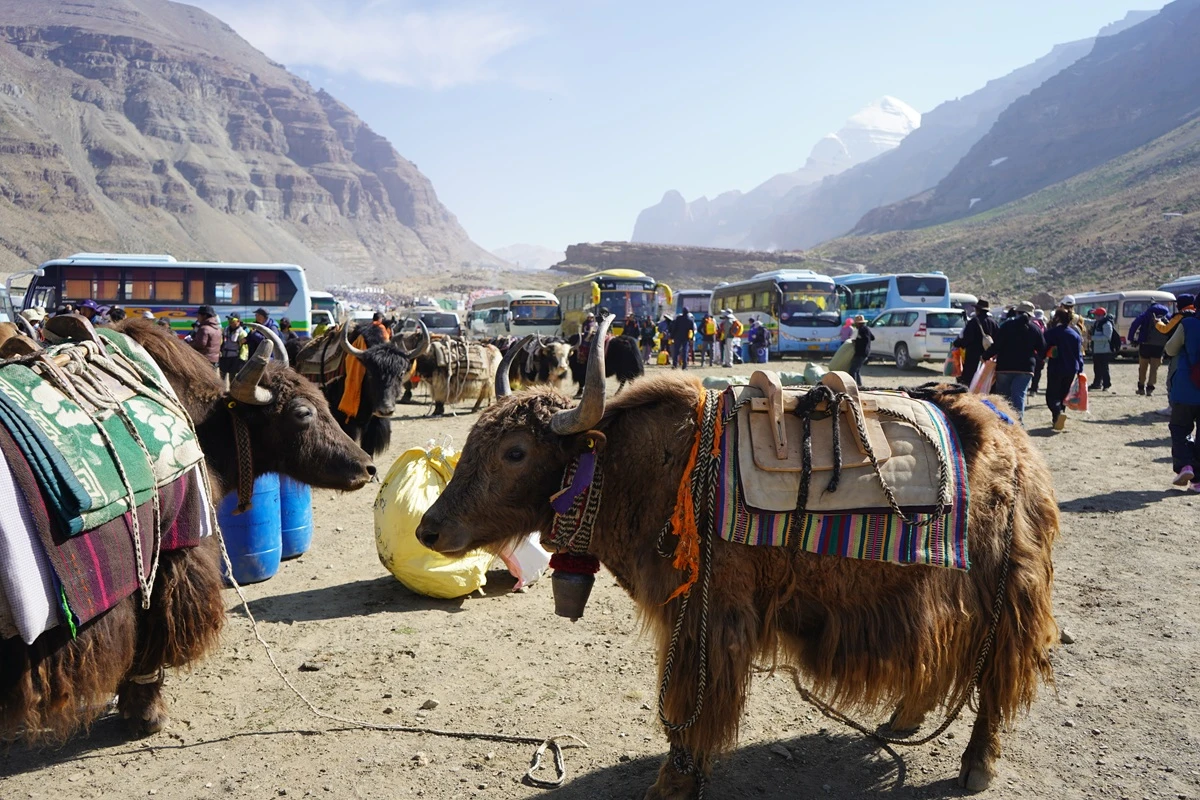
Your kora day-pack will be carried for you, so you only need to worry about water, snacks and a camera. Porter services range from USD 20 to 35 per day per porter for the 3-day kora. Yak rental, where necessary for carrying additional loads, comes in at around USD 25 to 50 per yak per day, and includes the handler.

We highly advise hiring a porter for anyone over 50, anyone whose knees/joints are in question, and any child who might have a hard time with the Dolma La climb.

In fact, on Day 7, as you make your descent from Dolma La, your porter's physical help with this can mean the difference between misery and relative ease. Tip your porter well, give them a name, eat together, and give them a generous tip at the end of your trek.

Mount Kailash Tour Difficulty

The Mount Kailash Tour is moderate and very often on the more difficult end of the spectrum. It is not to be trifled with. The biggest hurdle is not the mileage, nor the gradient; it is the continued physical demand at an extreme altitude over successive days.

The outer kora spans roughly 52km over 3 days, and day 7, Dolma La pass (5,630 meters/18,471 feet), is the hardest part by far. Climbing to Dolma La is about 770 vertical meters/2,526 feet on scree and boulder but the majority of hikers will need to stop for breath every 20 or so steps.

To enjoy any high-altitude tour, it is beneficial to undertake cardiovascular training for a minimum of 8-10 weeks prior to travel. Hiking, stair-climbing or cardio workouts three times per week and at an increasing level are suggested. Prior trekking above 3,500 meters will assist but not be essential providing at least 3 acclimatization days at Lhasa are built in.

Those travelers in an older age group or those with physical issues in their joints or walking legs, and indeed families travelling with younger children, are more than likely able to cope by having a porter, going very slowly and communicating honestly about symptoms to the guide at any time around the circuit.

Guides and Porters for Mount Kailash Tour

We will deploy a licensed Tibetan guide for the whole duration of your trip (Mandatory). All foreigners visiting Tibet need to be accompanied by the government licensed guide during their entire trip (Mandatory), but in Ngari Prefecture, it's especially strict; there will be different checkpoints for the Darchen to Kora route.

Your Tibetan guide's role goes beyond giving directions. They also handle your permit package, speak with guesthouse owners, liaison with local government and police, watch each member of your party for the subtle warning signs of AMS, carry emergency oxygen during the kora, take your orders at tea-house mealtimes in Tibetan or Mandarin, and adapt plans in the moment; deciding whether to alter pace, pull over for a much-needed rest or head back if necessary.

The best Kailash guides have walked that route over and over and can read the land, the weather, the trail conditions, and the group's energy like few can. No guidebook can replace that wisdom.

These Tibetan porters are employed solely to carry your gear on the three-day kora circuit. The better trained among them are capable of helping steady you up some very rough ground on the Dolma La pass - a mis-step down there would take you and your baggage into oblivion! We consider a minimum of one porter for every two people (one per person or child on a solitary journey) essential.

Read More Related to Kailash and Tibet

FAQs

We fly from Lhasa Gonggar Airport to Ngari Gunsa Airport, otherwise known as Ali Kunsha Airport. This airport, located about 4,274 meters above sea level, is one of the highest in the world accessible to commercial traffic. From there, we transfer by road to Darchen, the base of Mount Kailash.

The flight is usually scheduled at about 90 minutes as part of the itinerary used by Dream Tibet. Please be aware that the days and hours of operation may differ depending on the actual flight. Please consult us for departure.

It is around a 200 km road journey from Ngari Gunsa Airport to Mt. Kailash area. We continue by Jeep after you arrive and head toward Darchen prior to beginning Kailash trekking.

Yes, flight is much faster than overland. An overland trip takes many days; with flight it takes about 1/3 the total time. Dream Tibet notes that the flight option is 1-4 days shorter compared to the overland route from Lhasa.

Not necessarily – flights whisk you up so quickly from Lhasa’s altitude of roughly 3,650 meters to Ngari's (approx 4,274 meters) that altitude is certainly still an issue. It is for this reason that we build acclimatization days into our Lhasa tour prior to your flight.

Yes. The flight takes you towards Darchen for the start of the 3-day pilgrimage walk around Mount Kailash. The trek reaches 5,630 meters at the Dolma La Pass, so significant preparation is still recommended.

Yes, the overseas travelers need the special Tibet permit, western Tibet permit and, flight ticket within China will need Tibet travel permit. These permits will be all handled by the group since it's an included tour service.

Upon landing at Ngari Gunsa Airport, our group will meet you and continue the journey by road. The route for the flight itinerary will be approximately 200 km to reach Darchen by road instead of considering the airport as the end of the journey.

The Mount Kailash flight itinerary is seasonal. Based on current information from Dream Tibet, the best months for travel to this area are May to September.

Yes, the nature of the flight does not change a pilgrimage because Tibet still covers Lake Manasarovar, Darchen and nearly three days of walking around the mountain, including Dolma La Pass.

Unforgettable Travel Experiences
May 19, 2026
We Had Nothing to Worry About

The journey involved going through Lake Manasarovar, the Kailash Kora and back through Saga and Kyirong. All the transport, meals and hotel stays had been taken care of, and we...

read more +
E
Everly Montoya
Australia
August 20, 2025
A Challenging but Unforgettable Kailash Kora Experience!

My Kailash trek was seamlessly handled at every step – from my pickup point in Kathmandu, to Manasarovar Lake and the Yatra, all throughout; not a hiccup all along! The...

read more +
P
Phoenix Bird
Canada
May 13, 2025
Supportive and Caring Team

We were truly touched by the way Dream Tibet treated us during our Kailash pilgrimage. We were part of their family! All our needs, like food, hotels and daily requirements,...

read more +
B
Bryony Slater
United Kingdom
Need Help? Call Us.+977 9851162422