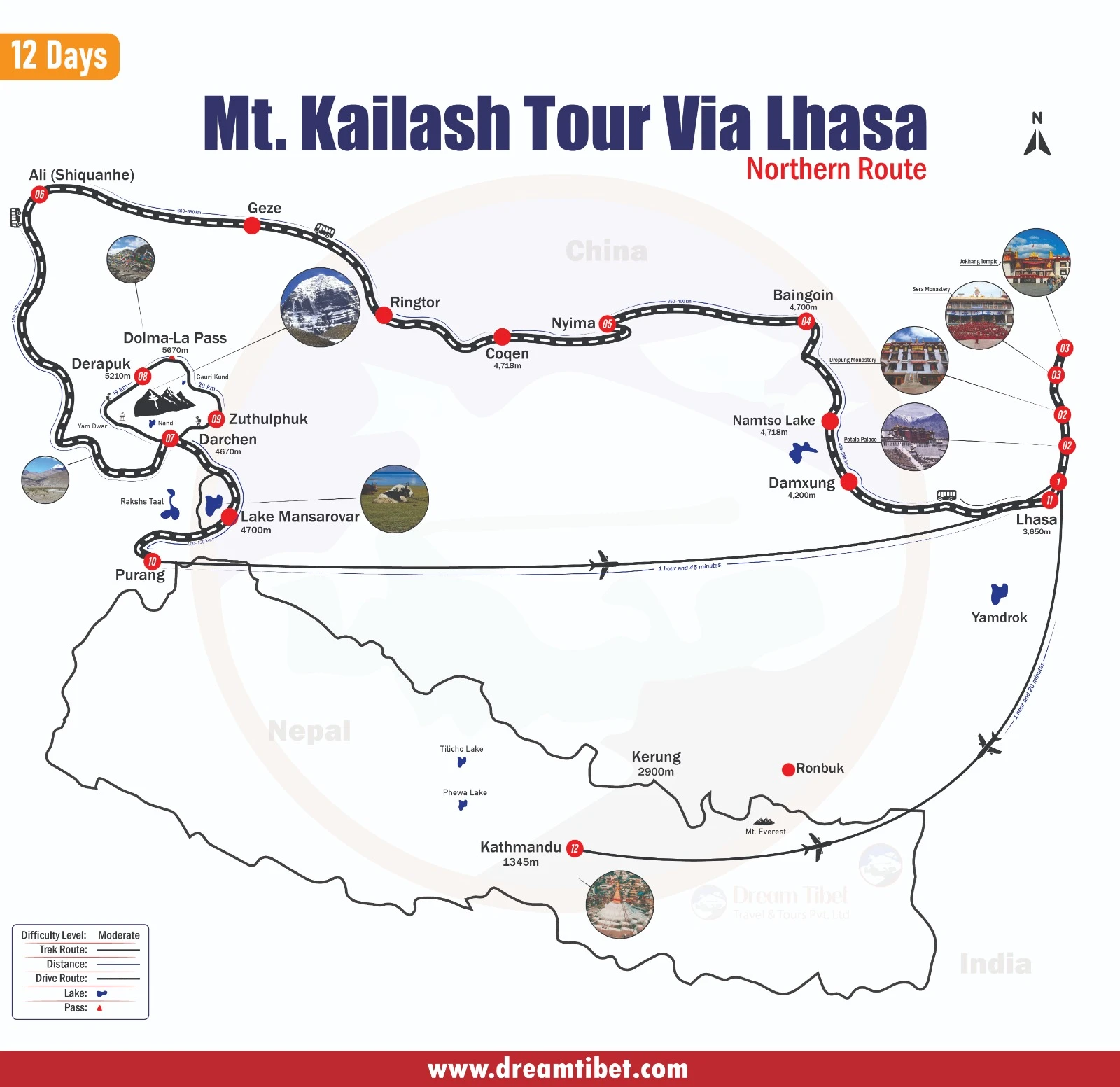
Kailash Mansarovar Tour Via Lhasa Northern route is a 12-day overland circuit that goes from Lhasa to Mount Kailash through Namtso Lake and the Changtang grasslands of northern Tibet, rather than the more conventional route from Kerung on the China-Nepal border.
This alternative route substitutes roughly six days of driving on high-quality roads for driving on gravel tracks in Baingoin, Nyima, and Ali and ends in Darchen, where pilgrims begin their sacred Kailash Kora. It is much less comfortable than the usual tour.
Still, it offers a compelling alternative to seeing Tibet's northern wilderness, its spectacular wildlife, and its nomadic people, while also being best for intrepid wanderers who brave the challenges of the Tibetan Plateau during the short summer season (roughly May to mid-September).
Lhasa to Mount Kailash Northern Route Tour 12 Days Highlights
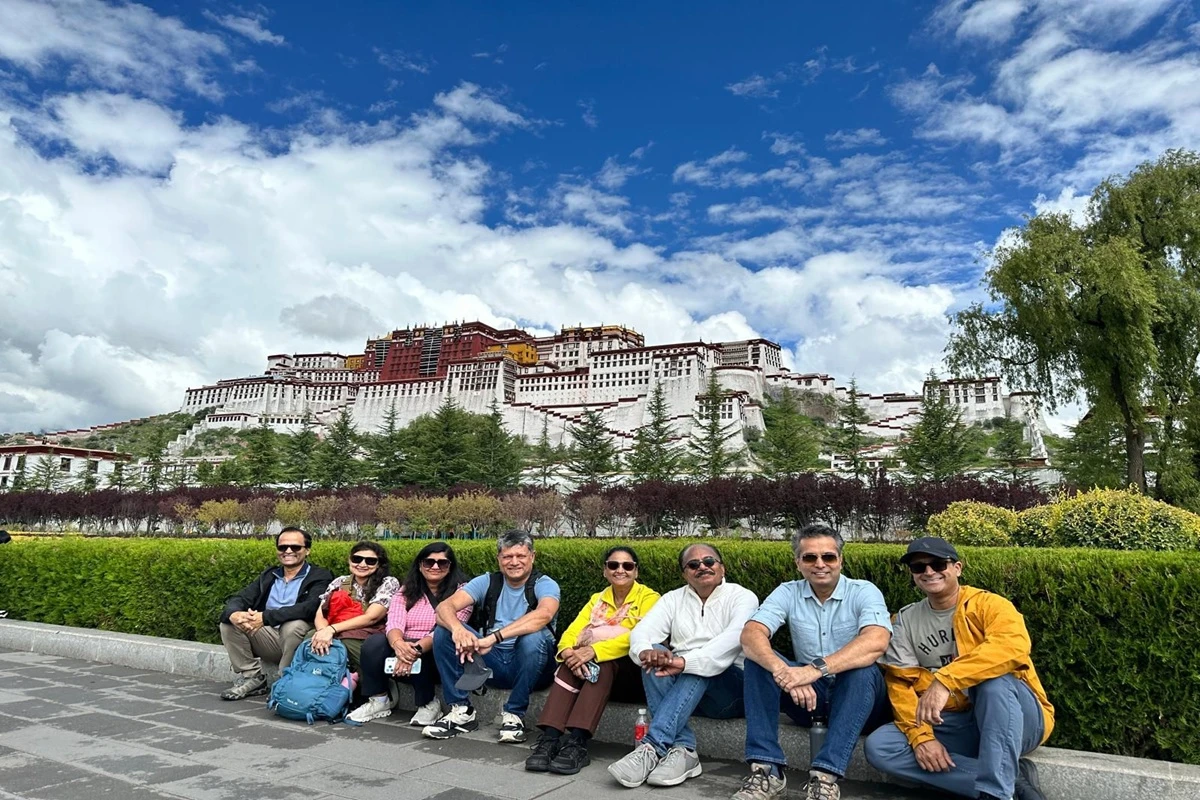
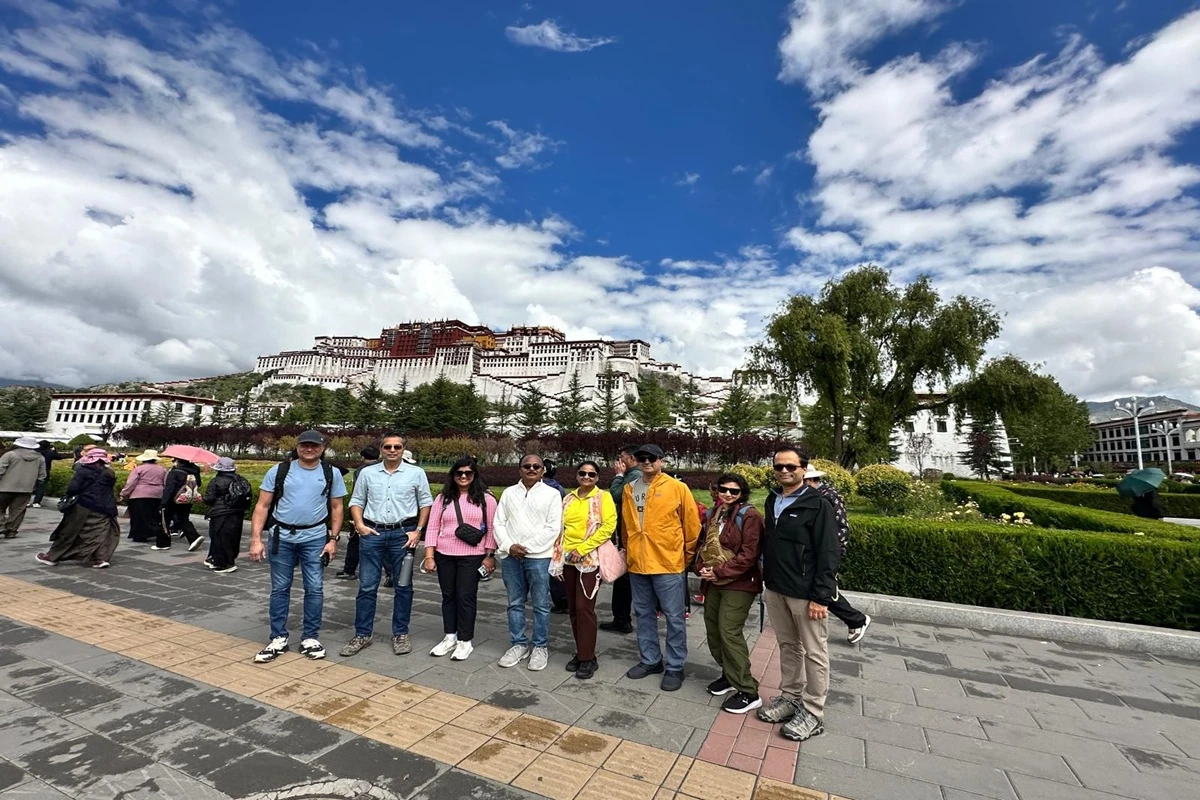
- Potala Palace, Lhasa: Thirteen floors of red and white stone soar from the valley floor around Lhasa – the winter home of the Dalai Lamas for three hundred years. Inside you’ll discover tombs covered in gold and walls scribbled with murals, as well as staircases that provide the altitude-related perspective that few people at 3,600 meters ever crave.
- Sera Monastery's debate courtyard: Young monks do daily debates about Buddhist philosophies here. They stamp and clap their way through every point of logic. Part study hall, part theater, it's the only Tibetan tourism that isn't tightly scripted for the cameras.
- Jokhang Temple and Barkhor circuit: This was the most holy of all Tibetan Buddhist temples built in the 7th century. People would prostrate at the entrance and worship the sunrise in the temple as a reward for a months-long pilgrimage. The market around Barkhor continued to be a real pilgrims path-not touristy at all.
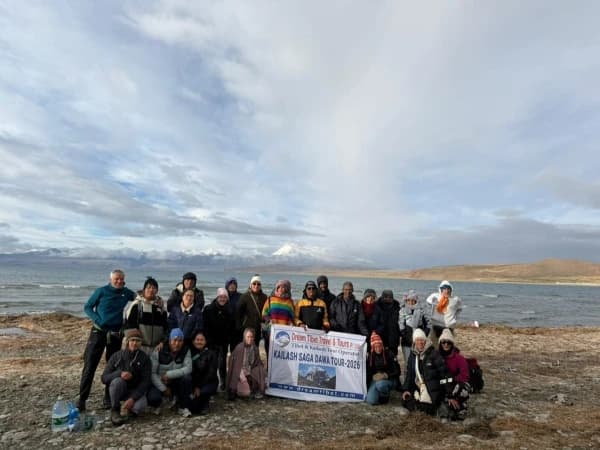
- Namtso Lake at roughly 4,700 meters: Earth's highest salt lakes, the water shifts between turquoise and deep blue depending on cloud or lack thereof. Yaks and Tibetan gazelles graze long, bare lakeshore; tents and gers huddle up against the scrub plateau beyond. Looking down across the large lake from the shore during sunset is one of the few memorable parts of the entire 12 day expedition.
- Six unbroken days across the Changtang and Ngari corridor: A gravel and grassland crossing through Baingoin, Nyima, and Ali which few foreign travelers to Tibet dare to attempt, and even fewer finish, including a single 600-plus-kilometer push from Nyima to Ali. There are many miles in which there is no road at all, places in which vehicles have been removed from their ground, to be translated by those who know what they are looking for.
- Genuine wildlife encounters, not zoo-adjacent sightings: The sightings of the antelopes, bounding across the road; wild yaks standing at the roadside like timid timid timid yaks-like wild Yaks stand suspiciously to graze on side-edge on this border of lake; and birds of prey and predators soaring above a lake that discovers of its own surprise on Baingoin Nyima, near to the 39 th degree of northern latitude on the Qinghai – Tibet Plateau, here they live a life of their own, it comes for nothing with human visitors.
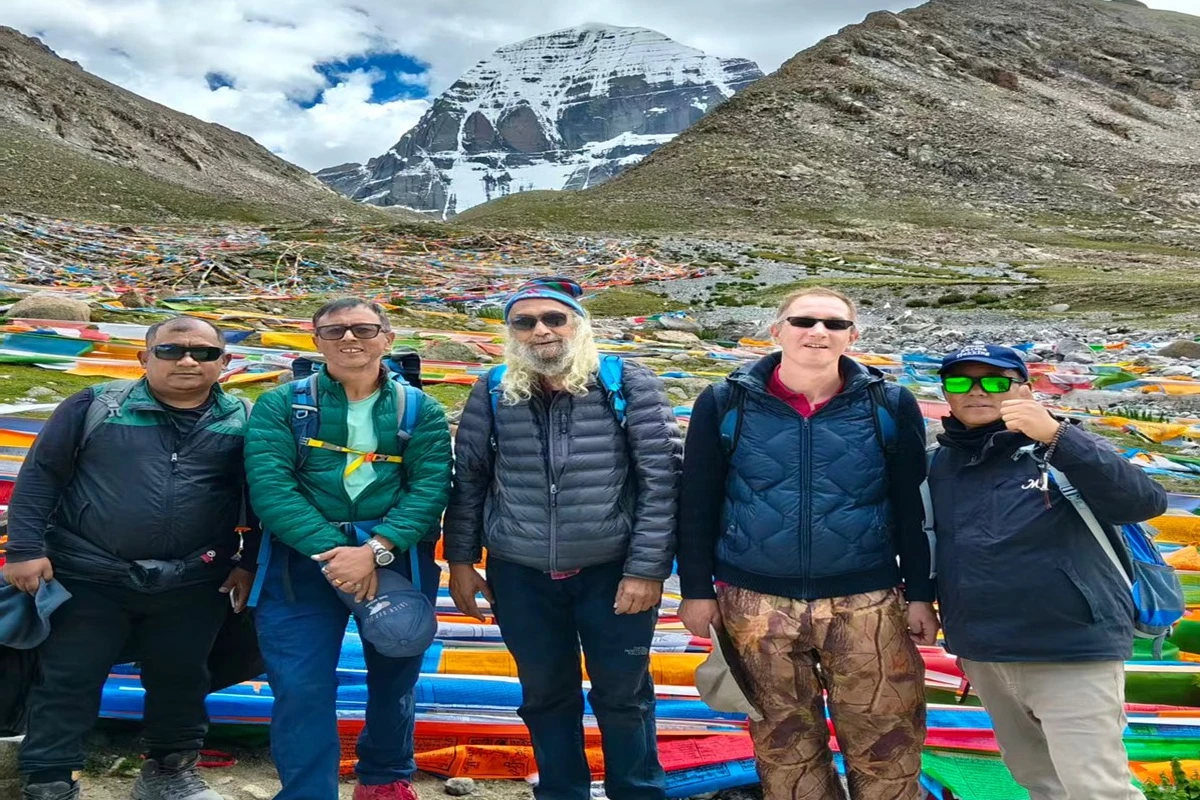
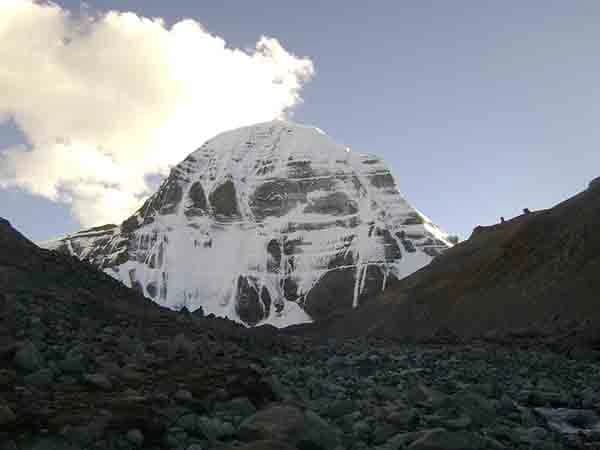
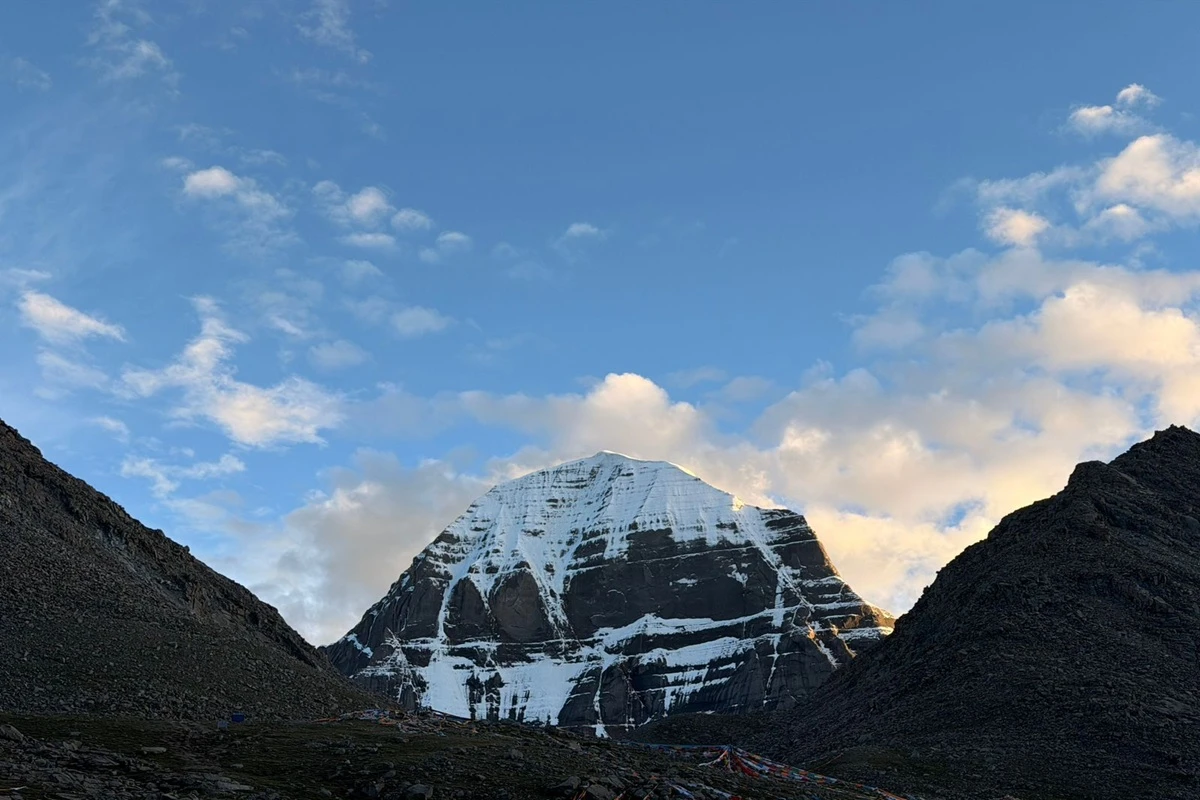
- Kailash's first appearance on the Ali–Darchen approach: The mountain reveals itself gradually on the horizon and not as a specific photo opportunity, after 6 days of discovering the world anew on this overland journey. Most visitors say that this and not the majesty of the summit is the highlight of their visit.
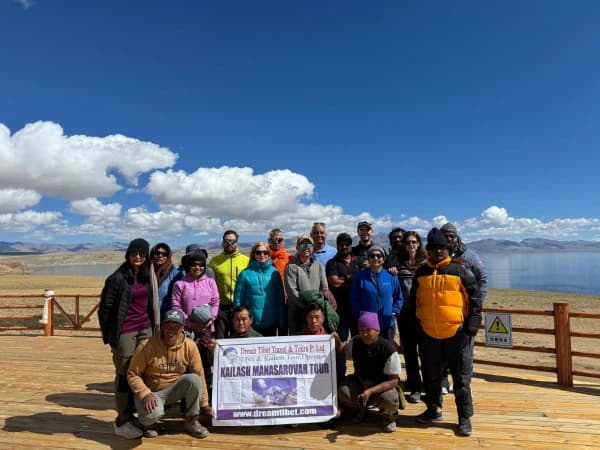
- Lake Manasarovar: More than simply another stunning body of water over 4500 m up, this sacred, still, glacial lake is a locus that, among an unusual showing of religious solidarity on the part of the four major religions present, is visited to serve as a single pilgrimage destination. It is visited on the same day as a pilgrimage destination. In the same journey from starting point to Darchen, on the day Kailash appears, as a stopping point rather than as another destination-an optional trip.
- Dirapuk Monastery beneath Kailash's north face: A monastery, situated at the base of the mountain, that Kailash seemed to fill the whole of the sky space over the roof of its walls - indeed the only, and likely best possible place from which to have a view of Kailash for the entire journey.
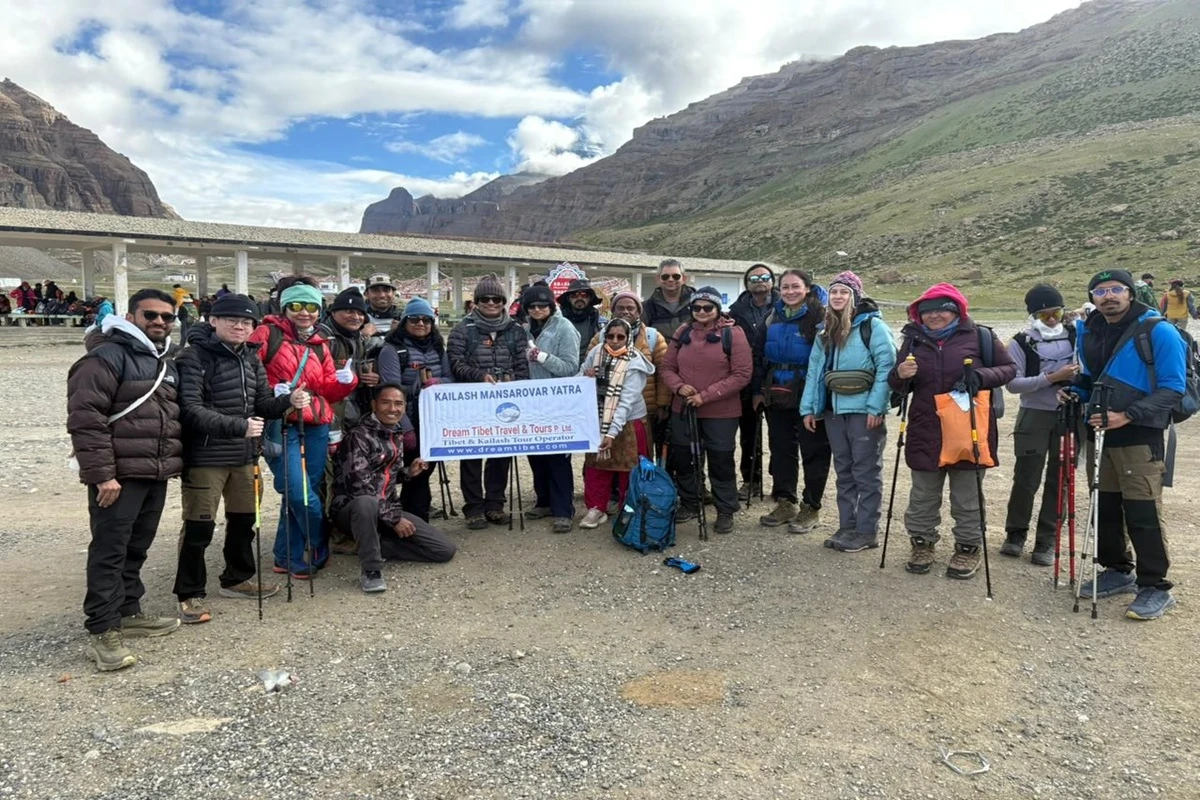
- Dolma La Pass at 5,630 meters: Most sacred point that culminates the spiritual as well as physical body of the Kora: The area is filled with prayer flags and also offerings, as an offering by approx 1000 years of pilgrims, as well as proceed further to sacred Gauri Kund downward.
- A route that is structurally unaffected by the closure of the Rasuwagadhi-Kerung border: Arriving in Lhasa via a direct flight instead of the land route through Nepal, this particular option was not affected by the August 2026 flood damage to the corridor – although this was the very reason for preferring the air route in the first place.
Kailash Mansarovar Tour Via Lhasa Northern Route 12 Days Overview
The itinerary for Lhasa to Mount Kailash through Namtso Lake, known as Northern Route 12 Days, has been driven by our team five times since 2019. We devised it simply because we no longer considered the Nepal border crossing reliable after having witnessed two washouts along the road in a span of three years.
This tour does not simply rehash the standard Kailash travel plan. It completely replaces the Kerung overland way and allows guests to fly directly into Lhasa, followed by traveling through Changtang, which is a difficult region in Tibet that very few travel agencies take on.
Having spent three days in Lhasa, tourists get acclimatized rather than engage in sightseeing tours. We have refused guests who indicated that they were ready for sightseeing for their first day upon arrival, and we are not going to change this practice in case any symptoms of altitude sickness are beginning to show.
Note that this tour includes such sites as Potala Palace, Sera Monastery's debate courtyard, and Jokhang Temple, but they are not as important as making sure one gets enough rest.
The nature of the journey shifts on Day 4 and is now a six-day traverse, from Namtso and Baingoin, through Nyima, and on to Ali. Our route comprises gravel tracks through grassland and often not even a road.
Our driver's sheet details sightings of wild yak or gazelle on 9 of our last 11 departures in this area. Wildlife can not be guaranteed on all tours, and two departures returned with no sightings.
Kailash itself first comes into view on the drive from Ali to Darchen, with a stop at sacred Lake Manasarovar along the same route. Darchen is the turning point between driving and trekking. We always factor in a rest day here before the Kora begins, come what may, even if an expedition's group itinerary requires it.
The three-day Kora crossing Dolma La (5,630m) is the most challenging and rewarding part of the whole trip.
It involves giving up the comforts of a predictable and comfortable route for the isolation of trekking into the unknown. That choice is not for everyone, and we'll say so if it's not for you, recommending the traditional Kerung-based style instead.
Why Choose Dream Tibet and Travel for This Route?
- Dedicated 4WDs and drivers who know this corridor inside out, not some random driver who just rented a vehicle for the week. Many agencies subcontract drivers who know nothing of the unmarked tracks on the Changtang; ours know exactly where the Nyima to Ali road goes, as they have driven it multiple times.
- Daily contact with your driver on the ground, not just handing him a pre-planned but rigid itinerary and crossing your fingers that bad weather won't show. Many operators hand you a printed schedule telling you when to be where, and hope for the best. We can change your plans on the fly if a certain stretch of road turns to mud, before your guests ever get there.
- Permits are rechecked before every departure, as rules and regulations on both the Ali Permit and road use in Tibet change frequently, not just when you sign up, or worse yet, when you arrive. Most agencies don't even bother checking the ever-changing regulations, let alone update them.
- A real rest day that is incorporated in Darchen before the Kora; a non-negotiable, regardless of group's schedule becoming behindhand. We have far too many operators who simply strip this down to save a day and, in truth, we wouldn't!
- With wildlife and general luxury not guaranteed outside of brochure specification, we tell clients what to expect from their post Lhassa accommodation, and on wildlife, as there needs to be clear communication in place and no enticing of passengers into the belief that they should find that much more than what actually exists in this remote part of the world.
- A trek that we deliberately rode last time before the 2026 closure made it impossible and not one that we suddenly decide to cobble together with haste.
How Does the 12-Day Northern Route Connect Lhasa, Namtso and Mount Kailash?
We have this as one continuous westward progression, and not three legs. Days 1-3 in Lhasa are simply acclimatization days, and we have declined requests from guests to skip these.
Day 4 turns north to Namtso, but this is actually only a stop en route to Baingoin and not an overnight stay, which some guests attempting to follow this itinerary from older versions have done by mistake.
Day 5 progresses to Nyima, but Day 6 is actually our hardest leg, a journey of more than 600 km to Ali, a drive of 11 to 13 hours, sometimes up to 14, if a section of gravel road is flooded. We have had breakdowns on this leg with no possibility of getting any assistance for many hours.
The day spent in Ali is our only day off, before Day 7 progresses to Darchen via Manasarovar. It is on this day that the fabled Kailash becomes visible on the horizon, after crossing a series of desolate landscapes that have no names on any map, but which our drivers have crossed on a six-day journey many times since 2019.
Who Can Join This 12-Day Northern Kailash Mansarovar Route?
Fitness and Physical Readiness
- Our guests are required to hike comfortably for 5-6 hours a day before departure; not that you need to be fit like a gym-bunny, but have some stamina, as the Dolma La day alone involves walking for 9-11 hours at altitude.
- We have sent 2 guests back on the road to Darchen in the past 3 years after their preliminary trek assessment as they did not have the physical or mental strength to continue on the Kora. You understand that on these occasions refunds for that particular portion of the trek cannot be guaranteed and this is noted before arrival.
- No technical climbing skills are required as it is not a mountain trek but a strenuous walking holiday.
Age and Prior Altitude Experience
- Most of our groups are a mix of people aged 25 to 65. We don't have an upper limit, but we do ask anyone over 60 to speak directly to us regarding the Nyima-Ali drive and the Kora before confirming your booking.
- While it is helpful if you have spent time at altitudes above 3,500 meters previously, we feel it is equally important that you report honestly to us should any of these side effects present themselves after reaching altitude. We talk to our guests about this and spend time going through these symptoms with them.
Tolerance for the Overland Crossing
- Six days of driving through Baingoin, Nyima, and Ali, including a 11-to-13 hour day, are not optional. This tour is not suitable for people who want a very tight schedule or who can not spend a long time in a vehicle. Guests who do not realize that this tour is very long and demanding tend to regret it by day 6.
- We tell every guest who asks about this particular tour option before spending any money with us.
How to Book This Route Kailash Mansarovar Northern Route Tour With Us for the Remaining 2026 (September, October) and 2027?
Step 1: Talk to Ram First
We usually conduct our inquiry on generic forms, but we recommend contacting Ram directly to make your booking quicker. Ram Chandra Lamichhane, the Founder and Managing Director of Nepal Himalaya Treks, personally evaluates every Northern Route request due to his own creation of this route, avoiding the Kerung crossing for certain guests after observing its failure twice. He will inform you clearly if your fitness level or timeline doesn't suit this route on the very first call, even if it will cost us the booking.
Step 2: Kalpana Pressure-Tests
Our Marketing Director Kalpana Lamichhane Neupane doesn't just send out a shiny day-by-day package. She leads each guest through each day of the trip with me, because we have had to cut tours short in the past when someone has overestimated driving hours to 11 and 13 hours at high altitude. We prefer to walk away from this trip now than end up looking after a stressed-out guest on day 6.
Step 3: We File and Re-Verify Permits Ourselves
We also manage, track, and submit the Tibet Travel Permit, Aliens Travel Permit, and Ngari Military Permit following your deposit and conduct a full review of the last 14 days of departure. It will never be submitted and forgotten once and for all. We, ourselves, have had permit requirements changed since booking the itinerary and will not leave your journey to chance.
Step 4: Bikas Meets You in Lhasa, Personally
Bikas Lamichhane takes care of arrivals himself. In case of any problems on a flight or a permit issue at the airport, he will be calling around himself on the ground. Not a subcontracted representative who has never met you.
Step 5: Puchung Owns the Trek, Full Stop
Mr. Puchung leads the crossing of the Changtang and the Kora hike. He has crossed the Dolma La numerous times with groups and can slow progress and cancel days if needed, despite the itinerary, if he feels altitude sickness coming on. We will always support his decision to slow the group or cancel a day if he feels it is necessary.
Lhasa to Kailash Mansarovar Trip Via Northern Route Cost 2026/27/28
Cost starts at US$ 25,90 per person on a 14–16 pax group basis. We priced this route the way we run it, not the way a brochure would round it up.
$2,590 which includes everything you need for a comfortable six-day tour on distant Plateau. This includes hotel and guesthouse accommodation according to the requirements of each day of the route, all the necessary Tibetan permits for visiting, an English-speaking Tibetan guide who knows this region will be at your service.
All the costs of visits to places of interest and attractions are included in the price, breakfasts are arranged every day, and all taxes are paid. There are no additional payments for obtaining permits or paying taxes when visiting monasteries.
What is not covered, we state in simple language, not small print: your return flight from Lhasa, lunch and dinner (in the guesthouses beyond Lhasa, food is at the whim of the local cooks, not an itemized menu we can quote you), porter or horse hire if you need it for the Kora, and rescue or evacuation, which we have to provide separately, since many of the trails we use are in remote regions.
The size of the group affects the price: small groups have a higher per-person cost, so let us know your preferred dates to confirm a price.
How Much Will You Save With This Route Compared to Kerung?
Due to the August 2026 flood, Kerung overland tour access is now disabled; so we are comparing access and rates.
For identical size group of (around 14-16 pax) to reach North route, would be comparatively saved of almost $2590 pp as northern routes would be more economical cost of about (around $150- $300 pp) compared to the same Kerung routes of same group sizes packages offered by us since we are able to minimize 1 traveling day & overnight of the package (staying close by cross border that is part of our original packages with Kerung access only.) and there is substantial difference in traveling.
Though this may not make a big price difference to the overall group of an experience value: As, it will compensate for some travel days reduced in the northern package days of traveling to various parts like Baingoin, Nyima & Ali to extend the days at most farthest places of stays in remote traditional houses & guesthouses throughout the journey. In this regard, one or another experience will diminish any saved value on fewer road kilometers at the border as compared to Kerung.
In comparison, smaller group sizes may not see the same amount of price reduction.
Because some tour costs can only be reduced so far, if not at the same rate as the cost per traveler would be. However, if you seek more details based on your choice of group size & traveling dates, you are welcome to write to us and get more detailed comparisons directly.