Upper Mustang Motor Bike Tour
Upper-Mustang-Motor-Bike-Tour
Upper Mustang-Bike Tour

Upper Mustang Motor Bike Tour 13 Days

Duration13 Days
Trip GradeModerate
Maximum Altitude3840m
ActivitiesMotor Bike riding, Mountain Scenery and Sightseeing
Group Size2
StartsKathmandu
EndsKathmandu
Best TimeApril to November
  • Best Time to Visit: Spring and autumn, predominantly March through May and September through November.
  • 2026 Spring operations: 60+ Upper Mustang motorcycle trips run.
  • Operation 2026 September: 20+ trips in September.
  • Operation Status: Last Operated: September 2026.
  • Nepal Operations: Managed by Bikram Bhandari.
  • Airport Support: Handled by Bikas Lamichhane.
  • Overall Management: Overseen by Ram Chandra Lamichhane.
  • Number of Bikes: Number of Royal Enfield Himalayan bikes and Number of Royal Enfield Classic bikes.
  • Riding Support: Guide plus mechanic support.
  • Terrain: Tarmac, gravel, dust, loose rock and off-road.
  • Main Path: Pokhara, Jomsom, Kagbeni, Lo Manthang, Upper Mustang.

The Kathmandu to Upper Mustang motorcycle tour is a 13-day journey over 1,000 kilometers that begins in Kathmandu and goes through Pokhara and the Kali Gandaki gorge to reach the medieval town of Lo-Manthang. There is a possibility of extending the tour to the border with Tibet. The course that the motorcycles will follow takes them through the busy streets of Kathmandu and then to the gorgeous area of Pokhara with its famous lakes before it finally leads to the desert lands resembling Tibet. The tour involves two off-the-bike days: one spent on technical preparation and the other for hiking the ancient monasteries of Lo-Manthang. On the way back, the group will stop in Bandipur, one of the preserved Newari towns in the hills. The price of the tour is 2,250 dollars per person and covers all permits, guides and accommodation.

Highlights of the Motorcycle Tour to Upper Mustang

  • The city of Lo-manthang is the last but not least important part of our adventure. It was practically inaccessible for tourists until 1992; since then, it has represented the province's past and present uniquely. In fact, it is so unique that it deserves an entire day to explore instead of just a few hours.
  • On Day Four in the Kali Gandaki gorge, we will have Dhaulagiri on one side and Annapurna on the other, both visible from both sides at the same time. According to our experience, clear days happen about 70% of the time. Another interesting fact is that this is where we will first experience gravel riding. In our experience, very few riders have requested support in the past five years.
  • The trip leads you up to the border of Tibet, not the actual border itself, as it is not included in every itinerary. However, the extension is offered on most of our departures, which is determined by the intensity of the trip and the availability of permits. We make sure to inform our clients about whether their departure will include the excursion in advance.
  • The interior murals of Champa Lhakhang and Thubchen Gompa are centuries old; thus, we strongly advise every guest to avoid taking pictures with flash, as it is prohibited to do so. We sometimes ask our guests to stop taking pictures if necessary.
  • Lo-manthang, the former royal palace, has existed since before the monarchy's 2008 abolition. We don't stake anything on this being untouched by tourism in twenty years' time, and that's a genuine threat to the long-term value of this itinerary; we prefer to say so rather than give guarantees.
  • Bandipur on the return - a side trip so few make that most drivers avoid it for the return journey. Some guests asked for it; after three seasons of guests telling us the return was the least good part of the trip, we added it. It is the least good part of the trip.
  • The natural hot springs in Tatopani on Day 10 - we allocate at least 90 minutes specifically for Tatopani; this isn't just a quick stop. We did add this because some of our previous guests told us 30 minutes isn't enough. We will increase this if necessary.

Upper Mustang Motor Bike Tour Overview

Dream Tibet and Travel offers a 13-day Upper Mustang Motorbike Tour that spans approximately 1,000 km from Kathmandu through Pokhara, Kali Gandaki Gorge and into the walled medieval city of Lo-manthang, with an option for intrepid groups to push on towards the border with Tibet. Our Nepal operations are headed by Bikram Bhandari, who sees to it that each machine is checked personally, not because that is standard practice, but because some years ago, the team discovered a crack in the brake line during an inspection of the vehicles for Day 2 that would not have come to light otherwise. Both the Annapurna Conservation Area Permit and the special Mustang motorbike expedition permits are established before the expedition starts, with the procedural work being performed ahead of time and not during travel.

The 13-day bike tour to Mustang is not based on a certain daily mileage. It has two non-biking days included in its schedule, where one day is dedicated to technical preparation and the other to walking among the monasteries in Lo-Manthang. The team of Bikram had a previous attempt when it used this structure, during which both components were not found complete enough by the customers. The ideal time for undertaking this Kingdom of Lo bike tour is either the spring season or the fall. In contrast, the monsoon season can pose some danger due to the possibility of landslides on some stretches, which Bikram cannot alter until he gets information about the present condition of those areas.

In the return journey section, Bandipur is also included, which means that the group will experience more excitement in the last part of the trip, instead of taking them on the shortest path possible immediately. This change comes about after Kalpana Lamichhane Neupane analyzed the feedback received from tourists who have completed the journey during the first three runs. It is important to note that the guests mentioned the direct return as the least exciting part of the tour plan. The tour price is US$2,250 per person and includes all the necessary permits, guides, and accommodation for the entire 13-day journey in the Kingdom of Lo on motorcycle. Each rider has to make his/her own budget for expenses apart from those included in the fuel cost and other items. Bikram Bhandari’s management team ensures that the riders have valid insurance documents.

Why Choose Dream Tibet and Travel for This Tour?

  • Mechanical Support for this route falls under Tenzin Nyima's domain, who tracks the wear and tear of brake pads via discrete gravel stretches instead of the total trip mileage. On his descent from Kalopani to Chaile, he changes brake pads about every third ride out instead of waiting for complaints, which he developed after two years of tracking the wear rate of this specific section of the ride.
  • The group's size limit is eight people per departure, set by Ram Chandra Lamichhane based on observations indicating that a group of 12 people in a previous year took considerably more time to get through a single track stretch near Ghami, thus resulting in delays on the part of a route without many options to stop.
  • The permit needed to access the Upper Mustang Restricted Area takes 5-7 working days to process through the Nepal Tourism Board. Kalpana Lamichhane Neupane ensures the application is submitted no later than 21 days prior to the departure date, which is three times the minimum processing time, based on the experience of a delayed approval, which would affect the first day of rides for the 2023 group.
  • We have a support vehicle which has been outfitted with a 40-liter fuel reserve tank, based on the longest distance between the fuel stations, which is 140 kilometers between Chaile and Lo-manthang, and not an abstracted “extra fuel in case of contingencies.” 
  • One of our guides, Chime Tasi, comes from a village located on the Kali Gandaki circuit and organizes our tea stops at homes which he has kept in touch with for over ten years, a level of access we do not enjoy on those circuits where our guides do not have such historical connections. 
  • We have structured our trip in this way now for four successive years, changing specific days each year based on actual departure data each season.

Upper Mustang Motorbike Tour With Group Discount Price 2027/28

The price of the Upper Mustang Motorbike Tour is US2,650 per head for 2 riders, US2,550 for 3 riders, US2,350 for 4 to 6 riders and US2,250 for 7 to 10 riders. We would also advise each participant to keep around US300 to US700 or more in hand, apart from the international flight cost, for insurance, riding equipment, visa, gratuities, food/drinks in the cities, doctors, and in case of accidents.

Travelers

Price per person

2 pax

US$2,650

3 pax

US$2,550

4 to 6 pax

US$2,350

7 to 10 pax

US$2,250

The significant figure is not merely the most affordable price shown in advertisements. On an Upper Mustang Motorcycle Tour of 13 days, an entire group of seven pays fixed operation costs in a much different way than a couple of riders. Due to this, the per-person fee is reduced by $400. Instead of simply showing that number in the advertisement, we would rather provide an explanation of the reason behind the difference in costs. It seems to us that real questions about costs arise after a certain booking amount has been made.

When it comes to Upper Mustang motorcycle tours, other operators often do not include travel insurance, a visa for Nepal, personal riding gear, tips, drinks, and the costs of motorcycle repair due to accidents in the price. Some of them also make riders cover other expenses that may be incurred because of delays, adverse weather conditions, road blockages, and itinerary extensions.

Therefore, it is important for Bikram Bhandari to handle the operations for Nepal before he leaves. We do not want to look at the budget as one total but checked for all expenses. We are not telling the rider that US$2,250 covers everything when it doesn’t. One damaged bike, an overnight stay in a hotel or a medical problem without full coverage can make the cost of the trip grow.

The same applies to the Upper Mustang Motorcycle Tour, where the cheaper quote may not mean the cheaper trip. What matters here is to know about the levels of support, permits, backup services, meals and risk costs before the motorcycle starts moving.

Why This Upper Mustang Motorcycle Route Is Built Around Real Riding Conditions?

  • The creation of our route has nothing to do with equal distances travelled each day. We design it based on the characteristics of the road, elevation, wind strength and the ability of the riders to tackle unstable terrain safely.
  • Kathmandu and Pokhara are purposely used as starting points for each stage - getting permission, packing lighter and inspecting motorcycles have to be done beforehand because once we move on, it will be more complicated to make changes to our arrangements.
  • Kagbeni is an operational point, rather than just a place to see. The group needs to have the right permits and other documents before they ride further north.
  • Lo Manthang has enough time allocated to it, because rushing will only lead to fatigue. Riders need their time for recuperation and getting prepared for the upcoming section of the ride.
  • Kora La is not seen as a riding trophy, as it is never guaranteed. If the weather or the riders’ condition does not allow them to complete the section, we will have to turn back.
  • The return via pathways from Kagbeni, Tatopani, and Bandipur minimizes both height above sea level and pressure on the rider instead of taking them back to Kathmandu immediately.
  • Having operated more than 60 Upper Mustang trips in spring of 2026 and more than 20 in September of the same year, we are aware of the importance of daily conditions and the fact that kilometers are not the main factor in determining the choice of the route.

What Makes Our 13 Days Upper Mustang Motorbike Tour Operationally Different?

  • Bikram Bhandari is in charge of managing the operations on the Nepal side instead of leaving everything to the riding crew.
  • Bikas Lamichhane makes arrangements regarding all the ground operations, including the organization of luggage movement and transfer of riders.
  • The motorcycles we use are Royal Enfield Himalayan and Royal Enfield Classic because they are the ones for which our route and support activities are designed.
  • A mechanic and backup aid should be considered recovery gear not brochure filler.
  • We provide replacements for motorcycles before departure and do not carry a universal toolkit.
  • We do not guarantee the same hotels, food, and roads since Upper Mustang operates differently.
  • We cancel riders, routes, and same-day pushes if the risk involved is too high compared to the advantages of sticking to the original journey.
  • The journey is organized as a moving operation and not as a fixed sightseeing program.
Itinerary

The 13 Days Upper Mustang Adventure operates based on experience with this route. In spring 2026, Dream Tibet completed 60+ departures to Upper Mustang, thereafter accomplishing another 20+ in September, which revealed the usual obstacles in the operations. The Nepal procedures are managed by Bikram Bhandari, whereas Bikas Lamichhane manages the arrival and departure arrangements before the riders proceed on their journey.

We rely on Kathmandu and Pokhara for license verification, permit checks, baggage claims and motorbike maintenance due to the fact that resolving those situations beyond Kagbeni takes too much time. Lo Manthang is given extra days, as attempts to make a hasty round trip north have previously failed. In case of bad winds, road conditions or bad state of the rider, we will not make a trip to Kora La. The way back through Kagbeni, Tatopani and Bandipur serves the purpose of lowering altitude and intensity of riding before the visit to Kathmandu.

Trip PlanExpand all
Max Altitude: 1,400 m Meals: BreakfastAccommodation: Hotel

We do not organize any activities for the first day apart from your arrival, which is intentional. Travelers arrive at Tribhuvan International Airport from every corner of the globe after a long flight and are met by us at the arrival terminal instead of being left to figure out how to find a way to get around in a new city. Your journey into Kathmandu introduces you to an astonishing contrast between the hustle and bustle of the traffic of a very crowded city and the vast, quiet landscape of the Mustang region, which needs to be noted now, as the contrast will make sense a few days from now. Self-check-in and relax before a quick briefing to outline the next twelve days in terms of the weather and ride conditions; we have previously experienced people landing in Kathmandu and being eager to see the temples of Kathmandu. We state that this is acceptable but urge people to keep the big sightseeing trips until the return journey, when the bike is surrendered and the clients have free time.

Max Altitude: 1,400 m Meals: BreakfastAccommodation: Hotel

This day has come into existence due to the fact we have realized that missing it creates evident problems for guests in the course of their trip. Nowadays, there is no such thing as a group inspection of bicycles, which are inspected separately regarding their tires, brakes, and a lot of other minor details that become apparent only when guests are deep into the gravel road of Mustang. Riding gear is put on at this stage, not on the third day when guests are already in the process of getting out of Kathmandu. We also give information pertaining to permits such as the Annapurna Conservation Area Permit and the special restricted-area permit, which is required for Upper Mustang and should be arranged before coming on board rather than in the course of riding. Some guests, thinking they've been riding elsewhere in the past, don't see the necessity of our Day 01; we have enough information to prove the opposite. Finally, we do a brief test ride around Kathmandu before the journey starts.

Max Altitude: 820 m Meals: BreakfastAccommodation: Hotel

The drive out of Kathmandu is the least exciting part of the trip, and we're honest about that in the briefing. Still, it gets better and better as the traffic thins out heading west along the Trishuli and then up the Marshyangdi River valleys. Pokhara's lakeside comes into view, replacing mountains with mountains in a better kind of way (if you can see the Annapurna range with clear weather on a late afternoon, it's nothing like what you saw during your week in the Valley). It's a riding day, multiple hours in the saddle, and we take that opportunity to learn something about how you handle things on longer stretches of Nepali highway, which is very different from the still-coming gravel roads in Mustang; your ease with the drive is telling. Pokhara itself is worth a visit, especially given the contrast between its lakeside in the early evening and the Annapurna massif picking up at the end of the day's light, another of our few opportunities to kick back a little before the serious part of the trip gets going.

Max Altitude: 2,530 m Meals: BLDAccommodation: Lodge

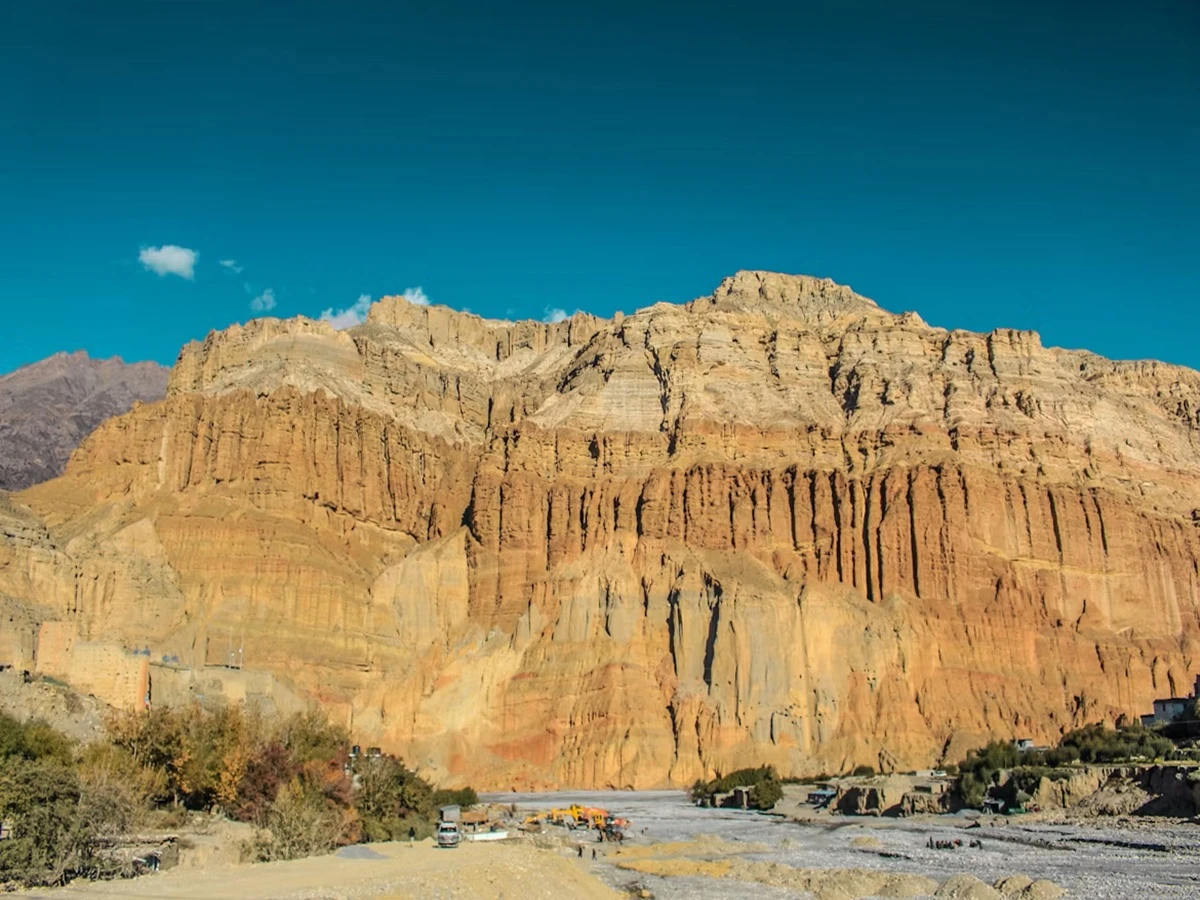
This is where the trip takes on its intended meaning. The road departs from Pokhara lake which is left behind, and successfully enters the Kali Gandaki Gorge, which is said to be the deepest in the world if compared to the buildings on the right and the left of it. Dhaulagiri is on the right, and Annapurna is on the left, and they can be seen clearly on a bright day. The smooth pavement gives way to rough and difficult terrain long before we reach Kalopani, which happened to be the first day when the guests actually had to trust their moto in terms of the ability to ride their bikes instead of only using the throttle. The riders can underestimate this part of the route, where this gorge does not allow making any assumptions. A bright, clear morning when Kalopani can be seen reveals the magnificent beauty of Dhaulagiri, which can be compared with another peak from the opposite side of Kalopani.

Max Altitude: 3,050 m Meals: BLDAccommodation: Lodge

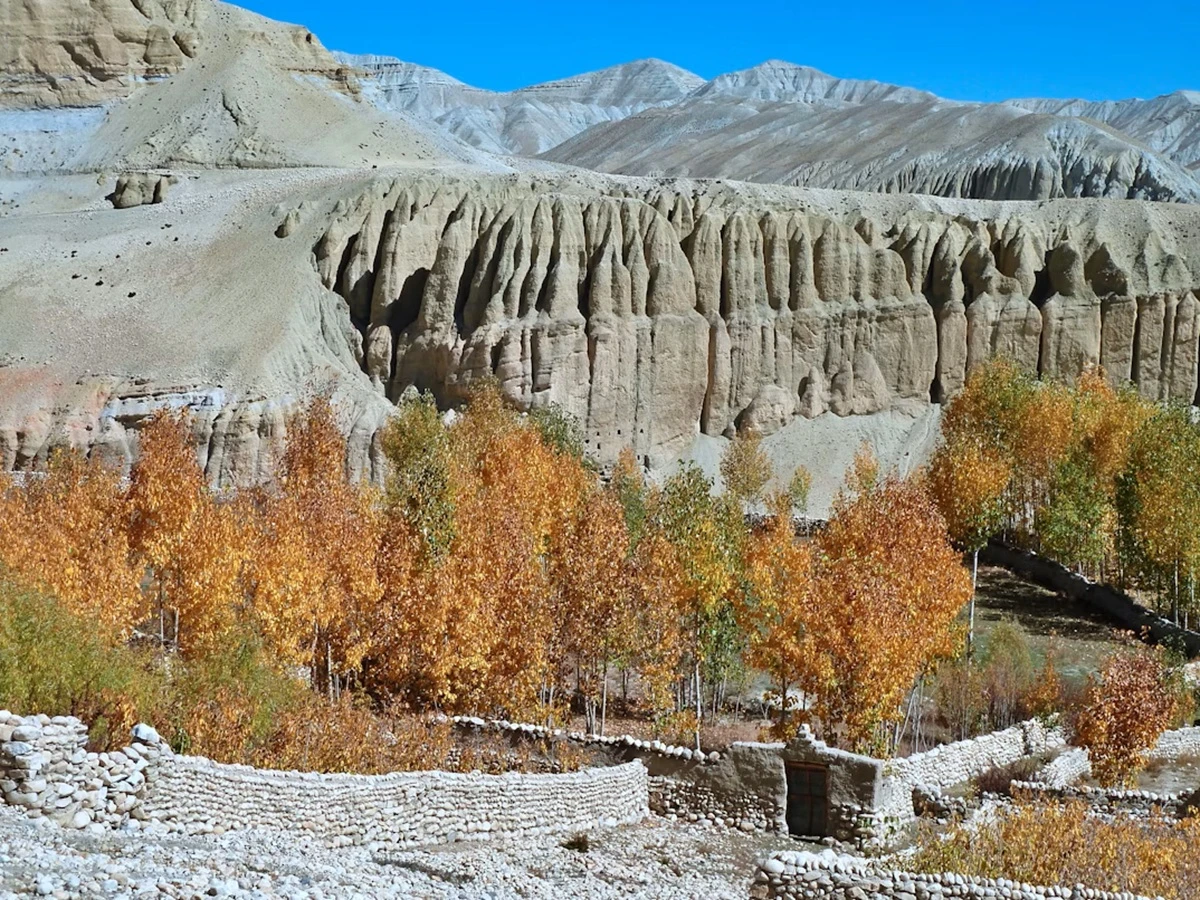
The whole scene completely changes today, and it does so more swiftly than guests might expect. After leaving the forested area of Kalopani, the road rises and gets into progressively more parched lands, with the greenery of lower Kali Gandaki disappearing, giving way to the stark and wind-eroded landscape of Upper Mustang. Technically, this is still the approach and not Mustang itself. Still, the region already suggests what is soon to come: fewer trees, more exposed stones, and a wind that starts blowing in the early afternoon - a moment that our guides take into consideration when planning the trip. Chaile marks the first day of the trek, but either there is a feeling among guests that the real essence of the journey captures them here, or they begin to ask more serious questions regarding the following days.

Max Altitude: 3,840 m Meals: BLDAccommodation: Lodge

On this day, people come into the walled city of Lo-manthang, which used to be the capital of the Lo kingdom and where the secluded Buddhist culture survived undisturbed until 1992, when Upper Mustang opened its gates to outsiders. The journey from Ghami includes high rocky passes featuring the landscapes that look more like Tibetan plateau than anything that can usually be found in Nepal, which is quite true since it is indeed the Tibetan plateau itself from the geological and cultural point of view. The strong winds make the day, so our guides change our departure time so that we ride when it is calm in the morning. Lo-manthang's walls after a full day spent in this area are something you cannot forget, as it is not a town you come to easily; such an experience is indeed unparalleled.

Max Altitude: 3,840 m Meals: BLDAccommodation: Lodge

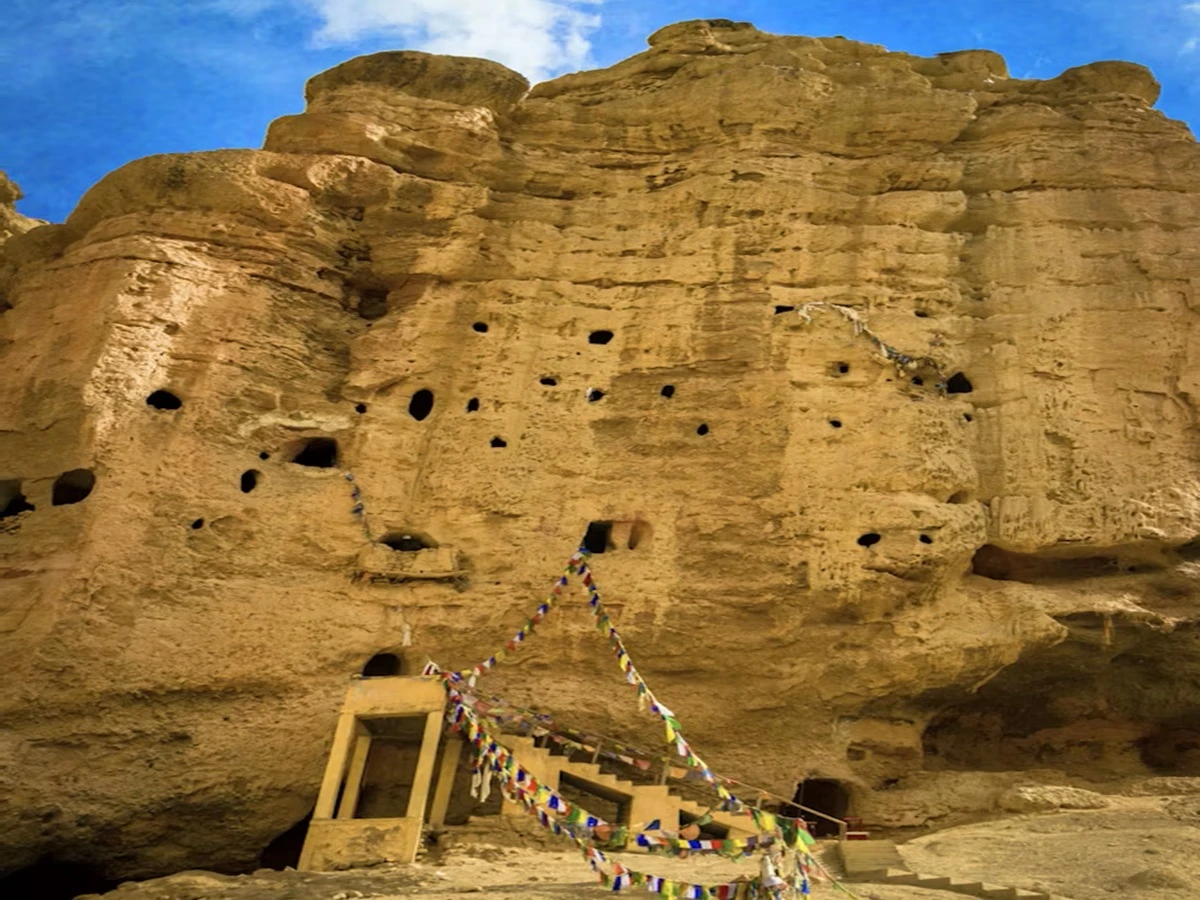
We have designed one day for the guests to take a break in our itinerary. This is not a resting day in the full sense of the word. Instead, this day serves as a chance to gain insights and feel fully involved in the surrounding atmosphere. Lo-manthang is a unique place with its well-preserved old town nourished by centuries-old monasteries, including Champa Lhakhang and Thubchen Gompa, where murals inside were created long before the first cathedral appeared in Europe and throughout their existence had nothing but benefits from the remoteness of the region. In addition, the last king of the Lo kingdom until 2008 ruled the place. In other words, we will not go far on this day and will spend it only on foot since the motorbike would simply get stuck in small, narrow alleys.

Max Altitude: 4,660 m Meals: BLDAccommodation: Lodge

From today we move even further north, arriving very close to the Tibet and Nepal border in locations that become increasingly more remote and, in parts, more inaccessible. This is not an official border crossing, since it is forbidden for tourists to enter Tibet from this side of the border; nevertheless, to see a part of Tibet closely enough to know what its territory looks like, with the characteristic Tibetan plateau plains stretching behind, is one of the greatest moments of the trip. The permission for this area is different from that of the Upper Mustang area, and we take care of confirming it beforehand. There are small villages and settlements along the way; some are almost empty, presenting Mustang as even quieter compared to Lo-manthang. However, although we treat this experience as an option for those who have enough guts, we do not include it in every trip departure, as it is something we mention during the booking process.

Max Altitude: 2,810 m Meals: BLDAccommodation: Lodge

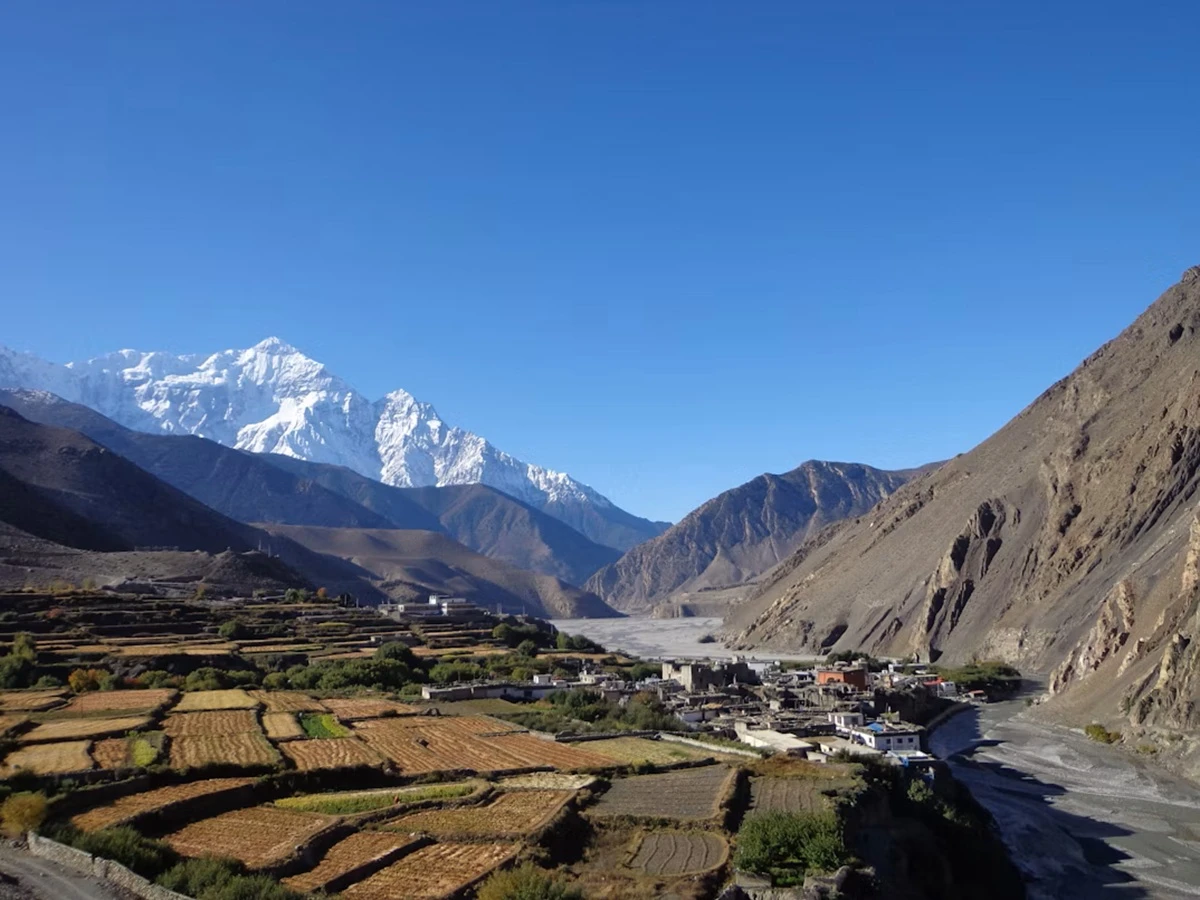
Today marks the turning point of the journey, and psychologically speaking, it presents a different experience compared to the first leg. Kagbeni lies at the usual portal to Upper Mustang, being the last settlement before entering the regulated zone. The journey back means traversing well-known paths rather than untraveled routes. From our observations, we feel that visitors cover this part of the route more quickly than they did the first time. There is nothing reckless about this; they just have this natural ability to ride through the area with ease now that they have previously made it. Kagbeni itself has a very old monastery and narrow streets at a high altitude deserves more than a one-night stay, so we make time for exploring it rather than passing through Kagbeni.

Max Altitude: 1,190 m Meals: BLDAccommodation: Lodge

In the Nepali language, Tatopani means “hot water.” The name is not just a term for decoration, as the hot springs here do provide rest after following dusty, uphill trails for a few days. Coming down from the high Mustang region and returning to Tatopani, one feels the greens and warmer winds again as opposed to the dry air from Day 5. Due to the long journey that riders have undertaken, we make sure that our time at the hot springs is lengthy, not confined to quick trips before supper. This is usually the first night since Kalopani when the temperature makes it possible for one to sit outside pleasantly after it has gotten dark.

Max Altitude: 1,030 m Meals: BLDAccommodation: Lodge

Bandipur is the place we have decided to visit when returning to Kathmandu, even if many operators don’t include this little town in their itineraries. Situated on the hilltop, this Newari town is not reached by the highways and therefore has managed to keep traditional architecture that few towns in Nepal can boast of. Bandipur has preserved old cobbled streets and houses of merchants and the stunning mountain view without huge crowds like those in Pokhara. After many days of exploring the remote parts of the world, such an experience is completely different from the previous one but still peaceful and full of cultural significance. Rather than regarding Bandipur as a stopover, we consider this place a hidden gem and many visitors say that they liked it most in the course of their journey.

Max Altitude: 1,400 m Meals: BLDAccommodation: Hotel

The closing riding day follows the route of the Trishuli Valley journey from Day 3, although the return route is significantly different from the journey outwards. All the rigors of riding through exceptional terrain for twelve days have changed the manner in which we experience the route; rather than being difficult, it is much easier thanks to the cumulative benefits gained over the days of riding. As we near Kathmandu, the volume of traffic increases and the sounds and level of activity around us return to what is experienced during the first day of the journey; instead of seeming chaotic, it feels like returning to a more familiar experience as life resumes. In the spirit of returning to Kathmandu, we also make use of the return to the city to begin to exit from the trip; the bikes are returned and checked, and guests are given the rest of the night to think about everything that happened on the trip.

Max Altitude: 1,400 m Meals: Breakfast

There's no activity scheduled today beyond breakfast and transfer to Tribhuvan International Airport for onward flights. Thirteen days have covered ground most travelers to Nepal never see, Upper Mustang's walled medieval capital, terrain bordering Tibet itself, and hundreds of kilometers of riding through landscapes that shift from dense green valley to high desert plateau and back again. We don't pad this last morning with additional activity; the trip has already delivered what it set out to, and most guests spend this final transfer quietly working out how to explain the last two weeks to people who weren't there.

Couldn't find what you're afterReach out to our travel experts.
Cost Details
Includes
  •  All arrival and departure arrangement
  •  Accommodation in main cities like Kathmandu and Pokhara in star category hotels
  •  Motorbike on hire
  •  Motorbike fuel during the tour
  •  Riding guide with experience of mechanic
  •  A mechanic with necessary tools
  •  Backup vehicle by 4wheel jeep
  •  A Team leader for every arrangement
  •  Accommodation, foods on the way Mustang
  •  Upper Mustang permit and permit of ACAP
  •  Entrance fees during the sightseeing
  •  Medical kit box
  •  Tax and service charge
Excludes
  •  Personal equipment
  •  Personal insurance
  •  Cost of emergency evacuation or medical expenses in case of need
  •  Lunch Dinner while you are in cities like Kathmandu and Pokhara
  •  Any tipping
  •  Cost of any flights
  •  Cost of Nepal visa (Nepal visa on arrival)
Essential Information

Essential Rider Briefing: Upper Mustang Motorbike Logistics and EEAT

We design our briefing for the Upper Mustang Motorcycle Tour on issues that can interrupt the trip, not on some standard advice lifted from a motorcycle checklist. Having run 60+ Upper Mustang trips during the spring of 2026 and about 20 of them in September 2026, we know where the bottlenecks usually lie: bad bike, wrong permits in Kagbeni, flat tire because you do not have the right tube or tool, overloaded bike on loose terrain, or a rider who realizes too late that gravel at high altitude is totally different from normal riding.

This experience enables us to refine our trip preparation. We started paying more attention to bike provision, pre-departure inspections, spare parts provision, permit checks, and rider assessment before the group gets to Mustang. Some procedures slow down the departure by an hour or more, but we prefer spending some extra time in either Pokhara or Kathmandu rather than losing a whole riding day north of Kagbeni.

Specialized Motorcycle Fleet: Royal Enfield Himalayan 450cc vs. Honda CRF

Choosing the motorcycle for the 13 Days Upper Mustang Motorbike Tour should entail more than the rider's favourite choice of camera. The motorcycle must be adapted in terms of the rider's height, experience, physical abilities and comfort on loose terrain.

Royal Enfield Himalayan 450 motorcycle has a 17-litre fuel tank, ground clearance of approximately 230 mm, and a kerb weight of approximately 196 kg. It gives the motorcycle a stable ride on long-distance trips; however, it is especially hard to manage when the motorcycle stops on a climb, sinks in loose gravel or has fallen over.

Honda CRF motorcycle is much lighter, which makes it more tractable on rough terrain. The downside is that Honda lacks in terms of fuel tank volume, luggage capacity and spare parts compatibility.

Motorcycle factor

Himalayan 450

Honda CRF-type bike

Weight

Heavier and more planted

Lighter and easier to recover

Fuel range

Larger tank

Smaller tank

Rough terrain

Stable but physically demanding

Easier through technical sections

Long road days

Comfortable for many riders

More off-road oriented

Rider requirement

Strength and confidence matter

Better for riders wanting lower weight

We do not issue a Honda CRF just because someone asks for it. If we do not have the specific bike ready for departure, we will inform you ahead of time and not at the last moment. Planning for our regularly scheduled Upper Mustang Motorcycle Tour revolves around Royal Enfield Himalayan and Royal Enfield Classic motorcycles.

Restricted Area Permit (RAP) and ACAP Protocol at Kagbeni Checkpoint

Kagbeni is where paperwork moves out of the office setting and into the logistics of the route.

Once we ride on the Upper Mustang Motorcycle Adventure from Kagbeni into restricted Upper Mustang territory, the necessary permit and official documentation are already established. Moreover, riders travel in the Annapurna Conservation Area; therefore, the proper paperwork needs to include the appropriate conservation area permit as well.

There have been instances where bikers think permits can just be sorted out after their arrival. This is impossible in our case. Before the bikes begin their journey to the restricted zone, all names, passports, permit dates, and routes are verified against actual travelers before departure.

A wrong passport number, incorrect date of travel, or missing document can create a situation that no riding abilities can fix at the checkpoint.

For that reason, we won't let a biker travel beyond Kagbeni first and afterwards try to get the proper documentation. If the documents are not correct, the bike remains behind.

This refusal can disappoint a traveler who wants to move forward, but it is better than creating a regulatory problem for both the rider and the operating team.

Dedicated Backup Truck, On-Route Mechanic and Spare Parts Inventory

The statement of a backup vehicle sounds very good in a package description and becomes obvious when a bike stops for repairs in some remote area. On the other hand, the 13 Days Upper Mustang Motorcycle Tour support planning relies on three issues of support: luggage of riders, repairable problems and unrepairable failures of vehicles in case of their breakdowns. It should be noted that the mechanic definitely does not possess an entire service station. However, relieving all possible problems in the field requires only the parts and tools that might resolve practical problems.

Typical preparation should include:

  • materials for tire repair, equipment, and tubes
  • clutch levers and brake levers, also if required
  • cables and elements of electric systems, which might be needed.
  • tools for chain adjustment and service.
  • oils and fluids
  • the elements of metal fastening, external ties and different materials for temporary repairs
  • motorcycle hand tools which will be needed.

The implication from the experience of riding these roads is that more equipment does not necessarily mean better assistance. The equipment must correspond to the bikes which will be used. A spare part that belongs to a different model essentially functions as deadweight.

We do not like to ask any mechanics to try to put an improv repair in place in case we have to deal with structural damage, complex fuel issues or unsafe conditions on the way. We simply take the motorbike back home and modify our plans for the day.

Off-Road Terrain Analysis: Kali Gandaki Riverbed and High-Altitude Passes

The nature of riding quickly changes from Pokhara, and it becomes even more obvious around Jomsom, Kagbeni, and the road takes north in the direction of Lo Manthang.

Riders should expect a broken road, loose gravel, dust, corrugation, ledges, stones, steep climbs and various sedimentation in the Kali Gandaki Riverbed. The situation can be quite different a few departures later because of rain, repairs, landslides or river movement.

This is the reason why we refrain from referring to crossing the Kali Gandaki riverbed as a sure-shot activity. What proved successful in April might not be the route taken in September. 

Prior to getting the motorcycles over difficult riverbed sections, the guide and the support team monitor the water depth, the current, the flow of stones, the availability of the road on the other bank and how the weakest rider can manage to cross it. 

The decision is made depending on the group as a whole and not on the most skillful rider. We are absolutely fine with refusing a crossing if we think that the risks are unreasonable. The alternative could be to change the route or to go around it, to receive help from a support team, or just to wait until the conditions are conducive.

Altitude Management and Oxygen Support Above 3,800M

Lo Manthang is situated at an altitude of about 3,800 metres, whereas a trip to Kora La takes one even higher. In other words, the first challenge that a person has to face at such heights is not only that of breathing.

So, at these altitudes one has to worry about not breathing, but also about other processes like sleep, concentration and appetite being affected. Such processes are of great importance in motorcycle riding, as a rider controls a two-wheeled machine on difficult terrain.

Thus, our team is interested in the actual state of the rider, rather than the height of the altitude.

A person who has normally been riding well but suddenly gets confused about directions, brakes uselessly, or rides extremely slowly should get in touch with an expert even before exhibiting clear symptoms of altitude sickness.

The symptoms include:

  • the person constantly having a headache
  • the person feeling nauseous or losing appetite
  • the person feeling tired
  • the person being unable to move properly
  • the person being confused
  • the person’s riding being noticeably worse than usual

Oxygen used while travelling is only an emergency measure, which should not be abused.

We will not provide oxygen to a rider in trouble solely for the purpose of continuing his or her climb towards Kora La and asserting that the trek is completed.

In cases where the symptoms occur, it is preferable to halt the ascent, return to a lower elevation, or abandon the day's plans altogether. Losing one day's trek is surely more cost-effective than converting an altitude-related problem into a medical evacuation.

Pre-Departure Bike Fitting, Safety Gear Guidelines and Rider Fitness Requirements

The easiest mistake to avoid is the one made before the commencement of the Upper Mustang Tour.

A rider needs to be trained on the motorcycle before participating in the Mustang trip. Just being able to sit comfortably on a motorcycle in a parking lot is insufficient. Besides this, the training is aimed at making sure that the rider knows how to manage the clutch well, apply the brake smoothly, maneuver the motorcycle at low speeds, and keep the balance of the vehicle under the necessary conditions.

This is especially true in the case of heavier motorcycles by Royal Enfield. The rider may feel completely safe on the Himalayan but will find the weight of the motorcycle problematic during uphill turns or when trying to come to a stop on loose stones.

This challenge is best to be uncovered before arriving at Kagbeni. We consider protective gear to be functional riding gear rather than regular accessories. Helmets, gloves, protective jackets, riding pants, and over-the-ankle boots must be secured before departure.

The same goes for riders’ fitness. The fact that you hold a valid motorcycle license means that you have permission to ride. It does not mean that you can ride safely in the Upper Mustang.

For the Upper Mustang Motorcycle Tour, riders are expected to have knowledge how to change gears manually, to brake on slippery surfaces, to make a hill start, to stand on the foot pegs, to balance well while going slowly, and to recover from the situation when the rear wheel is slipping on gravel.

In the event that an operator fails to show basic control during the pre-departure assessment, that person will not be allowed into the restricted Mustang area just because the tour has already been booked.

This is one of the few decisions that should never be dictated by commercial pressure. It's easy to deal with an unhappy customer in Pokhara, but not with someone who has lost their cool more than six hours beyond Kagbeni.

Accommodation on the 13 Days Upper Mustang Motorbike Tour

It is necessary to avoid describing a variety of accommodation options available on the 13 Days Upper Mustang Motorbike Tour without giving more specifics, as one can do by saying that accommodation consists of “comfortable hotels and lodges.” It is essential to understand that the standard of accommodation varies almost every two days of the trip. 

In Kathmandu and Pokhara, travellers can take a rest in a real hotel with an attached bathroom, hot water, charging facilities and the possibility to connect to Wi-Fi. However, in Kalopani and Tatopani, they will experience a mixture of staying at a lodge and a comfortable mountain hotel. 

However, the situation changes when the Upper Mustang Motorcycle Tour reaches Chaile, Ghami, and Lo Manthang. Accommodation depends on not only the village, where travellers are, but also the season, the amount of solar power, the availability of water supply, and how early someone booked in advance.

Based on the experience of 60+ Upper Mustang tours in spring of 2026, and over 20 tours in September of 2026, we do not promise the same standard of accommodation every night and would rather warn our clients about dropping comfort levels than explain to them how cold rooms in Kagbeni are after their arrival.

Overnight Stop

Typical Accommodation

Bathroom Reality

Hot Water

Charging/Wi-Fi

Our Practical View

Kathmandu

3-star or similar city hotel

Attached

Reliable

Reliable

Use this night to organize gear

Pokhara

Tourist hotel

Attached

Reliable

Reliable

Last easy reset before Mustang

Kalopani

Mountain guesthouse/lodge

Often attached or better shared

Usually available

Generally available

One of the more comfortable mountain stops

Chaile

Small village teahouse

Mostly shared

Limited, often paid

Limited

Expect function, not hotel comfort

Ghami

Traditional lodge/teahouse

Mostly shared

Solar/bucket where available

Limited

Cold bedrooms are normal

Lo Manthang

Better Upper Mustang guesthouse

Shared, some attached rooms

Usually available, not always unlimited

Better than smaller villages

Best accommodation inside restricted Mustang

Kagbeni

Established lodge/guesthouse

Mix of attached and shared

Generally available

Usually available

Noticeable comfort improvement

Tatopani

Lodge/hotel

Many attached options

Generally available

Usually available

Recovery night after rough riding

Bandipur

Heritage hotel/guesthouse

Usually attached

Reliable

Reliable

Comfortable final road night

Kathmandu

City hotel

Attached

Reliable

Reliable

Final shower, repack and departure preparation

Meals Arrangement Enroute

Food in Kathmandu and Pokhara

During the 13 Days Upper Mustang Motorbike Tour, you will have the most food options in Kathmandu and Pokhara. You can choose to eat Nepali, Indian, Tibetan, Continental or international dishes. Nevertheless, it is highly recommended to eat a light dinner prior to the long riding trip. Heavy alcohol, spicy food and eating late are not conducive to an early motorcycle departure.

Meals from Kalopani to Kagbeni

When the Upper Mustang Motorcycle Tour enters Kali Gandaki, the meals served at the lodges are simpler, but practical. Common dishes that you can find are dal bhat, noodles, fried rice, soups, eggs, potatoes, Tibetan bread and momos. According to the Nepal Tourism Board, basic Nepali food includes dal bhat, tarkari, roti and momo.

We would like riders to choose fresh food instead of having a wide choice of food.

Food in Chaile, Ghami and Lo Manthang

With the location within the Upper Mustang, the menus become limited because of the distance travelled by the products and the poor agricultural development of the area. It is typically possible to find a wider variety of food in Lo Manthang as opposed to other small locations. However, it still depends on the season and the availability of the food. 

We consider the following rules.

  • Have breakfast no matter whether you want to eat or not.
  • Can eat food from known suppliers nearby.
  • Drink water before feeling thirsty.
  • Whenever possible, avoid using anything made of raw products if hygiene of preparation is not guaranteed.

Food Before Riding 

The breakfast you will get usually consists of eggs, porridge or some variety of Tibetan bread, chapatti, potatoes, or toast served with tea or coffee. Generally, just before going over bumpy parts, we prefer to eat something heavy but not too oily.

Hydration and Rider Recovery

The upper Mustang is arid, breezy and dusty. It is very easy for riders to lose fluids without their awareness. Hence, we consider hydration - eating soup, drinking tea, water and making use of electrolytes - as part of preparation for riding, not as an option.

If someone experiences nausea, dehydration or loss of appetite when ascending to high altitude, we do not just put them back on the bike without analyzing the situation first as to what the problem might be.

When to Ride Upper Mustang: Seasonal Guide and Climate Analysis

Timing is the most critical aspect of the tour, as you need to coordinate the off-road terrain, mountain visibility and the weather at high altitude. The distance of Upper Mustang from the range of Annapurna and Dhaulagiri creates a rain shadow, so the weather will be different from the rest of Nepal.

Best times to ride: Fall (September-November) and Spring (March-May)

Fall provides great riding conditions, especially after the monsoon season, with clear skies, stable tracks, minimal dust, and magnificent views of the Himalayas. Spring means higher temperatures, flowering plants in the lower valleys, and high passes lying open. The month of May also coincides with one of the most famous events in Upper Mustang – the Tiji Festival.

Season

Average Temp (Day / Night)

Trail and Wind Conditions

Autumn (Sept - Nov)

12°C to 18°C / -5°C to 2°C

Dry, firm off-road trails; low dust; predictable morning weather

Spring (Mar - May)

14°C to 20°C / -2°C to 5°C

Clear high passes; moderate dust; ideal for Tiji Festival dates

Monsoon Season (June to August): Riding in the Trans-Himalayan Rain Shadow

Although heavy rain falls on lower Nepal, Upper Mustang enjoys the advantage of its rain-shadow effect, allowing for dry trails and green valleys to emerge. Careful riding is conducted along the highway (Kathmandu to Tatopani), as the lead road captains are vigilant for mudslides and other seasonal risks.

Month

Rain Shadow Status

Trail Advisory

Key Advantage

June – August

90% Rain-Free north of Kagbeni

Wet lower access roads; dry high-desert dirt tracks

Empty trails and vibrant valley agriculture

High-Altitude Wind Patterns: The Kali Gandaki Valley Afternoon Gales

Strong southern winds caused by thermal lifting occur in the Kali Gandaki Gorge every day around the time between 11:00 AM and 3:00 PM. The wind, which is full of fine glacial dust, affects the stability of rides. As such, all expeditions over high passes (such as Nyi La at 4,020m) are planned to take place as early as possible in the morning in order to avoid the wind.

Time Window

Wind Velocity

Trail Impact

Operational Riding Protocol

06:00 AM - 10:30 AM

5 - 15 km/h

Calm, clear visibility

Primary window for pass crossings and dirt trails

11:00 AM - 03:30 PM

35 - 60+ km/h

Heavy dust, low visibility

Lower valley transit or sheltered town arrival

Winter Off-Roading (December to February): Cold Weather and Snow Pass Viability

The coldest temperatures occur in winter, in the range of -15°C at Lo Manthang (3,840m). High passes like Nyi La become blocked with ice, and local tea houses move south in order to survive the cold weather, thus requiring the proper management of batteries and oil heaters.

Month

Night Temp

Pass Status

Expedition Status

Dec - Feb

-15°C to -20°C

High risk of snow/ice blockages

Not Recommended (Extreme expedition only)

High-Altitude Technical Support and Emergency Preparedness

On the Upper Mustang Journey, we start preparing for contingencies with a single question: how does the group continue if a motorcycle, or a rider, cannot move on? With over 60 Upper Mustang tours conducted in spring 2026 and more than 20 in September 2026, we regard backup transport and emergency retrieval and evacuation planning as an integral part of our operations.

4WD Support Vehicle Logistics and Daily Luggage Transfers

The 4WD vehicle provides luggage transport, spare parts, and tools, enabling the riders to avoid having to carry heavy bags on the bikes through gravel, river beds and steep sections. We provide information about our backup jeep and our mechanic, along with the guide, in our 13 Days Upper Mustang Motorcycle Tour travel package. Hence, the vehicle can be used whenever a rider cannot continue riding or is injured.

Comprehensive Spare Parts Carrying and On-Trail Mechanical Repairs

The mechanic is equipped with tools and motorcycle-specific consumables needed for the fleet. The main items include devices such as tubes, cables, levers, chain tools, fluids and electrical components. Other operators in Upper Mustang have brake shoes, spark plugs and clutch parts in their inventory as well. Small repairs can be performed on the way. In contrast, repair issues connected to structural or engine damage need assistance from the recovery team and cannot be made to appear as a temporary solution to the problem.

Satellite Phone Coverage, GPS Tracking and Medical Evacuation Protocols

Mobile coverage on the limited territory of Upper Mustang is not guaranteed. Before setting off, all communication, location and emergency protocols are worked out. We do not state the availability of live GPS tracking or satellite phone service without prior confirmation of the devices for use during the tour.

In the event of an emergency, stabilizing the situation, reaching the nearest road or airstrip, calling for help, and arranging the rider's further evacuation via the insurance company's services will be the main priority. Since Dream Tibet does not cover evacuation or medical expenses, riders should get insurance that would include motorcycle riding and high-altitude evacuation.

Himalayan Riding Conditions, Weather and Dust Management

Riding in Upper Mustang is not defined solely by temperature merely because weather conditions can significantly change depending on wind strength, dust, visibility, and the exposure of the road. After completing more than 60 trips through Upper Mustang in spring 2026 and 20+ trips in September 2026, we plan the riding hours based on the current weather conditions instead of simply assuming that the road would behave the same from the morning till the night.

Navigating High-Velocity Afternoon Kali Gandaki Valley Winds

Known as the corridor of the mighty wind, the Kali Gandaki passage is consistently windy, according to the Nepal Tourism Board.

The way we do things is by attempting to pass through the more exposed areas of our itinerary as early as possible while circumstances allow. In the afternoon, things do not look so rosy, as the wind contributes to the formation of clouds of dust as well as hampers visibility and comfortable overtaking of larger vehicles.

We shall not force riders to ride through an exposed section even if the itinerary states that it is necessary to reach another village in the afternoon. Should the winds start to make control of the bicycle difficult, we shall slow down the group. 

Rain-Shadow Climate Riding: Monsoon Season Viability in Upper Mustang

For inexperienced bikers, the Upper Mustang area is considered to be a rain shadow as it is situated behind the Annapurna and Dhaulagiri mountain ranges. The Nepal Tourism Board claims that the area in this part of the country receives less rain than in the majority of Nepal; hence, it is considered suitable for travelling during the June – September monsoon season.

Being in a rain shadow does not mean that it is completely protected from the monsoons.

Condition

Upper Mustang Reality

Rain

Much lower than southern Nepal

Road surface

Often dry and dusty

Lower approach

Can still receive heavy rain

River crossings

Can change after upstream rainfall

Visibility

Often good, but wind-driven dust matters

Dust Protection, Eye Care and Face Mask Protocols for Mountain Trails

Dust is probably the most underappreciated aspect of the Upper Mustang Motorbike Tour. Fine dust particles get stuck behind the jeeps, travel inside the helmets, and block the riders’ view when they do not maintain proper distance.

We recommend wearing sealed goggles or full-face visors, neck buffs or dust masks, and keeping distance during the trip. 

If a rider cannot see the road well because of the dust, we will not instruct them to stay with the group; instead, we will increase the distance between the vehicles.

International Rider Licensing, Visas and Financial Preparation

For the Upper Mustang Motorcycle Tour, paperwork and financial preparations could inhibit a rider from carrying out their plans as quickly as mechanical failure. It is important to check these before leaving for the trip because finding out about a problem with licensing, insurance, or finances only at Pokhara would mean unnecessary risks.

Mandatory Riding Documentation: International Driving Permit (IDP) & National License

According to the police in Nepal, the International Driving Permit can be used for driving in Nepal. Riders should also carry the original national motorcycle license that demonstrates that a rider has the corresponding motorcycle entitlement.

Before the start of our 13-day Upper Mustang Motorcycle Tour, riders should take with them the following documents:

  • Original national motorcycle license
  • Valid International Driving Permit
  • Passport
  • Nepalese visa
  • Copies of passport and motorcycle license
  • Insurance policy and emergency contacts

Once it’s time to go, we do not accept the “We will take care of the license later” responses. If a rider fails to present proper motorcycle documents, we would prefer to issue a stop to the motorcycle trip before departure instead of running into legal and insurance troubles during the ride.

Local Currency Emergency Fund: ATM Availability & Cash Needs Beyond Pokhara

Our preference is for riders not to rely solely on cards and ATMs while in Pokhara. After the Upper Mustang Motorcycle Tour reaches Jomsom, Kagbeni, and beyond, banking becomes less dependable. Small guesthouses, roadside stalls, local purchases, tips, and unforeseen expenditures can result in a demand for Nepalese rupees.

Our rule is simple:

  • Withdraw money before departing Pokhara
  • Keep emergency cash separate from daily cash needs
  • Carry smaller denominations
  • Do not depend on only one card
  • Keep some money easy to access and put the rest away securely

The Nepal Tourist Police also recommend using only proper financial institutions for currency exchange.

We do not give riders a specific amount of "exact cash" to take with them, since every individual spends differently. The key point is to ensure that enough local currency is taken from Pokhara so that it can be used safely for a few days without banking access.

Travel Insurance Compliance for High-Altitude Motorcycling

Dream Tibet indicates that personal insurance and emergency evacuation are not part of the package.

When insuring for the Upper Mustang Motorbike Adventure, it should cover exactly:

  • Motorcycle riding in Nepal
  • Type of motorcycle engine
  • Travel up to an altitude of 5,000 m
  • Immediate medical attention
  • Either helicopter or ground evacuation
  • Repatriation if necessary

It is important how the wording works, because some insurance companies do not pay for motorcycle riding if the rider has no license, breaks the law or rides without a helmet.

We do not allow any general travel insurance, as long as it has “adventure” in the title. On the pre-departure stage, riders need to clarify whether their motorcycle riding at high altitudes is accurately insured. If they cannot obtain a written confirmation that their insurance provides such coverage, we will consider it as being unclear and lacking coverage.

Fuel Supply Strategy and Border Region Security

The areas of fuel and border control are two areas where any form of improvisation is considered counterproductive on the Upper Mustang Motor Bike Tour. Once the group crosses Kagbeni, we ensure everyone understands the fuel range, permit validity, and the Kora La turnaround procedures before proceeding north by motorcycle.

Operating Issue

How We Handle It

Why It Matters

Remote Refueling

Before leaving the major cities, we make necessary calculations to determine fuel needs and fill up whenever a good opportunity appears. Any excess fuel must be carried only in the appropriate containers if needed on the route ahead.

Gas stations are less consistent in functioning north of Jomsom and Kagbeni. It is illogical to begin searching for fuel only after the Himalayan or Classic runs out.

Fuel Quality

We choose petrol stations with a proven reputation over the gas stations of questionable quality. We also do not boast of having petrol stashes, as the availability of fuel and its quality may significantly change from one day to another.

Gasoline of low quality or wrongly stored can lead to mechanical issues where workshops are hard to reach.

Kora La, 4,660m

Kora La is treated as a controlled border area, and it is not a borderless highway into China. We remind our riders to listen to the instructions of the Nepali customs officers and turn back when they reach the point where the authorities do not allow proceeding.

Currently, Korala serves as a border point for trade between Nepal and China, where there is a customs operation at the border. That means that border crossings can influence access and car movements.

Border Photography & Movement

We do not want anyone to cross barriers, go beyond the allowed borders, or take pictures of the security facilities if it is forbidden to do so.

Tourism goals do not replace border security procedures. No biker shall be allowed through, eager to find out how close they can get to the border of China.

Restricted Area Permit

The papers are analyzed prior to Kagbeni, including one’s passport information, travel dates, and the Upper Mustang restricted-area permission.

Upper Mustang is charged by the Immigration Department at the rate of $50 per person per day.

ACAP Documentation

Riders have Annapurna Conservation Area permit papers with them.

NTNC states that the ACAP entry fee for foreigners is NRs 3000 and for nationals of SAARC countries it is NRs 1000.

Checkpoint Verification

The documents can be easily accessed rather than being hidden away in the support vehicle. The guide is responsible for the whole group’s documents, and each rider is available for verification.

Upper Mustang remains closed since special permits are required for entry.

Kagbeni to Lo Manthang

All checkpoints must be regarded as stopover points, and avoiding them is not an option. In case there are problems with the documents, the bike is frozen until the situation is solved.

Nepal has drastically changed its Rules and Regulations related to access to restricted areas in 2026.

In the 13 Days Upper Mustang Motorbike Tour program, our policy is straightforward; we should fill the fuel tank well in advance so that we don't need it at the last minute. The permits need to be checked before entering the restricted zone. Kora La is not an open international crossing but rather a sensitive border point.

FAQs

Of course, you must have your National Riding License, a foreigner's heavy motorcycle license and an International Driving Permit. The International license is checked at every highway inspection by the traffic police, in addition to your motorcycle license. Likewise, the International license is also inspected while crossing the border check post, such as Kagbeni.

Sure, passengers are allowed, but it is advisable to have prior experience of off-road riding with a passenger. There are rough, rocky roads and several river crossings on the road. In order to ensure that you are comfortable while traversing such numerous high-altitude paths, we recommend that you secure a backup seat with a 4WD for your passenger. 

In case of any minor damage to the vehicle (like minor cuts on the wires or punctured tires), the insurance company will take care of it. However, in case of major faults or repairs that had to be done because of the rider being careless, the rider will have to pay for them. A security deposit is taken during the handover of the bike in Kathmandu in case of future damages to cover.

Yes, having travel insurance is mandatory. Your travel insurance must cover motorcycle riding and riding on terrains with engine size under 450cc, high-altitude evacuations and using helicopter search and rescue.

The limit for luggage is 15 kg per rider. The main luggage will be stored in the designated 4WD backup truck. The only luggage you should carry while riding is the minimal amount that includes the small tank or tail bag for important things, such as water, a camera, warm clothes, and your ID.

Cash is the most valuable thing in the Himalayas. Outside Pokhara, there are no functional ATMs or credit card machines in the Upper Mustang. It is better to change your money into Nepalese Rupees in Kathmandu or Pokhara. You should have about NPR 15,000 to 25,000 (120–200 USD) for personal expenses such as snacks, showers, recharging devices, souvenirs, etc.

You must have multi-functional and off-road riding clothing. The temperature may range from extremely hot in the lowland areas to bitter cold at high elevations.

  • Here’s what is mandatory:
  • Comfortable ADV jacket and trousers with removable thermal liners and CE level 2 protection.
  • Complete ADV helmet with visor.
  • Waterproof adventure footwear (long street shoes are not suitable for rugged road trips).
  • Windproof gloves and a spare pair of summer gloves.

Of course. Solo riders can simply come along with any of our fixed group trips. In addition, with the new legislation concerning area restrictions in the Nepalese Himalayas, it is now possible for solo travelers to get the RAP for Upper Mustang as long as our licensed guide accompanies them.

Our lead road captain checks each rider's blood oxygenation level with a pulse oximeter every day. If a rider begins exhibiting signs of severe Acute Mountain Sickness (AMS), he or she will be taken off the road, given supplemental medical oxygen, and transferred back to the main party in our heated, 4WD support vehicle. In case of an emergency requiring a helicopter evacuation, you may use your own insurance to cover the cost.

Yes! We will do a test ride and custom bike fitting during Day 02 in Kathmandu. You may bring any smartphone, GPS, or bike accessory you'd like to install on your motorcycle. Our mechanical crew will install and adjust all of your requested accessories on your Royal Enfield or CRF before we leave the city.

Unforgettable Travel Experiences
September 22, 2026
Unforgettable Experience in the Himalayas

My company had a private trip to Mustang organized by Dream Tibet Travel that exceeded every expectation. The views that opened while driving through Marpha, Muktinath and Nyi La Pass...

read more +
Z
Zachary Reeves
Greece
February 10, 2026
Riding in Restricted Regions with Absolute Comfort

Getting permits required for Mustang can be complicated, but Sandesh and the Dream Tibet travel team managed everything really easily. Bikes of 450 cc showed great performance on the river...

read more +
S
Samira Lawrence
Belgium
November 17, 2025
Amazing Adventure in High Desert

Wonderful trip with Dream Tibet Travel and Tour! Riding by bike in the walled town of Lo Manthang is beyond fantastic. The help of Sudeep and his team with oxygen...

read more +
B
Brody Lee
Canada
Recommended for you
Kathmandu - Lhasa - Kathmandu Motor Biking via EBC
Tibet, Lhasa, North EBC
Tibet Motor Bike tour
Tibet
Starting fromUS$2350US$2450
Need Help? Call Us.+977 9851162422