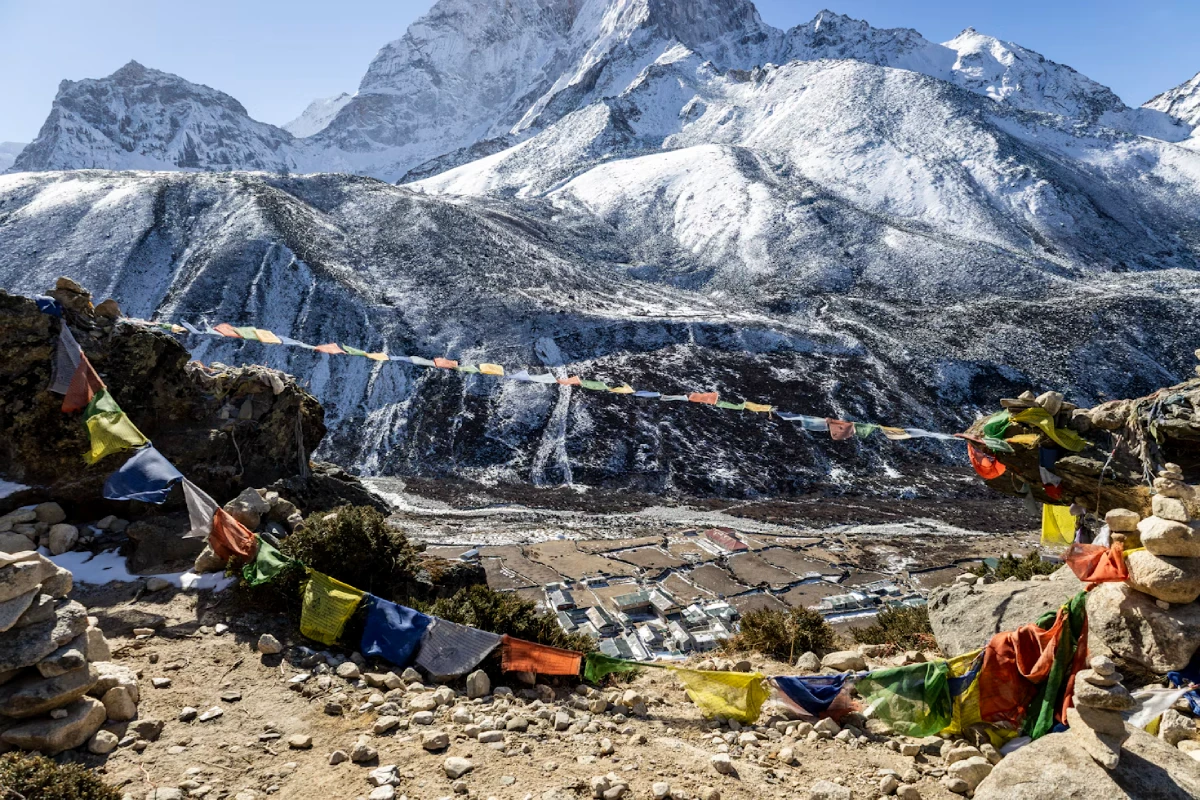
South Everest Base Camp Trek 12 days

South Everest Base Camp Trek 12 days

Duration12 Days
Trip GradeModerate
Maximum Altitude5,644 meters (18,517 feet) at Kala Patthar
ActivitiesFlying to Lukla, trekking through Namche, Dingboche, and Lobuche, reaching Everest Base Camp, and hiking Kala Patthar
Group Size1 to 12
StartsKathmandu
EndsKathmandu

The 12-Day Everest Base Camp Trek is a Khumbu trek from Lukla to Lukla, which ascends to Everest Base Camp at 5,364 m and Kala Patthar at 5,644 m, with Dream Tibet and Travel as your guides at all times. We have arranged for two acclimatization days at Namche Bazaar and Dingboche each, and we never allow any request to swap acclimatization days with summit days, because hasty ascent is the reason why people don’t succeed in this trek.

Our daily health tests include oxygen level measurement, sleeping patterns, and eating habits, and in case the situation worsens, we take action for the individual or the whole team. The flights from Kathmandu to Lukla will be booked for the early morning slots, as Lukla weather becomes cloudy in the late mornings. Group Rates start from US$1,190 per person.

Everest Base Camp Trek 12 Days Overview

Everest Base Camp Trek 12 Days with Dream Tibet and Travel starts from Lukla (2,840 m) and takes us up to the Sherpa settlements of Khumbu via Everest Base Camp (5,364 m) and Kala Patthar (5,644 m). Our itinerary involves traveling through Lukla, Phakding, Namche Bazaar, Tengboche, Dingboche, Lobuche, Gorak Shep, back through Pangboche and Namche Bazaar again. 

Our itinerary avoids routes such as those descending to Pheriche after Kala Patthar and goes to Pangboche (3,930 m) on Day 9, which becomes one of the longest walking days in this trek.

There are two acclimatization days in our itinerary: the first one is the one spent in Namche Bazaar (3,440 m) on Day 3 and the second one is on Day 6 in Dingboche (4,410 m), both involving going up to the viewpoint and returning to the same village to sleep. 

The days are not shortened due to delayed flights or the wishes of customers to shorten their trek. Lakpa Sherpa and Chhiring Sherpa, our experienced Everest guides who organize and watch over the mountain journey and assess guests' fitness to continue the trek, have completed more than 60 Everest region trips and have more than 15 years of experience.

The highest stop during the night is Gorak Shep (5,140 m), which we return to from our visit to the Everest Base Camp before our climb to Kala Patthar the next morning. We treat Kala Patthar as a key stop of our trek since it offers a better look at the summit of the mountain than Base Camp. However, neither site takes priority over the trekkers' health condition, and we have the right to change the plan in case of necessity.

Dream Tibet and Travel arranges the flight from Lukla, permits for the trek, accommodation in the teahouses and the return transportation. Our airport representative, Bikas Lamichhane, helps to deal with any problems that may arise during our flights in Kathmandu. In case of bad weather, we give preference to the next available flight, without discussing the use of a helicopter service separately charged. We inform the clients of these restrictions before the start of the trek.

Mount Everest Base Camp Trekking Spring and Autumn 2027 Cost and Bookings

The Everest Base Camp Trek 12 Days is available for booking in Spring 2027 (March-May), as well as in Autumn 2027 (September-November). Our Founder & Managing Director, Ram Chandra Lamichhane, and our Marketing Director, Kalpana Lamichhane Neupane, are the designated contacts for all bookings through the company. Travellers have the option of either opting for private travel or joining a group.

We are offering the following 2027 Everest Base Camp Trek group discounts, calculated per person:

Group size

Regular price

2027 booking price

1–4 people

USD $1,350

USD $1,250

5–8 people

USD $1,330

USD $1,230

9–12 people

USD $1,310

USD $1,210

13–18 people

USD $1,290

USD $1,190

The following guides, some of whom have over 15 years of guiding experience and have led 60 trips to the Everest region, work for us as guides in the Everest area: Lakpa Sherpa and Chhiring Sherpa. 

One of the booking conditions is critical: We would never cut out the acclimatization days in Namche Bazaar and Dingboche for your shorter vacation, especially if you are an inexperienced traveler. It is highly recommended to plan some extra days in Nepal after your trek because of the problems with flights from Lukla.

For 2027 departures, please get in touch with us, Dream Tibet and Travel, with your proposed travel month, your group size and date of arrival in Kathmandu. We will give you all necessary information about pricing and departure dates.

Highlights for Highest Mountain Base Camp Trek

  • Base camp Visit: Reach the base of Mount Everest (8,848.86 m), the world's highest mountain.
  • Sunrise from Kala Patthar (5,644 m): Observe the sunrise from Kala Patthar hitting Everest, Nuptse, Pumori and the ridges of the Himalayas.
  • Walk along the Khumbu Glacier: Cross glacier debris and difficult moraines created by one of Nepal's most famous high-altitude glaciers.
  • Come experience Sherpa village life: See the stone houses, fields, mountain markets and the historic Buddhist shrines.
  • Visit Tengboche Monastery: Tengboche is the heart of spiritual traditions of the Khumbu region. The oldest monastery in the mountains, it is the spiritual hub of the mountaineers.
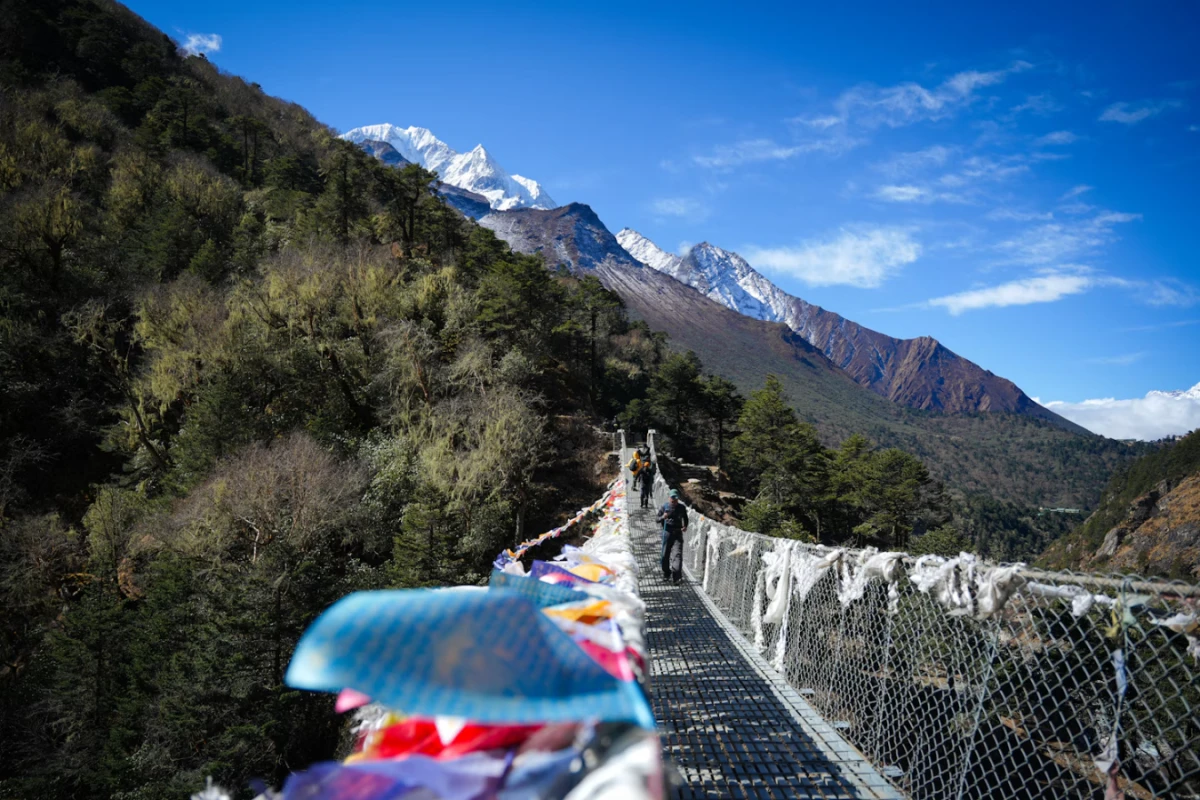
  • Cross the Hillary Suspension Bridge: Cross above the rushing waters of Dudh Koshi along a historic trail to Namche Bazaar.
  • Trekking within a UNESCO-protected area conserving the Himalayan environment and wildlife, as well as the Everest massif.
  • Climb with Everest guides: Go adventuring with the professional climbers of Dream Tibet and Travel in the Khumbu.
  • Experience the Everest expedition place: witness the change of seasons in Everest mountaineering activities around the Everest Base Camp.

Why Choose Dream Tibet Travel and Tours for the Everest Base Camp Trek 12 Days?

Dream Tibet Travel and Tours was established in 2003, and we have been working in Himalayan travel and tours with our founder, Ram Chandra Lamichhane. Kathmandu-based, with local staff providing direct service to you, avoiding most of the middlemen.

Our trekking crew is led by Dawa Sherpa, a local guide born and raised in Solukhumbu. Dawa started as a porter, and now he is an expedition leader for higher elevation expeditions. Lakpa Sherpa and Chhiring Sherpa have over 15 years' experience as guides in the Everest region and have undertaken 60 or more trips with our trekking crew.

As our Manager since 2018, Bikram Bhandari handles our field and office teams. Stay in touch with our team in Kathmandu even after hours, thanks to our live-in team of 24/7 support staff.

Everest Base Camp Trek 12 Days with Daily Departures and Local Sherpa Guides

The Everest Base Camp Trek 12 Days starts from Kathmandu, where you can book your tour anytime according to your convenience as a solo traveler, couple, or even as a private group. During our spring and autumn 2027 seasons, we accept bookings on daily basis depending on guide availability, flight schedule, and trekking plan. You need not be part of the group to have your own departure date.

The 12-day itinerary has its own structure that you must consider before booking. On Day 8, Everest Base Camp is visited, whereas on Day 9, Kala Patthar and a longer descent towards Pangboche are done.

Our 2027 Everest Base Camp Trek Departure and Booking Details

Booking detail

Dream Tibet and Travel arrangements

Trip duration

12 days and 11 nights

Departure location

Kathmandu, with Lukla flights possibly operating through Ramechhap

2027 departure season

Spring and autumn

Departure frequency

Daily departure requests accepted, subject to confirmation

Group options

Solo, couples and private groups

Starting package price

USD 1,190 per person for 13–18 travelers

Price for 1–4 travelers

USD 1,250 per person

Trekking guides

Lakpa Sherpa and Chhiring Sherpa, subject to assignment

Highest trekking point

Kala Patthar, 5,644 m

Kathmandu coordination

Bikram Bhandari, Nepal operations manager

Airport coordination

Bikas Lamichhane, airport representative

Our Approach to Daily Departures

There is a distinction between accepting your request to depart and ensuring that there is a Lukla flight available. After choosing your departure date, we will review the logistics and then confirm the booking. A private departure is one where you get to depart with your own group without needing another group to make up numbers.

In cases of groups, we will use our group rate per person as advertised on our website instead of saying each group departure is the same price. Our 2027 Everest Base Camp Trek departures are based on your preferred date and group size.

Everest Base Camp Trek 12 Days with Kala Patthar Sunrise and Sunset Hike Options

At Dream Tibet and Travel, there are two options for visiting Kala Patthar (5,644 m), which depend on your desired photographic environment, fitness and weather conditions. Lakpa Sherpa and Chhiring Sherpa will be able to determine which one is appropriate for your trek.

Kala Patthar Sunrise Hike

We will start our hike from Gorak Shep at 4:30 AM, walking in darkness under the starry sky. When dawn comes, the peaks of Everest, Nuptse and Pumori will reveal themselves before us. The sun illuminates the high ridges while it is still dark in the valleys. Cold winds and low temperatures make the hike rather challenging.

Kala Patthar Sunset Hike

We can organize an afternoon ascent from Gorak Shep as long as there will be enough daylight, good weather and energy. The upper slopes of Everest will reflect the golden rays of the evening sun, while the glaciers will sink into darkness. It will require changing our regular Base Camp program.

No Kala Patthar Hike Option

Many of our clients are satisfied with the hike to Everest Base Camp. We will respect your decision not to ascend to Kala Patthar. The extra hike is optional and will not be forced on you.

Everest Base Camp Trek with Front-Row Views of Mount Everest, the World's Tallest Mountain

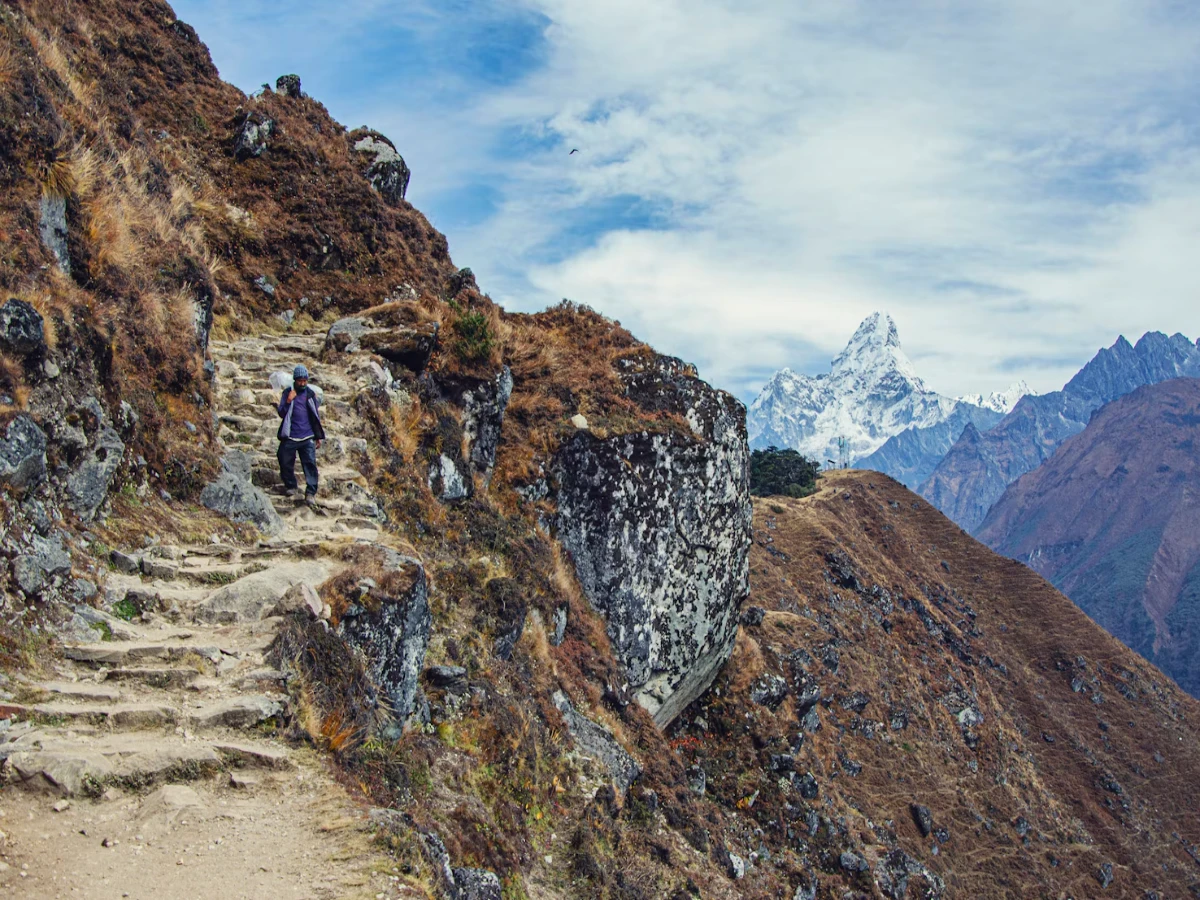
The Everest Base Camp Trek 12 Days will introduce you to the Himalayas, under Mount Everest (8,848.86 m), the highest mountain in the world. With Dream Tibet and Travel, you'll walk on the paths where Everest is revealed for the first time among the peaks near Namche Bazaar, along with the peaks of Lhotse, Nuptse, and the unique pyramid of Ama Dablam.

When approaching the Khumbu Glacier, Everest Peak becomes partially obscured behind Nuptse. It may be quite surprising to the trekkers, who expect to see the full panoramic view of the mountain from the Base Camp. The best viewpoint is from Kala Patthar (5,644 m), where Everest towers above all other peaks and behind you is the peak of Pumori and the Khumbu Icefall beneath.

We consider that it is one of the trekking highlights.
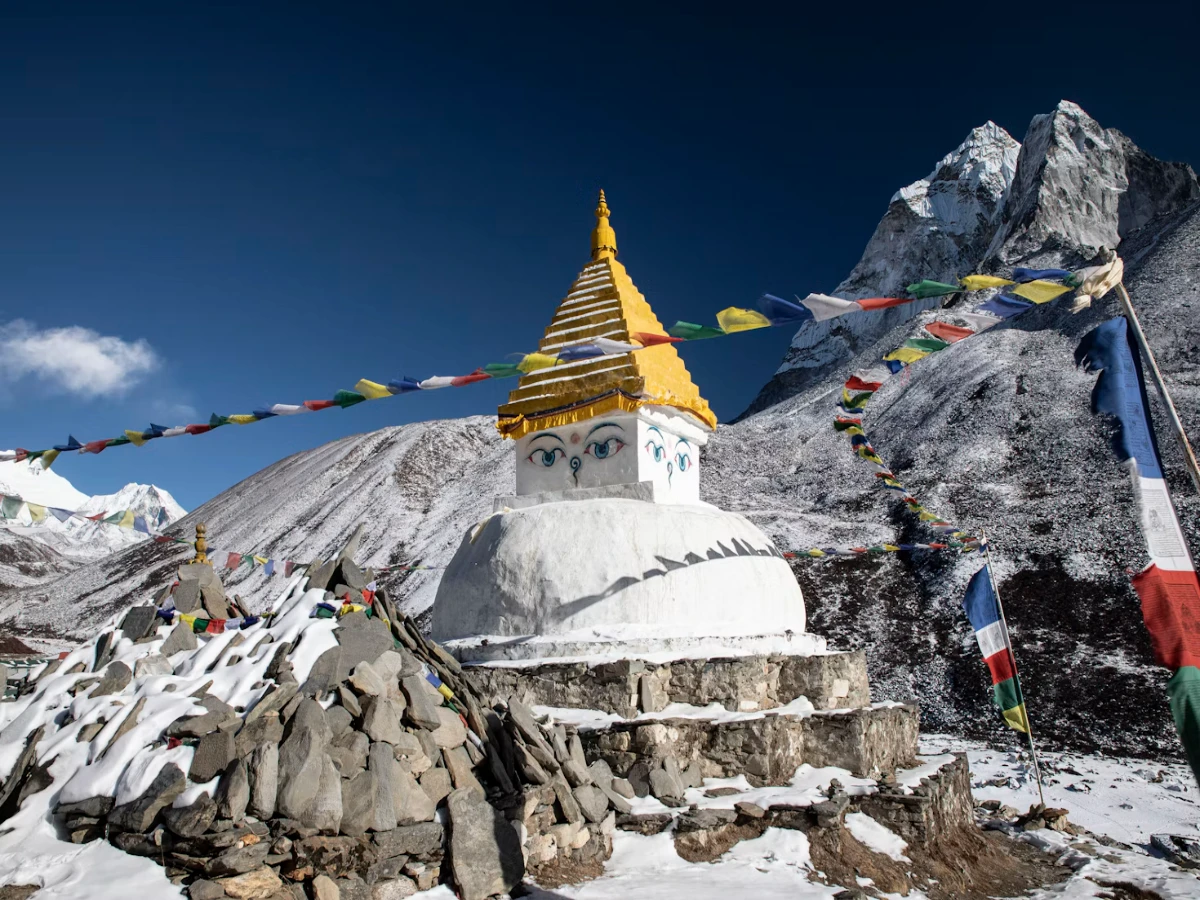
Itinerary

Himalaya Everest Base Camp Hike 12 Days Itinerary Overview

Our Everest Base Camp Trek 12-day tour takes into account the fact that there will be two acclimatization days and a special visit to the Everest Base Camp, along with an early trip up to Kala Patthar. With Dream Tibet and Travel, we have opted for a tough return route to Pangboche rather than terminating Day 9 at Pheriche, which involves coming down from Kala Patthar (5,644 m) to Pangboche (3,930 m).

Lakpa Sherpa and Chhiring Sherpa are our Everest guides who boast 15+ years of guiding experience as well as 60+ trips to the Everest region. They are responsible for assessing the walking pace and deciding when turnarounds should take place.

Our Complete 12-Day Everest Base Camp Trekking Schedule

Day

Route and daily activities

Overnight

01

Kathmandu to Lukla flight; walk through Chheplung to Phakding

Phakding (2,610 m)

02

Cross Hillary Bridge and enter Sagarmatha National Park en route to Namche

Namche (3,440 m)

03

Acclimatization hike toward Hotel Everest View; return to Namche

Namche (3,440 m)

04

Trek via Phunki Tenga to Tengboche Monastery

Tengboche (3,810 m)

05

Walk through Pangboche and the Imja Valley to Dingboche

Dingboche (4,410 m)

06

Acclimatization hike toward Nangkartshang Ridge

Dingboche (4,410 m)

07

Cross Thukla memorial ridge and follow Khumbu Glacier moraine

Lobuche (4,910 m)

08

Reach Gorak Shep, visit Everest Base Camp (5,364 m), return

Gorak Shep (5,140 m)

09

Kala Patthar sunrise hike (5,644 m); long descent to Pangboche

Pangboche (3,930 m)

10

Return through Tengboche and Phunki Tenga to Namche

Namche (3,440 m)

11

Descend through Monjo and Phakding; final climb to Lukla

Lukla (2,840 m)

12

Morning flight from Lukla to Kathmandu

Trek concludes

How Our Everest Guides Manage the Most Demanding Stages

Our schedule lists particular duties instead of relying on a generic trekking guide to take charge of everything.

  • Day 1, Lukla: Lakpa Sherpa checks the participants' boots and packs before setting the pace for walking.
  • Day 2, climb up to Namche: Chhiring Sherpa follows the group and helps the slower climbers reach their destination on the last stretch.
  • Day 6, Dingboche: Lakpa informs the climbers about warning signs at high altitude and how to act accordingly before proceeding to Lobuche.
  • Day 8, Base Camp: Chhiring looks into the present moraine path along with other guides instead of just taking the old one from the previous year.
  • Day 9, Kala Patthar: Lakpa sets a turn-back time for the participants before leaving. If necessary, climbing will take second place to a safe return.

The Route Decision We Want You to Understand Before Booking

Pangboche Descent is the most critical part of scheduling in our return journey itinerary. You have to complete the hike up Kala Patthar, then trek back down through several villages until you reach your lodge.

This is not listed as an easy day just because the rest of the trip will involve some loss of altitude. Our guides give information about how hard it will be, and even suggest that trekking poles will help beforehand.

Also, there is no day in our itinerary dedicated to Lukla flight cancellations. In case of any flights being delayed, our Kathmandu staff will find other options without necessarily eliminating the acclimatization days.

Our pledge is to inform you of the hard parts of the route before booking, not after you experience them.

Trip PlanExpand all
Max Altitude: 2,610 m Meals: Breakfast - Lunch - DinnerAccommodation: Teahouse

We take the first flight out in the morning since Lukla gets cloudy later on in the morning and the delays pile up quickly. It takes about 35 minutes to get there, and we brief you in detail about the short, sloping runway the previous evening to avoid any surprises. Lakpa Sherpa greets the team in Lukla, inspects all bags and boots, and will set the pace for the entire trek.

The first day is purposely kept short: about 3 hours downhill to Phakding, with prayer walls and suspension bridges over the Dudh Koshi. We have rejected all requests to continue to Monjo on day one, even from strong teams, since we have seen fit trekkers regretting that decision in Namche. Tonight is an early dinner and early bedtime.

Regarding flights to Lukla: Flights to Lukla are the most unpredictable aspect of any Everest trek, and nobody can control the weather. During peak seasons, Lukla flights can take off from Ramechhap (Manthali) instead of Kathmandu, which means a 4-5 hour drive starting from around 2 AM. We make sure each of our guests knows about this prior to confirming the booking. If your Lukla flight is cancelled, this is exactly what we do:

  1. Check the situation in advance. Our local coordinator is in contact with the airlines and airport authority from 6 to 7 AM and provides us with direct information.
  2. Be patient during adverse weather conditions. We know that flights start again in the second half of the morning or in the early evening, so we keep our passengers waiting in the airports or hotels with transport available.
  3. If a flight is canceled on a particular day, we rebook our passengers for the morning flight on the next day. The ticket and hotel extension will be done by Bikas Lamichhane in Kathmandu, so your trip will only be delayed by one day without any extra charge from us.
  4. Helicopter transportation services are provided. If a group has already booked an international flight, arrangements are made for hiring a helicopter jointly, for which charges will be quoted beforehand.
  5. The trek plan is shortened; however, the safety days will not be touched. If any day is canceled, we shorten the reserve without affecting the acclimatization days.
  6. We assist in the onward journey. We can help you rebook your international flights in case this happens, though it is outside our control, which is why we have buffer days.

This is carried out by Lakpa Sherpa and Chhiring Sherpa. Both are experts with over 15 years of experience as guides in the Everest region, with more than 60 successful trips.

Max Altitude: 3,440 m Meals: Breakfast - Lunch - DinnerAccommodation: Teahouse

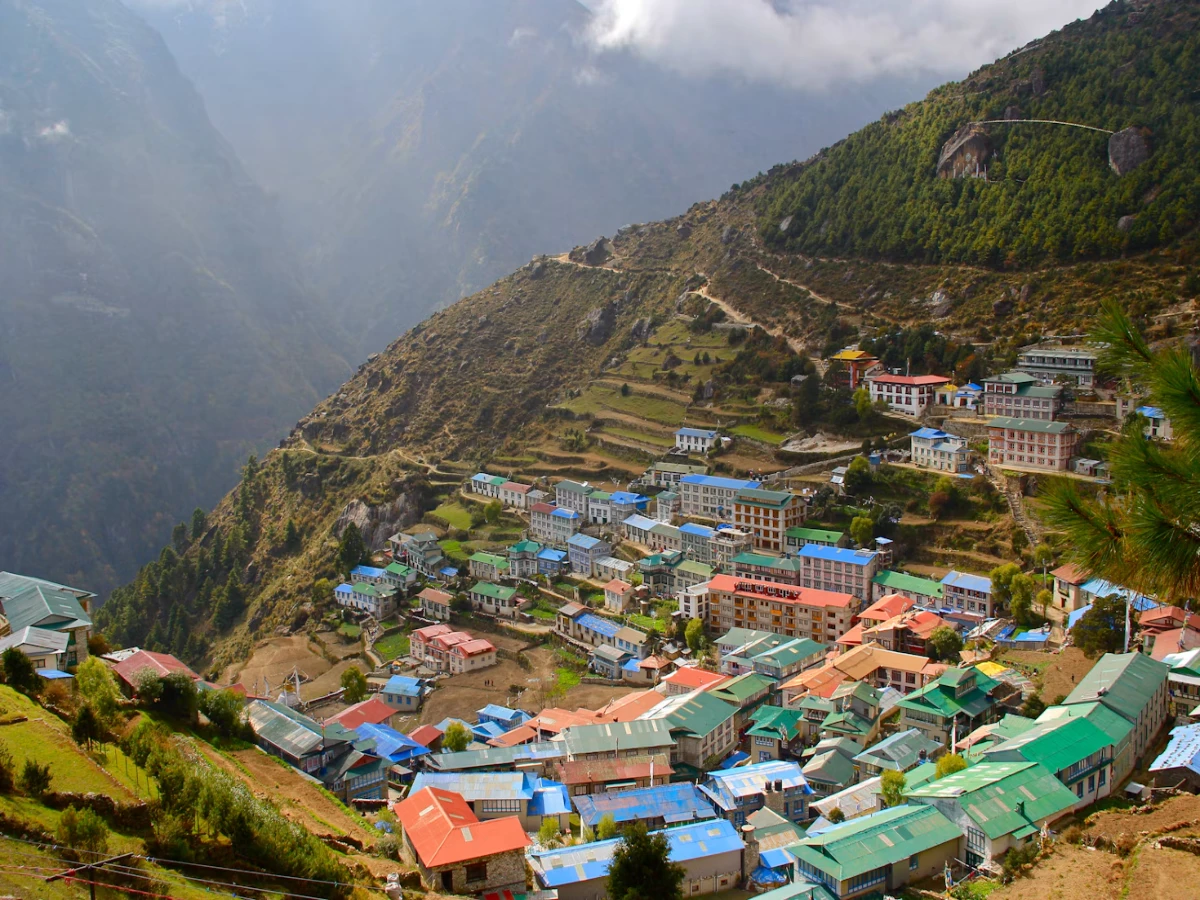
It is the first real test, and we speak honestly about it. The route traverses several suspension bridges and enters Sagarmatha National Park at Monjo, where we complete permit checks on our own, then climbs for around two hours after reaching Hillary Bridge. That last section is around 600 meters uphill, and it is where we closely observe the breathing and mood of everyone. Chhiring Sherpa walks at the back today so even the slowest walkers are never hurried. The first signs of Everest could be seen along the way, but we can’t ever guarantee that since it all depends on the weather. Namche emerges as a bowl of stone houses, bakeries, and shops selling the equipment and we choose lodges which provide enough heating, because sleep quality is what matters here for the next 10 days.

Note: Drink 3-4 liters of water today. We aim to get every group on the right track by giving everyone a thermos of hot water at each milestone of the pack, which is constantly refilled by our support team. If anyone has difficulty breathing on last hill, let us know immediately. It is better to take 10 min than lose you for two days.

Max Altitude: 3,440 m Meals: Breakfast - Lunch - DinnerAccommodation: Teahouse

We will not cut short this day, and we have turned away groups that have requested to do so in order to get more trekking days later. The theory is simple: climb high, sleep low. The morning walk is a steady climb to the Everest View Hotel, situated at around 3,880 meters. This promises spectacular views of Everest, Lhotse, and Ama Dablam before we turn back to camp at Namche for the night. The day offers fantastic views of Everest, Lhotse and Ama Dablam before descending to camp at Namche in the evening. Visit the Sherpa Museum and have some snacks at a local bakery.

Dawa Sherpa conducts a daily medical examination in the evening, taking note of your resting heart rate, sleeping patterns, appetite, and headaches. If any of you are showing cause for concern, we will let you know and make adjustments for the duration of the trek as necessary. It will not come at the expense of comfort, but never at the expense of safety.

Note: Namche is the last stop on the way to Everest Base Camp with ATMs and shops. It is best to buy any gear you may need here and not higher up the mountain. At higher altitudes, prices are significantly marked up, and options are much more limited. We have a list of recommended rental shops, and we suggest renting down jackets and sleeping bags as opposed to bringing bulkier clothing and gear from home.

Max Altitude: 3,810 m Meals: Breakfast - Lunch - DinnerAccommodation: Teahouse

The track runs through the mountain range over the Dudh Koshi River, with the great peak of Ama Dablam in sight for the majority of the day. There is a great chance to catch a glimpse of the Himalayan goat, and with a lucky chance, the different types of pheasants near Sanasa. The path descends down to the river at Phunki Tenga to have lunch, and then it starts climbing considerably for a couple of hours through the subtropical forests full of various trees such as rhododendron and juniper.

The climbing in that part becomes much more difficult than the figures may indicate, so we rather suggest travelers keep up with the pace instead of running after the group leading the way. The monastery itself is the biggest monastery in the region, where afternoon prayers start around three in the afternoon, and we try to get there in such a way that people can have time to relax before the prayers begin.

Note: Nights at Tengboche really do get cold. We advise appropriate layering pre-dinner and distribute hot water bottles during evening prep. Photographer regulations are in place at the monastery, and we clarify matters with the monks before visiting.

Max Altitude: 4,410 m Meals: Breakfast - Lunch - DinnerAccommodation: Teahouse

Today the scenery changes a bit. The trees become sparser, the valley widens, and the trail heads through Pangboche, one of the oldest villages in this region, before entering the Imja Khola valley. We walk at a slow-ish pace today because of the 600-meter gain and the resulting less dense air. Sonam Tesi Sherpa, our head cook on this trip, has a policy of more garlic soup, more fluids, and no heavy meat dishes at this elevation.

Some guests try to order fried foods, which we talk them out of, as there's much better food available and we're watching their protein intake. The village of Dingboche is nestled among stone-walled barley fields, with the great Ama Dablam rising close enough to feel enormous. The winds begin to kick up in the afternoon, so we get everyone inside by early evening.

Note: We take your oxygen saturation and resting pulse before dinner. Having an oxygen saturation that's low but remains steady is common in this high altitude environment. A reading that drops overnight is not.

Max Altitude: 4,410 m Meals: Breakfast - Lunch - DinnerAccommodation: Teahouse

Today is the day we take the utmost care with because it determines how many people make it to Gorak Shep in good condition. The hike in the morning ascends to 5,000 meters on the ridge located behind the village, which offers a view of Makalu, Lhotse, and Island Peak. We stop long before getting tired and go back to the low camp to sleep. Tourists frequently inquire about skipping the hike in favor of resting.

We decide either to allow it or not based on how one sleeps at night and what gets recorded on the oxygen meter, but we are opposed to having a day without hiking as we believe that it is not good for acclimatization. In the afternoon, we wash clothes, read and drink tea. Lakpa Sherpa speaks about the symptoms of mountain sickness and what to do if any symptoms appear, as everybody needs to know what actions to take before reaching Lobuche.

Note: Headaches, nausea, and bad sleep at an altitude of 4,400 meters are common, whereas a severe headache, confusion, or inability to stay upright are uncommon and require immediate descent. We never argue about this with guests or ourselves.

Max Altitude: 4,910 m Meals: Breakfast - Lunch - DinnerAccommodation: Teahouse

The trail winds upward gently through the valley, then more steeply toward Thukla Pass (elevation 4,830 meters), where memorials in the form of cairns mark the spots where climbers have perished on Everest. We stop briefly at the pass, where many of our guests find this to be the most poignant leg of the journey.

The trail drops gently from the pass along the moraine of the Khumbu Glacier to Lobuche. The cold becomes increasingly challenging as night temperatures drop below freezing and the lack of heat in the lodging becomes more apparent. Appetites shrink dramatically in the cold, so we encourage frequent, small meals rather than large ones. If you're feeling ill or your condition worsens, we'll turn back with you, altering the itinerary as needed.

Note: Keep your water bottles in your sleeping bag at night, or they'll freeze. You might also want to bring along a supply of salt tablets, since water can be difficult to retain in your system in these conditions.

Max Altitude: 5,364 m Meals: Breakfast - Lunch - Dinner

This day involves the longest part of the journey; however, we leave early (about 7 AM) so we can get to Gorak Shep in time for lunch and also have time for the trek to base camp. The glacier moraine is difficult and slow, so we move together as one group there.

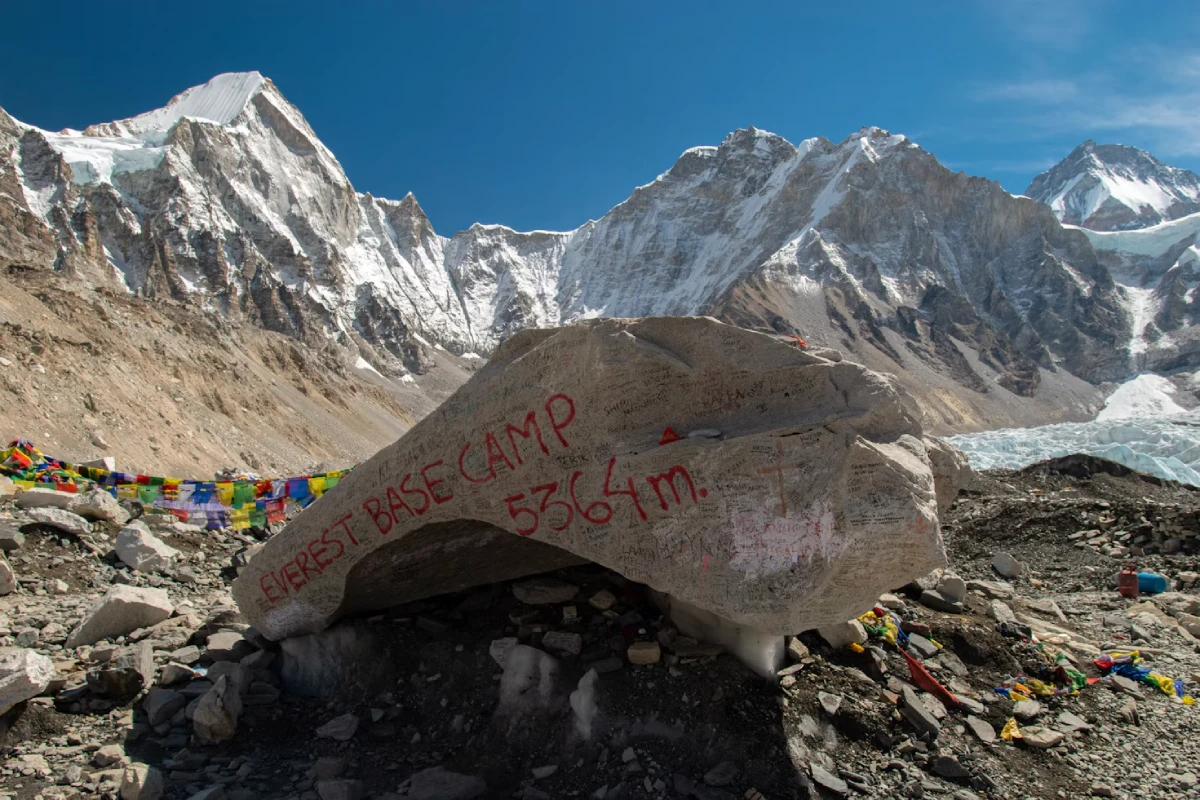
We spend about 30-45 minutes at base camp because, at 5,364 meters above sea level, the altitude is hard to cope with; however, we explain that views make one stay shorter. The view from base camp is not at all impressive, but it has the Khumbu Icefall, flags, and the opportunity to feel the atmosphere of an expedition.

If conditions change, we turn around without any discussion. Gorak Shep is known for its cold temperatures and is chosen as a suitable place with poor conditions for sleep.

Note: The base camp route and trail conditions change each season. Chhiring Sherpa follows the same route as other Sherpa guides to verify the specific path being used, rather than assuming the route used in previous seasons.

Max Altitude: 5,644 m Meals: Breakfast - Lunch - DinnerAccommodation: Teahouse

We rise at 4:30 AM for Kala Patthar, where the light on Everest, Nuptse, and Pumori is best in the hour following sunrise. The walk to the summit is a grueling 90 minutes to two hours, made more difficult by the cold and the steepness of the climb. We encourage everyone to eat something warm before starting, despite the lack of appetite.

Lakpa Sherpa sets the leisurely, measured pace, and designates a turnaround time before we set off: if we aren't near the summit when the designated time arrives, we'll turn back. The view from the summit is worth the effort; it's our favorite viewpoint of the trek, offering an even more spectacular view than the one at base camp.

After you've taken the important photos and had your breakfast, we'll begin our long descent through Lobuche and Dingboche to Pangboche, dropping nearly 1,700 meters. Knees are tested on this leg, and we'll stop to school you on a downhill technique.

Note: Trekking poles are your friends on this leg of the hike. If you don't have a pair, rent a set in Namche on day 3-we'll carry an extra set, too.

Max Altitude: 3,440 m Meals: Breakfast - Lunch - DinnerAccommodation: Teahouse

The air feels heavy and at times you seem to be able to sense that energy and that now you might regain your appetite in a matter of hours. We follow the low trail down to Phunki Tenga and Tengboche that from Tengboche heads steeply uphill to Namche, which can be quite a challenge to a worn out body. Since the trek takes a full seven hours, we get an early start with a hearty breakfast.

Today, we are a little more comfortable, and our language skills are beginning to improve. We will enjoy a celebration dinner in Namche and pick up some baked products or small gifts. The accommodations in Namche have hot showers that can be depended upon, and we book for any extras beforehand.

We give guests feedback forms tonight since we read them all after each departure and have changed the details of the trekking routes based on their feedback.

Note: Tipping instructions for guides and porters will be provided to you before you start your trek so that you do not wait until the last night of your trek to find out who should be given tips and to avoid unsure and overly generous tips.

Max Altitude: 2,840 m Meals: Breakfast - Lunch - DinnerAccommodation: Teahouse

This final walking day sounds easy, but it is longer than many guests expect (around 7 to 8 hours), with a last leg into Lukla that is quite challenging after sore muscles. The walk out of Monjo and Jorsale is quick, but we'll remind everyone to take care on the stone steps to protect their knees. We'll cross the same suspension bridges as on day two, but they seem different (and guests often comment on it!). In Lukla, we'll share a farewell dinner with the guides and porters. The weather can be fickle this time of year, so we'll review our contingency plan for tomorrow's flight this evening before anyone goes to sleep.

Note: Pack your Lukla flight bag this evening: passport, copy of ticket, and a small daypack with essentials. Large duffels will be sent on the same (or sometimes later) flight, but that may impact connections for guests with onward travel plans.

Max Altitude: 1,400m Meals: Breakfast - Lunch

Although we schedule the early flight, it is not uncommon for delays to occur in Lukla, nor do we suggest otherwise. The duration of the return flight is approximately 35 minutes, with stunning views of the Khumbu Valley, which may not have been as clear on the way up. The remaining day is free for relaxation after arrival in Kathmandu.

We will keep everyone informed every hour regarding the flight in case of cancellation.

Important notice regarding cancelled flights: In the case of a flight cancellation from Lukla, we will execute the following procedure:

  1. Lakpa Sherpa and Chhiring Sherpa will contact the airline and the airport office and directly inform our clients about the situation.
  2. Our clients will be taken care of in Lukla: they will be provided with accommodation and food, as well as robust rebooking.
  3. We book you onto the next flight available, keeping your group together, if we can do so.
  4. In case you have an international flight from Kathmandu on the same day, we will arrange helicopter services from Lukla to meet your group and quote you accordingly so that you can decide accordingly.
  5. Bikas Lamichhane looks after the Kathmandu situation to make sure that your hotel is secured, air transport is managed, and flights are re-booked whenever necessary.
  6. We suggest our clients leave a spare day after their trek and also inform clients who have booked an international flight on the same day regarding the risks related to their journey that happen beyond our influence.
Couldn't find what you're afterReach out to our travel experts.
Cost Details
Includes
  • Pickup/Drop off at Airport: Transfer in a private car upon arrival and at the time of departure in Kathmandu.
  • Lukla Air Ticket: Round-trip tickets from Kathmandu/Ramechhap to Lukla.
  • Teahouse Accommodation: 11 nights' accommodation at teahouses from Phakding to Lukla.
  • Meals during Trekking: Three meals a day, depending on the menu available at the lodge.
  • Guide: An English-speaking Guide for 12 days of trekking.
  • Porter: Transport of duffel bag within specified baggage limit (One porter for 2 trekkers).
  • Permit: Entrance permit for Sagarmatha National Park and Khumbu Pasang Lhamu Trek.
  • Trekking team cost: Cost of the salary of the guide and porter, food, and accommodation.
  • First Aid Kit: Medicines carried by our guide during trekking.
  • Taxes: Government-applicable taxes and fees.
Excludes
  • Kathmandu Hotel: Night accommodation & dinner/breakfast at the hotel prior to or after trek.
  • International: Flights to and from your country to Nepal.
  • Nepal Entry Visa: Visa fee can be paid after reaching the country.
  • Additional beverages: Bottled water, soft drinks, alcoholic beverages, specialty coffees.
  • Lodge Extras: Paid showers, Wi-Fi, phone charging and laundry.
  • Your boots, your sleeping bags, your down jackets and your clothing.
  • Travel Insurance: Medical treatment, helicopter rescue and evacuation.
  • Specific tips to the trekking personnel.
  • Weather Delays: Additional nights, meals, transportation, or flight changes due to weather.
  • Flight: Optional flight by helicopter or private charter.
  • Personal Expenses: Snacks, souvenirs purchased during travel.
  • Anything that is not included in the approved package contents.
Essential Information

How Difficult Is the Everest Base Camp Trek 12 Days? 

We put our Everest Base Camp Trek 12 Days in the challenging grade, but it does not rely only on the altitude we reach, which is 5,644 m at Kala Patthar. The more important question is whether the trekker can cope with the trekking route we offer. Our schedule provides for two nights in Namche Bazaar, two nights in Dingboche, one night in Gorak Shep and a difficult descent from Kala Patthar to Pangboche. It would be wrong to evaluate this tour based on the distance one has to cover to get to Everest Base Camp.

Lakpa Sherpa and Chhiring Sherpa work as our guides in the Everest region and have over 60 and 15 years of experience, respectively. Their responsibilities in our trekking process are clear. Chhiring is responsible for participants who do not climb, and Lakpa is in charge of establishing the proper pace for walking.

Where Does Our Everest Trek Become Most Difficult?

Trek stage

Actual challenge

Our operating decision

Day 2: Phakding to Namche

830 m increase in sleeping altitude

Chhiring stays with slower walkers

Day 5: Tengboche to Dingboche

600 m sleeping-altitude gain

Maintain a controlled pace and review symptoms

Day 7: Dingboche to Lobuche

Sleeping elevation reaches 4,910 m

Reassess anyone showing worsening symptoms

Day 8: Everest Base Camp

Extended walking across glacial moraine

Turn back if conditions become unsafe

Day 9: Kala Patthar to Pangboche

Early climb followed by more than 1,700 m of descent

Establish a turnaround time before the viewpoint ascent

Why We Consider Day 9 More Demanding Than Reaching Everest Base Camp

While several Everest treks terminate on day nine in Pheriche, our route proceeds towards Pangboche at a higher elevation of 3,930 m, right after climbing Kala Patthar.

This adds a certain complexity to the situation. The group will be going to sleep at a significantly lower altitude; however, they should prepare to deal with a long day of climbing before dawn breaks. Those who have a hard time descending for long distances should think twice before choosing a 12-day trek on Everest.

Our guides let everyone in the group know about descending and the use of trekking poles prior to this stage of the journey.

Who Should Not Book This 12-Day Everest Base Camp Itinerary?

We would recommend against this itinerary for any traveler who is not able to walk mountains in a row, needs long recovery after a normal hike, or has any medical issues that prevent them from embarking on difficult trips at high altitudes. We also do not endorse offering the itinerary without stops for acclimatization in Namche or Dingboche. 

As per our operating policy, we will always include both acclimatization stops, while the group can choose the ascent speed. Dream Tibet and Travel doesn’t guarantee reaching Everest Base Camp for every paying tourist. Continuing the trip in case of suspicion of acute altitude sickness is no valid excuse for not attending medical treatment or descending.

The thing we want our tourists to understand quite clearly is that our guides can always modify the distance of the planned hike, but they will never take matters of safety lightly because of the schedule or payment.

What Permits Are Required for the Everest Base Camp Trek 12 Days in 2027?

The most common route for your Everest Base Camp Trek 12 Days: Lukla 2 Passes. Entry documents for all Everest Base Camp Trekking expeditions through Lukla include the two required main documents. The following 2 passes are visited separately, and the passes are issued separately. If you do not pay the municipality fee, you will not be able to access the National park.

You should always verify both permits with the traveler's passport before starting the trek. Any spelling mistake, wrong nationality or missing document may cause problems at any of the checkpoints. We will cross the area where the permit is checked on day 2; we will travel from Phakding to Namche Bazaar.

Everest Base Camp Trek Permit Fees for 2027

The following are the published 2026 rates. Fees for spring and autumn 2027 should be reconfirmed before departure.

Permit

Foreign nationals

SAARC nationals

Khumbu Pasang Lhamu Trek Card

NPR 3,000

NPR 2,000

Sagarmatha National Park

NPR 3,000

NPR 1,500

Total

NPR 6,000

NPR 3,500

Permit Checks Along Our Lukla Route

We recommend handling the paperwork in this order:

  1. At Lukla: Register or validate the municipality Trek Card using the official registration procedure locally.
  2. At Monjo: Submit the necessary documents at the entrance to Sagarmatha National Park.
  3. During the entire journey: Keep the permits handy for future checks.

TIMS Card and Additional Permit Requirements

In general, the typical route from Lukla to Everest Base Camp works with the municipality Trek Card instead of a separate TIMS. However, the regulations stipulated nationally and locally have not always been consistent. Accordingly, we would recommend checking what applies right before the day of travel in 2027.

The itinerary does not involve obtaining any Gaurishankar Conservation Area permit because travelers head to Khumbu from Lukla and not through Jiri.

Clients of Dream Tibet and Travel must receive clear information about the government fees included in their package offer in written form. We do not consider it appropriate to present permits that have already been included in the trip price as free permits.

Food, Drinking Water and Teahouse Accommodation on the Everest Base Camp Trek

As we approach the Gorak Shep region from the lower Dudh Koshi Valley, we notice changes in food and accommodation plans. We prefer teahouses based on their ability to prepare meals, provide accommodation, and cater to our group rather than just spreading the word about hotels built in the higher-altitude mountains.

Lakpa and Chhiring Sherpa, our guides in the Everest region, who have gained over 15 years of experience and made more than 60 trips, help our guests know what to expect in terms of the accommodation during the overnight stops. Actually, Sonam Tesi Sherpa, our trekking guide/head cook, is closely associated with the food management system described in the itinerary. His participation in planning cooking at teahouses depends on the previous agreements as well.

Teahouse Accommodation Along Our 12-Day Route

Trekking stop

Nights

Accommodation and facilities

Phakding

1

Local teahouse, generally with twin-sharing rooms and basic bedding

Namche Bazaar

2 + 1

Broader lodge choices, with some properties offering attached bathrooms and paid hot showers

Tengboche

1

Mountain teahouse with simpler bedrooms and often shared toilets

Dingboche

2

Stone-built lodges, communal dining areas and limited room heating

Lobuche

1

Basic high-altitude accommodation, with cold bedrooms and shared amenities

Gorak Shep

1

Simple rooms, limited water availability and fewer accommodation choices

Pangboche

1

Traditional village lodges and communal dining facilities

Lukla

1

Established trekking lodges with relatively better access to services

We do not guarantee attached bathrooms, electric blankets or heated bedrooms along the route. Accommodation should be viewed as mountain accommodation for the majority of the trek (especially in Lobuche and Gorak Shep).

Food Available During the Everest Base Camp Trek

We don't pre-order the same menu for all travelers. Travelers select their meal from the menu of the teahouse, and our guides help them select the most feasible menu given the walking schedule.

Meal

Common choices on the Everest trail

Breakfast

Porridge, Tibetan bread, pancakes, boiled or fried eggs, toast, tea and coffee

Lunch

Dal bhat, vegetable fried rice, noodles, potato dishes, thukpa and momos

Dinner

Dal bhat, vegetable soup, pasta, Sherpa stew, fried noodles and potato curry

Drinks

Black tea, ginger tea, lemon tea, hot water and instant coffee

These are typical Khumbu teahouse options, not a guarantee that every dish will be available at every lodge.

Our Guides' Approach to Eating at High Altitude

In our trekking itineraries, Sonam Tesi Sherpa prefers garlic soup, less hearty meals, and fluid intake over heavier meat dishes at higher altitudes. Garlic soup prevents altitude sickness, but it is not a treatment for altitude sickness.

Lakpa Sherpa and Chhiring Sherpa also advise guests on fluid management and preparation of water for cold overnight stays. At the Lobuche, our recommendation is to keep a bottle of water in a sleeping bag to avoid freezing.

We recommend that our guests eat enough fresh food and not force themselves to eat any specific meals. Vegetarian meals are often more accessible at higher camps due to the lack of cold storage facilities.

Sleeping Arrangements and Personal Facilities

A typical teahouse bedroom accommodates two single beds, mattresses, pillows, and blankets. Some lower altitude lodges have attached bathrooms, but shared bathrooms are the norm at higher altitudes. A personal sleeping bag is still recommended.

Hot showers, wifi, battery charging, and boiled water for drinking are available at an additional cost. However, such comforts are not available in all teahouses.

Mobile Network, Internet Access and Emergency Communication During the Everest Base Camp Trek

Experiencing Everest Base Camp Trek 12 days is at odds with contemporary contact. You will not find a SIM card in Nepal with cellular service at every stop during the trek; your phone access will be inconsistent in populated areas and non-existent on some ridges and valleys. As for the wifi service in the tea houses, you can't always count on it. Dream Tibet and Travel advise our Everest trekking clients to handle their needs in Kathmandu before heading out to Everest, and not depend on high-tech solutions that are never fully reliable.

Mobile SIM Cards and Internet Coverage in the Khumbu

The companies that cover Nepal are primarily Nepal Telecom (NTC) and the private Ncell. In general there is phone coverage everywhere along the trek route, but just bear in mind that your signal may drop anywhere outside of Namche Bazaar. The higher you trek the less likely you will find somewhere with an internet connection. Your options in Dingboche, Lobuche and Gorak Shep are to buy the tea house owners' Internet or try to use the local Wi-Fi.

Please don't get an expensive foreign plan in the misguided hope that you will be able to send emails & texts anywhere. Guests are encouraged to download an off-line navigation program, put all their important documents on their phones and let their families know that being out of cellular range is not a bad thing.

Communication Between Our Guides and Kathmandu Office

All the arrangements from Nepal will be coordinated by Bikram Bhandari. Kathmandu airport arrangements will be coordinated by Bikas Lamichhane.

In order to distinguish a normal message from an emergency message. The late family communication is not an emergency situation but a situation requiring medical help or transportation /trekking schedule change.

The trek guide is the first point of contact for problems during the trek. The coordination by our Kathmandu office will be brought into play more than in a trekking team situation.

Emergency Contact Details Before Departure

Before the start of the trek, the traveler will be asked to provide emergency contacts, insurance policy information and aid telephone number of your insurer. This information will be kept offline.

Our aim is not to ensure a signal at every stop overnight. Our aim is that our guests know who to talk to, what we need to know and why they might not be in touch in an emergency due to conditions, locations and transportation.

Porter Services, Luggage Weight Limits and Baggage Handling on the Everest Base Camp Trek

On our Everest Base Camp Trek 12 Days, your duffel bag and your daypack are two different creatures. The duffel bag comes with the porter from overnight stop to overnight stop, while your daypack stays with you. Dream Tibet and Travel's philosophy on porterage is that a porter should take the weight off your back while trekking, and not add significant weight to a mountain guide's back.

We do not assume that a party of four going together automatically requires two porters. While your group may have arrived on the same flight, if the combined weight of your luggage exceeds what the agreed-upon number of porters can carry, you will need to make other arrangements for the extra bags, not simply divide up the weight among the porters.

How Lakpa Sherpa and Chhiring Sherpa Coordinate Trekking Luggage

Lakpa Sherpa and Chhiring Sherpa, our Everest region guides, are responsible for coordinating the group's travel along the trekking route. Their job with respect to luggage begins with determining what gear needs to be available for clients to access during the walking day.

This becomes especially important on the Lobuche to Gorak Shep leg of the trek. While you will arrive at Gorak Shep before continuing on to Everest Base Camp, your overnight gear will remain at the lodge. The same goes for the next morning on your way to Kala Patthar.

Our luggage logistics work according to your overnight destination, not the highest elevation you reach on any given day.

Porter Allocation and Lukla Flight Baggage Limits

Typical trekking setup is one porter for 2 guests, with the combined client baggage of approximately 20 kg. The most published airline allowance for the flight to Lukla is 15 kg in total, split between checked and hand baggage, but the airline's confirmed allowance will apply.

We distinguish these two weight restrictions: permission to carry baggage on an aircraft does not automatically determine how much a trekking porter should carry.

Luggage Preparation Before the Final Trekking Day

The plan is to come back to Lukla from Namche Bazaar, passing through Phakding. However, today is not a day to learn that excessive shopping, wet clothes, and unutilized equipment have made the duffel heavier than it should be.

Clothes should be kept in separate waterproof bags, and valuables should be kept safe in the personal daypack. Once in Lukla, documents including tickets, passport, and things required for the flight should be ready.

If checked luggage arrives after you do, dealing with the inconvenience of being separated from it for a while should not be a problem as long as medications and travel documents remain accessible.

Travel Insurance, Helicopter Rescue and Emergency Evacuation on the Everest Base Camp Trek

Travel insurance for our Everest Base Camp Trek 12 Days should cover more than just basic hospital treatment. You will be ascending to Kala Patthar (5,644 m), so an insurance policy restricted to trekking below 4,000 m or 5,000 m would be inadequate. From Dream Tibet and Travel, we suggest that your insurance explicitly covers trekking to at least 6,000 m, emergency helicopter evacuation, and treatment and trip interruption.

It is important to distinguish between arranging a rescue and getting approval from your insurance. The trekking team can help to arrange a rescue, but your insurance company decides if they will pay for any of the costs.

Helicopter Rescue Procedures and Our Guides' Responsibilities

Lakpa Sherpa and Chhiring Sherpa, our guides in the Everest region with more than 15 years of experience each, and more than 60 trips between them, are the guides associated with our mountain operations. In case of an emergency, the initial reaction is to assess the situation, not to call for a helicopter rescue

Here is what we will do:

  • Assessment: Guide determines the nature of the problem, the location and urgency, trying to get qualified medical assistance if possible
  • Stop: If there is a suspicion of serious altitude illness, we will stop going up and try to descend as soon as possible. We won't go on to Base Camp, simply trying to keep you from going higher while you are sick.
  • Contact Kathmandu: Our Nepal operations manager, Bikram Bhandari, is the person to contact in our Kathmandu office
  • Coordinate a rescue: We contact your insurance representative and the appropriate rescue company to determine the options available.
  • Get you to a hospital: Where available, arrangements are made to get you to the nearest hospital possible, considering your medical condition.

Insurance Approval, Rescue Payments and Reimbursement

To approve the expenses of your evacuation, your insurance provider may demand verification of your medical condition and approval of treatment, as well as spousal or payment guarantee. Not every evacuation reimbursement may be granted by the insurance company. While some medical service providers pay for medical services themselves, others first take payments from you and then apply for compensation.

Emergency Decisions When Helicopters Cannot Fly

In case of thick fog, wind or any other factor that makes the flight hard, then the helicopter cannot reach such high altitude areas like Lobuche, Gorak Shep and others.

In case of a medical emergency that requires a quick evacuation, one cannot afford to wait for the weather to change. In this case, our guide has to consult the local doctors and make the most of the options available, which might require other forms of assistance.

Medical Treatment, Hospital Transfers and Unexpected Costs

If the case requires hospitalization, then your insurance plan must cover the hospital charges, cost of extending the stay, changes in transportation, and cost of repatriation. These services are subject to your insurance plan's terms and conditions.

It is our obligation to help in the coordination of the rescue mission, but we cannot guarantee the retrieval of the helicopter or insurance claims. Make sure to have your insurance plan and number with you before embarking on the journey.

Best Time for Everest Base Camp Trek

For Dream Tibet and Travel's Everest Base Camp Trek 12 Days, we recommend April and October, but it depends on what you want to see and experience. Our guides, Lakpa Sherpa and Chhiring Sherpa, have more than 15 years of experience and have made over 60 trips to the region, so they know the area's nuances best, which contributes to the trek's success.

Spring: March to May

April is our favored month for seeing the Everest expedition in full swing, but your visit will have to be flexible, as we reach the Base Camp on Day 8 during the climbing season. However, we cannot guarantee you a full view of the camp or an uninterrupted look at the Khumbu Icefall. The mornings are still chilly in March, while May is characterized by more overcast days. Let us know if you'd like to see the sunrise from an open landscape, and we'll plan your trip around that.

Autumn: September to November

We favor October for this Everest Base Camp Trek, when mountain views are at their most spectacular. This is also the best time for taking great pictures since the sky is usually clear. Some trails may still be damp from the monsoon in September, while November can be quite cold, especially when climbing Kala Patthar.

Trekking Equipment and Packing List for Everest Base Camp Trek 12 Days

Rather than spending a fortune on trekking brands, Lakpa Sherpa and Chhiring Sherpa advise investing in well-fitting gear for the Everest Base Camp Trek 12 Days. Your gear needs to be suitable for trekking in the lower Khumbu and the freezing temperatures of Gorak Shep and Kala Patthar.

Trekking Clothing

  • Base layers: 2 moisture-wicking thermal tops and bottoms.
  • Insulation: 1 fleece jacket and 1 warm down jacket.
  • Outerwear: Waterproof, windproof jacket and trousers.
  • Walking clothes: 2–3 trekking trousers and 3–4 quick-drying shirts.
  • Accessories: Warm hat, sun hat, neck gaiter and insulated gloves.

Footwear

  • Waterproof, broken-in trekking boots with ankle support.
  • 4–5 pairs of trekking socks and thermal sleeping socks.
  • Lightweight sandals or shoes for teahouses.

Sleeping and Trekking Equipment

  • Sleeping bag rated approximately −15°C to −20°C.
  • Trekking poles, especially for the Kala Patthar–Pangboche descent.
  • Headlamp with spare batteries.
  • UV-protective sunglasses and reusable water bottles.

Health and Personal Essentials

  • Sunscreen SPF 50+, lip balm and moisturizer.
  • Personal medicines, blister plasters and basic toiletries.
  • Water purification tablets or a suitable filtration system.

Equipment Rental and Gear Checks

  • Rent bulky down jackets or sleeping bags in Kathmandu or Namche.
  • Lakpa Sherpa checks boots and packs at Lukla before trekking.
  • Avoid new boots, cotton trekking clothes and unnecessary electronic equipment.
FAQs

Yes, we can certainly arrange a private Everest Base Camp Trek for you with Dream Tibet and Travel, even if you are the only one going. Your guide will travel with you on your trekking route; you don't have to join up with anyone else. Your accommodation depends on availability of single rooms and the single room supplement, where applicable.

Yes, you can request a female trekking guide, and we'll check availability for your departure date, rather than guaranteeing a named guide before we know what she is like. If privacy and personal comfort are important to you, let us know at the booking stage so we can make arrangements to meet your requirements.

There are no public conveniences at regular intervals. You can use the facilities at teahouses and settlements along the way, but there are some stretches without toilets. Our guide will be able to tell you where the next suitable place to stop will be. Please carry toilet paper and a sealable bag for your waste, and do not leave anything behind.

You can ask for a private room, and we can usually accommodate you in larger settlements, but we cannot guarantee single occupancy throughout your journey. Lodging at both Lobuche and Gorak Shep is limited, and you may find that at peak times, there aren't any private rooms available. Neither does a private trek necessarily mean a private bedroom.

Departures can be discussed, but we do not take age alone as a recommendation for trekking with us. We ask about any previous hiking experience and medical opinion, as well as the willingness of the young person concerned, and the ability to cope with consecutive days in the mountains. A private departure can offer more flexibility, but it doesn't remove the risk factors associated with high altitude.

Sure. Please inform us the date you want to celebrate while you are leaving the trek and we will be able to prepare something in one of our overnight teahouses. A cake or some other food can be arranged in the case of bigger villages according to what is available there, but we usually try to organize something special for you to eat.

According to your location, reasons to stop and people accompanying you, another option can be proposed by us. In no case will we leave a sick trekker alone to keep on moving forward to let other people pass.

Yes, if you wish to extend your stay at Namche or at Sherpa villages, we can arrange another route for you. But an additional night at Namche will make changes to the common 12 days itinerary and to your ticket to and from Lukla.

It may happen that you will see teams of climbers near the Everest Base Camp according to the season. However, we cannot guarantee your access to any part of the expedition or the meeting with climbers. Being part of expedition operations organization, the climbers have to be provided with privacy and access to necessary equipment while working. We kindly ask you not to enter the tents and storage places.

Vegetarian meals are available all around your way; however, it may also be possible to find vegan meals in some local dishes. Food allergies need special attention because the mountain huts cannot guarantee that the meals served in their kitchen are free of allergens. We kindly ask you to inform us about your dietary restrictions in advance.

Yes, you can. Please mention either Lakpa Sherpa or Chhiring Sherpa with your trekking request as these are the Sherpa guides we can provide for Everest trek. We will verify their availability for your dates of travel. Please note a guide request does not confirm until your trek bookings are finalized.

Unforgettable Travel Experiences
October 18, 2026
Exceptional Organization for a Once-in-a-Lifetime Trek

Dream Tibet, Travel provided nothing but exemplary tour coordination skills. This 12-day trip is full of beautiful sites that include everything. The entire team is very friendly, professional and most...

read more +
L
Lina Wilson
Belgium
April 21, 2026
A Magical 12 Days Filled with Professional Care and Safety

High altitude travel may not be easy for some people, yet the company made sure everything was perfect in terms of safety during our travels. They made us understand the...

read more +
D
Destiny Field
United States
November 18, 2025
Flawless Logistics and Unforgettable Himalayan Views

The 12-day trip that we went on with Dream Tibet Travel Company was perfect for us since it offered us the best combination of culture in Lhasa, travel through high-altitude...

read more +
E
Evie O'Brien
United Kingdom
Need Help? Call Us.+977 9851162422