The Kailash Mansarovar Yatra is possible by road, making this the preferred route for thousands of pilgrims every year over the helicopter option. To do so, however, entails crossing some of the highest motorable passes on your way to Mount Kailash (6,638m) as you wind through landscapes formed by the Tibetan plateau, which cannot be seen from above, or in any other way for that matter.
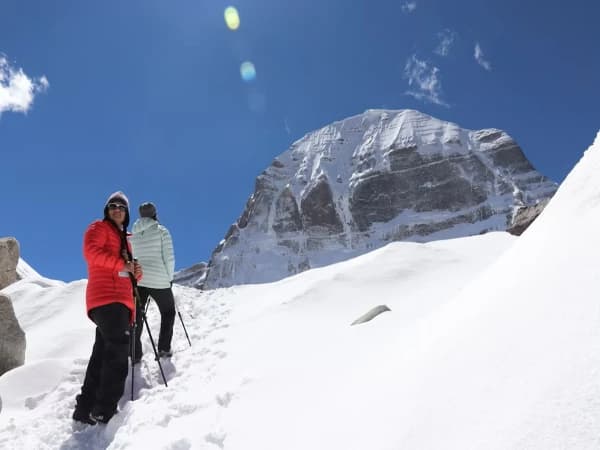
The experience of darshan of Mount Kailash will eclipse that of seeing this mountain from a helicopter at 6,200m altitude. And after you've travelled through the Himalayan foothills and the Tibetan plateau on your way to Lake Mansarovar at 4,590m at a slow and steady speed, it's an arrival that feels truly earned. The road that you travelled to get here makes the arrival all the more significant.
Depending on your choice of route, the Kailash Mansarovar Yatra by road takes approximately 1,800 to 2,200km and takes between 14 and 20 days to complete from Kathmandu, Nepal. Crossing the border from Nepal to Tibet can be done at Rasuwagadhi or Tatopani Zhangmu. And you'll arrive at Lake Mansarovar at 4,590 metres before you proceed to circumambulate Kailash Mountain at 6,638 metres. You'll need a Tibet Travel Permit, a Chinese Group Visa for Indian Citizens, both arranged through a registered Travel Agency, and an Alien Travel Permit to enter Tibet. And these must all be obtained through a registered Government Travel Agency in Tibet with a minimum processing time of ten to fifteen business days.
Introduction to Kailash Mansarovar Yatra by Road from Kathmandu Nepal
The Kailash Mansarovar Yatra is an incredibly holy pilgrimage for followers of various religions, including Hinduism, Buddhism, Jainism and Bon. And it's often seen as just as or even more important than actually going to the destination itself. The first threshold for all pilgrims going to Kailash Mansarovar is actually when they arrive in Kathmandu, the capital city of Nepal.
When a pilgrim arrives to take their Kailash Mansarovar Yatra via road, 3 to 4 days must be spent waiting in Kathmandu for a government-authorised travel agency registered in Tibet to complete the processing of both Travel and Group Visas. This process usually takes between 10 and 15 business days to complete. But because all three visas, Travel, Group and Alien Permits, are issued at the same location in Kathmandu, waiting times will be shorter than if processed separately in China, Tibet and India.
In Kathmandu, those 3 to 4 days are far from just waiting time. Pilgrims can visit Pashupatinath Temple, where each evening the temple performs Aarti, a fire ceremony, on the holy Bagmati River and is considered one of Asia's holiest Shiva ceremonies. Or they can visit Doleshwor Mahadev Temple, located in Bhaktapur, which contains the head of Kedareshwara and is also an essential stop for Hindu pilgrims before heading back home. Plus, there are other very significant sites in and around Kathmandu, such as Budhanilkantha Temple, where there's a 5th-century stone statue of Vishnu reclining, created from one solid piece of black stone. And there's also the Boudhanath Stupa, located about 8km from Thamel, the centre of tourist activity in Kathmandu. Pilgrims who want to extend their spiritual journey through Nepal into Tibet may also visit Muktinath Temple in Upper Mustang at 3,710m, located directly northwest of Kathmandu, 200km away, or a scenic 25-minute flight from Pokhara to Jomsom, or approximately a one-hour jeep ride from Jomsom. The overland Kailash route from Kathmandu travels north until it intersects with the Nepalese-Tibetan border crossing points at either Rasuwagadhi or Tatopani.
Kathmandu and Nepal Stop
Spiritual Significance
Distance from Kathmandu
Time Required
Kathmandu and Nepal Stop
Spiritual Significance
Distance from Kathmandu
Time Required
Pashupatinath Temple
Evening Aarti, sacred Shiva shrine on Bagmati River
5 km
2 to 3 hours
Doleshwar Mahadev
Believed to hold the head of Kedareshwar (Kedarnath body)
18 km, Bhaktapur
1 to 2 hours
Budhanilkantha Temple
5th-century reclining Vishnu, single black stone carving
9 km
1 to 2 hours
Boudhanath Stupa
One of the largest Buddhist stupas in the world
8 km
1 to 2 hours
Swayambhunath
2,500-year-old hilltop stupa, full Kathmandu Valley panorama
3 km
1 to 2 hours
Muktinath Temple, Mustang
Sacred Vishnu shrine at 3,710m, revered by Hindus and Buddhists
200 km northwest via Pokhara
2 to 3 days
All Kailash Mansarovar Yatra by Road Routes (Via Bus or Land Cruiser) in 2026 and 2027
Mount Kailash (6,638m) and Lake Mansarovar (4,590m) in 2026 can be accessed by 4 separate overland road routes from Nepal. The most active of these is the Kodari route (through Nyalam), while the Kerung route has been closed since the earthquake but is anticipated to reopen sometime in 2026, with no firm date available. All groups of pilgrims and tourists are strongly advised to contact their travel agencies to determine the current status of each route before proceeding to make travel plans.
The Hilsa route from Nepalgunj (the nearest large city to Simikot) to Simikot is now accessible to motor vehicles following its recently constructed Bailey bridge. The overland route from Simikot to Hilsa continues to be open but suffers from ongoing road upgrades.
Route 1: Kailash Mansarovar Yatra by Road (Bus and Land Cruiser) via Rasuwagadhi and Kerung (Gyirong)
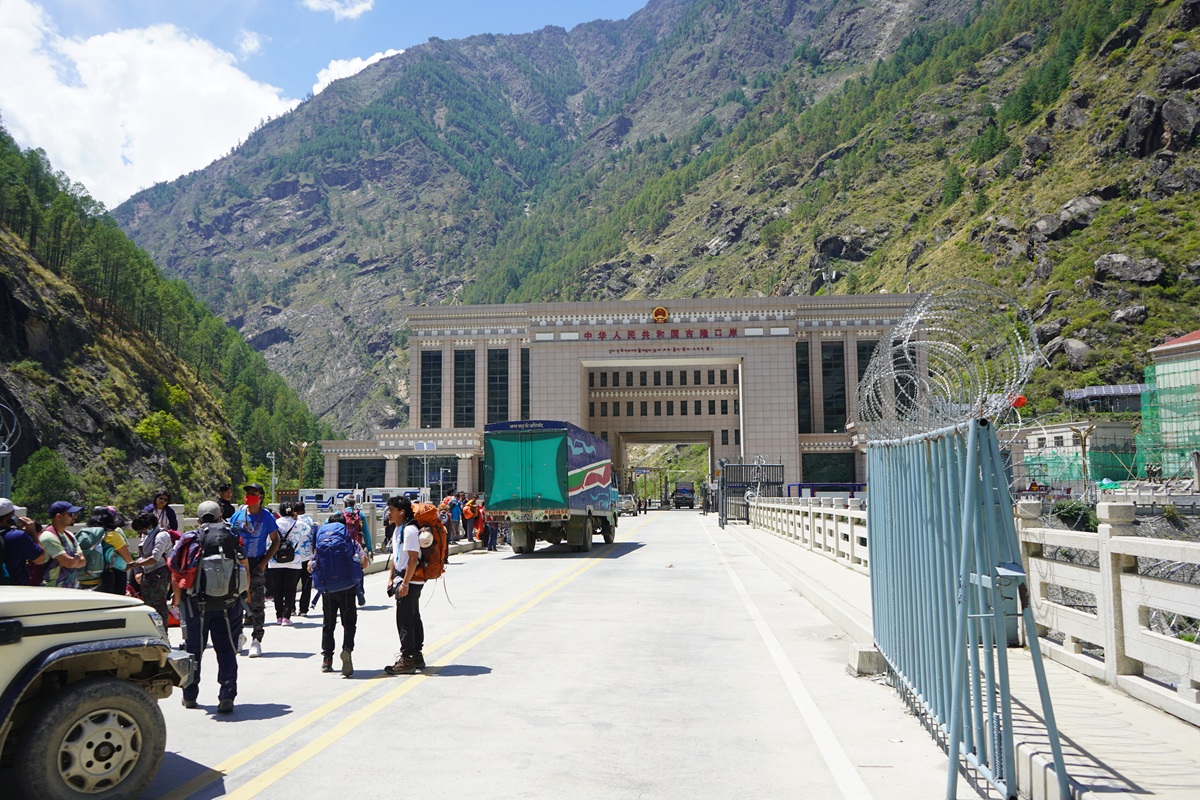
Pilgrims crossing Kerung border checkpoint on road to Kailash Mansarovar
Kerung (Gyirong) in Tibet is accessible via the Rasuwagadhi border crossing between Nepal and Tibet. The most popular way to travel between Nepal and Tibet for the Kailash Mansarovar Yatra prior to 2025 was via the Rasuwagadhi to Kerung road corridor. The Rasuwagadhi - Kerung overland corridor is about 160 km (7 to 8 hours of travel) from Kathmandu to Kerung through the Bhote Koshi River Valley and Syabrubesi.
Kathmandu → Rasuwagadhi Border: Bus / Private Car / Land Cruiser (Nepal Side)
Rasuwagadhi Border → Kerung onward: Land Cruiser Only (Tibet Side, mandatory)
Kailash Parikrama: On Foot (53km, 3 days)
Return: Land Cruiser → Bus / Private Car (after Rasuwagadhi Border)
Distance and Travel Time
Kathmandu to Kerung: 170 km, 8 to 10 hours via Syabrubesi
Kerung to Saga: 450 km, 1 full driving day on paved highway
Saga to Lake Mansarovar: 240 km via Paryang, 5 to 6 hours
Lake Mansarovar to Darchen: 30 km, 1 hour
Total Kathmandu to Kailash: 950 to 1,050 km
Why Choose This Route
In 2015, the Kodari route to Tibet closed due to the Nepal earthquake. With the closure of the Kodari route, the majority of travellers to Kailash travelled through the Kerung (Gyirong) border. As a result, the Chinese government invested heavily in the development of the Gyirong highway. The road along the Tibet side of the border (from Kerung to Saga) has been fully paved and is about 2 to 3 hours shorter than the old route through Kodari.
The elevation of the Kerung border (2,700 m) allows for a more gradual elevation and is less severe than the elevation change at any of the other border crossings between Nepal and Tibet.
Altitude Profile
Location
Elevation
Kathmandu
1,350m
Kerung
2,700m
Saga
4,500m
Lake Mansarovar
4,590m
Dolma La Pass
5,630m
The route goes up 3130m over 7 days, or an average of 447m per day, comfortably within the internationally recommended safe altitude acclimatisation limit of between 300m and 500m for overnight stays above 3,000m.
Typical Itinerary (14 Days)
Day 01: Drive Kathmandu to Kyirong
Day 02: Rest day in Kyirong
Day 03: Drive Kyirong to Saga (4,450m, 232 km)
Day 04: Drive Saga to Paryang (4,558m) to Lake Manasarovar (4,600m, 507 km, 8–9 hrs)
Day 05: Drive to Darchen (4,575m, 40 km)
Day 06: Kora Day 1 - Trek to Dirapuk Monastery (5,000m, 6–7 hrs)
Day 07: Kora Day 2 - Trek Dirapuk to Dzutul-puk (18 km, 6–7 hrs)
This route is suitable for healthy pilgrims between the ages of 18 and 70 years old and for those travelling at a high altitude for the first time (especially those aged 60-70 years). The gradual daily increase in altitude makes this route appropriate for first-time high-altitude travellers (especially those aged 60-70 years). This route is definitely not suitable for travellers with unmonitored cardiac/pulmonary conditions without prior clearance from their physician by way of travelling over 4500 metres.
2026 Road Status
As of early 2026, the Syabrubesi/Kerung portion of the route is closed at this time due to damage from monsoon flooding west of Kathmandu in the summer of 2025 and subsequent damage caused by a second flood in July 2025. A re-opening date has not yet been announced, but it is expected to reopen in 2026. Pilgrims should confirm the status of this road with their registered travel agency prior to booking.
Kerung Route
Facts
Border crossing
Rasuwagadhi to Kerung (2,700m)
Total distance
950 to 1,050 km Kathmandu to Kailash
Total itinerary
14 to 15 days round trip
Highest point
Dolma La Pass (5,630m)
Suitable age
18 to 70 years
Package cost
$2,800 to $3,500 per person
2026 status
Reopening April to May 2026
Permits required
Tibet Travel Permit, Chinese Group Visa, Alien Travel Permit
Processing time
10 to 15 working days via registered agency
Best months
May to October
Route 2: Kailash Mansarovar Yatra by Road (Bus and Land Cruiser) via Kodari and Tatopani (Nyalam Route)
Route 2 is the Kailash Mansarovar Yatra by road from Nepal via the traditional Kodari to Tatopani route, which has been the active overland road for the last several years due to the disruption of the Kerung route. The Kodari - Tatopani route connects Kathmandu District with the Tatopani border when entering Tibet through Zhangmu (2,300m) with an ascent to Nyalam (3,750m), located on the southern end of the Tibetan plateau.
Kathmandu → Tatopani Border: Bus / Private Car / Land Cruiser (Nepal Side)
Tatopani Border → Zhangmu onward: Land Cruiser Only (Tibet Side, mandatory)
Kailash Parikrama: On Foot (53km, 3 days)
Return: Land Cruiser → Bus / Private Car (after Tatopani Border)
Distance and Travel Time
Kathmandu to Tatopani border: 114 km, 4 to 5 hours
Zhangmu to Nyalam: 30 km, 1 to 2 hours steep ascent
Nyalam to Saga: 330 km, 1 full driving day
Saga to Lake Mansarovar: 240 km via Paryang, 5 to 6 hours
Lake Mansarovar to Darchen: 30 km, 1 hour
Total Kathmandu to Kailash: 900 to 950 km
Why Choose This Route
The Kodari route has served Hindu and Buddhist pilgrims for more than 50 years and carries the significance of being in operation for more than 50 years. The Kathmandu to Tatopani border crossing distance (114 km) is the shortest from Kathmandu among the four crossing routes and can be made in 4–5 hours. As of 2026, the Kodari route is the most active route available for pilgrimage travel and is the first and only bookable route for all months of departure.
Altitude Profile
Location
Elevation
Kathmandu
1,350m
Zhangmu
2,300m
Nyalam
3,750m
Saga
4,500m
Lake Mansarovar
4,590m
Dolma La Pass
5,630m
This route has a lot of elevation change in just 30 kilometres on the road from Zhangmu at 2,300m to Nyalam at 3,750m. And with 1,450m of altitude gain, it's mandatory for all pilgrims travelling through this portion to stop here for at least one or 2 nights to acclimatise, no matter how fit they are.
Typical Itinerary (16 to 18 Days)
Day 1 to 2: Kathmandu permit and visa processing
Day 3: Drive Kathmandu to Zhangmu border (4 to 5 hours), continue to Nyalam
Day 4 to 5: Acclimatization at Nyalam (3,750m), 2 nights mandatory
Day 6: Nyalam to Saga (4,500m)
Day 7: Saga to Lake Mansarovar via Paryang
Day 8: Mansarovar Parikrama and rituals
Day 9: Mansarovar to Darchen (4,560m)
Day 10 to 12: Kailash Parikrama over Dolma La Pass (5,630m)
Day 13 to 16: Return drive to Kathmandu
Who Is This Route Suitable For
This route will accommodate pilgrims aged 18 through 65 who are otherwise healthy or fit for travel. But given the difficulty and steepness of the climb from Zhangmu to Nyalam, the route is slightly more difficult than other routes. And any traveller who is over 65 should consider this when attempting the trek via this route. It's also a good route for those who have trekked at least once at altitudes above 3,500m prior to attempting the trip via this route, for example, anyone who has previously hiked in the Himalaya. Attempts via this route aren't highly encouraged as a first-time, high-altitude trekker unless a conservative acclimatisation plan has been established or discussed with an experienced guide.
2026 Road Status
In 2026, the Kailash Yatra route will be completely operational and confirmed as the busiest or most travelled route into Kailash in Nepal. And all Indian, Nepali and foreign tourists will have the opportunity to traverse this area while enjoying the beautiful scenery from May through October 2026.
Kodari Route Detail
Border crossing
Tatopani to Zhangmu (2,300m)
Total distance
900 to 950 km Kathmandu to Kailash
Total itinerary
16 to 18 days round trip
Highest point
Dolma La Pass (5,630m)
Suitable age
18 to 65 years
Package cost
$2,800 to $3,000 per person
2026 status
Fully operational, primary active route
Permits required
Tibet Travel Permit, Chinese Group Visa, Alien Travel Permit
Processing time
10 to 15 working days via registered agency
Best months
May to October
Nyalam (3,750m) as the Key Acclimatisation Stop on All Kodari Route Yatras
Nyalam is located at an elevation of 3,750m and is one of the first significant towns on the Tibetan Plateau after crossing the Zhangmu border into Tibet. It's the single most essential acclimatisation point for all Kodari route yatras to Mount Kailash. Positioned 30km north of Zhangmu, Nyalam is the exact location where the road to Kailash goes from a steep gorge in the Himalayas to being flat and on the Tibetan plain. So it requires that all Kailash yatra participants rest for a minimum of 48 hours for haemoglobin adjustment before continuing their journey of 330km to Saga at 4,500m, where they then continue on to Dolma La Pass at 5,630m to do the parikrama around Kailash.
Why Nyalam Cannot Be Skipped
Pilgrims arriving in Nyalam at 3,750m from Kathmandu at 1,350m within one day will have gained 2,400m in less than 24 hours. And that's a rate of elevation gain that exceeds the 300m to 500m per day maximum allowable for those travelling above 3,000m. So the Tibetan Tourism Bureau has a protocol requiring all registered groups on the Kailash Yatra to remain at Nyalam for a minimum of one or two nights, with no exceptions. And if a travel agency offers one night at Nyalam with the objective of shortening the itinerary length, that agency is compromising the safety of their pilgrims through one of the highest altitude transitions on the route.
What to Do During 2 Rest Days at Nyalam
Take short acclimatisation walks around Nyalam at an altitude of 3,750m to 3,900m.
Use a pulse oximeter to monitor your blood oxygen saturation. And if your reading is less than 85% at rest, you'll need one more rest day.
Visit the Milarepa Cave, which is 2km from the centre of Nyalam and is associated with the 11th-century Tibetan Buddhist saint.
Drink a minimum of 3 to 4 litres of water daily. And hydration is extremely important when acclimatising at altitude.
No alcohol and no sleeping pills as both of these can depress your breathing rate and increase the difficulty of adjusting to altitude.
Medical Facilities at Nyalam
Nyalam offers basic guesthouse accommodation, with 2 options ranging from $10 to $20 per night per person, including breakfast. And local restaurants average $5 to $8 per meal. Medical assistance is also available through registered agencies with the Tibet Tourism Bureau. And these agencies have supplemental oxygen cylinders, Diamox at 250mg and a small amount of basic altitude emergency supplies for anyone who has developed acute mountain sickness at an altitude above 3,500m.
Altitude Comparison (Nyalam vs Skipping Nyalam)
Scenario
Day 3 Altitude
Day 5 Altitude
AMS Risk
With 2 nights at Nyalam
3,750m
4,500m (Saga)
Low to moderate
Skipping Nyalam, driving direct
4,500m in 24 hours
4,590m (Mansarovar)
High to severe
2026 Status
In 2026, Nyalam will be completely functioning and will be the required acclimatisation stop on the Kodari route. All agencies registered with the Tibet Tourism Bureau show a stay of 2 nights at Nyalam for every standard Kailash Yatra itinerary utilising the Tatopani to Zhangmu border crossing.
Detail
Detail
Data
Altitude
3,750m
Distance from Zhangmu
30 km north, 1 to 2 hours
Mandatory stay
2 nights minimum
Room cost
$10 to $20 per person per night
Meal cost
$5 to $8 per meal
Safe oxygen level
85% saturation or above at rest
Optional visit
Milarepa Cave, 2 km from town
Next stop
Saga (4,500m), 330 km, 1 driving day
2026 status
Fully operational
Route 3: Kailash Mansarovar Yatra by Road (Bus and Land Cruiser) via Nepalgunj and Hilsa to Purang
The western Nepal corridor to Mount Kailash through the Humla District is the least historically used route of the four possible routes to Mount Kailash. And that's due to no motorised road being built to connect Simikot to Hilsa. But that changed permanently when the Kharpunath Bridge was inaugurated by Prime Minister KP Sharma Oli on July 7, 2025. And it provided the first complete overland road connection between Nepalgunj and Hilsa at 3,640m above sea level without any helicopter sectors.
The Nepalgunj to Hilsa route crosses the Nepalese-China border at Hilsa at 3,640m into either Purang, also known as Taklakot, at 3,900m in Tibet. It covers over 450 kilometres from Nepalgunj to Hilsa in 2 to 3 days of driving. And then it's over 130 kilometres from Purang to Darchen at 4,560m. So in total it's 11 to 14 days completing the full route from Nepalgunj to Kailash Parikrama and back. And that makes it the shortest total itinerary out of all four Nepal routes.
Route Map
Kathmandu → Nepalgunj (flight, 150m) → Simikot (2,910m) → Hilsa (3,640m) → Purang or Taklakot (3,900m) → Lake Mansarovar (4,590m) → Darchen (4,560m) → Kailash Parikrama → Return same road
Transport Breakdown:
Kathmandu → Nepalgunj: Flight
Nepalgunj → Simikot: Flight (small aircraft)
Simikot → Hilsa: On Foot / Helicopter (2 options available)
Hilsa Border → Purang / Taklakot onward: Land Cruiser Only (Tibet Side, mandatory)
Kailash Parikrama: On Foot (53km, 3 days)
Return: Land Cruiser → Flight (Simikot → Nepalgunj → Kathmandu)
Distance and Travel Time
Kathmandu to Nepalgunj: 1 hour flight or 12 hour bus
Nepalgunj to Hilsa: 450 km, 2 to 3 driving days via Humla and Kharpunath Bridge
Hilsa border to Purang: 10 km, 1 to 2 hours including permit checks
Purang to Lake Mansarovar: 100 km northeast, 2 to 3 hours
Lake Mansarovar to Darchen: 30 km, 1 hour
Total Nepalgunj to Kailash: approximately 600 km
Why the Chuwakhola Bailey Bridge
Until July 2025, a person travelling along this route had to first take a flight from Nepalgunj to Simikot and then fly separately from Simikot to Hilsa. And that resulted in additional costs of between $300 and $500 per person for each leg of the journey. But the completion of the Bailey bridge has forever eliminated both of these flights, allowing for private jeep travel along the complete route of the corridor. And this will make it the most cost-effective option for travel in western Nepal during 2026 and 2027.
Altitude Profile
Location
Elevation
Nepalgunj
150m
Simikot
2,910m
Hilsa border
3,640m
Purang
3,900m
Lake Mansarovar
4,590m
Dolma La Pass
5,630m
Although the Hilsa corridor has elevation gains starting with an increase of 3,490 metres above sea level from Nepalgunj to Dolma La Pass, the driving time of 2 to 3 days from Nepalgunj to Hilsa provides natural acclimatisation for the client. And it does so by travelling through Humla District prior to crossing into Tibet at 3,640 metres in elevation.
Typical Itinerary (11 to 14 Days from Nepalgunj)
Day 01: Arrive Kathmandu (1,400m)
Day 02: Fly to Nepalgunj (150m)
Day 03: Fly to Simikot (2,985m), trek to Darapori (2,300m, 3–4 hrs)
Day 04: Trek to Kermi (2,860m, 5–6 hrs)
Day 05: Trek to Yalbang (3,020m, 5–6 hrs)
Day 06: Trek to Tumkot (3,380m, 5–6 hrs)
Day 07: Trek to Yari (3,700m, 6–7 hrs)
Day 08: Trek to Hilsa via Nara La Pass (4,620m, 6–7 hrs)
Day 09: Drive to Purang (3,800m, 1–2 hrs)
Day 10: Drive to Montser (4,280m, 2–3 hrs)
Day 11: Garuda Valley sightseeing, drive to Darchen (4,575m)
Day 12: Kora Day 1 (Trek to Dirapuk Monastery (5,080m, 6–7 hrs)
Day 13: Kora Day 2 (Trek via Dolma La Pass (5,630m) to Dzutul-puk (8–9 hrs)
Day 14: Kora Day 3 (Complete Kora, drive to Lake Manasarovar (4,590m)
Day 15: Tour around Lake Manasarovar (4,590m)
Day 16: Drive to Saga (4,640m, 7–8 hrs)
Day 17: Drive to Kerong (2,800m, 6–7 hrs)
Day 18: Drive to Kathmandu via Rasuwagadhi (1,400m, 7–8 hrs)
Pilgrims from western Nepal and Indian pilgrims from Lucknow, Varanasi, Gorakhpur, Kanpur or Allahabad are also within 6 to 8 hours of Nepalgunj by road or air. And it's a great option for budget-conscious pilgrims. Those who haven't used the overland route due to the helicopter fare of $300 to $500 between Simikot and Hilsa now have full overland access due to the completion of the Chuwakhola Bailey Bridge. The route is suitable for any pilgrim aged 18 to 65 who is generally healthy. But pilgrims without any experience above 3,000m should schedule an additional acclimatisation night at Simikot at 2,910m before crossing into Tibet via Hilsa at 3,640m.
2026 Road Status
The Simikot to Hilsa section has a motorable road from Nepalgunj to Simikot but it continues to improve. The Simikot to Hilsa route is open for all Indians, Nepali pilgrims and international trekkers from May to October 2026. So all pilgrims travelling through this route should verify the road conditions on the Simikot to Hilsa route through your booking agent before making your reservation.
Detail
Data
Border crossing
Hilsa (3,640m) to Purang or Taklakot (3,900m)
Total distance
600 km Nepalgunj to Kailash
Total itinerary
11 to 14 days from Nepalgunj
Highest point
Dolma La Pass (5,630m)
Suitable age
18 to 65 years
Key infrastructure
Bailey bridge over Chuwakhola River, Kharpunath Rural Municipality, inaugurated July 6, 2025
Cost saving vs helicopter version
$300 to $500 per person
Package cost
$2,500 to $3,200 per person
2026 status
Motorable Nepalgunj to Simikot; Simikot–Hilsa operational, road upgrading ongoing
Permits required
Tibet Travel Permit, Chinese Group Visa, Alien Travel Permit
Processing time
10 to 15 working days via registered agency
Best months
May to October
Important: Each of the four overland routes for the Kailash Mansarovar Yatra in 2026 will require three different pieces of government documentation. First, a Tibet Travel Permit. And second, a Chinese Group Visa for Indians travelling to Tibet. Plus third, an Alien Travel Permit. All three documents must be applied for and obtained exclusively from a Nepal travel agent who is registered with the Tibet Tourism Bureau. And they can take anywhere from 10 to 15 business days to process. The Kailash Mansarovar Yatra will occur in 2026 between approximately the middle of May and the end of October. And the cost of a Kailash Mansarovar Yatra package in 2026 will range from $2,500 to $3,500 depending on the travel route, group size and length of the itinerary.
How to Go to Kailash Mansarovar by Bus?
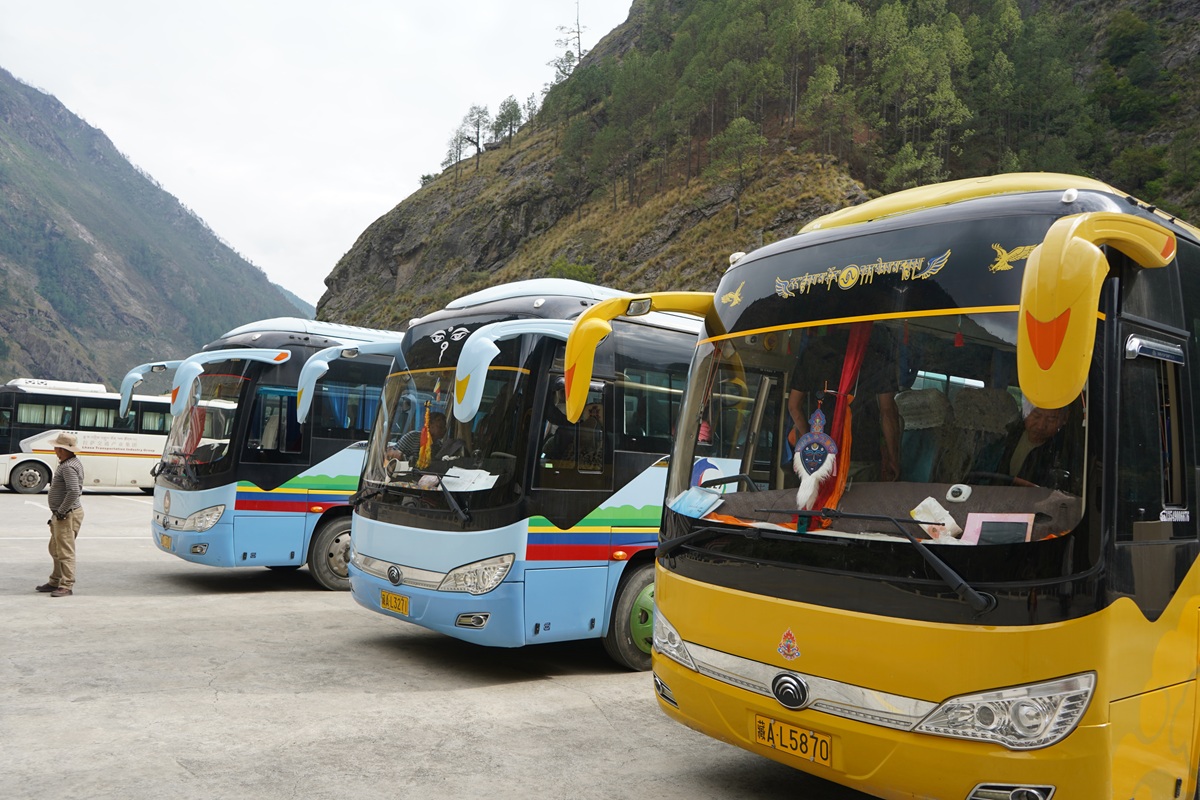
Group of pilgrims boarding a bus for Kailash Mansarovar Yatra from Kathmandu Nepal - Kailash Yatra by Bus
This guide will give an overview of travel by bus to the Kailash Mansarovar. And when searching for the Kailash Mansarovar Yatra using a bus, note that the word bus doesn't refer to public city or state transport buses. It's a fully organised journey with an overland itinerary of group travel via private 4WD jeeps on the Nepal side and shared coaches on the Tibetan Plateau. And that's what distinguishes this travel option from the helicopter darshan package.
For the complete round-trip journey from Kathmandu, via the Rasuwagadhi to Kerung border, to Mount Kailash at 6,638m and Lake Mansarovar at 4,590m, yatras generally take 14 to 16 days from the time that you leave Kathmandu. And the cost for the multiple yatra grants during the period of time that you spend in Nepal is approximately $1,600 to $2,200. So that makes the bus option the lowest cost overland pilgrimage vehicle option on the market compared to a private vehicle yatra option via private jeep or self-driving.
Kathmandu to Nepal Border By Toyota Land Cruiser
The Toyota Land Cruiser is the vehicle of choice for all travel between Kathmandu and the Nepal-Tibet border at Rasuwagadhi. Pilgrims will all use a Toyota Land Cruiser that carries a maximum of 6 passengers. And its 4WD capabilities and height allow it to travel on the mountainous road connecting Syabrubesi and Rasuwagadhi over approximately 160 kilometres in about 7 to 8 hours. And for groups who prefer a larger, shared transportation option with other passengers, there's also the option of taking a non-air-conditioned deluxe bus with 2x2 seating on the same road on the Nepal side of this journey for a lower cost per person.
Tibet Border to Kailash By Shared Van or Minibus
Once at the Tibet border at Kerung, all pilgrims will then transfer to a shared van or minibus for the remainder of the Tibet plateau journey. And that takes them from Kerung at 2,700 metres above sea level to Saga at 4,500 metres and finally to Lake Mansarovar at 4,590 metres and Darchen at 4,560 metres. The road between Kerung and Saga on the Tibetan side has been entirely renovated with pavement following investment made by the Chinese government to upgrade the Gyirong highway. And that makes the shared vehicle ride very comfortable while travelling at sustained altitudes greater than 4,000 metres over the length of this segment of the trip.
Emergency and Backup Transport at Darchen
At Darchen, which is the base for the 52km Kailash Parikrama and is located at an elevation of 4,560m, there are options for pilgrims who are unable to complete the entire circuit on foot. They can be transported by pony or horse for approximately $50 to $80 a day. Or they can hire a vehicle for the section between Darchen and Zuthulphuk, where there's a motor road running parallel to the hiking route.
What is Kathmandu to Kailash Mansarovar Distance by Road?
The length of the road from Kathmandu to Mount Kailash at 6,638m and to Lake Mansarovar at 4,590m is different depending on the route taken when crossing the border. The distance from Kathmandu to Kailash Mansarovar is approximately 950 to 1,050km when using the Rasuwagadhi to Kerung route. And it's approximately 900 to 950km using the Kodari to Nyalam route. Plus, it's approximately 600km from Nepalgunj to Kailash using the Hilsa to Purang route. And the total driving time from Kathmandu to Darchen is between 4 and 5 days of driving, depending on the route travelled, the time it takes to cross the border and the time it takes for pilgrims to acclimatise in Kerung at 2,700m or Nyalam at 3,750m before reaching the Tibetan plateau, which is at an elevation greater than 4,500m.
Kailash Mansarovar Yatra by Road Cost from Nepal in 2026, 2027 and 2028
A yatra to Kailash Mansarovar by road from Nepal will cost between $1,600 and $3,500 per person, approximately Rs. 1,33,000 to Rs. 2,91,000, for 2026. And the price depends on the departure city, route and group size. Departures from Nepalgunj generally have a lower price than from Kathmandu. And that's because they have a shorter driving distance on the Nepal side of the border via the Hilsa-Purang Corridor.
Kailash Mansarovar Yatra by Road Cost from Kathmandu (Capital City)
Standard Group Package: Kathmandu to Kailash by Road
Package cost: $2,800 to $3,000 per person (approx. INR 2,33,000 to INR 2,50,000)
Group size: 6 to 12 pilgrims
Duration: 14 to 16 days round trip from Kathmandu
Vehicle: Toyota Land Cruiser Kathmandu to border, shared van or minibus Tibet side
Includes:
All three mandatory permits (Tibet Travel Permit, Chinese Group Visa, Alien Travel Permit)
Licensed Tibetan guide throughout Tibet section
Tea house and guesthouse accommodation twin-sharing basis
Breakfast and dinner on Tibet side (BB basis)
Airport transfers in Kathmandu
Full Board Supplement (breakfast, lunch, and dinner) available at an additional $350 per person (approx. INR 29,000) for pilgrims who prefer all meals covered without separate arrangement
Private Package: Kathmandu to Kailash by Road
Package cost: $3,200 to $3,500 per person (approx. INR 2,66,000 to INR 2,91,000)
Group size: 2 to 4 pilgrims
Duration: 14 to 16 days round trip
Vehicle: Dedicated Toyota Land Cruiser Nepal side, private van Tibet side
Includes:
All three mandatory permits
Private licensed Tibetan guide
Twin-sharing accommodation throughout
Breakfast and dinner Tibet side (BB basis)
Kathmandu hotel 3 nights on arrival
Full Board Supplement available at additional $350 per person (approx. INR 29,000)
Kailash Mansarovar Yatra by Road Cost from Nepalgunj (Western Nepal)
Standard Group Package: Nepalgunj to Kailash by Road
Package cost: $1,600 to $2,200 per person (approx. INR 1,33,000 to INR 1,83,000)
Group size: 6 to 12 pilgrims
Duration: 11 to 14 days round trip from Nepalgunj
Vehicle: Toyota Land Cruiser Nepalgunj to Hilsa border, shared van or minibus Tibet side
Includes:
All three mandatory permits
Licensed Tibetan guide Tibet section
Guesthouse accommodation twin-sharing basis
Breakfast and dinner Tibet side (BB basis)
Full Board Supplement available at additional $350 per person (approx. INR 29,000)
Private Package: Nepalgunj to Kailash by Road
Package cost: $2,500 to $2,800 per person (approx. INR 2,08,000 to INR 2,33,000)
Group size: 2 to 4 pilgrims
Duration: 11 to 14 days round trip
Vehicle: Dedicated Toyota Land Cruiser Nepal side, private van Tibet side
Includes:
All three mandatory permits
Private licensed Tibetan guide
Twin-sharing accommodation throughout
Breakfast and dinner Tibet side (BB basis)
Full Board Supplement available at additional $350 per person (approx. INR 29,000)
Kailash Mansarovar by Road Without Chinese Visa
No foreign national can travel to Kailash Mansarovar via road without all proper documents. And there's no exemption that will allow any foreign national to enter Tibet or access any other part of mainland China outside of the Tibet Autonomous Region. All foreigners travelling through Tibet for pilgrimage must get a Chinese Group Visa and a Tibet Travel Permit, even if they're from a country that has a visa-free agreement with China. Currently, China has about 50 countries that can use the visa-free agreement for entering mainland China. But this doesn't apply in any way to visa-free citizens who wish to go to Tibet. So all foreigners must go with an arranged and approved tour of Tibet.
Indians need to obtain a Chinese Group Visa, which takes 3 to 5 days to process, through either a travel company located in Nepal or directly in Kathmandu. And then they must submit an application for a Tibet Travel Permit, which takes 10 to 15 days to process, from either a travel company located in Nepal or directly from the Tibet Tourism Bureau in Lhasa. And it's important to know that visas and permits cannot be obtained on arrival at Rasuwagadhi, Tatopani or Hilsa.
Nepali citizens applying for a Chinese visa must do so through the Chinese Embassy in Kathmandu. And they must also obtain a Tibet Travel Permit before entering Tibet.
Yes, it's possible to travel by car from Nepal to Kailash Mansarovar. But you can't use a privately owned car to drive the Kailash Mansarovar route through the Tibet Autonomous Region. All vehicles entering TAR must be registered with an approved Tibetan travel agency. A licensed Tibetan driver must operate the vehicle and have driving experience on the Tibetan plateau.
The Kailash Mansarovar Yatra by car is conducted as a split-vehicle yatra. The first part involves using a 6-passenger Toyota Land Cruiser, driving from Kathmandu to the border of Nepal and Tibet. And then drivers switch to agency-registered vehicles with licensed Tibetan drivers whose experience includes plateau driving. And that second segment takes pilgrims from Kerung at 2,700m or Zhangmu at 2,300m via Saga at 4,500m to Lake Mansarovar at 4,590m and Darchen at 4,560m.
At this time, Indian registered vehicles aren't allowed to enter Tibet due to the current arrangements between the Chinese government and India. So all Indian citizens must use pre-registered agency-owned vehicles and drivers who have their Chinese Group Visa and Tibet Travel Permit, which are valid only for organised group travel.
How Indians Can Go to Kailash Mansarovar Yatra by Road?
Indians can go to the Kailash Mansarovar Yatra by road. And it's the most popular route for Indian pilgrims since they usually travel by road through Nepal, with Kathmandu being where permit completion and other preparations occur. From Kathmandu, pilgrims travel by private Toyota Land Cruiser or shared jeep to the Nepal-China border. As of 2026, the primary active corridor between Nepal and China is through the Tatopani-Zhangmu route, also known as Kodari. This route is 114km from Kathmandu and takes a four to five-hour drive.
Historically, the most popular route was the Rasuwagadhi-Kerung route. But this was shut down in June 2025 and has not been approved to be reopened by Chinese authorities due to damage from the 2025 monsoon floods. The Nepal government officials in Pilgrimage of Lord Shiva through these 2 routes also suggest the route from Nepalgunj to Hilsa, known as the Humla route, for Indian pilgrims from the states of Uttar Pradesh and Bihar. And much of that route is now motorable due to the 2023 Chuwakhola Bailey Bridge opening.
The road in Nepal is narrow and hilly, and also partly rough in some places, especially when you get nearer to the border. But the road in Tibet is mostly blacktop and well-maintained. And the overland trek to and from the Kailash Mansarovar Yatra takes approximately 12 to 14 days, allowing enough time to acclimatise to the higher altitude conditions.
Can asthma patients go to Kailash Mansarovar by Road?
The general consensus among government agencies, tour agencies and acclimatisation medical authorities is that asthma patients should not travel the Kailash Mansarovar Yatra, regardless of the severity of their asthma. The Journey is Unsafe for Patients with Asthma. The combination of atmospheric conditions for the travel routes results in an extremely hazardous environment for anyone suffering from an airway condition.
The route is Dangerous for Asthma Patients
The environmental factors on this route combine to create a uniquely hostile environment for anyone with respiratory conditions.
Extreme altitude: Dolma La Pass is at 5,630m with very little oxygen.
Cold, dry air: It's a direct and familiar culprit for bronchospasm.
Dust from the Tibetan plateau: And it's a source of air irritation during the entire journey.
Intensely physical exertion: It's an inevitable part of the Parikrama.
No emergency medical facilities at altitudes above 4,500m: So any severe respiratory episode can't be treated onsite.
What Official Sources Say
Severe / Uncontrolled
Strictly not recommended
Mild / Controlled
Still not recommended, official policy bars participation
Tibet's Tourism Bureau prohibits registered tour operators from allowing pilgrims who have been diagnosed with chronic obstructive pulmonary disease, asthma, congestive heart disease or severe hypertension to reserve a spot on any of the yatra road trips from Nepal to Kailash Mansarovar. And this prohibition applies equally to asthmatics who have their condition controlled. So it will be enforced across all three shared existing road routes in Nepal in 2026.
Pre-travel clearance from a physician who specialises in high-altitude medicine is needed before individuals can consider travelling to high altitude. And regarding the yatra itself, the majority of medical authorities and agencies recommend that persons diagnosed with asthma choose an alternative pilgrimage until such time as asthma has become fully resolved.
For the yatra specifically, the pilgrimage operator and trip planner states that if a person has asthma and attempts to make a reservation or book a spot on a yatra trip, that individual would be declined a reservation. And that's because asthma will likely become much worse quickly at high altitude and therefore pose an increased risk for serious respiratory complications.