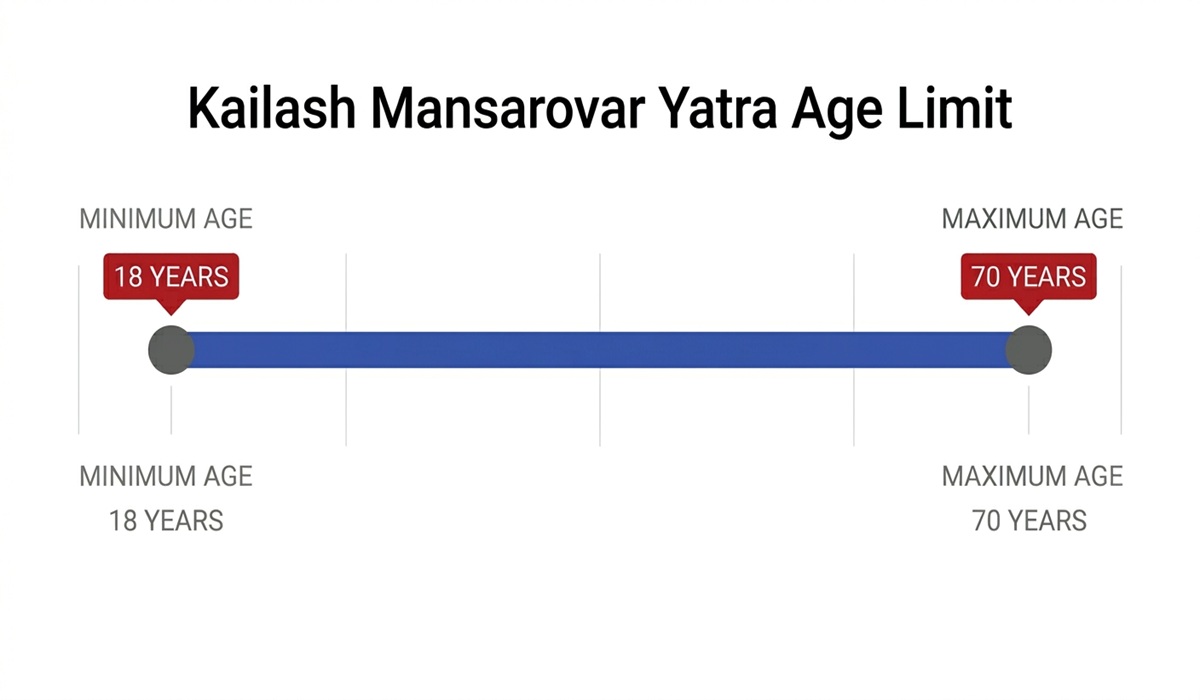
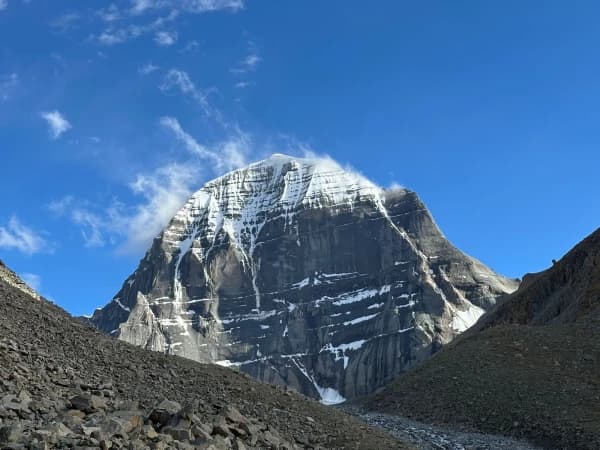
Kailash Mansarovar Yatra typically has an acceptable minimum age of 18, and generally, the upper limit is set at approximately 70 years on common pathways. Safety and health factors regarding travel to very high elevations are the primary consideration with regard to age restrictions.
The Kailash Mansarovar Yatra is unlike many other pilgrimages. It requires individuals to travel to altitudes of 4,500m (14,763ft) or higher and subject themselves to decreased oxygen levels that increase their chance of contracting altitude sickness or becoming fatigued much faster than usual. Age is one of the biggest factors in determining whether an individual can successfully complete the treks of up to 1,500km (900mi). So age restrictions are in place for those wishing to participate.
This pilgrimage to Kailash Mansarovar is far from typical; with all of the travel routes ascending above 4500 meters, and with much lower than the usual oxygen content in the atmosphere, it is a very real possibility that a traveler could experience trauma from altitude exposure, or even suffer severe fatigue as a result of the altitude. That is why there are rules regarding the minimum and maximum ages for the pilgrims. Let’s take a closer look.
What is the age limit for the Kailash Mansarovar Yatra?
Kailash Yatra Minimum and Maximum age limitation
Age limits for the Kailash Mansarovar Yatra are generally between 18 and 70 years, depending on the organised route being taken. Some routes are highly restricted due to safety concerns, so the age limit will also depend on the governing authority that regulates the route. Experienced travellers can attest that this is a general guideline. But there appears to be consensus among international travellers that there may be greater flexibility with age limits for foreign nationals using the Nepalese route, provided the traveller is medically fit and has prepared themselves adequately for the journey.
The Kailash Mansarovar Yatra involves travelling to an altitude of over 4,500 metres (14,764 feet). As elevation increases, the amount of oxygen available in the air decreases. So physical fitness is the key aspect of travelling at this altitude. Minimum age restrictions are also in place to reduce the risk of travellers suffering from altitude sickness and other serious illnesses related to the increase in elevation.
Minimum Age Limit for Kailash Mansarovar Yatra
In general, 18 years of age is the minimum age requirement for Kailash yatra, although it can vary with some of the private trips or less formal routes.
Travel Research suggests that people of all ages might experience altitude-related problems and that there is no proven relationship between the effects of high altitude and age alone. However many experienced travellers prioritise their preparation over age. They agree that individuals will experience different effects from being at a high altitude regardless of how old they are.
Criteria
Details
Standard Minimum Age
18 years
100% enforced on official routes
Flexible Cases
12–17 years (rare, conditional)
Less than 5–10% of operators allow minors
Key Concern
Physical maturity and stamina
Oxygen levels drop by 40–50% at high altitude
Altitude Exposure
Above 4,500m to 5,600m
Rapid ascent increases AMS risk within 24 hours
Traveler Insight
Younger participants struggle unexpectedly
Around 25–30% of first-time travelers report mild altitude symptoms (general trek trend)
Health Risk Factor
Low acclimatization ability
AMS can start above 2,400–2,500m
Maximum Age Limit for Kailash Mansarovar Yatra
The standard maximum age limit on Kailash Mansarovar Yatra is 70 years, but it is usually only applied to Yatras that are run by the government. There are a few different types of programs (Katra) that allow individuals over the age of 70 to participate if they meet specific health conditions.
There are examples everywhere where older travelers manage to accomplish the journeys while younger do not succeed, because they have been ill-prepared.
Criteria
Details
Standard Maximum Age
70 years
Followed in most official permits
Health Requirement
Mandatory medical clearance
Required for 100% of applicants
High-Altitude Risk Zone
Above 4,500–5,600 meters
Oxygen levels drop by ~40–50%
Risk Factor
Heart & lung strain increases sharply
AMS risk rises significantly after age 60
Is the Mount Kailash Yatra Age Limit for NRIs Travellers Same as Indian Ones?
Yes and No. The age limit for NRIs and Foreign Passport Holders to participate in the Yatra is not always the same as the age limit for Indians to participate. Many tour operators set their own rules; therefore, there is no single rule or regulation that applies to all people around the world. For Indian passport holders, most of the routes for the Kailash Mansarovar Yatra that are regulated by the Indian Government are strictly enforced for those between 18 and 70 years of age. The reason for establishing this limited age range is due to the medical risks associated with traveling to high altitudes.
For NRIs and foreign passport holders, age restrictions are much less restrictive. Most travel through Nepal or with private tour operators. Many trip companies allow people over 70 to participate if the participant has passed a very detailed medical exam based upon the specific Tour Operator's requirements.
Key Difference Between Indian and NRI Age Rules
Category
Age Limit
Flexibility
Key Condition
Indian Citizens
18–70 years
Strict
Government permit required
NRIs / Foreign Nationals
18–70 (recommended)
Flexible (up to 75+)
Medical clearance mandatory
Nepal Route Travelers
Case-by-case
Higher flexibility
Fitness test + operator approval
Risk Factor
High altitude (>4,500m)
Same for all
Oxygen & AMS concerns
Why the Rules Differ
One of the most common reasons that Non-Resident Indians (NRIs) have greater flexibility than most travelers is that they generally enter Nepal through routes and via logistics that offer greater flexibility (i.e., customized travel, helicopter options for certain segments of your journey, and extended medical monitoring, etc.). However, that greater flexibility does not mean that your level of risk is any lower; the risks associated with altitude, drops in oxygen levels, and physical exertion are the same for everyone.
NRIs generally have slightly relaxed conditions (compared to most others) based upon medical approval, but in reality, your physical fitness is far more relevant than either your nationality or age, and each case will be assessed on its own merits.
Are People Over 70 Actually Allowed to Travel to Mansarovar and Kailash?
The answer is: Yes, under very limited circumstances, but not as a general rule.
The typical Kailash Mansarovar Yatra routes determined by the government have a maximum age of 70. This means that most pilgrims over this age will be unable to take part in a government Yatra because of the risk to their health from high elevation.
However, under certain circumstances, there may be exceptions to the 70-year upper age limit on government Yatra routes. Some private tour operators on Nepal routes allow travelers up to age 75 to participate in the Yatra, as long as they pass a complete medical evaluation prior to departing.
Medical evaluations include an assessment of your heart, lungs, and physical fitness to ensure you will be able to endure the extreme conditions at high elevations (usually over 4,500 meters).
What is important to understand is that there are no guarantees that you will be able to go on the Yatra, even with age limits lifted by authorities. For any individual who applies to go on the Yatra, their physical fitness will be more important than their age (unless the individual is deemed fit enough to go), and many older applicants will be rejected by the Yatra authorities if there is any concern regarding their medical conditions.
Therefore, while in some rare cases the answer is yes for older travelers, the vast majority of travelers over 70 will not be able to go on an official Yatra unless they have received special permission from Yatra authorities.
Are children under 18 allowed to travel with parents? Yes or No?
No. Most people under 18 cannot go on the Kailash Mansarovar Yatra, even if they are with their parents.
Most guidelines for participating in the yatra place restrictions on minors due to the extreme altitude (over 4500 m) where oxygen is extremely limited, and there is a high risk for developing acute mountain sickness (AMS).
While many agencies do not have a strict "written" rule against allowing children on the trip, in practice, tour operators and the agencies that issue permits for the yatra refuse to grant applications for children due to safety (ie, lack of access to emergency medical care) and the fact that children are not physically ready to travel through an extreme environment like the Mount Kailash region.
Tour operators in rare internal discussions suggest that children aged 10 and older may be able to attempt high altitude travel on many types of treks throughout the Himalayas. But given how extreme an experience the Yatra is, the standard policy is not to allow anyone under the age of 18 on any organised Yatras.
Why Age Limit Matters for Kailash Mansarovar Yatra
The Kailash Mansarovar Yatra has an age restriction, which is not just a policy on paper; it is a policy that has been developed through extreme geographic locations, health science, and by real traveler experiences that mandate the need for such a restriction. The pilgrim journey is spiritually fulfilling; it's also one of the most physically demanding pilgrim journeys on earth. The following are the 3 reasons why people cannot enter into the Kailash Yatra based on the Kailash Yatra age restriction.
High Altitude Risks Above 4,500 Meters
Wherever you go on the Kailash Mansarovar Yatra, you will be at extreme elevations, which are between 4500m and 5600m above sea level. When you reach this height, the air becomes thinner, and it dramatically increases the effort needed for physical activities. A person can find that they will become very tired by very simple activities, increasing the level of risk for travelers, both young and old.
Oxygen Level Drop and AMS Risk
When you get to Kailash, the oxygen levels will be approximately 40%-50% less than sea level. This level of decreased oxygen levels will cause an increased chance for Acute Mountain Sickness (AMS), which can cause headaches, nausea, and in severe cases, could lead to death. This is the second major contributing reason for the "Kailash Yatra age restriction" policy.
Health and Stamina Matter More Than Age
A person's age is not the most important factor; physical condition is the most important factor when doing this journey. An older person may have a lower lung capacity, or a lower efficiency in the functioning of the heart, but, similarly, a younger person may not have enough stamina to phase through this journey. The total journey requires continuous stamina for up to several days.
Sudden Weather and Terrain Challenges
Variability of weather and terrain can cause difficulty for the body to adjust due to rapid changes in conditions (i.e., drastic temperature changes, high winds, very rough terrain) without adequate ability to maintain good cardiovascular fitness and respiratory fitness.
Limited Medical Facilities on Route
During emergencies, access to medical assistance is usually limited, with minimal medical facilities available to support at a distance. Transporting to the nearest location is usually slow and hard in a timely manner (should something happen). Therefore, it is important to pre-screen travelers by age/health to reduce risk.
Kailash Mansarovar Yatra Age Limit for NRIs vs Foreign Nationals
Kailash Mansarovar Yatra Age Limit for NRI
Kailash Mansarovar Yatra Age Limit for Foreigners
Kailash Yatra for NRIs traveling through Nepal generally adheres to rules that apply to international passport holders.
International visitors can travel to Kailash Mansarovar in two ways - by booking a tour through Nepal or an adventure tour through Tibet.
The minimum age to participate is typically 18 years, due to the risk of high altitude and safety requirements for health.
Young travelers less than 18 years of age must travel with an adult.
On the other end of the range, the maximum age to go on a trip is typically around 70 years old, particularly for those who are taking a more physically challenging route.
Travelers aged 70 - 75 may be permitted to travel on a tour with either the age restriction removed, but will likely need to show evidence of their high level of physical fitness.
NRIs on tours traveling through Nepal have more options in qualifying and obtaining their tour packages, as opposed to those traveling to Kailash through other government routes in India.
Most international travelers hold a foreign passport, which allows them to travel independently and obtain the required travel permits to travel in Tibet.
NRIs participating in the Kailash Yatra usually require both a medical fitness examination and travel insurance prior to being enrolled for a tour.
Foreign national travelers above 70 years of age may still travel as part of the group as long as they present satisfactory proof of good health, and their tour operator has determined that they can travel safely.
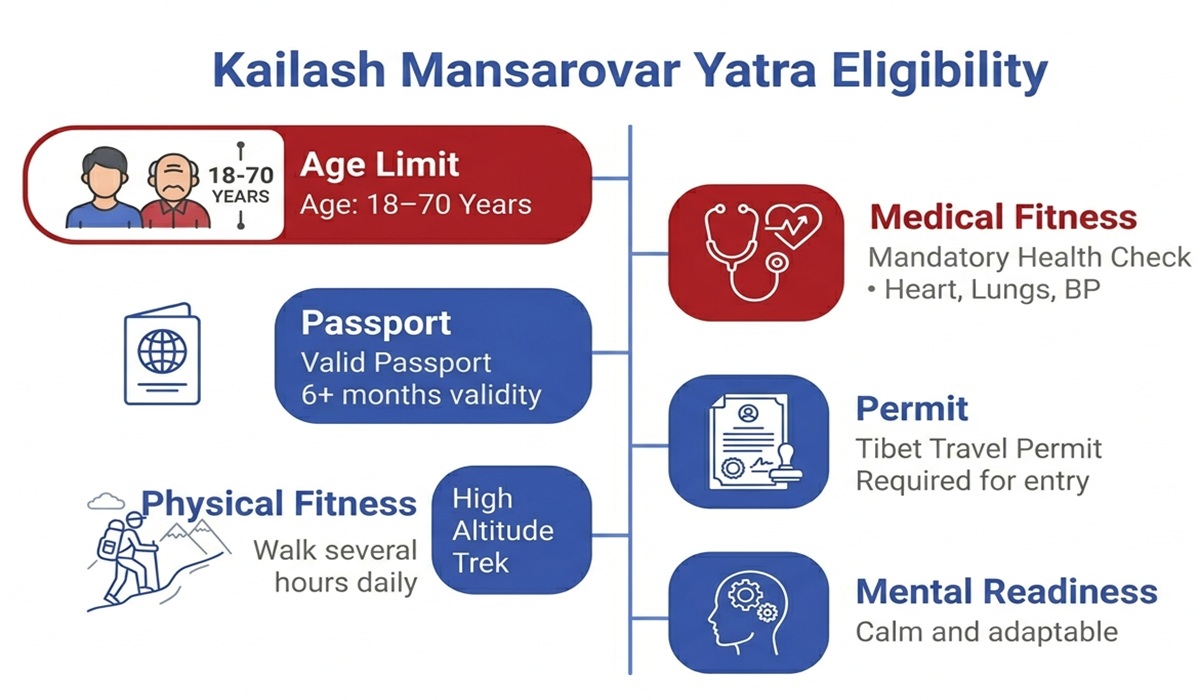
Kailash Mansarovar Yatra Eligibility Criteria That Applies To All Pilgrims
Eligibility requirements for Mount Kailash yatra
The Kailash Mansarovar Yatra has stringent eligibility rules because it takes place in extremely high-altitude terrain (4,500 meters and above), where there is a significant decrease in the amount of oxygen, and access to medical assistance is limited. As such, these eligibility rules are applicable to all pilgrims, Indians, NRIs, and Foreign nationals , to help maintain the safety of the Yatra by minimizing the risk of life-threatening incidents, e.g., Acute Mountain Sickness (AMS).
Age Criteria
Age can be an eligibility filter, but not the sole factor.
Criteria
Details
Minimum Age
18 years
Maximum Age
70 years (standard rule)
Relaxation
Up to 75 years in special cases (medical approval required)
The majority of most sanctioned trip routes follow the same age guidelines of 18 to 70, particularly the government-operated yatras. But some private companies that operate trips going into Nepal might let people older than 70 go on their pilgrimages, provided they meet some more stringent medical requirements. The reason for this age limit is that very young children and older people are more likely to have problems with altitude due to lack of oxygen and fatigue caused by low oxygen levels than people aged 18 to 70.
Medical Fitness Requirement
Medical fitness is the single most critical factor in determining whether you will receive your yatra authorization.
Criteria
Details
Requirement
Mandatory medical certificate
Key Checks
Heart, lungs, blood pressure, oxygen levels
Fitness Rule
Must handle high-altitude trekking safely
Therefore, even if someone is over the appropriate age limit, they can still be rejected if they have medical risk factors, such as heart disease, uncontrolled high blood pressure, or respiratory issues. Many travelers underestimate this requirement; however, medical authorization is the sole determining factor for gaining entry into the yatra.
Passport and Documentation
You will need to have valid and sufficient travel documentation to gain permits and gain entrance into Tibet.
Criteria
Details
Passport Validity
Minimum 6 months
Permits
Tibet Travel Permit required
Visa
Issued through authorized agencies
Without sufficient documentation/permits/ paper work you will NOT be given permission to enter Tibet without fail. All permits for entry into Tibet can only be obtained through government-approved travel or travel agencies, as independent travel into Tibet is prohibited.
Physical Fitness and Endurance
You will need to be physically fit for the yatra due to the long hours of traveling on foot, as well as the extreme nature of the terrain you will be traveling on.
Criteria
Details
Walking Ability
Several hours daily at altitude
Terrain
Rocky, steep, and unpredictable
Preparation
Prior trekking experience recommended
The trip consists of a long walk in an area with very little oxygen, so even if you are in good shape, you may not do very well if you do not spend time adjusting to this. Because of the way a person has developed their body and their age, stamina plays a more important part in success than simply their age.
Mental Readiness and Adaptability
Pilgrims must keep their minds active as they experience feelings of loneliness due to being far away from home and changing weather conditions, as well as physical discomfort; if they are mentally engaged in the journey itself the experience will be more enjoyable.
Criteria
Details
Conditions
Cold weather, isolation, limited facilities
Requirement
Calm mindset and patience
Importance
Helps handle discomfort and AMS symptoms
What are Kailash Mansarovar Yatra Health Requirements in 2026?
The Kailash Mansarovar Yatra health requirements in 2026 are there for the ultimate protection of the pilgrims against the dangers of high altitude. Since the journey starts at elevations of about 4,500 feet (1,372 m) to about 5,600 feet (1,707 m), the amount of oxygen available at that elevation drops significantly (about 40%-50%) compared to the amount of oxygen at sea level, causing the body to work harder than usual to supply itself with the resources that our bodies need. Even those who are in good physical condition can develop potentially serious health problems, such as AMS, when traveling at such elevations, which is why medical and fitness testing will be critical prior to starting the journey to Kailash Mansarovar.
High-Altitude and Oxygen Level Concerns
Kailash Mansarovar is located at a very high altitude with lower levels of oxygen. The reduced oxygen has a direct impact on a person's ability to breathe, heartbeat, and exercise. Many people who travel to high altitudes experience symptoms of headache, dizziness, nausea, and fatigue during the first 24 to 48 hours after ascending.
The authorities who control access to Kailash Mansarovar also require that travellers have sufficient capability to function without medical assistance at those altitudes. Because emergency services are very limited in the remote parts of the Himalayas, any small health problem could quickly lead to a serious one.
Mandatory Medical Tests for Pilgrims
Pilgrims must also undergo a series of mandatory medical screening tests in order to be eligible for approval to travel to Kailash Mansarovar. The tests are critical in determining if you have enough physical capacity to withstand some of the extreme stresses of being in a high altitude environment.
Some of the required medical tests are:
EECG (heart)
Stress tests for the heart
Blood Pressure measurements
Lung Function Tests
X/ray of the Chest
Diabetes Tests
General Health Screening.
The doctors will check specifically for Heart Disease, Asthma, Hypertension, and Weakness of the Respiratory System; these illnesses and/or diseases will get worse at high altitude.
A medical fitness certificate, as verified by a physician, is also required as a part of the approval process for travel to Kailash Mansarovar.
Fitness and Physical Requirements
Medical approval aside, physical endurance is extremely important for eligibility to travel. All pilgrims must have the ability to:
Walk multiple hours a day in a changing environment
Carry a light load during the hike
Adapt to sudden changes in altitude
Before leaving on the pilgrimage, regular walking, cardio, and breathing training are all advised. Even if a person is physically active, it is recommended that they prepare with a few weeks of endurance training before departing.
Oxygen, AMS Prevention, and Safety Measures
Due to the very low amount of oxygen available in many areas, AMS prevention is one of the most important aspects of maintaining your health. Some suggestions for travelers are to:
Gradually ascend to allow time to adjust to the altitude
Always stay hydrated
Do Not Exert Yourself Too Much
Carry medication for altitude sickness as prescribed
Although travel companies may supply oxygen tanks and emergency medical support, there is limited access to these items in remote areas; therefore, it is important that every traveler is prepared in advance.
What are the Essential health and safety precautions for a Trip to Mount Kailash?
General Health and Safety Precautions for All Mount Kailash Travelers
Get a Complete Medical Checkup: Consult with your physician if you're new to physical activities and have a heart condition, a lung disease, or high blood pressure.
Prepare for High-Altitude Conditions: Of the many health risks that one faces during the Kailash Yatra, it's mainly Acute Mountain Sickness (AMS). Symptoms vary and can include headache, nausea, dizziness, breathlessness, as well as sleep disturbance and fatigue. Don't ignore the early signs.
Acclimatize Properly: Gradual acclimatization is the most important way to avoid altitude sickness. Typically, an itinerary will include days off at intermediate altitudes to allow the body to acclimatize. In Manang, your body finally gets a chance to adjust.
Keep Hydration and Nutrition in Check: Drink at least 3 to 4 liters of water each day. Pilgrims also do well to eat light meals and refrain from alcohol consumption and smoking.
Walk Slowly and Avoid Overexertion: Simply walking about can be tiring at high altitude. So walk slowly with plenty of rests. It keeps the energy saved and results in fewer health threats. You'll be glad you didn't rush.
Precautions for NRIs Traveling to Kailash Mansarovar
NRIs coming by the route of Nepal have to adhere to the health protocols specified for foreign nationals.
Ensure Comprehensive Travel Insurance: As the Tibetan plateau is remote, we highly recommend you purchase medical evacuation insurance. You'll be glad you did if things don't go to plan.
Transport Your Medication and Oxygen Backup: Most organized tours will carry oxygen cylinders for emergencies. But travelers should still expect to bring personal medicines and any altitude sickness medicine if prescribed. Don't assume it'll all be taken care of for you.
Follow Guided Tour Protocols: Most NRIs travel in organized tour groups. So take care to follow the instructions of the guide about the days of rest, walking speed, and safety at altitude. It's there for good reason.
Keep Copies of Medical Records: It's wise for travelers with chronic conditions to carry a medical report and prescription medicines for immediate access if the need arises. Plus, having them on hand can make a real difference in an emergency.
Precautions for Senior Citizen Pilgrims (Above 60 to 70)
In case they take measures that are easy, seniors may also be able to take the pass at the Kailash Yatra while never setting up a battle with significant danger.
Strict Medical Screening: However, seniors need to undergo heart, lung, and blood pressure tests before the pilgrimage assessment. Don't skip this step.
Choose Comfortable Travel Routes: Senior citizens are advised to use helicopter routes or shorter trekking itineraries in order to ease exhaustion. It's not a compromise. It's smart planning.
Avoid Overexertion During Parikrama: At Dolma La Pass at 5,630 meters, oxygen is still sparse. So take it slow and don't push beyond your limits.
Travel With Medical Support: Attendants and medical doctor assistants need to travel thoroughly with senior citizens. You'll feel much more at ease knowing that support is close by.
Precautions for Adults (18 to 60 Age Group)
Most pilgrims to Kailash fall within this age category. But even healthy adults need to prepare carefully.
Getting in Shape for the Trip: Cardiovascular training includes walking, hiking, cycling, and cardio-type breathing exercises to get your body ready for acclimation to altitude. Take your time and gradually increase the intensity of your workouts and the duration.
Follow an Acclimatization Schedule: Don't rush through your itinerary. The body develops a tolerance to hypoxia with slow ascent. Patience is imperative in these early days of acclimatization; don't try to hurry the process.
Carry Essential Trekking Gear: Must-haves: warm clothing, trekking poles, waterproof shoes, sunscreen, sunglasses, and a first-aid kit. On cold nights, you'll be glad you packed that extra warm layer.
Listen to Your Body: If light symptoms of high altitude sickness appear, lie down and, if necessary, go to lower heights. It's not giving up. It's staying safe so you can complete the yatra.
Kailash Mansarovar Yatra Routes With Minimum and Maximum Age Limits
The holy Kailash Mansarovar Yatra is attempted through two routes from India and Nepal. The travel conditions, permit rules, and age limits vary by route. For the most part, the minimum age is 18 years, and the maximum is around 70 years old due to extremely high altitudes at Mount Kailash over 5,600 meters.
Here is the information for important routes to Kailash Mansarovar, along with their age limit:
India Routes
India Government Route (MEA Yatra - Lipulekh Pass, Uttarakhand)
The Government of India, Ministry of External Affairs, organizes the Kailash Mansarovar Yatra (official).
Route
Minimum Age
Maximum Age
Key Details
India Govt Route via Lipulekh Pass (Uttarakhand)
18 years
70 years
Strict medical screening and selection through lottery system
Important Points
Age Group (18 - 70 years and older).
Mandatory Testing of All Pilgrims in Delhi (before leaving for the Yatra).
Computerized Lottery/Computerized Assignments of All Pilgrims.
Includes Trekking and Another Form of Travel Over Long Distances at High Elevations.
India Government Route (Nathu La Pass, Sikkim)
This route is different from other routes as it is a route created by the Indian Government; it is primarily a road with limited amounts of trekking.
Route
Minimum Age
Maximum Age
Key Details
India Govt Route via Nathu La Pass (Sikkim)
18 years
70 years
Motorable route with government medical clearance
Key Highlights
It also follows the 18 to 70 age rule
Must be medically cleared and government-approved
It's not as hard as the Lipulekh route
Nepal Routes (Most Popular for NRIs and Foreigners)
At this moment, the best and most available travel method is through Nepal. It's especially practical for NRIs, foreign passport holders, and senior citizens. These tours are arranged by private tour operators and offer more choices in your itinerary. You'll find it's a much more flexible way to make the journey.
The Mansarovar height, together with Mount Kailash's altitude, makes this pilgrimage one of the most extreme high-altitude treks on Earth. There is less oxygen in the atmosphere than at lower elevations due to the increase in elevation. For elderly pilgrims and young children, especially, low oxygen levels will affect their ability to continue on a high-altitude trek.
The same applies to non-aged healthy adults; all must adequately prepare prior to embarking upon their journey due to low oxygen levels being available at these altitudes, as well as the potential for altitude sickness.
This is crucial as the elderly make up one of the largest demographic components in terms of tourists and pilgrims at high altitudes.
The only problem is that the body can't adapt because of a lack of pressure. The higher we go, the weaker our body becomes to work with lower oxygen pressure.
More strenuous for the heart and harder to breathe
Slower recovery from fatigue
Higher risk of Acute Mountain Sickness (AMS)
Due to a decline in resilience with age, elderly pilgrims above 60 to 70 lend themselves towards additional medical clearance and progressive acclimatization. Don't underestimate how much that matters up there.
Impact on Children and Young Pilgrims
High altitude oxygen loss is also more damaging for children.
Symptoms of fatigue and dehydration can develop rapidly
Poorer recognition of AMS instances
Short endurance for long hours of trekking
So the majority of official guidelines keep an age cap for pilgrims below 18 years.
How Age Links to Endurance
Age has a direct impact on the body in terms of how it copes with low oxygen.
Young adults (18 to 40): faster to adapt and way more durable
Middle age (40 to 60): moderate endurance, but does require fitness preparation
Seniors (60+): decreased lung capacity and slower acclimatization to high altitude
Because both Kailash and Mansarovar are at extreme altitudes in the 15,000 to 21,000 feet range, it's less about your age than how fit you are to endure. At those heights, preparation matters more than anything else.
What are Some Special Rules for senior citizens (60+ & 70+)?
Parikrama Restrictions
Mount Kailash Parikrama is a physically exhausting walk of around forty-two kilometers that usually takes three days to complete, finishing at the aforementioned Dolma La Pass, located at a height of 5630 meters above sea level. As the Kailash Parikrama can be quite difficult physically for older pilgrims, some restrictions have been placed on their ability to participate fully in this trek.
Many authorities and tour companies feel that older pilgrims (those over the age of 60) should avoid or not attempt to complete the traditional Kailash Parikrama due to health concerns associated with high altitudes.
Due to this circumstance, as many seniors as possible will remain at the base of Mount Kailash (Darchen) during the time that other members of their group participate in the Kailash Parikrama.
Once again, seniors can still go to Lake Mansarovar and obtain a view of Mount Kailash, which is considered holy, although they will not have completed the Kailash Parikrama.
Some tour companies provide alternate methods of travel via helicopter or shorter road routes for seniors. This gives senior citizens an opportunity to experience the spirituality of this pilgrimage while minimizing the level of physical strain associated with the most difficult portion of the pilgrimage.
Extra Conditions for 70+
Travelers 70 years of age or older may still journey through Kailash Mansarovar. However, they must comply with additional rules established by both the travel companies and the Tibetan Authorities.
It is required that a doctor attest to your ability to safely travel at the high altitudes of these regions.
Due to the potential dangers associated with travel without assistance, seniors over 70 years old must travel with either a close relative or family member who will accompany them on the trip.
Certain agencies will ask to place a refundable security deposit of $1,000.00 US to secure you against possible emergency medical treatment in Tibet.
These policies are intended to promote the responsible and safe travel of older pilgrims on their sacred pilgrimage to reduce the health risk for elderly pilgrims traveling to an area located in remote parts of the highest mountain range in the world.
BMI Calculator for Kailash Mansarovar Yatra Fitness
Actual BMI representation for Kailash Yatra Pilgrims
The Kailash Mansarovar Yatra requires a considerable amount of physical preparation for the difficult trip because of the altitude of roughly 4500 - 5600 meters above sea level. Body Mass Index is one of the primary indicators used by the Tour Operators and Authorities to determine eligibility for the Yatra. The BMI will determine if a person's weight matches their height, and it will also allow for the determination of the performance of a body in a high altitude environment.
BMI Calculation
BMI = Weight (kg) ÷ Height (m^2)
Example:
If a person weighs 70 kg and is 1.75 m high, then
70 ÷ (1.75 x 1.75) = 22.9.
The BMI is in a healthy range, and it would typically be acceptable to participate in high-altitude travel.
Ideal BMI for High-Altitude Travel
Maintaining a healthy body mass index (BMI) during a Kailash Mansarovar Yatra is critical since excess body weight increases the amount of work the heart and lungs have to do to function at high elevations.
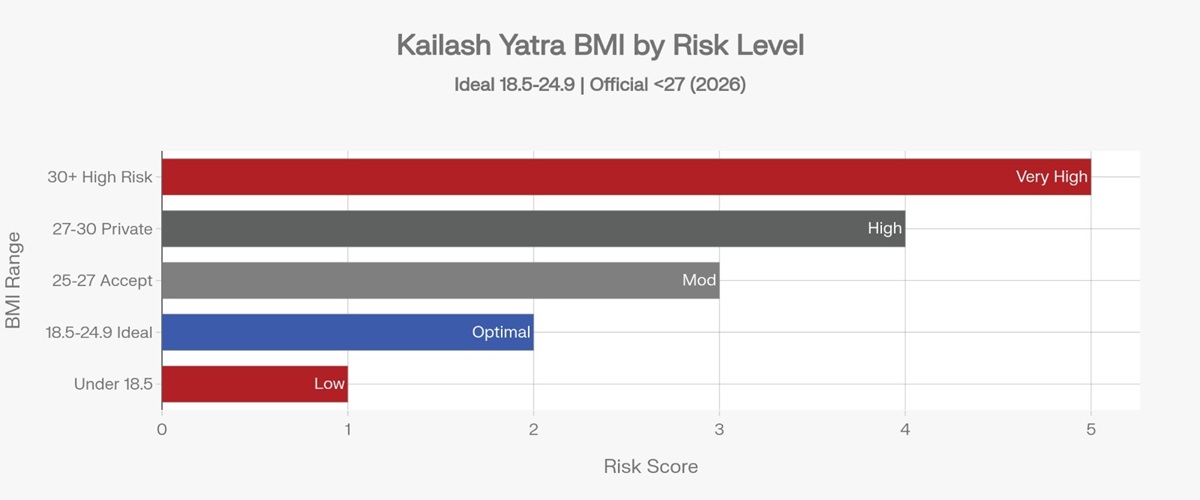
The ideal BMI for travel at high altitude is between 18.5 and 24.9.
Acceptable BMI Range for High Altitude: Up to 27 (for Official Yatra) will likely be acceptable.
Higher BMI Ranges (27-30): May be accepted for some private operators, but only with a signed medical release/clearance.
BMI's over 30: Will generally require further health screening, and may be denied access.
Many official recommendations state that for a safe experience, you should have a BMI below 27 when attempting to go on this pilgrimage. Having a higher BMI might increase your risk of developing altitude-related complications like feeling tired, difficulty breathing, or developing altitude sickness (like high altitude pulmonary edema (HAPE)). Having a low BMI prior to the Kailash Parikrama will also allow you to have greater endurance because you will be trekking 52 km in three days.
How to Prepare Your Body Before the Yatra?
To help prepare your body for the long distances you'll need to walk and the lower levels of oxygen that are present in higher elevations, you should begin getting yourself into shape 3 to 4 months before you are scheduled to go on your trek.
1. Improve Your Cardiovascular Fitness
Cardiovascular fitness is developed by performing cardiovascular activity (like brisk walking, jogging, biking, swimming, etc.) at least 3 times per week. By doing this, you will strengthen your heart and lungs, which are critical for high-elevation trekking.
2. Practice Long Distance Walking or Hiking
Having the ability to comfortably walk 10 to 12 km per day and the ability to use stairs will help you tremendously while trekking. Practicing hiking on hilly terrains will also help you when you actually start your trek.
3. Increase Leg & Core Strength
Exercises like lunges, vertical stair climbing, squats, and core exercises build up the muscles needed for stability & endurance while doing steep/long ascents like the Dolma-La Pass.
4. Breathe Properly
Using pranayama and some other yoga breathing techniques will help you develop greater lung function and also prepare you for lower amounts of oxygen in your blood (at higher elevations).
5. Eat Right
Balanced meals (including enough protein, vegetables, and plenty of fluids) before the trip; lower levels of body fat before the trip will help maintain your body's Mass Index so that it will remain in an acceptable range.
Is Passport Required for Kailash Mansarovar Yatra?
For all types of travelers, a passport is generally required in order to travel on the Kailash Mansarovar Yatra. The Yatra occurs in the Tibet Autonomous Region of China, an area that falls under the jurisdiction of international travel rules, and therefore, all travelers will require a valid travel document and permit prior to their entry into Tibet. The required documentation can differ depending upon the traveler's nationality and the route taken, whether through the Indian Government's route or the Nepal side.
Passport Requirement for Elderly and Children
Both senior citizens and children must present valid identity and travel documents to be able to participate in the Yatra. Passports must be valid and hold at least six months of remaining validity for any Yatra participants planning to enter Tibet. The passport must also have blank visa pages for the approval of visas and for entry stamps.
Children traveling with their parents must show their own passport or one of the acceptable identity documents, depending on the route taken. This applies to all non-resident Indians (NRIs), foreign nationals, and most individuals coming to the Yatra through a group tour booked in Nepal. For those entering Nepal, Indian citizens can travel to Nepal using either a passport or a voter ID, but will need a passport to continue onto Tibet for all Yatra participants, regardless of their age.