One of the most frequent questions that we receive from the pilgrims who are in the process of planning the sacred Kailash Mansarovar Yatra are:
Can asthma patients go to Kailash Mansarovar Yatra safely?
Is Kailash Mansarovar Yatra safe for asthma patients?
This is perfectly understandable considering the high altitude conditions where the yatra takes place, and concerns regarding the breathing patterns of the individuals in the rarefied atmosphere are natural. Asthma is no longer just an age-specific ailment confined to the elders, but it is also prevailing in the young generation, working professionals and even among physically active individuals who long to complete the spiritual odyssey once in their lifetime.
The Kailash Mansarovar Yatra attracts pilgrims from all walks of life who want to get blessed at the abode of Lord Shiva, Mount Kailash and take a holy dip at the celestial Lake Mansarovar, which is one of the highest freshwater lakes in the world and is a very sacred destination. For many, this is not just an ordinary journey but also a dream and a lifetime aspiration.
However, it is essential that before undertaking the yatra, asthma patients themselves are in a healthy state of mind and have enough awareness about the challenges involved:
High altitudes and less oxygen
Extremely cold and dry climate
Long walking distances during the Kailash Parikrama
Heavy physical labor at an altitude of more than 4,500 meters
Danger of altitude sickness and breathing problems
Fortunately, many asthmatics who are in good health have successfully completed the Kailash Mansarovar Yatra. It all depends on whether you have been medically evaluated properly and carry the necessary medicines, inhalers, etc. And importantly, your level of asthma, whether mild, moderate or severe. In this article, we will look at risks, precautions and expert advice to understand whether you can or can't take up the Kailash Mansarovar Yatra if you are an asthmatic.
Can Asthma Patients Really Go to Kailash Mansarovar Tour Yatra? Direct Answer
Yes, in many cases, an asthma patient may be able to complete the Kailash Mansarovar Yatra if it is stable and well-controlled. However, if the asthma is very mild and completely under control, only then they might be permitted to travel provided they receive a letter from their physician and are monitored throughout the Yatra.
Asthma can be life-threatening in extreme altitude, low oxygen, and cold environments, as found in the Yatra, which is also very strenuous. For our travelers, Asthmatics are prohibited to travel with us due to the various health hazards. Asthmatics are required to visit their general physician or specialist regarding their physical suitability prior to traveling and have a thorough discussion of health conditions before confirming any travel.
Moderate asthma patients and well-controlled asthmatic patients can take the journey smoothly after good preparation, adaptation, adherence to prescribed inhalers, medicines, etc. However, the altitude (as high as 5630m at Dolma La Pass), lack of oxygen, freezing climate and the extensive trekking trail can make this a strenuous and risky pilgrimage.
Asthmatic patients with moderate to severe asthma can be at a serious risk unless their pilgrimage has been supervised under proper medical clearance, as breathing difficulty can be experienced, and asthma attacks or altitude sickness can be induced at high altitudes.
Important Notice: Dream Tibet Travel is not a medical consultancy. All asthma patients must seek medical consultation and clearance from a Pulmonologist or Physician who has expertise in high-altitude tourism before they proceed for registration on the Yatra. The recommendations are purely based on the travel experience, and medical clearance must be prioritized.
Very Mild Asthma Patients (Usually Can Travel with Care)
Kathmandu (1,400m)
Kathmandu is considered relatively safe even for mild asthma patients as compared to the entire trek; oxygen levels are quite normal, and the atmosphere and air are quite stable. Most people traveling for pilgrimage do not have any noticeable issues breathing at this point.
Kerung / Kyirong (2,700m)
This is the initial true altitude zone of the Kailash Mansarovar Yatra, and mildly asthmatic people might feel a little shortness of breath. Rest, taking prescribed inhalers and sipping lots of water might prove effective during acclimatization.
Saga (4,500m+)
In this region, the oxygen level starts depleting considerably. Mild asthmatics will be well advised not to overstrain themselves by walking slowly with frequent intervals. Staying hydrated and avoiding cold air exposure is considered extremely vital in this phase.
Lake Mansarovar (4,590m)
Here, the mild asthma patients feel quite comfortable after accommodation. Although the high altitude and wind might cause slight discomfort, they can generally be handled with medication and controlled physical activity.
Darchen (4,670m)
This serves as a starting base for the Kailash Kora. Asthmatic patients can suffer mild symptoms due to thin air and wind, thus they should be carefully monitored before the beginning of the trek.
Dirapuk (5,080m)
The air is becoming considerably thinner, making breathing more difficult. Slow-paced walks should be adopted, but still, asthmatic patients with mild cases will be able to proceed.
Dolma La Pass (5,630m)
This part is by far the most strenuous part of the yatra. Asthmatic patients with mild cases can only traverse this point if physically capable, stable and extremely carefully.
Zuthulpuk (4,760m)
During this downhill, air is becoming less thin, and breathing is a relief, making the patients more stable and their symptoms gradually controlled.
Generally fine. Oxygen is adequate, and even the medium asthmatics do not find themselves breathless at this altitude. Most mild asthma symptoms don’t occur at this stage, but it is important to build up fitness before you travel at any altitude.
Kerung / Kyirong (2,700m)
This is the first zone of altitude. Some degree of mild-moderate breathlessness can start to occur due to less oxygen, but most medium asthmatics can do well at this stage using an inhaler and taking things slowly.
Saga (4,500m+)
It is becoming more and more difficult to breathe as there is less oxygen. A medium asthmatic will probably begin to feel their breathing restricted. Chest tightness or breathlessness could arise.
Lake Mansarovar (4,590m)
Getting colder. A medium asthmatic could still cope well, but the breathlessness could be more pronounced, especially due to the cold, lack of oxygen, and any exertion.
Darchen (4,670m)
This is the place you start the trek. You are very exposed to the cold wind and thin air, so be particularly aware of asthma symptoms developing and take precautions before starting on the trek.
Dirapuk (5,080m)
A medium asthmatic would find it extremely difficult to breathe at this height. Their breathlessness may now have been brought on by sitting on the horse or walking around, even doing so little.
Dolma La Pass (5,630m)
This is the worst and highest part of the Yatra for asthma patients. A medium asthmatic risks becoming very short of breath. It may be safer for a medium asthmatic to skip this and not do the full Kora, but only to Mansarovar or Darchen.
Zuthulpuk (4,760m)
As you descend, breathlessness may begin to improve, although you will still feel tired and suffer the effects of the height.
Severe or Uncontrolled Asthma Patients (Not Recommended)
For the entire Kailash Mansarovar Route, anyone suffering from serious asthma or uncontrolled asthma is not recommended to embark on the tour.
Kathmandu (1400m), Kerung (2700m), Saga (4500m+), Lake Mansarovar (4590m), Darchen (4670m), Dirapuk (5080m), Dolma La Pass (5630m) and Zuthulpuk (4760m) these extremely high altitude locations offer very thin oxygen levels, a very harsh climate and extremely limited facilities to meet emergency medical situations.
Why High Altitude Makes Kailash Mansarovar Yatra Risky for Asthma Patients?
Factor
What Happens at Kailash Yatra Altitude
Risk for Asthma Patients
Oxygen Level Drop
40 - 50% less oxygen than sea level
Severe breathlessness, wheezing
Dry Air
Extreme dryness and cold winds
Airway irritation, asthma trigger
Temperature Change
Warm days, freezing nights
Lung stress and fatigue
AMS Risk
Common above 3,000m
Can worsen asthma symptoms
Extreme Altitude
Up to 5,630m (Dolma La Pass)
High risk of respiratory distress
All the places during the Kailash Mansarovar Yatra lie on the Tibetan Plateau, also known as "Roof of the World". The minimum elevation (Kathmandu 1400m) to the highest elevation (Dolma La Pass 5,630m) causes significantly reduced oxygen levels and air density due to the thin air at the altitudes mentioned. Researches show that the reduction in oxygen availability is almost 40-50% when comparing at sea level and at the above altitude ranges. Our body will have to undergo enormous stress to survive and breathe at such a high altitude.
Thin Air and Low Oxygen Levels
At altitudes such as Saga (4500m), Lake Mansarovar (4590m), and trekking routes of Kailash Parikrama, the oxygen pressure is significantly lower than normal. This leads to breathlessness even in physically fit persons, and patients with asthma could experience bronchospasm and wheezing due to an increase in airway hyperresponsiveness.
Dry and Cold weather condition
The region is extremely dry, cold, and windy, and it is considered a trigger for Asthma symptoms. Moreover, dry atmosphere and cold temperature may cause dehydration, body exhaustion and long hours of walking during the Kailash Kora, further exaggerating the condition.
Risk of Acute Mountain Sickness (AMS)
The common ailment encountered at altitude over 3000m (which can result in headache, nausea, dizziness, and shortness of breath) is AMS, which can potentially convert to HAPE and HACE in later stages if not taken proper treatment and rested.
Kailash Yatra in reality
As highlighted above, this yatra is definitely spiritual but at the same time physically challenging, secluded and has minimum medical support available. Healthy trekkers do find it very difficult at such high altitudes; asthma patients definitely need to make conscious decisions considering their health.
Understanding the 4 4 4 rule for Asthma Patients During Mount Kailash Trip?
The 4-4-4 rule is an emergency protocol used to treat breathing difficulties in an asthma attack quickly. The rule is particularly important when travelling at high altitudes, for example, on the Kailash Mansarovar Yatra, where there is reduced oxygen and conditions such as cold air, physical activity and dust could trigger a sharp deterioration in symptoms.
What is the 4-4-4 Rule?
If you suffer an asthma attack, this should be done:
4 Puffs: Sit down and remain calm, and have 4 single puffs of a blue/grey reliever inhaler (e.g. Ventolin, Salbutamol).
If you have a spacer, have 1 puff per breath, taking 4 breaths with each puff.
4 Minutes: Leave for 4 minutes to let the medicine take effect whilst monitoring your breathing constantly.
4 More Puffs (if required): If you notice no improvement, take a further 4 puffs.
This rule is very popular as a first aid approach before you go to the doctor.
When to Use the 4-4-4 Rule During Kailash Yatra?
Asthma attacks on the following points mean an immediate 4-4-4 will be required.
Kerung/Kyirong (2700m): Early onset of breathlessness due to altitude.
Saga (4500m+): Wheezing or tightening of the chest due to the drop in oxygen.
Lake Mansarovar (4590m): Suddenly asthmatic with the arrival of a cold wind.
Darchen / Dirapuk / Dolma La Pass (4670-5630m): High-risk areas with extremely low oxygen where attacks tend to happen quickly.
To be applied upon the very first sign of wheezing, chest tightening or breathlessness and not when the symptom is at its worst.
Why is it important for the Kailash Mansarovar Yatra
Medical help is sparse at high altitudes, and the distance between the camps is quite long. Prompt self-management of symptoms plays a vital role. Thus, carrying a reliever inhaler and remembering the 4-4-4 rule is a must for every asthma patient venturing on the journey.
Travel Safety Note (Dream Tibet Travel Guidance)
Dream Tibet Travel sincerely suggests that every asthma patient get adequate medical consultation prior to the yatra. While we help the patient with acclimatization and manage the logistical and emergency aspects during the yatra, we do not provide any kind of medical consultation. The 4-4-4 rule can be useful as a first-aid measure and does not substitute for prompt medical intervention.
Any asthma patient should obtain clearance from a Pulmonologist familiar with high-altitude travel before commencing a Kailash Mansarovar Yatra trip.
How risky is Kailash Mansarovar Yatra for Asthama Patients?
The Kailash Mansarovar Yatra could be more trouble for asthmatics because the low oxygen supply at altitude causes increased stress to the lungs. Furthermore, the cold, dry air combined with physical activity will cause bronchospasm and difficulty breathing. Hypoxia due to altitude, in the view of research, causes increased respiratory stress and can worsen asthma.
Lower oxygen levels (hypoxia effect)
Low oxygen saturation level is very high at altitudes. The lungs have a more strenuous task trying to obtain the desired oxygen saturation level, and asthma patients may experience a tightness of the chest, shortness of breath and wheezing.
irritation from cold, dry air
Asthmatic patients react badly to cold, dry air, which will trigger narrowing of the airways(bronchospasm) and cause the respiratory tract to be sensitive.
Stress from physical exertion
Walking for long hours during Kailash kora raises the oxygen requirement in the body and results in exhaustion, hyperventilation and the onset of asthmatic attack.
Interaction with acute mountain sickness (AMS)
The presence of headache, nausea and giddiness as a result of AMS will exacerbate breathing difficulties, hence managing the asthmatic attack is harder.
Lack of access to medical facilities in the remote region
From a medical security aspect, delaying medical attention at high altitude camps if an asthma attack occur increase the danger.
Psychological stress and anxiety
Anxiety-induced dyspnea, which is brought about by the higher altitude and difficult terrain, can augment how the individual feels his asthma and, as such, make asthmatic control difficult.
Reduced sleep at higher altitude
Low altitude means that oxygen is inadequate at the altitude that you are, which can affect how well you sleep. The reduced sleeping quality means your lungs aren’t functioning as well as they can throughout the day, which will impact the asthmatic person.
Does an Inhaler help in High Altitude of Kailash Mansarovar Yatra and Parikrima?
Inhaler for Asthma patients that they can use duing Kailash mansarovar Tour
Yes, an inhaler can be effective at high altitude in the Kailash Mansarovar Yatra and Parikrama, but it is not a cure for the problems associated with high altitude breathing problems. It helps to relieve the symptoms like wheezing, tight chest and shortness of breath caused by asthma. Because the oxygen level is extremely low at high altitudes such as in Kerung (2,700 m), Lake Mansarovar (4,590m) and Dolma La Pass (5,630 m), breathing may seem strenuous even after using an inhaler.
Which Asthma Patients Benefit Most From an Inhaler in Kailash Yatra?
Mild asthma patients- They are most likely to have their asthma perfectly controlled by an inhaler and may complete most of the part of the trip carefully.
Moderate asthma patients: The inhaler can control the symptoms, but the effects may diminish at high altitudes; they need medical monitoring.
Severe asthma patients and those who cannot control asthma symptoms well- Their symptoms will not be enough to be managed with the help of an inhaler; they are still at risk, and it is best not to take the trip.
Which Inhalers Are Recommended?
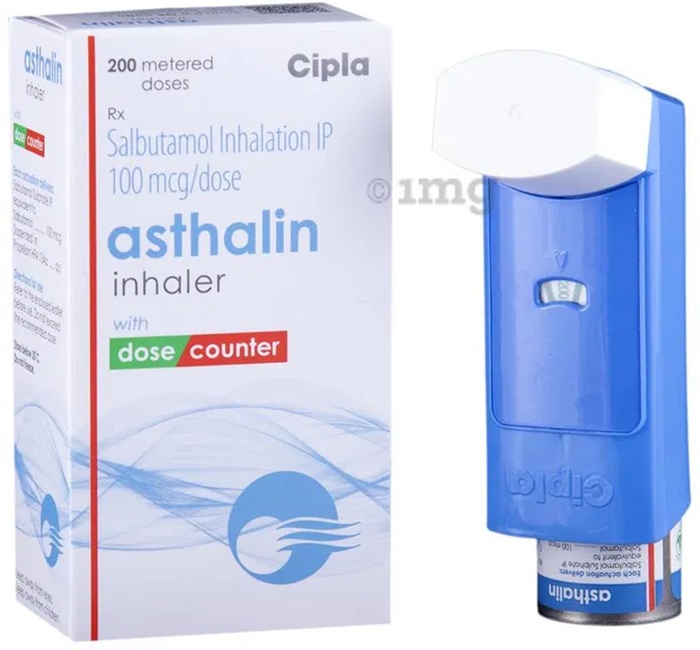
Reliever Inhalers (Most Important): Salbutamol (Generic Name) is available under the brand names Ventolin, Asthalin, and is used for support during an episode of rapid onset, shortness of breath.
While inhalers help in asthma and lung symptom control, they do not supplement oxygen in high-altitude areas. The major threat in the Kailash Mansarovar Yatra would still be hypoxia. Hence, inhalers can be useful as an emergency adjunct medicine but not as full protection. It is also imperative that medical clearance be obtained prior to undertaking the journey.
How to Be Prepared as an Asthma Patient Before Attempting Mount Kailash Tour?
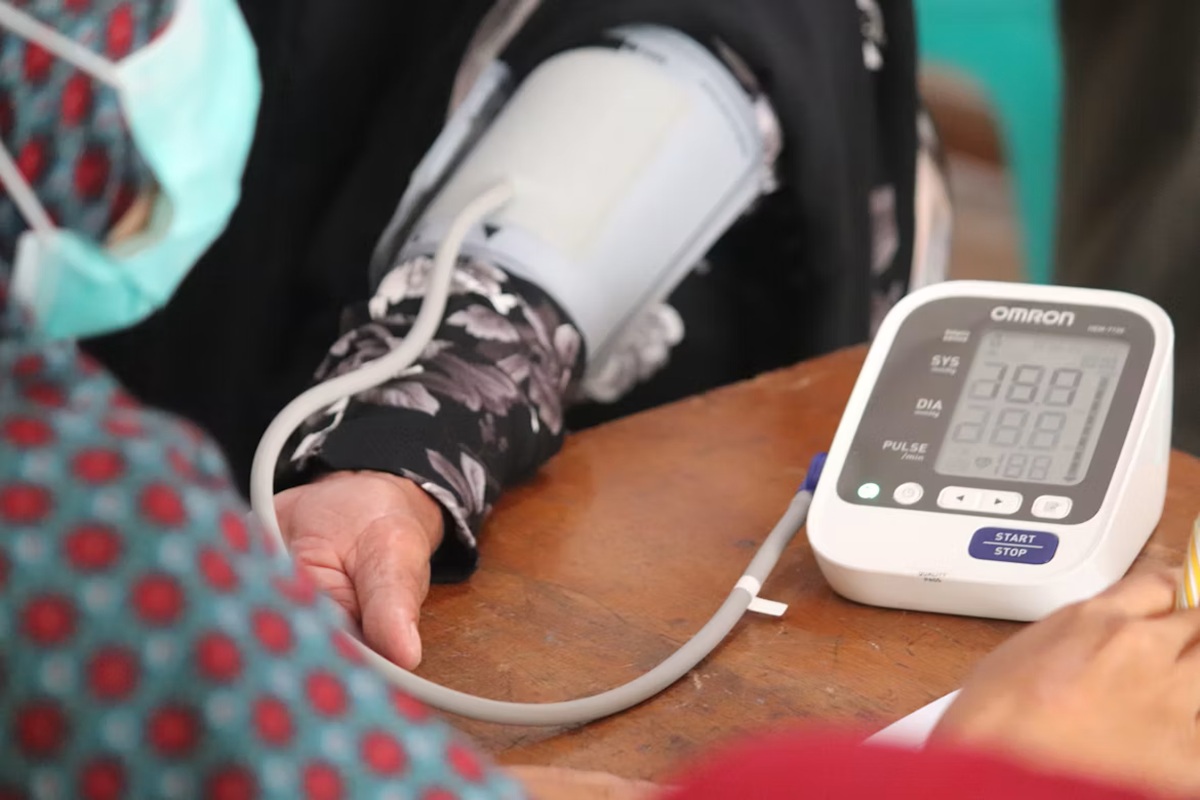
Checking Blood Pressure before Mount Kailash Tour
Not only physical readiness, but for asthma patients, the preparation for Kailash Mansarovar Yatra involves many factors of a medical, acclimatization and emergency readiness nature. Medical science indicates that at high altitude, the air oxygen is diluted and may cause inflammation of the airways. For those proceeding in regions beyond 2700 m and beyond 4000 m in particular, it is advised to take certain preventive measures before entering such a high altitude territory.
Pre-Yatra Medical Fitness Check-Up
First and foremost, it's crucial to get a complete medical check-up for a person suffering from asthma. Generally Doctors check:
Degree of control on asthma (Mild, Moderate and Severe)
Lung function tests (Spirometry)
Response of oxygen during the efforts
Only asthma patients with Mild control are usually advised for High Altitude travel with all possible safety precautions.
Acclimatization plan at stages on Kailash route
Kathmandu Kerung(1400m-2700m)
Start at a very slow pace and get aware of breathing; this is generally the initial acclimatization stage.
Saga Region(4500m+)
Oxygen gets decreased; thus, asthma patients need to limit their efforts and take frequent breaks.
Lake Mansarovar(4590m)
Cold winds and lower oxygen can induce the symptoms, so regulated movement is required.
Kailash Base (Darchen4670m)
Be prepared mentally as well as physically to deal with the toughest part of the journey.
Dirapuk Dolma La Pass (5080m-5630m)
This is the highest and the highest risk zone; the low oxygen here causes an immediate increase in symptoms.
Zuthulpuk(4760m)
The stage of descent with easy breathing.
Medication and Emergency Inhaler Preparation
Those suffering from asthma need to bring:
Reliever inhaler (Salbutamol/Ventolin)
Preventer inhaler (if prescribed)
Spacer device
Backup medication (as prescribed by doctor)
These are necessary because bronchospasm can occur at high altitudes due to cold, dry air.
During Yatra: Safety, Role of the Operator (Dream Tibet Travel Guidance)
A proactive approach on the part of the asthma patient is necessary, while a responsible operator like Dream Tibet Travel will take basic precautions to support patients and control situations during the Kailash Mansarovar Yatra.
Walk at a slow pace and avoid fatigue.
Use the inhaler as soon as the first signs of symptoms appear.
prefer easier routes if possible.
cease immediately if breathing difficulties occur.
Generally support provided by the operators will include
availability of oxygen during emergencies
availability of highly experienced high altitude guides
continued supervision of the group
assistance in arranging for medical evacuation procedures in case of emergencies.
Such exercises will help increase the efficiency of the lungs in a high-altitude area with low oxygen.
Mental Preparation for High-Altitude Stress
Altitude-induced stress can have a bad influence on Asthma. Patients need to be mentally prepared for:
Slow trekking speed
Cold climate and its influence on respiration
Emergency Awareness During the Yatra
Patients should be made aware of symptoms suggestive of an impending emergency, such as:
Wheezing
Chest tightness
Persistent coughing
Inhaler and rest should be initiated, and if the symptoms persist, one should either descend or seek immediate medical attention.
Final Doctor Clearance is Mandatory
Patients with respiratory disorders require the clearance of a doctor before ascending over 2500m; studies have shown a positive influence.
Understanding Oxygen Levels at Mount Kailash and Their Impact on Asthma
Mount Kailash Tour Oxygen levels
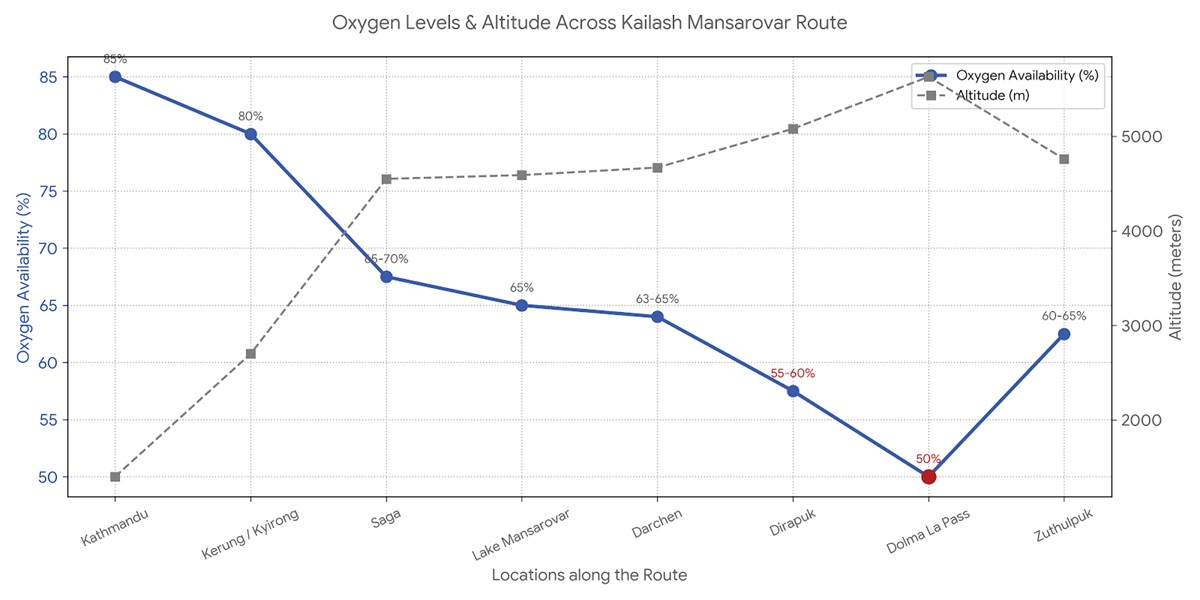
Oxygen Levels Across Kailash Mansarovar Route (Scientific Reality)
Location
Altitude (Approx.)
Oxygen Availability
What It Means Physically
Kathmandu
1,400 m
~85% of sea level
Normal breathing for most people
Kerung / Kyirong
2,700 m
~80%
Mild oxygen drop, early adaptation begins
Saga
4,500 - 4,600 m
~65 - 70%
Noticeable breathlessness in exertion
Lake Mansarovar
4,590 m
~65%
Reduced stamina, cold-air sensitivity
Darchen
4,670 m
~63 - 65%
Breathing becomes heavier during activity
Dirapuk
5,080 m
~55 - 60%
Significant oxygen stress on lungs
Dolma La Pass
5,630 m
~50%
Severe oxygen deficit, high risk zone
Zuthulpuk
4,760 m
~60 - 65%
Gradual recovery during descent
It is medically proven that at an altitude of 5,500m+, the amount of oxygen may reach almost half that at sea level- thus one breath taken here will provide half the amount of oxygen as a breath taken in at sea level. This reduction in altitude affects our oxygen intake as our atmospheric pressure decreases. There will still be about 21% oxygen, but because there is less pressure to force this air into the lungs, the oxygen taken in is reduced.
Thus, the body hyper-ventilates (breathes faster). The heart will need to work harder, and less oxygen will be delivered to the brain and muscles. For someone who has asthma, there is additional strain placed on them because their airways are already sensitive to irritants in the air.
This route involves prolonged staying over 4000m; therefore, it poses problems to asthma sufferers compared to the standard tourist trip, which would be significantly shorter than the route taken. Even if taking asthma medications and inhalers, the asthmatic patient has to be more than vigilant, as oxygen levels cannot be increased in higher altitudes; only symptoms can be treated.
Impact of Oxygen Drop on Asthma Patients
Narrowing airways (possibility of bronchospasm): Dry cold low oxygen air could trigger airway narrowing, resulting in a wheeze and/or chest tightening.
Decreased oxygen reserve: There is less available oxygen to use for the system at altitude, and moderate asthma may seem worse with effort.
Worsening cold air sensitivity: The cold, dry air from the Himalayas blowing past such as Dirapuk and Dolma la pass would have a direct irritating effect.
Fatigue-induced breathlessness: Combined with the effort of walking, low oxygen places further burden on breathing controls making asthma control difficult.
Added influence of AMS: The symptoms and signs of acute altitude sickness (AMS), for example, the light-headedness and feeling of fatigue, will add to the subjective feeling of how bad the asthma is.
Best Route Options for Asthma Patients Visiting Kailash Mansarovar
The route of the Kailash Mansarovar tour is extremely important for asthma patients because of the correlation among patients for high altitude travel, altitude increase, access to medical services, and how long they are away from home. Research on breathing normally at high altitudes indicates that increased travel by way of less than optimal means of gradually increasing your altitude over time will help decrease your oxygen needs and improve the ability to manage your asthma! Below are some options for the different routes of travel to Kailash Mansarovar from an asthma-safety point of view. The travel routes from Nepal to the Yatra are extremely important for asthma patients because of the correlation among gradual altitude increase, road conditions, and acclimatisation.
1. Kathmandu - Kerung (Rasuwagadhi) Overland Route (Recommended for Very mild Asthma Patients)
This is an older traditional Nepal-Tibet entry point.
Very sudden and abrupt altitude rise from Zhangmu (2300m) to Nyalam (3750m). A mandatory stop is required for acclimatization at Nyalam.
More physically demanding.
Asthma perspective: Not advisable for patients suffering from any chronic respiratory condition due to a rapid and sudden rise in altitude, although good for extremely fit patients with a controlled, mild asthmatic condition.
This route combines both helicopter travel and some overland travel.
It is faster than the above routes; thus, there is a very limited opportunity for altitude acclimatization.
Highly dependent on weather conditions.
Asthma perspective: Not recommended in general for asthma patients, as sudden changes in oxygen levels can worsen breathing.
From a medical perspective Kerung overland is the most recommended due to gradual adjustment to the low oxygen level. This can lead to breathlessness, bronchospasm and altitude reaction from quick access points such as Hilsa or Kodari. The important consideration with asthma is not how long, but how slow a person acclimatises to the low oxygen above 4,000m.
When Should Asthma Patients Avoid Kailash Mansarovar Yatra Completely?
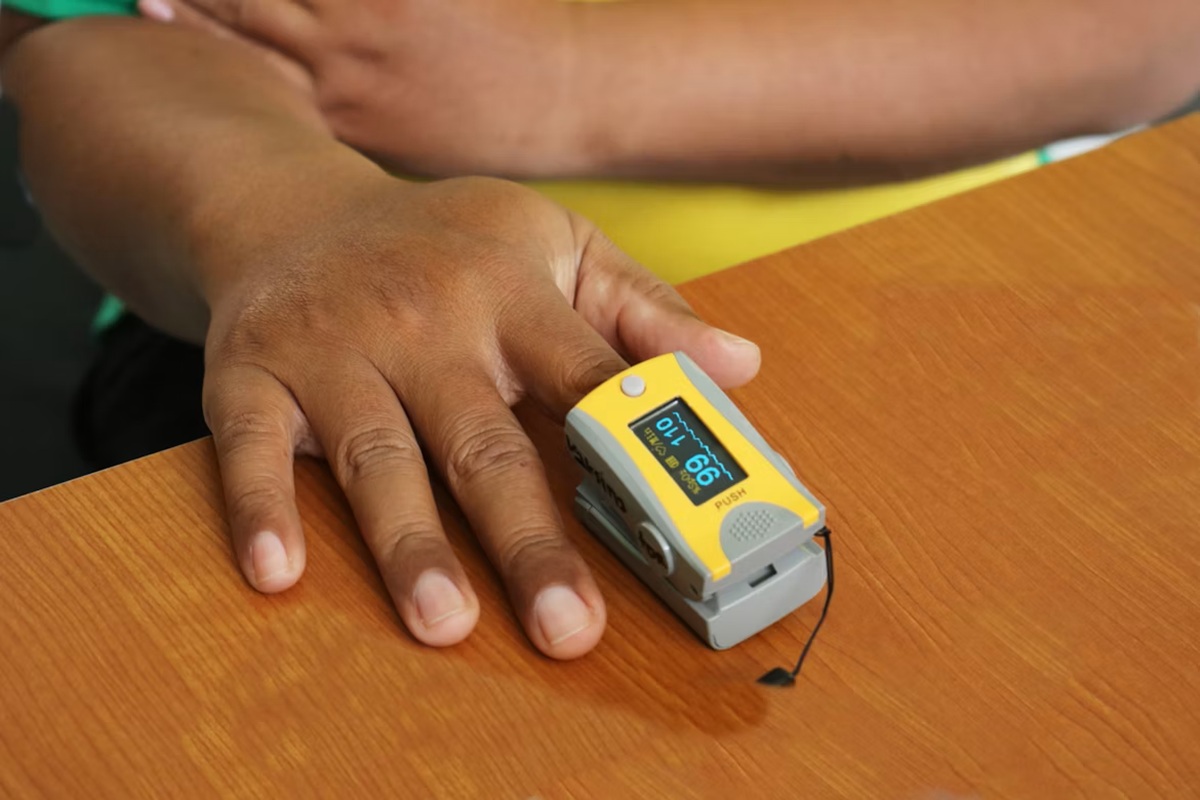
Our Guides Checking Oxygen Levels of a pilgrim in Holy Mount Kailash Tour
Asthma patients should altogether avoid the Kailash Mansarovar Yatra if they are in a higher risk group of having acute breath problems in high altitude environments. Due to low oxygen levels at high altitudes (4,000m), as per research data, the chronic respiratory condition worsens, which is not under proper control. A patient who experiences breathing problems even when at light exercise, or an attack exacerbated due to hypoxia, would experience it here even more frequently.
Frequent asthmatic attacks
In case a patient experiences breathing attacks even while at rest or is indulging in light activities, the trip should not be taken, as high altitude would further lead to increased inflammation in the airways and intensify asthmatic attacks.
Recent hospitalizations due to Asthma
Patients who have recently been hospitalized due to Asthma or are being treated for emergency care should absolutely avoid this yatra. Recurrence of symptoms is further exacerbated in conditions of low oxygen, like in Dolma La pass(5,630m).
Dependence on rescue inhalers
If you have to make trips to your rescue inhalers several times a day, then this implies that you have very unstable Asthma. This problem is more serious at locations where access to immediate medical facilities is limited, such as in the remote regions of Saga and Dirapuk.
Severe allergic/asthmatic reaction to cold air and physical activity
Conditions which are a result of extremely cold and dry air are common triggers for asthma patients, which lead to frequent asthmatic attacks. Such asthmatics experience shortness of breath and chest tightness on slight exposure to cold and during minimal physical exertion, and thus would find such a trip to high altitude as not at all suitable.
Very low lung functioning, with poor medical test results
Lung capacity is tested using spirometry and oxygen level tests; thus, if these values are very low, then a trip to high altitude is often not advisable.
Existence of co-existing serious diseases
An asthmatic suffering from chronic diseases such as heart ailments, poorly managed hypertension, and respiratory infections is doubly vulnerable and should avoid the yatra.
Medical Reality (Important Note)
At altitudes above 4,500m, there's a significant oxygen deficit & difficulty of evacuations and rescue operations. Thus, for asthmatics whose asthma condition isn't very stable, the increased chance of severe hypoxia and combination with cold air & high exertion poses a definite medical risk.
Asthma Patients' Diet Plan Before and During Kailash Mansarovar Yatra
Eating a balanced diet can also assist the body during long treks and improve breathing, immunity and stamina at higher altitudes. The main aims of a diet for very mild asthma patients are the prevention of flare-ups and inflammation, the avoidance of food triggers, adequate hydration and a slow release of energy suitable for trekking at altitudes of over 2000m- 5600m. Medical reports indicate that a combination of anti-inflammatory foods, good hydration and good nutrition could improve a person's level of respiratory ease and fatigue levels when acclimatising.
Pre-Yatra Diet Plan (7 - 10 Days Before Travel)
Breakfast (7:00 am to 9:00 am)
Here, the aim is to strengthen your lungs and boost immunity.
You should have warm water with honey. Honey will be beneficial as it will reduce inflammation. You could opt for oats porridge with almonds and walnuts. Boiled eggs or paneer would be a good choice for protein, and you could have either a banana or an apple for energy.
Lunch (12:30 pm to 2:00 pm)
Here, the aim is to increase energy levels while being conscious of proper digestion. You should opt for either rice or roti, Dal for protein and vegetables such as spinach, carrots and beans. Yogurt could be consumed because of its immune-boosting effects due to the probiotics.
Dinner (7:00 pm to 8:30 pm)
Here, the aim is to have an easily digestible meal. A good choice would be either vegetable soup or khichdi. Steamed vegetables are also an option, and for protein, you could choose paneer or, if non-veg, boiled chicken. Warm herbal tea, i.e., tulsi or ginger, would be the perfect end to the day.
Diet Plan During Kailash Mansarovar Yatra (Mild Asthma Patients)
Take frequent tiny sips rather than taking a large amount at once.
Foods to take (anti-inflammatory and lung-friendly)
Foods containing ginger and turmeric
Almonds, Walnuts, flax seeds
Green vegetables (spinach, kale)
Warm soups and broths
Fruits of the season (apple, banana, oranges)
Foods to avoid at high altitude
Cold drinks and ice water
Deep-fried/ oily food
Too much sugar and processed chips
Heavy meat dish (difficult to digest at high altitudes)
Over amount of dairy products (if causes mucous in some cases)
Main Medical Reality for Asthmatic Patients
The amount of oxygen is very low at high altitude, and digestion also becomes sluggish; thus, there may be a higher degree of exhaustion and breathing difficulty. This light, warm and anti-inflammatory diet helps to utilize the oxygen more effectively and also reduces the stress on the body during the Kailash Mansarovar Yatra. However, this diet cannot cure or prevent asthma attacks at any level; hence, proper use of the given medicine and inhaler is crucial for asthma patients throughout the yatra.
Dream Tibet Travel offers very hygienic, fresh vegetarian meals throughout your trip, which are light, warm and easy to digest in high altitude conditions. This type of meal menu will always help the tourist, especially in case of well-controlled, very minor asthma, by avoiding the oily and deep fried and processed foods, which are very difficult to digest and will thus increase the strain. In order to get support from the diet, asthma patients need to follow medical advice strictly and get clearance.
How Do You Manage and Recover From a Flare-Up During Mount Kailash Mansarovar Tour?
Kailash Mansarovar Yatra with Dream tibet Travel
An asthma flare-up in high altitude (e.g. Kerung, Saga, Lake Mansarovar or Dolma La Pass) requires an immediate and managed approach: controlled breathing, and properly using the reliever inhaler. According to guidelines, prompt treatment of a mild attack of asthma at high altitude can even prevent it from becoming an asthmatic emergency.
Below is a practical step-by-step emergency plan of response, internationally accepted and followed:
Stop Immediately and Sit Upright
Immediately stop trekking/walking
sit straight (never lie flat on the ground)
loosen up tight clothing
Maintain calm to decrease oxygen consumption.
Position that will improve the ventilation of the airways.
Use reliever inhaler immediately (4-4-4 rule)
Use 4 puffs of a reliever inhaler (Salbutamol/Ventolin). Give each puff over 4 breaths with a 4-minute interval in between breaths and puffs. This is the globally accepted method of first aid for emergency asthma attacks. Continue treatment as above until improved.
If the breathing does not improve within 4 minutes, then another 4 puffs should be given. Continuously monitor breathing status carefully and do not continue trekking until it stabilizes.
Control breathing at altitude: Use of nasal breathing.
Avoid fast, frantic breathing; breathe using your nose through shallow breaths. In areas with cold, dry air, it is advisable to cover the mouth and nose with a scarf or mask (Dirapuk, Dolma La pass). In such situations, immediate shelter from the cold, dry wind is paramount, as it can trigger the tightening of airways.
Drink water and Rest
Keep drinking warm water, little by little.
Cease all physical efforts for 30-60 minutes.
Maintain a warm body; it is going to decrease the aggravation of respiratory ways.
At altitude, water is to a great extent dehydrated. You will see that the bronchi will be easily hypersensitized.
Continue trek or descend
If symptoms get worse, then you could go slowly with caution.
If symptoms remain the same or worsen, stop trekking immediately.
Descend, descent is the fastest remedy.
Increasing oxygen supply at high altitude cannot be done with a doctor's help.
Helicopter Evacuation
If symptoms do not improve after some puffs on the inhaler, call a helicopter for instant transportation. Call for a helicopter immediately in any of the following:
Extreme chest tightness.
Dizzy, cannot interpret anything and is too weak to even talk.
At high remote places, such as Saga or Dolma La Pass, the distance may be very far to get to a doctor; act fast.
A patient's Recovery fact for Kailash Yatra patients:
An asthma attack does not recover instantly in high altitude conditions. Air remains hypersensitive after the lowering of the symptoms due to:
Deficiency in the oxygen supply to the body.
Exposure to dry cold air.
Extreme fatigue from trekking.
Therefore, frequent rest, slowing down and watching your movement is crucial after every asthmatic attack.
Final Verdict: Is Kailash Mansarovar Yatra Safe for Asthma Patients in 2026?
The 2026 Kailash Mansarovar Yatra cannot be deemed completely safe for an asthma patient. The risk of suffering complications during this yatra depends completely on the stage and severity of asthma control. From a medical point of view, the pilgrimage entails being at extremely high altitudes for long hours (between 2,700m and 5,630m above sea level), where the oxygen level drops by 40-50%.
This can easily trigger asthma by causing hypoxia, cold and dry air, as well as by strenuous effort. This especially happens while circumambulating Mount Kailash. If the asthma is mild and very well-controlled, then with medical clearance and prior acclimatisation, the patient may be allowed to undertake the pilgrimage, provided they use their inhaler diligently. But even for them, symptoms can prove unpredictable above 4,000m altitude. The moderate to severe asthma patients, frequent exacerbations, patients recently hospitalized or having reduced lung capacity should by no means attempt the Kailash Mansarovar yatra.
Therefore, even though the moderate stages may even finish the yatra with care and attention, still, for an asthma patient, the Kailash Mansarovar Yatra is a high-risk expedition for 2026, and no step should be taken before consultation and clearance by a pulmonologist.
For your safe and organized travel to Kailash Mansarovar, you can contact Dream Tibet Travel, which arranges the Kailash tours along with a knowledgeable Tibetan guide, cozy accommodation, sattvic vegetarian meals and comprehensive on-ground support.