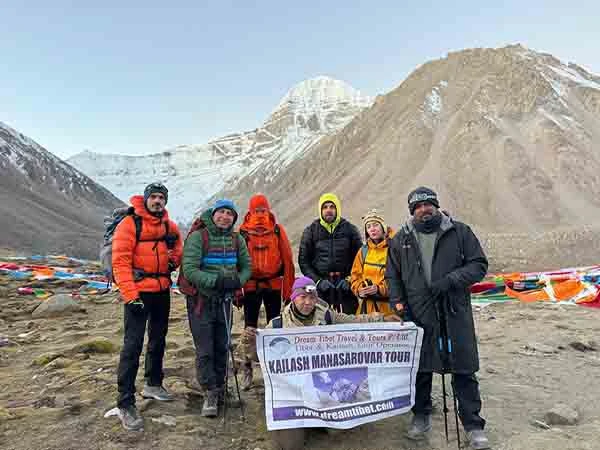
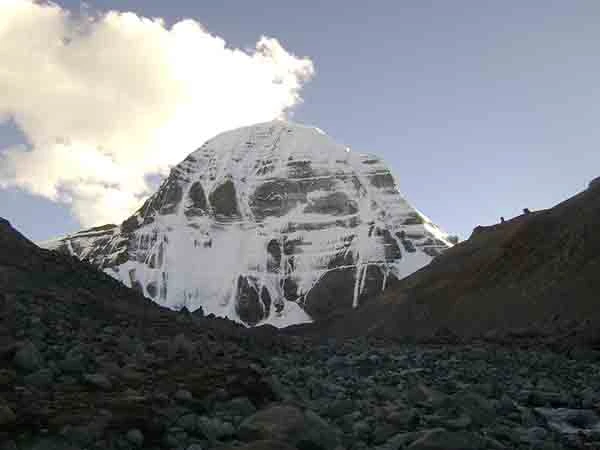
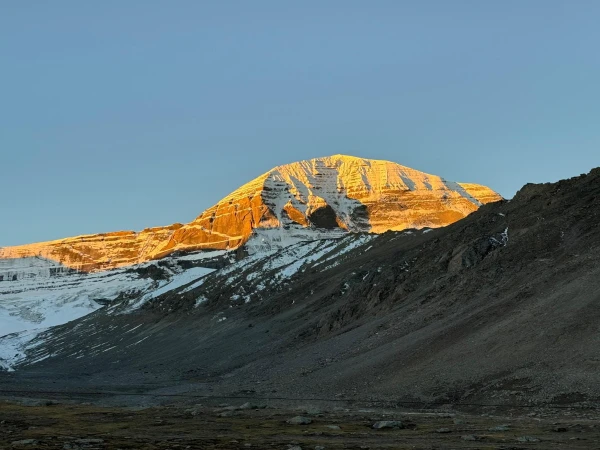
Dolma La Pass Location, Map and Geographical Features
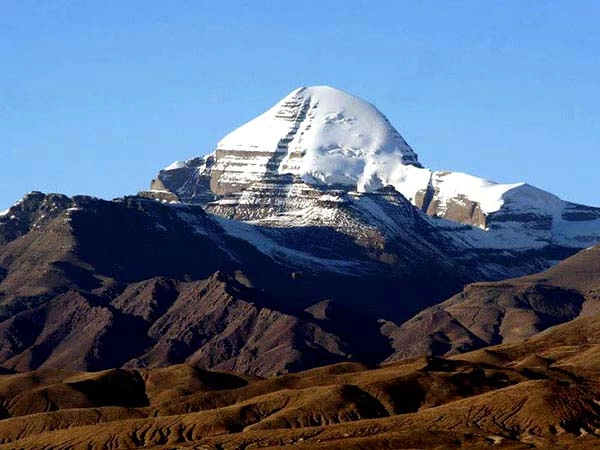
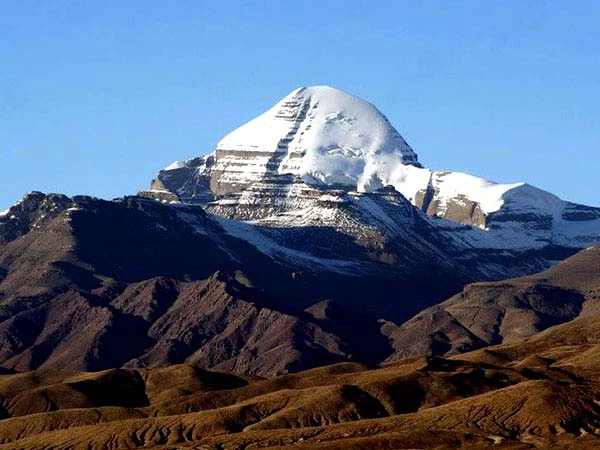
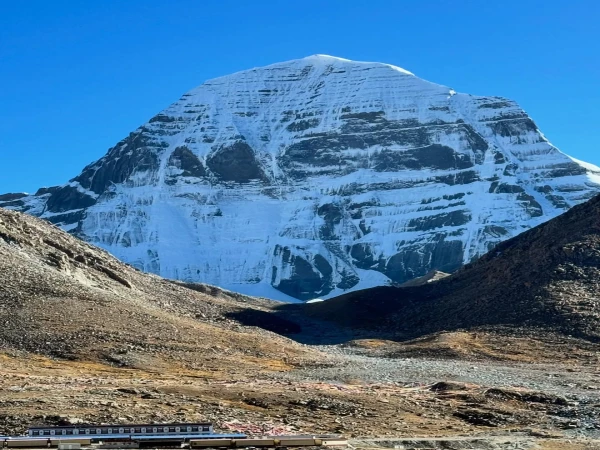
Dolma La Pass is a high mountain pass that is located on the eastern side of Mount Kailash in western Tibet. This 5,630-meter (18,471 ft) high mountain saddle connects the northern Kailash Kora valley near Dirapuk with the trail going down to Gauri Kund and Zuthulpuk. Despite the common misconception that Dolma La Pass is a viewpoint along the side track, it is actually the main part of the crossing, and it belongs to the traditional 3-day Outer Kailash Parikrama.
The location of Dolma La Pass is quite impressive; it is surrounded by the majestic mountains and glaciers, narrow valleys, and rocky peaks. The highest point of the pass is marked with prayer flags, and there is a significant meditation place, Gauri Kund, right below the descent. Because of its location, this mountain pass is considered to be the highest and the most difficult part of the Kailash pilgrimage.
Where Is Dolma La Pass Located in Tibet?
Dolma La Pass is a mountain pass located in the Ngari Prefecture of the Tibet Autonomous Region, China, which is part of the Tibetan Plateau and located in the Mount Kailash region of Burang (Purang) County, near Mount Kailash, on the way from the Dirapuk Monastery to the Zuthulpuk Monastery.
There is no ordinary motor road to this pass because the pilgrims traveling by car get to the Darchen region first, and then walk the Kora to Yam Dwar and Dirapuk, crossing Dolma La on the following day of their hike.
This place is especially important because there is a big change in relief on both sides of the pass, where the track goes down the valley of Gauri Kund after climbing the rocks from Dirapuk to the pass.
Dolma La Pass Map, Coordinates and Position on Mount Kailash Kora
Dolma La Pass is at about 31.0675° N, 81.3120° E according to a published Kailash route coordinate set. Other online maps give various coordinates, so check the trail waypoint against the guide's GPS track before using.
Where is Dolma La Pass Located? Find out in Detail
|
Quick facts
|
Details
|
|
Destination
|
Dolma La Pass
|
|
Other spellings
|
Drolma La, Domala, Doma La
|
|
Country
|
China
|
|
Region
|
Tibet Autonomous Region
|
|
Prefecture
|
Ngari
|
|
County
|
Burang (Purang)
|
|
Approximate altitude
|
5,630 m / 18,471 ft
|
|
Reference coordinates
|
31.0675° N, 81.3120° E
|
|
Geographical feature
|
High mountain pass or saddle
|
|
Position
|
Eastern side of Mount Kailash
|
|
Trekking route
|
Mount Kailash Outer Kora
|
|
Previous overnight stop
|
Dirapuk
|
|
Next overnight stop
|
Zuthulpuk
|
|
Nearby sacred sites
|
Shiva Tsal, Dolma Stone, Gauri Kund
|
|
Usual crossing stage
|
Day 2 of the three-day Outer Kora
|
|
Vehicle access
|
No ordinary road crossing over the pass
|
The map should also indicate that Dolma La should be shown separately from the summit of Mount Kailash. Pilgrims merely cross the pass as part of their Paraikrama; they do not climb Mount Kailash.
The position of Dolma La also explains why the entire pilgrimage circuit cannot be traveled in a vehicle. If access by vehicle is possible by way of approach roads, traveling the circuit itself is on foot.
Dolma La, Domala and Drolma La: Names and Meanings
Domala, Drolma La, and Dolma La are some of the different ways to refer to the same sacred pass that forms part of the Kailash Kora pilgrimage route.
In Tibetan, the name belongs to Drolma, the Tibetan name for Tara, a very popular female deity in Tibetan Buddhism, who symbolizes compassion and salvation. In Tibetan, la means mountain pass.
Therefore, in addition to its geographical connotations, the name has a religious meaning: it is a mountain pass, but at the same time the name of Tara, the goddess.
Dolma La is a sacred pass during the Kailash Parikrama, for Hindu pilgrims, related to Lord Shiva and Goddess Parvati. Rituals related to renewal and purification of one’s body and soul have a connection to the pass, but the meaning varies according to the tradition.
Domala can be found on some maps, while Dolma La and Drolma La are commonly used on tour itineraries. These names must not be confused with the other pass called Drolma La, close to Shey Gompa in the Dolpo area of Nepal.
Mountains, Valleys and Sacred Landmarks Surrounding Dolma La
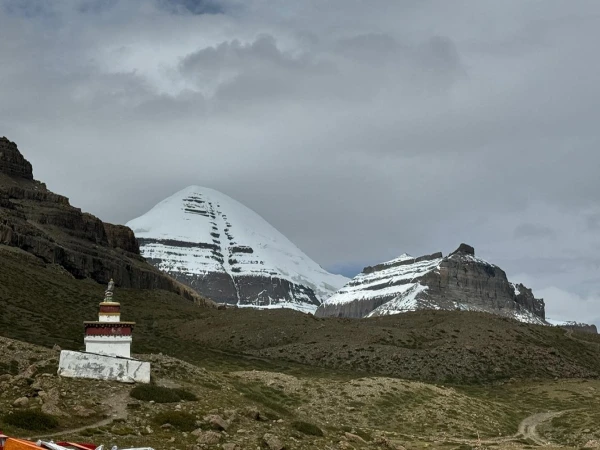
Dolma La is enclosed on both sides by the rough Trans-Himalayan scenery characteristic of the region surrounding western Tibet. Unlike the broad valley floors in Darchen, this part of the Kora route is characterized by shrinking rocky terrain with exposed cliffs and steep slopes down to the bottom of the eastern valley.
These prominent landmarks occur in the following sequence on the trek.
|
Landmark
|
Position relative to Dolma La
|
Geographical and religious importance
|
|
Mount Kailash
|
West of the pass
|
Sacred mountain encircled by the Kora
|
|
Dirapuk Monastery
|
Before the ascent
|
First major overnight stop, near the North Face
|
|
Shiva Tsal (Shivatsal)
|
Along the approach
|
Sacred area associated with symbolic death and renewal
|
|
Dolma Stone and prayer flags
|
At or near the pass
|
Important Tibetan Buddhist devotional landmarks
|
|
Gauri Kund (Parvati Kund)
|
Below the pass after crossing
|
Sacred high-altitude lake associated with Goddess Parvati
|
|
Zuthulpuk Monastery
|
Farther along the descending valley
|
Traditional second overnight stop
|
|
Darchen
|
Beginning and end of the circuit
|
Main road-access base for the Kailash Kora
|
Dirapuk and the northern valley: The pilgrims normally camp out in the foothills of Mount Kailash on the northern side the previous night. Beyond this point, the path gradually climbs to reach the steeper rocky terrain, which will guide the pilgrims to Dolma La Pass.
Shiva Tsal and the upper ascent: On the way to the pass, there is an area which is a destination for pilgrimage for the Tibetan Buddhists and Hindus. The path gradually gets steeper and rockier until it reaches its peak.
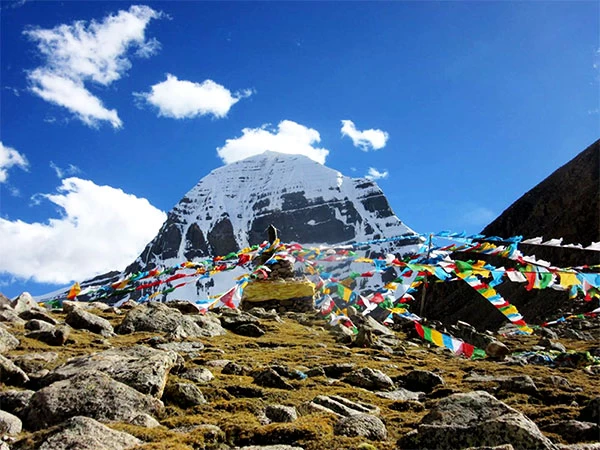
Dolma La Pass peak area: There are a number of fluttering prayer flags and religious offerings decorating the narrow pass. This is a high-altitude pass and not a high mountain plateau where pilgrims can camp.
Gauri Kund and eastern descent: The ascent to the holy lake (be it the turquoise or ice-filled one depending upon the season) is anything but easy because although there is a downward slope, it is certainly not flat ground where the pilgrims can stop and gaze at the lake.
Valley to Zuthulpuk: The slope becomes easier to descend with the ground falling less steeply into the valley, but the trek is still a long one before reaching the destination where the pilgrims stay for the night.
Both the geographical landmarks make it quite clear why Dolma La is considered the most crucial point on the Outer Kailash Kora. Reaching the prayer flags is just half the job done; the pilgrims still need to descend to the lake and proceed onwards to Zuthulpuk.
What Is the Altitude of Dolma La Pass?
Dolma La Pass has an altitude of around 5,630 meters (18,471 feet); it is the highest point of Mount Kailash Outer Kora, situated in western Tibet. Dolma La Pass is usually crossed by pilgrims on the second day of the three-day Parikrama while traversing from Dirapuk to Zuthulpuk. Such a strenuous climb at such an altitude, where the air pressure is only half that of sea level, can be rather exhausting.
Dolma La Pass Altitude in Meters and Feet
Although 5,630 meters is the usual reported altitude of Dolma La Pass, there are some itineraries that state 5,636 meters or even 5,645 meters.
|
Altitude measurement
|
Approximate value
|
|
Elevation in meters
|
5,630 m
|
|
Elevation in feet
|
18,471 ft
|
|
Elevation in kilometers
|
5.63 km
|
|
Atmospheric pressure
|
Around 50% of sea-level pressure
|
|
Oxygen percentage in air
|
Approximately 20.9%
|
|
Trekking significance
|
Highest point of the Outer Kailash Kora
|
The height of the pass is greater than the elevation quoted for Everest Base Camp in Nepal (5,364 meters). However, passing through Dolma La is not the same as scaling Mount Everest.
Elevation Differences Between Darchen, Dirapuk, Dolma La and Zuthulpuk
The greatest difference in elevation comes after the first night at Dirapuk on the Kora route. The pilgrims have to climb to the pass of Dolma La before descending a few hundred meters to the second resting place.
|
Kailash Kora location
|
Approx. elevation
|
Difference from Dolma La
|
|
Darchen
|
4,670 m
|
960 m lower
|
|
Dirapuk Monastery
|
5,210 m
|
420 m lower
|
|
Dolma La Pass
|
5,630 m
|
Highest point
|
|
Gauri Kund
|
5,550–5,608 m
|
22–80 m lower
|
|
Zuthulpuk Monastery
|
4,790 m
|
840 m lower
|
The above are examples of published elevations and not a survey of the GPS profile. Itineraries take pilgrims from Dirapuk to somewhere around 4,900 to 5,000 meters, which means the climb to Dolma La is greater.
It should be noted that this crossing does not end with the prayer flags; there is still uneven descent and trekking to Zuthulpuk ahead.
Dolma La Pass Oxygen Level and Atmospheric Pressure at 5,630m
Oxygen content remains around 20.9% at Dolma La, same as at sea level. The difference is in the atmospheric pressure.
The atmospheric pressure at about 5,630 meters is 50-51 kPa compared to 101kPa at sea level. In other words, each inhalation brings much lower pressure of oxygen into the lungs.
This explains why pilgrims may notice:
- Faster breathing while climbing.
- Increased heart rate during ordinary walking.
- Longer recovery after steep sections.
- Slower movement despite good physical fitness.
- Greater fatigue when carrying a backpack.
A pulse oximeter measures the percentage of oxygen in the blood, not the percentage of oxygen in the air. Results may differ based on the acclimatization process and physiological differences. One cannot be assured by one result that a pilgrim can safely.
If pilgrims develop headache, vomiting, confusion, lack of coordination, or breathlessness even at rest, they need immediate medical attention and, possibly, descend.
Why Different Maps and Kailash Itineraries Report Different Elevations
The height of Dolma La can vary because different reference points might be employed when drawing the map, using a trekking altimeter, or by the tour operator.
This might happen because of:
- GPS error caused by the relief and drifting of the satellites,
- the discrepancy between the barometric and satellite altitude,
- altitude measurement of the prayer flag area while the other point is taken as saddle,
- rounding off errors as a result of the meter-foot conversion,
- or the mere fact of employing outdated routes without recalculation.
In this guide, 5,630 meters (18,471 feet) will do just fine.
Nevertheless, we recommend that you concentrate more on your guide's assessment and the condition of the trail than on the minor differences in the readings of your altimeter and the altitude indicated on the map. The real difficulty is in long-term exercise above 5,000 meters and subsequent descent to Zuthulpuk.
Dirapuk to Dolma La Pass Distance, Route and Walking Time
The distance between Dirapuk and Dolma La Pass varies from 6 to 9 kilometers depending on where you calculate the distance from. The ascent is usually completed within 3-5 hours. This may very well prove to be the steepest section of the journey, for here you need to ascend from an altitude of 4,900-5,210 meters to 5,630 meters while simultaneously storing energy for the descent to Zuthulpuk.
Dirapuk to Dolma La Pass Distance in Kilometers
|
Route stage
|
Approx. distance
|
Elevation
|
Terrain
|
|
Dirapuk to Shiva Tsal
|
4–5 km
|
Around 4,900–5,200 m
|
Valley trail, gradual rocky ascent
|
|
Shiva Tsal to Dolma La
|
2–4 km
|
Up to 5,630 m
|
Steep scree, boulders and uneven steps
|
|
Total ascent
|
6–9 km
|
Around 420–730 m elevation gain
|
3–5 hours walking
|
Distances and elevation gain vary with the mapped starting point and selected trail.
Early Morning Departure from Dirapuk Monastery
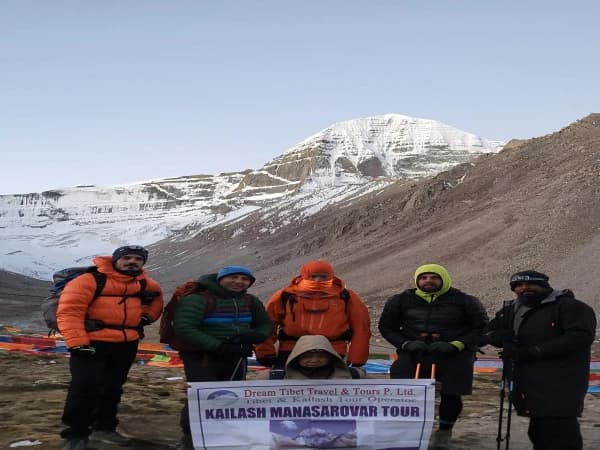
Most Kailash teams leave Dirapuk in the early hours of the morning, sometimes as early as 4 to 5 AM. Breakfast may be taken in the morning or is usually carried with us, depending on the guest house. Headlamps, gloves, and warm jackets are advised since the mornings are particularly cold and dark at the beginning of the path.
Those experiencing any symptoms of altitude sickness must be tested prior to starting the trek.
Shivatsal to Dolma La: The Final Steep Ascent
Shivatsal, also called Shiva Tsal, is considered sacred ground because here people usually offer their prayers to the gods of the mountains. After this, the path will become increasingly steep and difficult for us as we climb through rough scree and balance on massive rocks.
Our hiking group travels at a slower pace as we near the summit, because it is very easy to slip on such a slope. There are no guarantees that we will find some spots where we can have a brief rest on our way, since the path is only stretched from one large rock to another.
Trail Conditions, Climbing Time and Resting Points
We hike over rough terrain, stepping over stones or even clearing the path covered in ice and snow. We only stop briefly on flat spots on the path, but do not stop for longer periods in case of any weather changes.
The pace of hiking, stops, and rest points depend on how the group feels on a particular day.
What Pilgrims Encounter at the Dolma La Summit
At a height of nearly 5,630 meters, the pass is adorned with brightly colored Tibetan prayer flags as well as many objects related to the worship of Goddess Tara.
Here pilgrims generally pause for photo opportunities and prayers. It should be mentioned, however, that this peak is not the end of your journey because you will have quite a bit more walking and descending to do to get to Gauri Kund and ultimately Zuthulpuk.
How Far Is Dolma La Pass from Zuthulpuk Monastery?
Distance from Dolma La Pass to Zuthulpuk Monastery lies between 12 and 16 kilometers (7.5-10 miles). Depending on which route you take and at which point you stay overnight, the distance may vary. Once you pass the Dolma La Pass (elevation 5,630 m), pilgrims walk down the way to Gauri Kund, and from there a long trail goes to Zuthulpuk (elevation 4,790-4,835 m).
Trekking down takes 4-6 hours but depends on the condition of the route, altitude, snowfall, and pace of the pilgrims' group. This is just the start of the Kailash Parikrama pilgrimage for the second day.
Dolma La Pass to Zuthulpuk Distance and Walking Duration
From Dolma La to Zuthulpuk, you will descend a whopping 800-840 meters in height. Moreover, the most difficult part of your descent will begin right after you cross the pass.
|
Route section
|
Approx. distance
|
Elevation
|
Trail conditions
|
|
Dolma La to Gauri Kund area
|
1–2 km
|
5,630 m to around 5,300–5,600 m
|
Steep, rocky descent
|
|
Gauri Kund area to lower valley
|
3–5 km
|
Descending below 5,300 m
|
Boulders, loose stones and uneven trail
|
|
Lower valley to Zuthulpuk
|
8–9 km
|
Descending toward 4,800 m
|
More gradual valley walking
|
|
Total
|
12–16 km
|
Approximately 800–840 m net descent
|
Around 4–6+ hours
|
The Steep Descent Immediately After Dolma La
The first lower part beneath the prayer flags will need to be approached more carefully. At this point pilgrims will descend, first by hand with some steps and a bit of gravel.
When descending, it might even be more painful than the climb since knees and leg muscles will be sore from walking. Even for descents trekking poles might not work.
Rocky Sections, Loose Stones and Possible Snow or Ice
Loose rocks may slide out the moment you step on them when walking on a hillside. Throughout the winter season, the trail will be blanketed with snow and ice, and melting snow in the summer will leave the rocks slippery.
Do not walk close to other pilgrims whilst on the way and do not walk underneath pilgrims as they go past on an unstable slope. Some steep downward areas may be restricted to ponies.
Gauri Kund Viewpoint to the Lower Valley
Gauri Kund, which is also called Parvati Kund, can be seen below the trail when the trail begins to descend. The pilgrims looking at the lake would see the greenish-blue waters of the lake surrounded by rocky hills, barring any snowfall or poor visibility conditions.
Since the lake is considered sacred by the Hindus, one must not attempt to approach the lake because the path that leads to the lake from the trail would be very risky due to the presence of rocks everywhere.
Beyond the lake, the path begins to lead to the valley, where the path becomes less steep as it turns at the next bend, but the travel time is still several hours.
Final Walking Section and Overnight Accommodation at Zuthulpuk
The third part of trekking to Zuthulpuk involves crossing through the valley that has water streams, rocky area, and also areas that can be considered easy trekking routes. However, despite the reduced elevation, weary pilgrims may find this route longer than anticipated.
Pilgrimage accommodation in Zuthulpuk involves basic facilities that suit the pilgrims, including common sleeping area, basic sleeping equipment, and basic sanitation facilities. Heating, food, power supply, and toilet facilities will vary.
Having reached Zuthulpuk, the pilgrims will need to eat, drink, change the wet clothes, and prepare for the last day of the Kora to Darchen journey.
The most important thing is that crossing Dolma La does not mark the end of a tough day. The descent and remaining distance to travel along the valley floor must be taken into consideration when assessing the fitness of the pilgrim.
You Cannot Conquer Mount Kailash, but You Can Reach Its Spiritual Summit at Dolma La Pass
The elevation of Mount Kailash is about 6,638 meters (21,778 feet). This mountain has never been scaled; thus, there is no record of the official summit point. The difference between Mount Kailash and Mount Everest lies in the fact that while Mount Everest is one of the mountains that has been climbed by several mountaineers, Mount Kailash is a mountain that is considered sacred by the local people. This means that climbing Mount Kailash is not something that is available to adventurers as it is in the case of climbing Mount Everest.
One can, however, scale the topmost point of Mount Kailash's outer Kora, namely the Dolma La Pass, which stands at an elevation of 5,630 meters (18,471 feet).
Why Is Climbing Mount Kailash Not Allowed?
- Sacred to Hindus: The mountain is said to be the abode of Lord Shiva and Goddess Parvati. It is stated that the ascent of the mountain is a sacrilege.
- Sacred to Tibetan Buddhists: Kailash is said to be the earthly home of Demchok (Chakrasamvara). The circumambulation of the mountain is an important religious activity in Tibetan Buddhism.
- Sacred to Jains: The mountain is venerated as the place where the first Tirthankara, Rishabhanatha, gained enlightenment.
- Sacred to Bon followers: The mountain holds religious importance for followers of the indigenous Bon religion.
- Government restrictions: The Chinese government prohibits mountaineering activities on the mountain. Climbing the mountain is not allowed with regular Tibet travel permits.
- No established climbing expedition route: There are no official mountaineering expeditions on the mountain.
Why Can Pilgrims Cross Dolma La Pass but Not Summit Mount Kailash?
Dolma La is a gap in the circuit, but not the summit of Mount Kailash. A pilgrimage through this mountain pass ensures that the pilgrim completes the circuit without climbing the sacred peak.
The differences are straightforward:
|
Particular
|
Mount Kailash Summit
|
Dolma La Pass
|
|
Altitude
|
Approx. 6,638 m
|
Approx. 5,630 m
|
|
Activity
|
Mountain summit ascent
|
High-altitude trekking crossing
|
|
Public climbing access
|
Not permitted
|
Crossing permitted on authorized Kora itineraries
|
|
Established pilgrim route
|
None to summit
|
Traditional Outer Kailash Kora
|
|
Religious role
|
Sacred mountain itself
|
Sacred crossing associated with Tara
|
|
Physical challenge
|
No legal climbing route available
|
Steep ascent, loose rocks, high altitude and descent
|
|
Typical journey
|
Summit cannot be booked
|
Crossed on Day 2 of the three-day Outer Kora
|
Why Is Dolma La Called the Spiritual Summit of Kailash Parikrama?
According to Tibetan Buddhism, Dolma La is the embodiment of Goddess Tara, while the neighboring Shiva Tsal symbolizes liberation from past attachments and purification of the individual.
According to Hindu beliefs, passing through this pass is regarded as the essential step for conducting the great parikrama of Lord Shiva's abode. In addition, the neighboring Gauri Kund is associated with Goddess Parvati.
Certainly, climbing the Dolma La pass does not equal conquering the Kailash. This merely means that this pass gives the devotees the opportunity to undertake the most difficult and highest route to the sacred mountain. Remaining unconquered by Mount Kailash, Dolma La offers an alternative to the highest physical peak.
Why Is It Called Dolma La Pass? Origin, History and Religious Meaning
Dolma La got its name in homage to Tara, the Tibetan goddess of compassion and protector. The name Dolma means "she who liberates" or "savior" in Tibetan, and La means a mountain pass. Hence, Dolma La means the Pass of Tara. Dolma La Pass is deeply connected with one of the most famous pilgrimage traditions practiced by Tibetan Buddhists – Kailash Kora.
Gyelwa Gotsangpa, the legendary Buddhist priest, according to tradition, invented the Kailash Kora pilgrimage route, and he did the very first Kailash Kora pilgrimage. According to legend, he wrote twenty-one hymns to Tara.
The Tibetan Meaning of Dolma La
In Tibetan, her name is written as "Drolma La," but the English-speaking trekking guides usually call her name "Dolma La" or "Domala" or "Drolma-La."
- Dolma / Drolma (སྒྲོལ་མ): Tibetan name for Tara, the goddess of Buddhism.
- La (ལ): A Tibetan term for a mountain pass.
- Dolma La: A mountain crossing associated with Goddess Tara.
Goddess Tara is highly regarded in Tibetan Buddhism. She is the goddess who is traditionally asked for help in case of danger and fear. She appears in 21 different forms.
The Legend of 21 Wolves and Gyelwa Gotsangpa
One of the most prominent legends about the origin of the name Dolma La involves Gyelwa Gotsangpa, a Tibetan Buddhist master and spiritual teacher, linking him with the Mount Kailash pilgrimage route.
According to the version of this legend that has been preserved in the traditions of the Tibetan people, Gotsangpa came to the place where the mountain trail was divided into three directions.
He could not decide which of the mountain passes to choose, so he turned to the local manifestation of the goddess of death, asking for advice.
- According to the legend, twenty-one wolves appeared before Gotsangpa, which symbolized the twenty-one manifestations of Goddess Tara.
- The mystical animals led him along the narrow trail to the top of the mountain, where the last wolf disappeared into a huge stone at the mountain pass.
- After that, the mountain pass was named Dolma La, as the manifestations of Tara appeared to be helping pilgrims find a path around Mount Kailash.
- The version of the legend preserved in the sources indicates that the name Dolma La was given to the mountain pass in honor of the appearance of Tara.
It is important to note that this version of the legend has nothing to do with actual historical events.
All the details of the story are symbolic and are connected with Tibetan Buddhist beliefs and rituals.
In this regard, the legend of the origin of the name Dolma La should probably be understood as a purely mythological narrative, unrelated to reality. However, it probably reflects significant portions of Tibetan history.
How Dolma La Became an Important Part of Kailash Parikrama
The specific date of naming Dolma La cannot be found in existing historical records. This place gained religious meaning because of the common practice of pilgrimage around Mount Kailash in Tibet.
Countless travelers passed this place throughout history, thus contributing to the list of sacred places that include monasteries, praying places, stones, and other ritual items.
The pilgrimage developed a symbolic sequence:
|
Sacred location
|
Traditional significance
|
|
Dirapuk
|
Northern section of the Kailash Kora
|
|
Shiva Tsal
|
Symbolically leaving behind the former life
|
|
Dolma La Pass
|
Liberation, purification and spiritual renewal
|
|
Gauri Kund
|
Sacred lake associated with Goddess Parvati in Hindu tradition
|
|
Zuthulpuk
|
Sacred site associated with the Buddhist master Milarepa
|
Dolma La has greater significance as pilgrims linked crossing the pass to discarding any negative karma and starting afresh with a spiritual existence.
Why Do Pilgrims Leave Prayer Flags at Dolma La?
The prayer flags that surround Dolma La are an indication of the importance of the mountain to Tibetan Buddhists.
The pilgrims present traditional prayers to Tara as an offering, which is aimed at protecting and promoting their spiritual journey. Additionally, the prayer flags bear Buddhist messages and good wishes to all people.
Some pilgrims see the path as a metaphor for exiting one’s previous life and starting a new one. It is linked to the practices of the Shiva Tsal, where the pilgrims leave tokens of their previous life behind.
The rituals are different for followers of the two religions, and each one should be respected. Additionally, leaving offerings is subject to environmental regulations.
The Sacred Pass of Goddess Parvati
Dolma La Pass, which reaches an altitude of around 5,630 meters, is also revered by Hindus, as it is believed to be frequented by Goddess Parvati. While the pass’s Tibetan name derives from the goddess Drolma, a manifestation of the Buddhist Tara, this sacred place is perceived by Hindu pilgrims as a part of Lord Shiva’s and Goddess Parvati’s realm.
Notably, the first significant experience after overcoming Dolma La is Gauri Kund, also known as the Parvati Kund, a glacial lake located below the pass on the way to Zuthulpuk.
Gauri Kund is where Goddess Parvati is said to have taken a bath and given birth to Lord Ganesha, who was granted his elephant head by Lord Shiva. Therefore, Hindu pilgrims believe the area to be connected to the ideas of motherhood and family and bathe in the glacial lake to purify themselves.
Thus, it is possible to conclude that for Hindu pilgrims, the Dolma La pass is an example of devotion and commitment to one’s religion and family represented by Goddess Parvati and Lord Shiva. The lake below the pass is a sacred place to Hindus, therefore making the journey even more challenging.
Before Dolma La Pass
Prior to arriving at Dolma La Pass (5,630 m), pilgrims stay their first night at Dirapuk Monastery, situated on a hillside measuring between 4,900 and 5,100 meters above sea level and facing the northern side of Mount Kailash. This is the last overnight stop before the challenging ascent begins.
The climb towards Dolma La usually starts the next morning. As pilgrims set off from their sleeping accommodation, they wear warm clothes, take drinking water and packed food with them, and follow the rocky incline along Shiva Tsal towards the final ascent.
Dirapuk Monastery: The Last Overnight Stop Before Dolma La
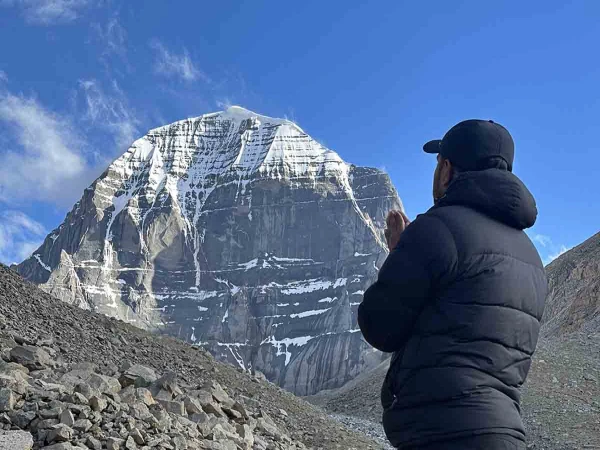
Dirapuk Guesthouse offers basic accommodations, including meals and a spectacular view of the North Face of Mount Kailash. Before going to bed, make sure to pack your day pack, check your trekking gear, and inform your guide about any discomfort, such as a headache, nausea, or abnormal shortness of breath.
It is important to note that there are no hotels or accommodations at Dolma La, and therefore, pilgrims should get ready for the passage and the journey towards Zuthulpuk.
Shiva Tsal: The Sacred Site Before Dolma La Pass
Shiva Tsal (also known as Shiwa Tsal or Shivatsal) is a pass on the ascending trail before Dolma La. It is sacred ground traditionally associated with death, purification, and rebirth in Tibetan Buddhist pilgrimage culture. It is customary for many pilgrims to leave behind a significant object, hair, or some other form of offering at this place. It should be noted that there are cultural restrictions at this place regarding the kinds of offerings that can be left behind.
The trekking route becomes increasingly difficult past Shiva Tsal, with uneven terrain made up of scree, rocks, and even possible patches of snow or ice. The pilgrims have to move further on to reach the prayer flags marking Dolma La Pass.
Important Preparations Before Crossing Dolma La
- Departure: Start early as per weather and route assessment by the guide.
- Health: Do not attempt to climb further if the altitude sickness is worsening.
- Clothing: Thermal clothing, gloves, hat and a wind resistant jacket is recommended
- Food & water: Have sufficient quantity to last throughout the trek to Zuthulpuk.
- Support: Make arrangements for the pony and porter; sometimes, it is difficult to ride
- Spiritual offerings: Keep the rituals short and do not litter non-degradable items
- Weather: Be cautious while climbing on the snow, ice, windy conditions and low visibility
The key here is that Shiva Tsal is the last important spiritual destination before Dolma La and not the end of the difficult climb; beyond this point, one still needs to climb the pass, then descend to Gauri Kund and walk more for some time before reaching Zuthulpuk.
After Dolma La Pass
After crossing Dolma La Pass (5,630 m), pilgrims head downhill towards Gauri Kund and then on to Zuthulpuk Monastery, the second night stop on Mount Kailash Kora. This is a long walk of around 12-16 km depending on how you measure the distance and where the guesthouses are located.
The first 2-3 km down from the pass are quite challenging. Even though you are going down, the trail is strewn with loose rocks and uneven patches of ice or snow, making it a real effort after the climb up to the pass. Soon enough, the path opens up into a wider valley and the slope becomes less severe.
Gauri Kund: The Sacred Lake Below Dolma La
Gauri Kund, also known as the Parvati Kund, is a small holy lake found at the base of the descending slope. The place has significance among Hindu pilgrims because Goddess Parvati, the consort of Lord Shiva, is said to have taken baths in it. The lake is famous for being linked with the birthplace of Lord Ganesha.
As you pass by, it would be a good idea to stop at a convenient viewing point to offer prayers and take some pictures. However, pilgrims must understand that getting to the lake involves navigating through fairly steep slopes.
These slopes are extremely slippery and should not be attempted without the consent and protection of authorized personnel. It should also be noted that getting down the slopes is not a necessary part of Kailash Parikrama.
The Steep Rocky Descent After Dolma La Pass
As soon as you exit the prayer-flag zone, the trail drops off precipitously over boulders, gravel, and uneven rock steps.
- First section: Steep descent over rock needs careful footing.
- Snow and ice: Possible in shaded spots outside of winter.
- Trekking poles: Good idea for balance and knee strain.
- Pony restrictions: Riding might not be possible on the steepest part.
- Rest stops: Find a secure spot that doesn't impede other pilgrims.
This isn't the time to hurry just because you've passed the highest point.
From Gauri Kund to the Lower Valley
It is only at the end of the challenging climb up that the route will come out into a larger valley. The route has become much less steep and takes one through rocky zones where there is flowing water.
Hiking will be easier, but pilgrims will still not have any rest after walking for hours over 5,000 meters and will have to keep on hiking slowly.
Reaching Zuthulpuk Monastery for the Second Overnight Stay
The Zuthulpuk Monastery stands at about 4,790 meters and is traditionally the second place to spend the night during the three-day kora.
Accommodation is quite basic, with shared sleeping arrangements and very little in terms of bathrooms. Don’t come expecting hotel-standard accommodation like that of Saga or Darchen.
Upon arrival, you will need to have some food and then change into fresh clothes before heading back to Darchen.
Route Summary: Dolma La Pass to Zuthulpuk
|
Route stage
|
Approx. distance
|
Main experience
|
|
Dolma La to Gauri Kund area
|
1–2 km
|
Steep rocky descent
|
|
Gauri Kund area to lower valley
|
3–5 km
|
Uneven rocks and descending trail
|
|
Lower valley to Zuthulpuk
|
8–9 km
|
Longer, gentler valley walk
|
|
Total
|
12–16 km
|
Approximately 4 - 6+ hours
|
What Happens on the Third Day After Zuthulpuk?
The following morning, pilgrims continue on the remaining part of Kailash Parikrama towards the Darchen side of the circuit.
The last day's walk will be about 8-10 kms depending on where the vehicles will be allowed to pick up the group. The trail is on the lower side of the valley and is normally not as steep as the Dolma La crossing.
On reconnecting with the vehicle, the pilgrims continue on their Kailash Mansarovar itinerary, resuming at either Darchen, Saga, or whichever destination was arranged in the schedule.
The crossing of the Dolma La is the highest point on Kailash Kora, but actually completing the circuit safely and finishing the last day's route is what brings the pilgrimage to an end.
Dolma La Pass Trek Difficulty: The Hardest Day of Kailash Parikrama
The Dolma La Pass trek is rated as strenuous to very strenuous, even for trekking pilgrims. The pass at 5,630 meters (18,471 feet) is reached on the second day of the Kailash Parikrama pilgrimage. The problem is not technical climbing; it is a combination of factors like high altitude with steep rocky stretches, icy conditions, and most importantly, the long descent to Zuthulpuk.
What Makes Dolma La Pass Difficult Despite Its Relatively Short Ascent?
The climb from Dirapuk to Dolma La is only about 6-9 km, but pilgrims must gain significant elevation above 5,000 meters (16,400 feet). The decreased air pressure at this altitude makes even moderate exertion much more challenging. Many walkers find they need to stop frequently, even on seemingly easy parts of the trail.
Steep Gradients, Loose Boulders and High-Altitude Walking
Other than Shiva Tsal, the trail gets progressively rocky. The ground is uneven, with loose gravel, large boulders to step over, and patches of snow that may hide unstable ground. There are no permanently built steps or good places to stop and rest on the upper part of the trail.
Why Descending Dolma La Can Be More Difficult Than Climbing It
On your way down to Gauri Kund, you will encounter about 2 km of extremely steep terrain. Your legs may feel tired, and on the rocky and possibly icy trail, you need to be cautious not to slip. Trekking poles are a must, but you still need to take each step deliberately.
Walking Hours, Fatigue and Physical Demands
|
Trekking factor
|
Difficulty assessment
|
|
Maximum altitude
|
5,630 m
|
|
Ascent from Dirapuk
|
Approximately 6–9 km
|
|
Full Dirapuk–Zuthulpuk stage
|
Approximately 18–24 km
|
|
Total walking duration
|
Commonly 8–12+ hours
|
|
Main ascent challenge
|
Thin air and steep scree
|
|
Main descent challenge
|
Loose rocks and knee strain
|
|
Overall difficulty
|
Strenuous to very strenuous
|
Distances and durations depend on actual trail endpoints, conditions and walking pace.
Dolma La Pass Difficulty for Beginners and Senior Citizens
For first-timers, crossing the pass is possible with proper physical training and acclimatization, but there are no guarantees. Age is not an indicator of physical fitness.
Existing medical problems need to be assessed before travel. People with worsening altitude sickness symptoms should be assessed at Dirapuk before traveling, instead of helping them cross with ponies.
Reaching the Roof of the Kailash Kora: The Highest Point of Your Kailash Mansarovar Yatra
The most common name for the ‘Roof of the Kailash Kora’ is probably Dolma La Pass, because it is the highest point (about 5,630 meters/18,471 feet high) that pilgrims attain while performing the Mount Kailash Parikrama. The Dolma La Pass is not at all a 'climbing route' to the summit of Mount Kailash, which itself is banned anyway. However, one can climb over the Dolma La, as it is included in the ‘official pilgrimage route’.
It is generally completed on the second day (of 3 days) of the Kailash Kora Circuit.
|
Dream Tibet Kailash itinerary
|
Dolma La crossing day
|
|
10-Day Kailash Mansarovar Overland Tour
|
Day 7
|
|
16-Day Kailash Mansarovar Full Moon Tour
|
Day 12
|
|
Other Kailash packages
|
Depends on the confirmed itinerary
|
What Does Reaching the Highest Point of Kailash Kora Signify Religiously?
1. Hinduism: Devotion to Shiva and Parvati
- Lord Shiva’s Abode: It is believed that this particular mountain is the dwelling place of Lord Shiva and Goddess Parvati. The Dolma La pass is an important feature on the pilgrimage path, known as the Parikrama.
- Purification: It is believed that through the performance of the holy walk, pilgrims can purify their karma (negative energy) and sins.
- Gauri Kund: The Gauri Kund is a lake beside the Dolma La and is sacred to the Goddess Parvati as awell as the worship of Lord Ganesha.
- Faith and devotion: It is believed that for the local pilgrims, this is not an endurance test but a test of faith and humbling devotion.
2. Tibetan Buddhism: Tara, Liberation and Rebirth
- Dolma La: This pass is named after Drolma, which is the name of Tara in Tibet. Dolma La is considered a sacred path for the Buddhist followers who pray for the protection and compassion of Tara.
- Rebirth from old life: Passing through Dolma La is a form of rebirth for the pilgrims who metaphorically say goodbye to their past life in Shiva Tsal to make a journey through the pass.
- Overcoming bad karma: The pilgrims seek help from Tara to overcome the sufferings of life in order to remove their bad karma while passing through this path.
- Blessings from prayer flags: The pilgrims utter mantras and pray for blessings from the prayer flags of Dolma La on behalf of all living beings.
3. Jainism: Liberation and the Path of Rishabhanatha
- Ashtapada: According to the Jains, the peaks of Kailash are associated with the rishi (sage) Ashtapada, who was the first Tirthankara who attained enlightenment.
- Moksha: By performing a pilgrimage in this region, a person is able to attain an experience of salvation, meaning that he/she is not bound to rebirth.
- Self-restraint: Such an exercise usually requires strict observance of self-discipline, patience, and renunciation of material enjoyments.
- Important distinction: The mountain pass of Dolma La does not carry any relevance in terms of meaning and symbolism in the context of Jain religion as it does in Tibetan Buddhism.
4. Bon Religion: Sacred Mountain and Spiritual Transformation
- Sacred Mount Tise: The Bon followers consider Kailash an important peak in religious cosmology.
- Counterclockwise Kora: The Bon followers practice counterclockwise circuits of the mountain, which is different from Hindu and Buddhist pilgrims who perform clockwise circumambulation.
- Purification and blessings: The religion considers the pilgrimage a way of achieving purity, and religious practices involve blessings.
- Dolma La crossing: The mountain pass is part of the spiritual circuit, but the name is derived from the Tibetan Buddhist Tara.
What Do Pilgrims Leave at Dolma La Pass for Good Luck and Blessings?
At Dolma La Pass (5,630 m), pilgrims offer prayer flags, scarves, and various objects for blessings and protection. Tibetans regard the pass as the home of the goddess Drolma (Tara). However, some people perform rituals using old clothes and hair at Shiva Tsal before heading to Dolma La.
Traditional Offerings and Their Religious Beliefs
- Prayer Flags: Containing prayers for world peace, protection, good luck, and best wishes to all creatures on the road to goodness.
- Khata Scarves: White ceremonial scarves as offerings and prayers for a significant pilgrimage.
- Old cloth: Commonly offered during Shiva Tsal and symbolizes the abandonment of old burdens and beginning of a new spiritual path.
- Hair locks: Signify detaching from the physical world and ill fate in one’s life.
- Coins: Commonly presented to the Dolma Stone while prayers are offered for the blessing from the goddess.
- Photos: Some individuals take pictures of their loved ones while prayers for protection, good health, and good rebirth are being offered.
- Prayer Beads: As per one tradition in Tibet, when two people meet, they have to match their prayer beads to symbolize the everlasting spiritual friendship.
Is Leaving Something Compulsory?
No. These are religious customs; there is no need to leave something as a sacrifice to experience good luck and sin forgiveness. A pilgrim may leave personal belongings.
However, it is better to avoid plastic, clothes, photographs, or any other kind of trash, or follow local rules about objects left as offerings to gods.
Can You Cross Dolma La Pass Without Trekking Experience?
Yes, a trekker may cross Dolma La Pass (5,630 m) for the first time; however, being a newbie pilgrim means you will have to put your body through a serious challenge. A Dolma La Pass crossing takes a long day, from Dirapuk, the climb will be gradual through some challenging rocky outcrops to a high camp, and then a steep descent to Zuthulpuk will follow. It is recommended to have prior Himalayan trekking experience; however, fitness level, acclimatization, and weather conditions are more important than trekking skills.
Fitness Requirements for First-Time Kailash Pilgrims
A pilgrim must be able to walk for 8–12 hours on rugged ground, climbing steeply uphill and down, without relying on a stranger for support.
Walking on smooth roads is not adequate training. The real trek involves loose scree, exertion at high altitude, and extreme knee strain.
Can Elderly Pilgrims Complete Dolma La Pass?
Some older pilgrims manage the crossing, while younger, healthier-looking tourists often struggle with altitude. Age is not the sole factor. Older pilgrims must consult a doctor before departure if they have heart, lung, or mobility issues.
Physical Preparation Before Traveling to Tibet
Start your structured training 8-12 weeks before you go. Train for long periods of walking, frequent ascents and descents and not just speed walking.
Walking Training, Stairs and Uneven-Terrain Practice
|
Training activity
|
Suggested preparation
|
|
Brisk walking
|
45–60 minutes, 4–5 days weekly
|
|
Hill walking
|
Progressively longer uphill and downhill sessions
|
|
Stair climbing
|
15–30 minutes as tolerated
|
|
Long practice walk
|
Build toward 4–6 hours with breaks
|
|
Strength exercises
|
Step-ups, squats and controlled step-downs
|
|
Trekking poles
|
Practice on rocky and descending trails
|
These are training suggestions, not validated fitness thresholds or guarantees of completion.
When Should a Pilgrim Avoid Attempting the Crossing?
A pilgrim must not start Dolma La with deteriorating headache, incessant vomiting, uncharacteristic breathlessness, or impaired coordination.
Poor medical conditions, insufficient acclimatization, or considerable weather risks may also necessitate a postponement or cancellation of the crossing. Being fit does not prevent acute altitude illness.
Dolma La Pass Oxygen Level, Altitude Sickness and Medical Emergencies
The greatest risk at the pass is not ordinary fatigue but the possibility of an attack or worsening of an existing altitude illness occurring while the pilgrim is far from road access and medical assistance.
How Much Oxygen Is Available at Dolma La Pass Compared with Sea Level?
At 5,630 meters, the atmospheric pressure is approximately 50% of that at sea level and, despite a similar percentage of oxygen being present (around 20.9%), the amount of oxygen pressure per breath delivered to the lungs is significantly reduced.
This section deals with what the guides and pilgrims should do if and when symptoms occur, as opposed to repeating the preceding altitude calculations.
Headache, Nausea, Dizziness and Warning Symptoms at High Altitude
|
Symptoms
|
Concern
|
Appropriate response
|
|
Mild headache with nausea or dizziness
|
Possible acute mountain sickness
|
Stop further ascent and arrange assessment
|
|
Persistent headache with repeated vomiting
|
Possible worsening altitude illness
|
Do not continue uphill; urgent assessment and likely descent
|
|
Confusion or inability to walk straight
|
Possible high-altitude cerebral edema
|
Emergency descent and medical treatment
|
|
Breathlessness at rest, persistent cough or severe weakness
|
Possible high-altitude pulmonary edema
|
Emergency descent, oxygen if available and medical care
|
|
Severe cold, shaking or loss of coordination
|
Possible hypothermia, altitude illness or both
|
Immediate assessment, warming and emergency response
|
These symptoms may be similar to those caused by other conditions. The Wilderness Medical Society points out that severe altitude sickness must be treated quickly, primarily through descent.
What Guides Should Check Before Leaving Dirapuk
Before setting off, the guide should ascertain:
- Whether the pilgrim has suffered from a headache or nausea overnight.
- Whether they have been vomiting or are able to eat their breakfast
- Whether they are able to stand and walk unaided
- Whether they are experiencing unusual difficulty in breathing.
- Whether they have been able to clear existing symptoms.
It may be possible to obtain an extra bit of data from a pulse oximeter, but no single measurement is sufficient to establish fitness to cross Dolma La.
Oxygen Cylinders, First Aid and Their Practical Limitations
While oxygen is useful in the stabilization of a patient, it does not mean that the authorization to continue toward the pass has been granted.
There needs to be sufficient oxygen in the cylinders together with suitable regulators and the ability to use the latter. The use of small cans of oxygen cannot treat serious cases of altitude illness.
Medical assistance, as well as drugs, should be dispensed according to sound medical advice.
Emergency Descent and Evacuation Options
There is no vehicle road passing through Dolma La. In case of emergency evacuation, help would have to be provided until such a point that transportation on road can be provided to the next destination.
It is not possible to guarantee pickup by helicopter from the pass in case of an emergency. The possibility of the emergency will depend upon approval from and communication with the local authority/rescue service.
What Happens If a Pilgrim Cannot Continue Over Dolma La?
The appropriate response depends on the pilgrim's location and the nature of the emergency.
Prior to crossing, a guide may be required to facilitate the pilgrim's return towards Dirapuk and subsequent assistance. Post-crossing, the route towards Zuthulpuk may be the only viable option, but this must be determined by evaluating the patient's needs and the terrain.
For a pilgrim suffering from a life-threatening condition such as an altitude illness, the priority is to get the afflicted pilgrim down and administer medical care. A pilgrim experiencing altitude sickness must not be left alone to return to camp.
Pony, Horse and Porter Services During Dolma La Pass Trek
Pilgrims who can't manage to walk the entire Kailash Kora pilgrimage can always call in Tibetan ponies with a handler or even hire a porter to carry personal belongings on their behalf. Although these additional services can lighten the load, there's no guarantee that you'll be able to ride a pony all the way from Dirapuk across Dolma La to Zuthulpuk. You may well find yourself walking up and down several of the steepest, rockiest stretches on your own.
Where Can Pilgrims Hire Ponies and Porters for Kailash Kora?
Such arrangements are usually made before the start of the Parikrama, either with the local operator in Darchen or the designated allocation point.
It is essential that pilgrims have a clear idea of their requirements before setting out for Yam Dwar or Dirapuk. After all, there's no telling what might happen if one assumes that there will always be a pony available at the halfway mark on the mountain.
Can a Pony Carry Pilgrims All the Way Over Dolma La?
Not necessarily. Riding ponies is forbidden on certain dangerous parts of the route, particularly the rocky, steep drop just after Dolma La.
One of the published Kailash operators has rules that state that pilgrims have to walk at least approximately 3 km of the descent, as this is too dangerous to ride. Conditions are variable and may depend on local arrangements and trail circumstances.
Sections Where Pilgrims May Need to Walk Independently
|
Kailash Kora section
|
Pony support
|
Practical limitation
|
|
Yam Dwar to Dirapuk
|
Commonly arranged
|
Walking may still be necessary
|
|
Dirapuk toward Dolma La
|
Route-dependent
|
Steep terrain may require dismounting
|
|
Dolma La summit area
|
Not guaranteed
|
Exposed rocks and restricted riding
|
|
Steep descent toward Gauri Kund
|
Frequently unsuitable
|
Pilgrims must be prepared to walk
|
|
Lower valley toward Zuthulpuk
|
Depends on allocation and conditions
|
Remounting is not guaranteed at a fixed point
|
|
Final Kora day
|
Subject to booked service
|
Confirm the endpoint in advance
|
Estimated Pony, Handler and Porter Costs
|
Service
|
Published indicative cost
|
Important details
|
|
Pony with handler
|
CNY 2,370–4,500
|
Price may cover a multi-day Kora arrangement; route and exclusions vary
|
|
Porter
|
CNY 990–1,500
|
Carrying weight and service days must be agreed
|
|
Additional luggage handling
|
Variable
|
May not be covered by the standard porter arrangement
|
|
Early return or emergency transport
|
Separately quoted
|
Not automatically included with pony hire
|
Advance Booking, Weight Restrictions and Service Limitations
Before paying, pilgrims should confirm:
- If the price includes the pony handler.
- The precise start and end points.
- If it covers all of Kora’s three days in total.
- The maximum weight of luggage to be carried by a porter.
- Which part has to be walked rather than ridden.
- Whether the cancellations/early returns are refundable or not.
- What happens in the case of extreme weather or health issues that prevent crossing.
Though a pony can lessen the walking needs, it cannot help with altitude sickness, poor equilibrium, or failing to descend.
Dolma La Pass on Different Kailash Mansarovar Tour Itineraries
The Dolma La Pass (5,630 m) is passed during the second day while trekking in the Outer Kora of Mount Kailash that generally takes three days for completion. But the exact day when one crosses it may differ according to the duration of the Kailash Mansarovar Yatra.
|
Dream Tibet Kailash Package
|
Dolma La Crossing Day
|
Trekking Route
|
Important Details
|
|
10-Day Overland Kailash Yatra
|
Day 7
|
Dirapuk → Dolma La → Zuthulpuk
|
Travels via Kathmandu, Kerung and Saga; three-day Outer Kora
|
|
16-Day Full Moon Kailash Yatra
|
Day 12
|
Dirapuk → Dolma La → Zuthulpuk
|
Includes a longer itinerary with Lake Mansarovar and Full Moon pilgrimage arrangements
|
|
Kailash Tour via Lhasa
|
Day 8
|
Dirapuk → Dolma La → Zuthulpuk
|
Travels through Lhasa, Shigatse and Saga before Kailash
|
|
10-Day Small-Group Kailash Tour
|
Day 7
|
Dirapuk → Dolma La → Zuthulpuk
|
Group-joining pilgrimage with standard trekking arrangements
|
|
Luxury Kailash Mansarovar Tour
|
Day 11
|
Dirapuk → Dolma La → Zuthulpuk
|
Upgraded hotels on the driving route; basic accommodation during Kora
|
|
15-Day Kailash Inner Kora
|
Day 11
|
Dirapuk → Dolma La → Zuthulpuk
|
Outer Kora crossing followed by a separate Inner Kora excursion, subject to access
|
Can a Helicopter Land at Dolma La Pass if a Pilgrim Becomes Sick?
No. The pass (5,630 m) does not have any designated helicopter rescue helipad, and the pilgrims should not expect evacuation by helicopter in case of any emergency because of the challenging nature of the terrain, altitude, unpredictability of weather, and limited availability of air traffic in Tibet.
In case of serious altitude sickness or inability to walk:
- Immediate evaluation: The guide will evaluate the condition of the pilgrim and arrange for assistance.
- Immediate descent: Immediate descent from the dangerous altitude to a safer altitude is the first concern.
- Evacuation by land: Evacuation of the pilgrim can be done using land transport with the help of porters and other local staff members.
- Transportation: From the place of land transportation, the pilgrim can be transported towards Darchen or any appropriate place.
- Helicopter evacuation cannot be expected near Dolma La.
Frequently Asked Questions About Dolma La Pass
Is Dolma La Pass Higher Than Everest Base Camp?
The elevation of Dolma La Pass is 5,630 meters(18,471 Feet) above sea level, and it is 266 meters higher than Everest Base Camp (5,364 meters), but it has different routes from Everest Base Camp.
Is There a Road to Dolma La Pass?
No. Although there is a road to reach Dolma La Pass, most pilgrims walk the area as part of the Mount Kailash Outer Kora. Typically, pilgrims hike between Dirapuk and Zuthulpuk. Roads can be found up to the pass in Darchen and the Kora pickup points.
Is Dolma La Pass Open Throughout the Year?
The best time to do the pilgrimage is during the pilgrimage season, normally late spring to early autumn. The roads are normally cut off due to snow, ice and powerful winds and local bans during other times. And it is better to discuss it with your Tibet-authorized travel agent.
Can Pilgrims Skip Dolma La and Still Visit Lake Mansarovar?
Yes. Crossing the Dolma La Pass during a trip to Lake Mansarovar is optional. One can take a darshan of Kailash and enjoy a tour of the sacred lake without undertaking the 3-day Parikrama. People who do not go for the Kora circuit remain close to Darchen, depending on whether there are available accommodations.
Does Everyone Undertaking Kailash Yatra Have to Cross Dolma La?
No. People who plan on doing the traditional Outer Kailash Kora circuit have to cross the Dolma La Pass. However, people going for sightseeing tours of Mount Kailash and Lake Mansarovar do not have to cross this high-altitude point of the journey.
Is There a Toilet at Dolma La Pass?
Apart from the basic toilet facilities that are available in the Dirapuk village, there are no permanent toilets at the Dolma La Pass. Additionally, while passing through this high-altitude area, people cannot stop to use the toilet since the area is rocky.
Can Pilgrims Remain at Dolma La Summit for a Long Time?
No, absolutely not. A long stop is not advisable at this place. Dolma La is a high-altitude mountain pass, at about 5,630 meters above sea level. Cold winds and thin air make this a very difficult trekking experience. Pilgrims usually take a break from the journey at this point just for a few minutes of prayers and photos.
Can Pilgrims See Mount Kailash from Dolma La?
This is not certain, depending on the weather conditions and the exact spot where you are standing. In order to have an unobstructed view of the holy mountain, it is necessary to trek up to the area of Dirapuk or to go on a full Kora circuit to the Northern side of the Kora Valley. As for Dolma La, the view is partially obstructed by the rocky ridges. Thus, it is not certain that one can see the peak of Mount Kailash.
Is Dolma La Pass Part of the Inner Kora?
No. Dolma La is part of the normal Outer Kailash Kora from Dirapuk to Zuthulpuk. The Inner Kora takes a different course nearer the mountain and includes different holy sites and extra restrictions.
What Happens When a Group Cannot Cross Dolma La on the Scheduled Day?
Before making a decision about whether they can carry out the crossing or not, guides evaluate the weather, state of the trek, and status of the pilgrims' health. Based on the assessment, pilgrims may postpone the crossing, turn back toward Dirapuk, or drop the Kora altogether. Moreover, in case of changes in accommodation, transportation, and itinerary, the arrangements depend only on location.