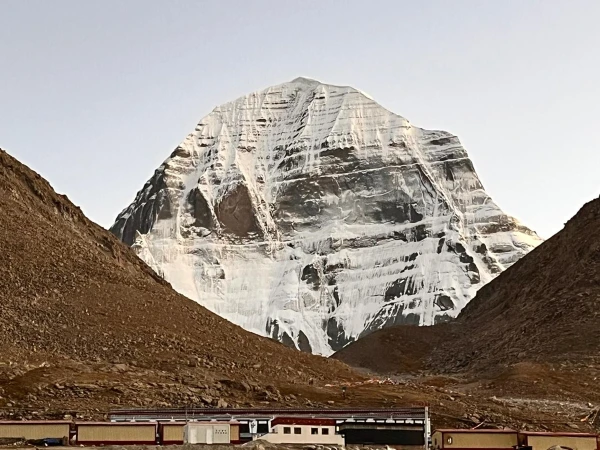
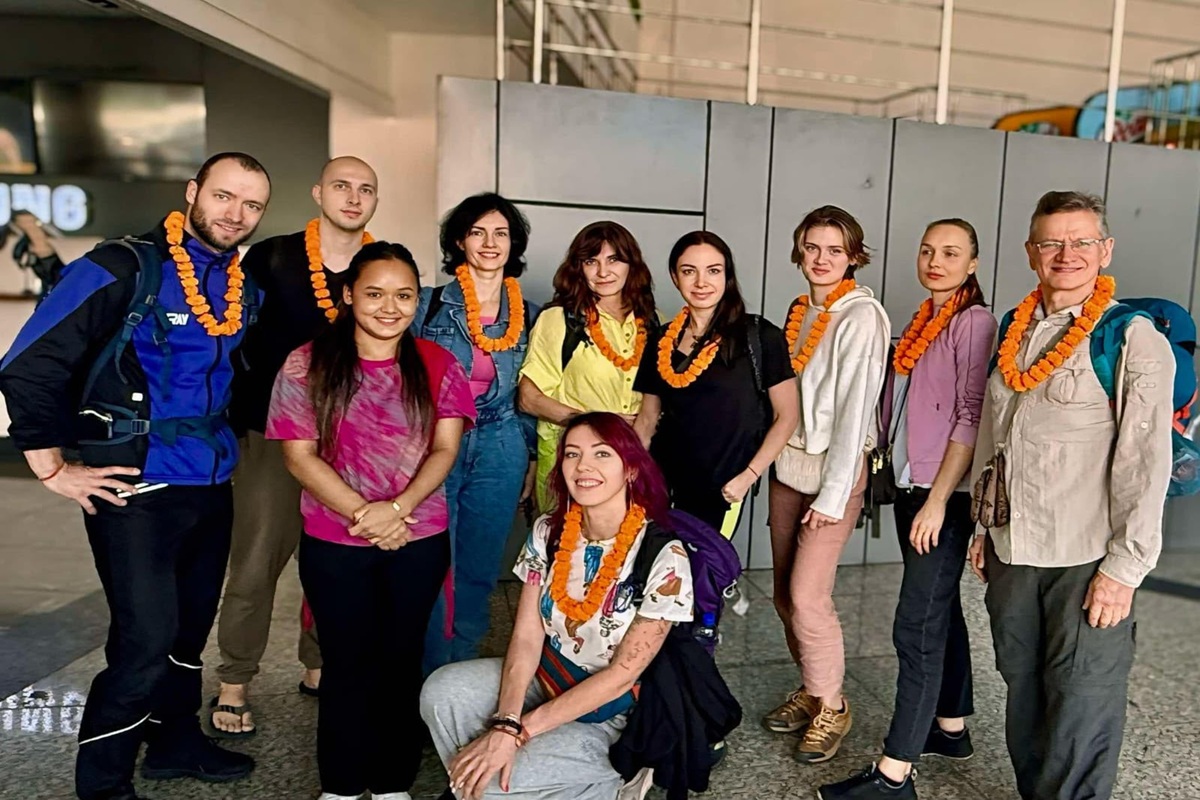
The 13 Day Kailash Mansarovar Yatra Tour is a fast and effective way to do the Kailash Mansarovar pilgrimage tour. This tour caters to those who are traveling to the Tibetan plateau from Kathmandu and don't have enough time. Mount Kailash (6,638 m) and Lake Mansarovar (4,590 m) are the principal destinations with spiritual attractions.
The trip will include visiting various old monasteries, riding through the Tibetan plateau, and three days of trekking around Kailash (the Kora or parikrama), plus reaching the highest elevation along the path - Dolma La Pass (5,645m).
This 13-day holy expedition perfectly interlaces sightseeing and a significant spiritual process while providing time for pilgrims to acclimate to the high altitudes.
Read the guide to discover all details from itinerary and route, required permits and altitude, as well as accommodation, packing, costs, and travel preparation, to make sure you have an experience of a lifetime by completing the Kailash Mansarovar Yatra in a mere 13 days.
Tibet Travel Permit, Alien's Travel Permit, Military Permit & Chinese Group Visa
Suitable For
Pilgrims, Spiritual Seekers & Adventure Travelers
Age Recommendation
Generally 18 to 70 Years (subject to medical fitness)
Highlights
Mount Kailash, Lake Mansarovar, Dolma La Pass, Yam Dwar, Dirapuk, Zuthul-Puk, Tibetan Plateau
Trip Style
Overland Pilgrimage & High-Altitude Trek
Physical Fitness
Good health and moderate fitness recommended
How Can I Complete Mount Kailash Mansarovar Tour in 13 Days (2 Week) in 2026, 2027, 2028?
The 13 Days Mount Kailash Mansarovar Tour for devotees of religious faith seems to be a perfect plan to finish one’s dream trip within two weeks.
The tour starts from Kathmandu and follows an overland route via the Kyirung border in Tibet. Hence, you will proceed slowly for the acclimation before heading towards holy Mount Kailash and sacred lake Mansarovar. Your itinerary covers the entire 3-day Kailash Kora (Parikrama), including trekking over the spiritual and mystical Dolma La Pass (5,645m) and making your way back to Kathmandu.
Available for 2026, 2027, and 2028 departures, this is one of the best ways to experience this awe-inspiring pilgrimage, with plenty of time to ensure you complete the circuit safely yet efficiently.
Mount Kailash Mansarovar Tour 13 Days Itinerary
Day 1: Arrival in Kathmandu - Altitude Acclimatization Begins
Arrive at Tribhuvan International Airport
Meet your tour representative
Hotel transfer and welcome briefing
Review travel permits and required documents
Rest and begin acclimatization
Overnight stay in Kathmandu
Day 2: Kathmandu Cultural Preparation - Pashupatinath and Valley Temples
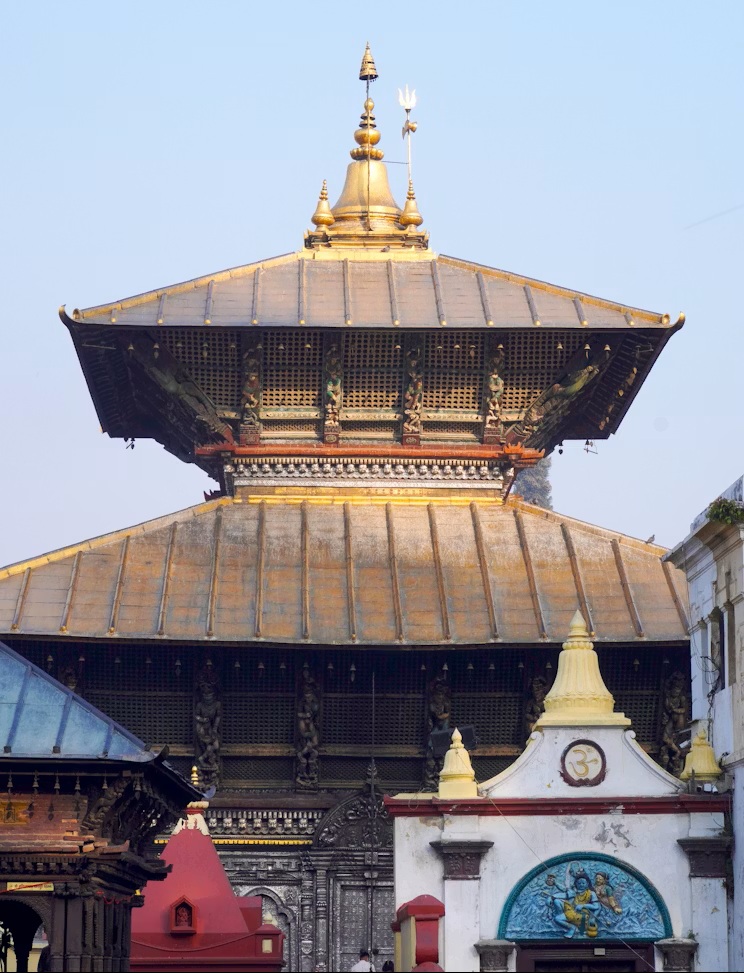
Visit Pashupatinath Temple
Explore Boudhanath Stupa
Attend pilgrimage briefing
Final equipment and packing check
Prepare for Tibet journey
Overnight in Kathmandu
Day 3: Kathmandu to Kyirung Border Crossing - Entering the Tibetan Plateau
Scenic drive to Rasuwagadhi Border
Complete Nepal and China immigration formalities
Meet your Tibetan guide
Drive to Kyirung (Gyirong)
Rest for altitude adjustment
Overnight in Kyirung
Day 4: Kyirung Acclimatization - Milarepa Cave Preparation Hike
Acclimatization day
Short hike to Milarepa Cave
Explore Kyirung Valley
Prepare for higher elevations
Overnight in Kyirung
Day 5: Kyirung to Saga - Dramatic Altitude Gain to 4,450 m
Drive across the Tibetan Plateau
Enjoy panoramic Himalayan landscapes
Cross rivers and high mountain passes
Arrive in Saga
Overnight stay in Saga
Day 6: Saga to Lake Mansarovar - Long-Distance Plateau Crossing
Drive to the sacred Lake Mansarovar
First breathtaking view of Mount Kailash
Visit Rakshas Tal en route
Evening spiritual prayers and meditation
Overnight near Lake Mansarovar
Day 7: Mansarovar to Darchen - Kailash Parikrama Base Preparation
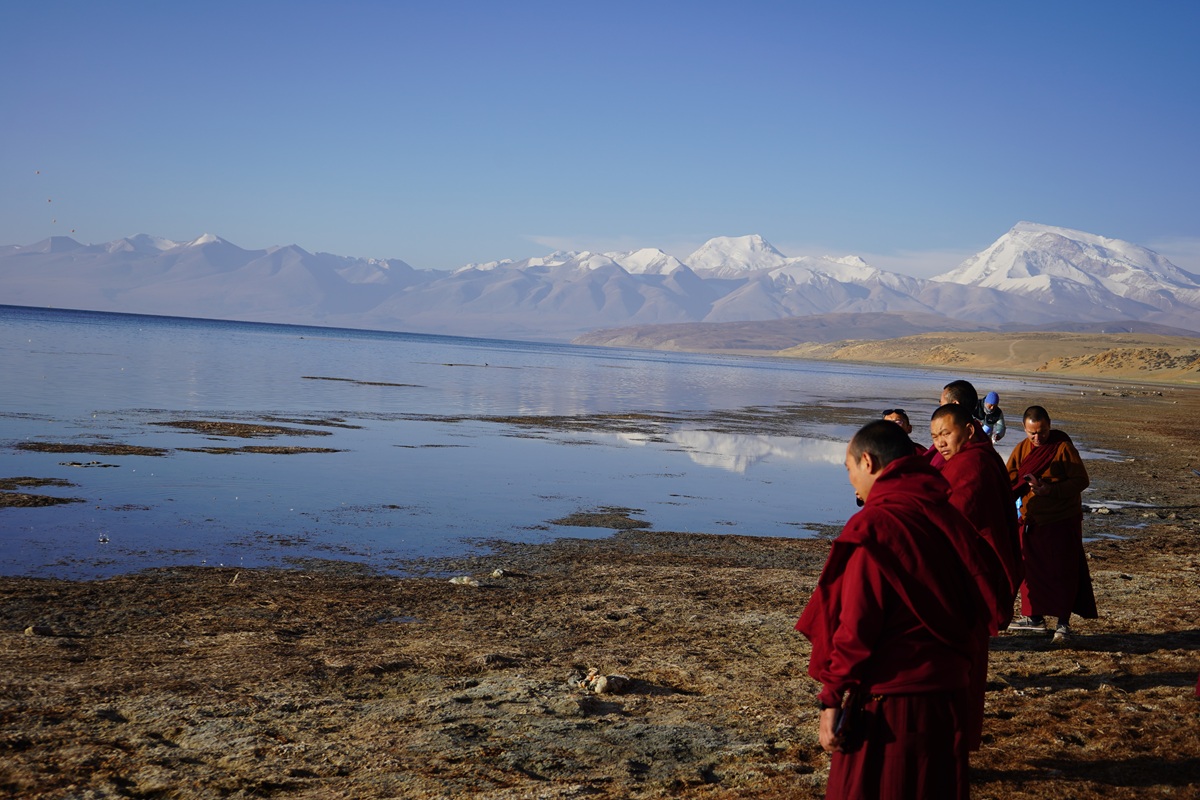
Morning holy rituals at Lake Mansarovar
Optional holy bath and puja
Drive to Darchen
Final preparation for Kailash Kora
Overnight in Darchen
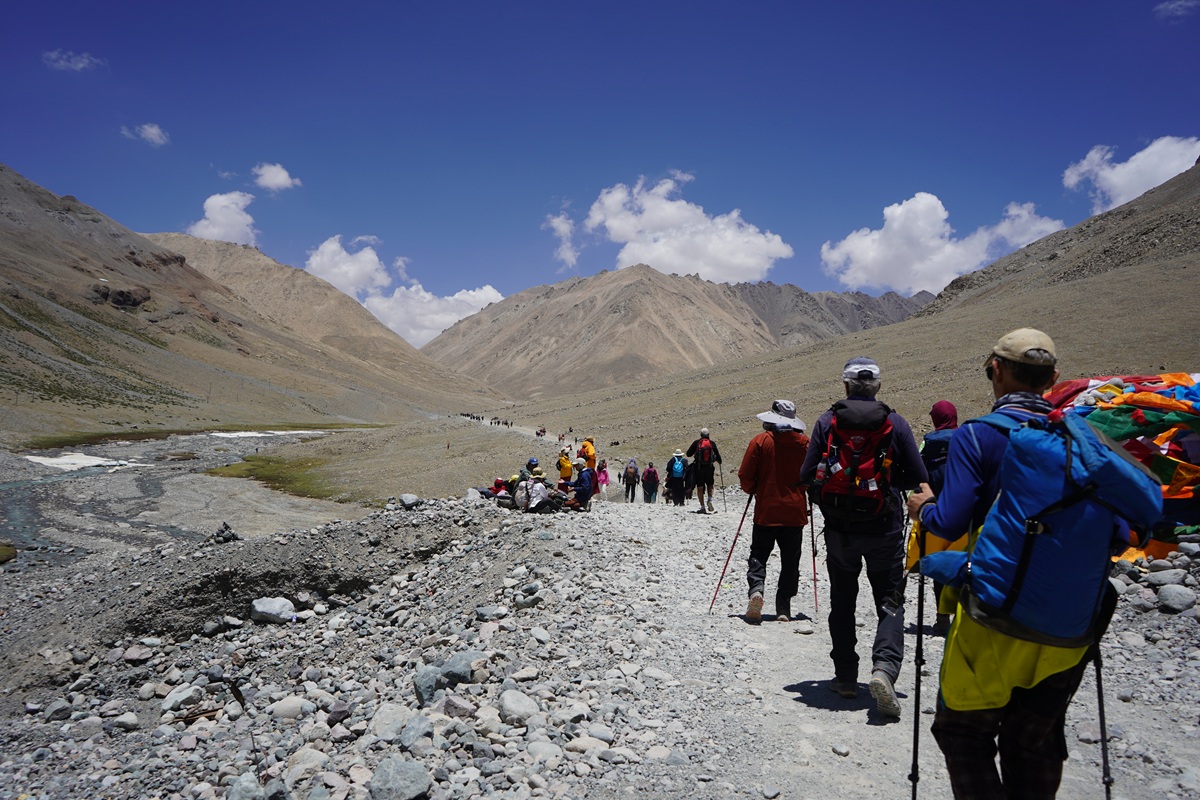
Day 8: Darchen to Dira-Puk - Beginning the Sacred Kailash Kora
Drive to Yam Dwar
Begin the first day of Kailash Parikrama
Trek to Dira-Puk Monastery
Enjoy spectacular North Face views of Mount Kailash
Overnight in Dira-Puk
Day 9: Dira-Puk to Zuthul-Puk via Dolma La Pass - Most Challenging Trek Day
Early morning trek
Cross Dolma La Pass (5,645 m)
Visit sacred Gauri Kund
Descend to Zuthul-Puk
Overnight in guesthouse
Day 10: Zuthul-Puk to Darchen, Drive to Saga - Completion and Relief
Complete the final section of the Kailash Kora
Return to Darchen
Drive back to Saga
Celebrate successful completion of the pilgrimage
Overnight in Saga
Day 11: Saga to Kyirung - Retracing the Plateau Route
Scenic drive through western Tibet
Enjoy final views of the Himalayan plateau
Return to Kyirung
Overnight in Kyirung
Day 12: Kyirung to Kathmandu - Border Crossing and Return to Civilization
Complete border formalities
Drive back to Kathmandu
Farewell dinner (optional)
Overnight in Kathmandu
Day 13: Departure from Kathmandu - Journey's End and Integration
What Types of 13 Days Kailash Mansarovar Yatra Package You Can Book?
Kailash Mansarovar Yatra with Full Board Meals (Breakfast, Lunch and Dinner)
Full Board Meals Package (B-L-D) is the most convenient and all-inclusive meal option that a pilgrim opting for the 13 Days Kailash Mansarovar Yatra will have. It consists of Breakfast, Lunch, and Dinner every single day, so you don’t have to worry about finding meals in the remote area of Tibet.
This is the most convenient package to keep things hassle-free since the route comprises mostly very high altitude regions where restaurants are rare. A majority of well-established tour operators will be preparing you the freshest vegetarian food or even travelling along with their own kitchen staff in some high-end tours to keep things in check in terms of food hygiene as well.
What Is Included in the Full Board Meals Package?
A Full Board program does a great deal more than provide a meal for you. In addition to your breakfast, lunch, and dinner every day, you get accommodation, transport, and permits, plus all the ground crew assistance you can imagine on all stages of the journey.
Most packages include:
Daily Breakfast, Lunch & Dinner (B-L-D)
Fresh vegetarian Indian, Nepali, and simple continental meals
Packed lunches during long driving days and Kailash Kora
Hotels and guesthouses as per the itinerary
Kathmandu airport transfers
Tibet Travel Permit
Chinese Group Visa
Alien's Travel Permit
Military Permit (where required)
English-speaking Tibetan guide
Professional driver and support crew
Emergency oxygen cylinder
Basic first-aid kit
Group luggage transportation
Government taxes and service charges
What Meals Will You Receive Every Day?
During such a high-altitude journey, food is one of the most necessary aspects. Since your appetite might diminish at altitudes more than 4,500m above sea level, all dishes served to you consist of protein as well as carbs and have been developed to be tasty yet highly absorbable. Such food will certainly appeal to a great deal of people, the travelers, no matter their preferences.
A typical day's menu may include:
Breakfast
Tea or coffee
Bread, butter and jam
Porridge or muesli
Eggs (where available)
Fresh fruit
Hot milk
Lunch
Rice
Dal
Vegetable curry
Chapati
Pickles
Seasonal fruit
Juice or soft drink
Dinner
Soup
Rice
Dal
Mixed vegetables
Paneer or soybean dishes
Chapati
Dessert (selected days)
Tea or hot water
The lunch you take during Kora in Kailash is often in packed lunch form, as there are no standard hotels for you to take your meal between Dirapuk and Zuthul-Puk. Most of the tour organizers also arrange snacks such as tea, coffee, popcorn, and biscuits in the evenings.
What Hotels Are Included?
You should expect to have accommodation standards at any of the remote hotels, guesthouses, and lodges in the Himalaya due to your Full Board tour to Kailash.
Typical accommodation includes:
Destination
Accommodation
Kathmandu
3 - 5 Star Hotel (depending on package)
Kyirung
Tourist Hotel
Saga
Comfortable Hotel
Lake Mansarovar
Guesthouse or Lodge
Darchen
Hotel
Dirapuk
Basic Guesthouse
Zuthul-Puk
Basic Guesthouse
Please remember that there are no deluxe hotels during Kailash Kora and thus the accommodation at Dirapuk and Zuthul-Puk stays standard to all Operators.
Additional Services Included
Beyond the meals, some valuable add-on services are included in the Full Board packages that would enhance your trekking tour.
These may include:
Dedicated kitchen team (premium departures)
Nepali tour leader
Tibetan pilgrimage guide
Supporting truck for kitchen equipment
Duffle bag
Day bag
Down jacket (selected operators)
Daily mineral water
Hot drinking water
Medical support
Oxygen cylinder during emergencies
Pre-departure briefing
Assistance at immigration checkpoints
Kailash Mansarovar Yatra with Half Board Meals (Breakfast and Dinner)
If a group of pilgrims would like to keep breakfast and dinner at their hotel but enjoy lunch at local restaurants as they were on their road trip around the area, this Half Board Meals Package will not let you down.
It is suitable for travelers who will spend a long time in Tibet driving and take lunch at their own preference during lunch time while on their way, taking into account whether or not they feel hungry, their on-the-move timeline, as well as individual likes and dislikes.
What Is Included in the Half Board Package?
Half Board Package comprises all important facilities needed for the 13-day Kailash Mansarovar Yatra with Breakfast and Dinner for each day of the tour.
The package generally includes:
Daily Breakfast
Daily Dinner
Hotel & Guesthouse Accommodation
Kathmandu Airport Transfers
Kathmandu–Kyirung–Kathmandu Transportation
Tibet Travel Permit
Chinese Group Visa
Alien's Travel Permit
Military Permit (if required)
English-speaking Tibetan Guide
Experienced Driver
Emergency Oxygen Cylinder
Basic First Aid Support
Government Taxes & Service Charges
What Meals Will You Receive?
Normally, we start the morning with a solid and warm meal before leaving, and have our meal in the evening once we arrive at the overnight destination.
Breakfast usually includes
Tea or Coffee
Bread, Butter & Jam
Toast
Eggs (where available)
Porridge or Muesli
Fresh Fruit
Hot Milk
Dinner generally includes
Soup
Rice
Dal
Vegetable Curry
Chapati
Pickles
Salad
Tea or Hot Water
Nearly all tour operators use purely vegetarian food, especially for the many Indian pilgrims and Tibetan pilgrims who have dietary religious regulations. On the luxury trips, there are also, for example, cakes, fresh fruit, and snacks in the evening.
How Does Lunch Work?
There are no meals for Half Board.
Instead, the itinerary takes you to small restaurants, guests’ houses, or roadside restaurants where you can get your own choice of meal.
Typical lunch options include:
Fried Rice
Noodles
Vegetable Curry
Dal Bhat
Momos
Soup
Pasta
Tibetan Bread
Tea & Coffee
Travelers are free to eat from a light to a heavy fare throughout the day while taking in the driving and elevation gains throughout the course.
How Much Does Lunch Cost?
Lunch prices vary depending on the destination.
Typical costs are:
Destination
Average Lunch Cost
Kyirung
US$8 - 12
Saga
US$10 - 15
Lake Mansarovar
US$12 - 18
Darchen
US$10 - 18
During Kailash Kora
US$15–20
Travelers who are doing the entire pilgrimage generally plan for the equivalent of US$80-$150 for lunches. Prices of this sort of food may increase when purchasing remotely, due to increased transit for supplies.
What Is Not Included?
The Half Board package normally excludes:
Daily Lunch
Soft Drinks
Alcoholic Beverages
Personal Snacks
Horse Hire
Porter Service
Laundry
Personal Shopping
Travel Insurance
Single Room Supplement
Tips for Guide & Driver
How Much Can You Save Compared to Full Board?
In general, a Half Board package can save you about USD 100-250 per person compared to a Full Board, and these costs can vary depending on tour operators, number of people in the group, and type of hotels selected. This package deal will appeal more to those people who are ok to buy lunch on their own from time to time.
Kailash Mansarovar Yatra with Breakfast Only Package
The Breakfast Only Package is perfect for those who want the most flexible journey throughout the 13-day Kailash Mansarovar Yatra. This package includes your 3 nights' hotel and daily Breakfast. You can arrange rest lunches and dinners yourself during your journey.
The package does not include the meals, as there are restaurants in the hotels or in the vicinity. All overnight accommodations from Kyirung to Saga to Darchen provide both local food and Western food; you can choose them according to the time, appetite, quantity, and food style. In the case that this tour package provides you with indispensable travel service.
What Is Included in the Breakfast Only Package?
This trip itinerary only includes your breakfast; it will cover almost everything on your pilgrimage for travel purposes.
Most Breakfast Only packages include:
Daily hotel breakfast
Hotel and guesthouse accommodation
Kathmandu airport transfers
Kathmandu–Kyirung–Kathmandu transportation
Tibet Travel Permit
Chinese Group Visa
Alien's Travel Permit
Military Permit (if applicable)
Experienced Tibetan guide
Professional driver
Emergency oxygen support
Basic first-aid kit
Government taxes and service charges
What Breakfast Can You Expect?
A hearty breakfast is served before departure each morning, making sure your day starts off with enough energy for hours in the van and treks throughout the day.
Typical breakfast options include:
Tea or coffee
Bread, toast, butter & jam
Boiled or fried eggs
Cornflakes or muesli
Porridge
Fresh fruit
Milk
Pancakes (selected hotels)
Tibetan bread (occasionally)
While most hotels serve different breakfasts in different locations, most operations cater to the need for a light meal, of the sort that does you good at height.
How Do Lunch and Dinner Work?
While lunch and dinner have not been included, it will also provide ample opportunity for you to eat in restaurants, cafes, and hotel dining areas along the way; it may be a nice experience.
Popular meal choices include:
Dal Bhat
Fried Rice
Vegetable Noodles
Momos
Soup
Pasta
Tibetan Bread
Chapati & Curry
Chinese Stir Fry
Nearly all the restaurants will serve up some vegetarian options, and bigger towns such as Saga and Darchen are likely to offer more options than small villages.
How Much Will Lunch and Dinner Cost?
The additional meal cost depends on where you eat and what you order.
Typical daily expenses are:
Meal
Estimated Cost
Lunch
US$8 - 20
Dinner
US$10 - 25
Daily Total
US$18 - 45
For a full 13-day tour, the meals on an add-on tour (purchased separately as per choice) will range from US$180 to US$350. These can vary due to the fact that food supplies will have long journeys through the wilderness before reaching Lake Mansarovar and Darchen.
What Is Not Included?
Besides lunch and dinner, the following items are generally excluded:
Snacks
Soft drinks
Mineral water
Tea and coffee outside breakfast
Horse hire
Porter service
Travel insurance
Personal expenses
Laundry
Tips for guides and drivers
How Much Can You Save?
When opting for a Breakfast Only package as opposed to one including a Full Board Meals Package, the savings for a person may range anywhere from USD200 to USD400 per person, relative to which package operator, group size, and hotel category. Furthermore, this allows total flexibility in meal budgeting daily.
Luxury Hotel Kailash Mansarovar Yatra with Full Board Meals Package
If you desire the most comfortable 13 Days Kailash Mansarovar Yatra experience there is, your answer is to choose our Luxury Hotel + Full Board Meals Package.
This package offers comfortable stays, meals, transfers in private cars and personalized assistance that lets you concentrate solely on the tour of your spiritual quest and lets every travel arrangement be handled in the hands of the professional guides.
While no luxury hotels are available during the Mount Kailash Kora trek due to the extreme topography in the Himalayas, you'll be staying in only the finest and upgraded services of the country from arrival in Kathmandu till departure in Kathmandu.
What Makes This a Luxury Package?
Your Package differs from the standard Kailash Mansarovar yatra by making your experience prior to and after your treks more comfortable for you.
Some of the premium features include:
Luxury hotel accommodation in Kathmandu
Best available hotels in Kyirung, Saga, and Darchen
Full Board Meals (Breakfast, Lunch & Dinner)
Private airport transfers
Dedicated tour coordinator
Experienced Tibetan guide
Comfortable private vehicle or premium Land Cruiser
Smaller group size for a more personalized experience
Premium support throughout the pilgrimage
What Hotels Are Included?
Accommodation is upgraded wherever possible along the route.
A typical luxury package may include:
Destination
Hotel Standard
Kathmandu
5-Star Luxury Hotel
Kyirung
Best Available 4-Star Hotel
Saga
Best Available 4-Star Hotel
Lake Mansarovar
Best Available Guesthouse
Darchen
Best Available 4-Star Hotel
Dirapuk
Twin Sharing Guesthouse
Zuthul-Puk
Basic Guesthouse
Important: There are no star luxury hotels in Dirapuk, nor in Zuthul-Puk. Since the hotels at Dirapuk and Zuthul-Puk have basic guesthouse quality for this altitude, many of the operators and agents stay there with the pilgrims while they circumambulate Mt. Kailash.
Meals Are Included?
The package includes Full Board Meals (B-L-D) throughout the pilgrimage.
Meals generally include:
Daily breakfast
Freshly prepared lunch
Hot dinner every evening
Pure vegetarian cuisine
Indian, Nepali & simple continental dishes
Soup before dinner
Tea and coffee
Fresh fruits
Packed lunches during the Kailash Kora
Hot drinking water throughout the journey
Premium Services Included
These luxury packages come with a set of benefits and privileges that will be in a regular scheduled departed program.
These may include:
Dedicated Nepali tour leader
Professional Tibetan guide
Private support crew
Kitchen team with experienced cooks
Airport meet-and-greet service
Welcome and farewell dinners
Duffle bag for the pilgrimage
Oxygen cylinders
Comprehensive medical kit
Supporting vehicle for kitchen equipment and luggage
Priority assistance during permit and immigration procedures
How Much Does the Luxury Upgrade Cost?
The additions to the Luxury Hotel + Full Board package, compared to a basic package with an overland option, typically add anywhere between $ 500 and $ 1,500 per person to cover the differences in the:
Hotel category
Group size
Departure date
Vehicle type
Private or group departure
Additional luxury services requested
A custom-tailored luxury tour in aLuxury vehicleand with aLuxury helicopterride and as a luxury transfer will be many, many times more.
What Is Not Included?
Even luxury packages generally exclude:
International airfare
Personal travel insurance
Horse or porter for the Kailash Kora
Personal shopping
Laundry services
Donations at monasteries
Alcoholic beverages
Visa fees (if charged separately)
Tips for guides and drivers
How Will We Reach Mount Kailash and Lake Mansarovar?
Kailash Mansarovar Travel is an ultimate adventure in itself. In this 13-day Kailash Mansarovar yatra, you travel overland from Kathmandu to Tibet via the Kerung (Gyirong) Border; a safe and favorite route as it gives gradual ascent to the desired heights that minimizes the probability of facing high-altitude illness, while enjoying the awesome panorama of great Himalayan peaks, vast river valleys and the Tibetan plateau.
This is unlike a conventional road trip and involves crossing two borders, so it naturally requires the use of two vehicles owing to restrictions between China and Nepal. All transfers are efficiently handled between our Tibetan and Nepali teams who oversee seamless border-crossing.
Step 1: Kathmandu to Kerung Border by Nepali Jeep
Upon arriving in Kathmandu, you start with a short scenic journey, a private, modern, and air-conditioned Nepal private vehicle driven by a local, professional mountain driver. The trip will be taken via Trishuli by the scenic and adventurous Prithvi & Pasang Lhamu Highway via Dhunche and then through Syabrubesi and up to the Rasuwagadhi (Kerung) Border.
During this scenic drive, you'll experience:
Beautiful Himalayan landscapes
Traditional Nepalese villages
Trishuli River valleys
Forest-covered mountain roads
Langtang National Park region
Several comfort and meal stops
The drive usually takes 7–9 hours, depending on road and weather conditions.
Step 2: Border Crossing at Kerung (Gyirong)
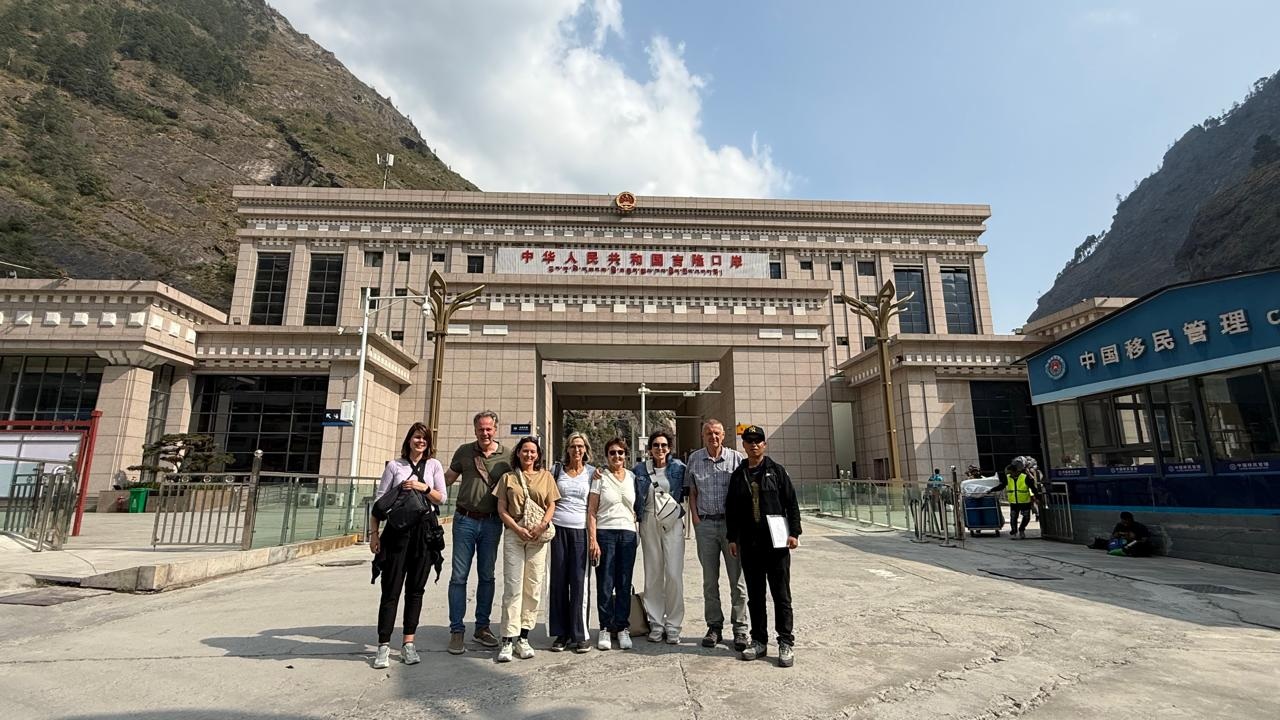
Once you are at the Nepal-China border, complete the Nepal immigration exit formalities, then you walk over to the Chinese immigration checkpoints across the international border. Your support crew in China take over at this point.
They will:
Assist with immigration procedures
Help transfer your luggage
Coordinate with the Tibetan team
Ensure all baggage is moved safely to the waiting Tibetan vehicle
Assist elderly pilgrims or those needing extra support
You don't need to worry about the hassle of carrying your bags during the border transfer. We've our ground staff that handle this for you.
Step 3: Transfer to a Tibetan Tourist Jeep
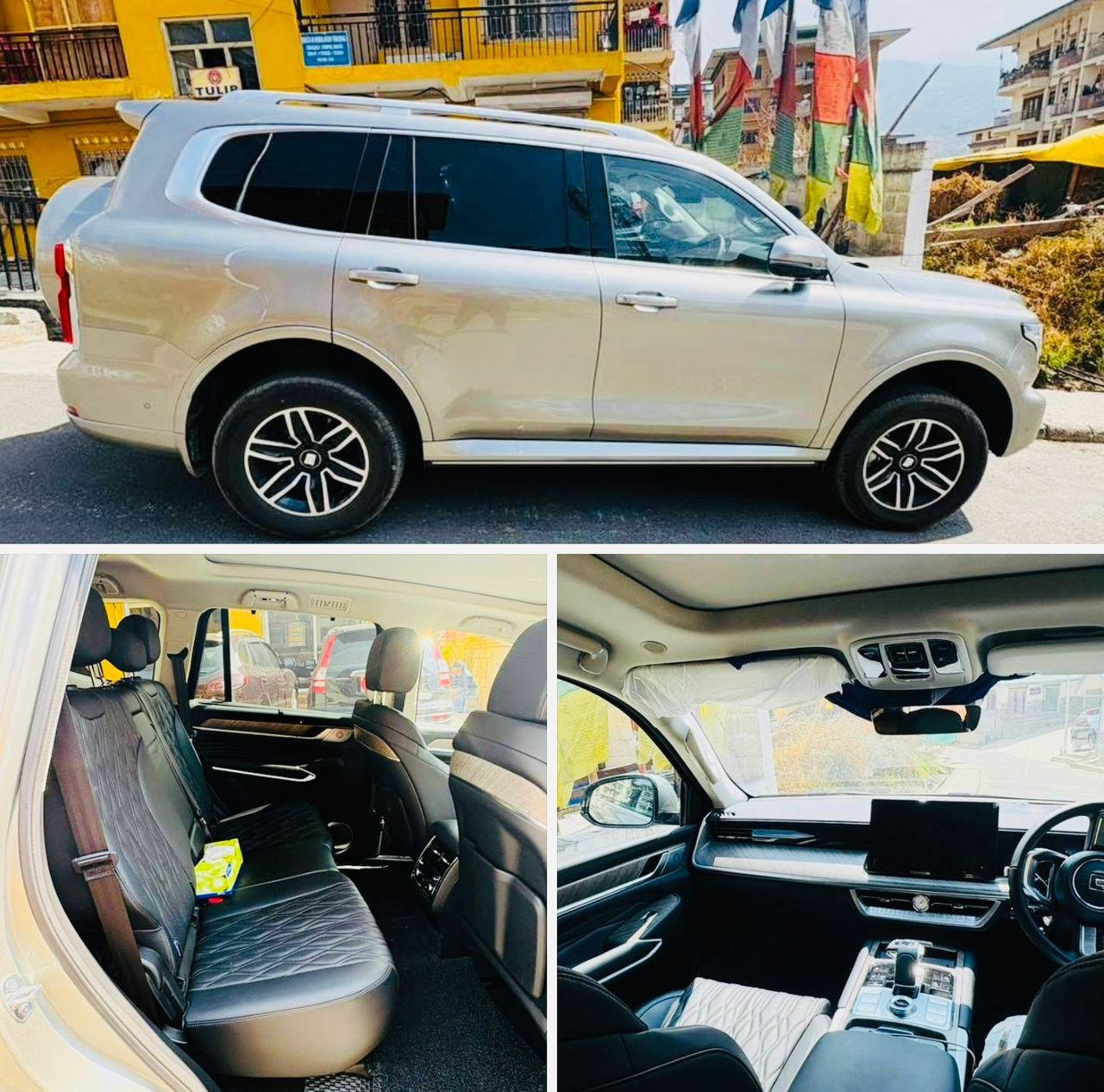
Once cleared with Chinese immigration, your licensed Tibet guide and driver will meet you. From here, you will then be transferred to a Chinese-designated touring jeep/vehicle that will be your ground vehicle in Tibet during your tour.
These are specifically authorized to be on the roads within the Tibet Autonomous Region and will be with you for the tour. Chinese-licensed Tibetan drivers are equipped for navigating on these high-altitude mountain roads.
Your Tibetan vehicle will take you through:
Kyirung (Gyirong)
Saga
Lake Mansarovar
Darchen
Mount Kailash Kora starting point
Return journey via the same route
This change of car is necessary for all travellers going in land as vehicles of Nepal can not enter and vehicles of Tibet can not come in Nepal.
Step 4: Scenic Overland Journey Across the Tibetan Plateau
Upon entering Tibet, the journey takes on through one of the globe's top and greatest road networks. For the many part, the roads have been built up making for relatively effortless cruising even as your elevation boosts.
Along the route you'll enjoy:
Endless Tibetan Plateau landscapes
Snow-covered Himalayan peaks
Yak and sheep grazing fields
Crystal-clear alpine lakes
Nomadic Tibetan settlements
Wide-open grasslands
First views of the sacred Mount Kailash
Holy Lake Mansarovar
This gradual climbing is probably the main plus side of traveling overland, as this gives you more chance to get accustomed to altitudes over 4000 metres prior to starting the Kailash Kora.
Why Does the Journey Use Two Different Vehicles?
Few pilgrims expect to be made to switch transport at the border - this is quite normal for all non Chinese nationals who entered Tibet from Nepal.
The transfer is required because:
Vehicles with Nepalese registration are not allowed to go to Tibet. Vehicles with Chinese registration (Tourist Vehicles) must be used when inside Tibet.
A licensed local Tibetan Driver should be arranged as per the tour regulations of the region.
The luggage exchange support team will handle this, making travel very convenient for our dear pilgrim group members.
Kailash Mansarovar Tour in 13 Days Detailed Itinerary
Day 01: Arrival in Kathmandu (1,400m)
Kathmandu Airport Arrival With The team
Duration: Free Day
Accommodation: Hotel in Thamel, Kathmandu
Distance: Not applicable (arrival day)
This is where the Kailash Mansarovar Yatra starts. On arrival in Kathmandu, our company representative will help you transfer to your hotel in Thamel. This day is entirely dedicated to helping you adjust to the different time zones and start acclimating to the extreme altitudes (over 5600m) you'll be visiting.
Here, the travel facilitator you chose will have the briefing meeting: permit process, how to avoid altitude sickness, what gear to bring, etc. You will also meet your lead guide and be updated about the trekking trip plan in detail.
Arrival in Kathmandu (1,400m): Highlights & Timing
Anytime - Arrival at Tribhuvan International Airport, Kathmandu, Nepal
Within 30 minutes of landing - Meet and Greet: Our representative will be waiting for you just outside arrivals at the terminal, holding your name as a sign.
30 to 45 minutes after meeting - Hotel Transfer: With a private transfer, you’ll be dropped off right at your guest house in Thamel - Kathmandu’s backpacker ‘centre’.
Afternoon (flexible timing) - Pre-Trip Briefing: Stop by our office for an hour on permits, altitude medication, packing slips and the daily schedule.
Evening - Simple dinner either at your hotel or at a Nepali restaurant in Thamel. Enjoy the Nepali taste of dal bhat
Note: Strict timings will vary with international flight timings arriving in Kathmandu and the traffic conditions. You may inform the timings at which you arrive to the tour operator a minimum of 24 hours prior to arrival.
About Kathmandu
Kathmandu is the capital city of Nepal, standing at an altitude of 1400 meters in the Kathmandu Valley, surrounded by four high mountains. It is the most preferred city for our whole range of Kailash Mansarovar Yatra overland through the Kyirung border.
Kathmandu has seven UNESCO World Heritage Sites, namely Pashupatinath Temple, Boudhanath Stupa and Swayambhunath, to mention a few. All these landmarks have a significant impact on the spiritual tone of the pilgrimage that awaits all.
All trek shopping facilities like permit agencies, shops selling trek gear, currency exchangers and pharmacies are found at a reasonable walking distance from most tourist hotels of Kathmandu in the Thamel area.
Pilgrims may utilize Day 01 of the trip to get themselves organized for last-minute shopping, collect their Diamox drugs from the chemists or get them exchanged for Chinese Yuan for all expenses in Tibet. Given Kathmandu’s low altitude and convenience, it is the safest and most feasible option to complete pre-departure formalities before heading toward the Tibetan Plateau.
Day 02: Kathmandu Cultural Preparation (1,400m)
Pashupatinath Visit Before Departing for Tibet
Duration: Full Day Cultural Tour
Accommodation: Hotel in Thamel, Kathmandu
Distance: Approximately 20–25 km by vehicle between sites
Here begins your spiritual preparation for Kailash Kora. Your entire day is dedicated to exploring the sacred Hindu and Buddhist sites in the cultural capital of Nepal, creating the spiritual and cultural ambiance required as we will journey to Tibet.
The structured temple visit arranged by your guide would encompass such vital places as the sacred Pashupatinath Temple and the Boudhnath Stupa, both places very significant to the Religious faith and tradition of Kailash Mansarovar Pilgrimage.
The afternoon is also utilized for a final check-up of equipment, permit check-up, and medical fitness check of each member of the group.
Kathmandu Cultural Tour: Highlights and Timing
6:30 AM - Leave your hotel after an early breakfast and drive by car to the Pashupatinath Temple
7:00 to 9:00 AM - Pashupatinath Temple Visit: Explore the Bagmati cremation ghats, talk with ash-coated sadhus outside the walls of the temple and witness live Hindu rituals. Non-Hindus will only be able to visit the ghat but not the inner shrine.
9:30 - 11:30 AM - Boudhanath Stupa Visit: Perform a clockwise kora around the world's biggest stupa, engage in rotating Tibetan exile Buddhist prayer wheels and witness the slow and mindful pace of pilgrim prostrations.
12:00 - 1:00 PM - Lunch at a Thamel restaurant
2:00 - 4:00 PM - Gear Check and Permit Verification: Your trekking guide checks your Chinese Group Visas with all your group members in person, your Tibet Travel Permits and your Tibet individual trekking permit with every Trek Team member separately.
4:00 - 5:00 PM - Medical Briefing: Diamox use instructions; altitude sickness symptoms; when it's time to descend.
Note: The time for visiting and enjoying the most of Pashupatinath is before 9:00 AM in the morning. If you come in late, you won’t experience the real feel.
About Pashupatinath Temple and Boudhanath Stupa
Nepal's holiest Hindu temple complex, perched above the banks of the Bagmati River on the eastern outskirts of Kathmandu and identified as a UNESCO World Heritage Site. The Pashupatinath Temple itself, dedicated to Lord Shiva as the lord of the animals, is itself an active cremation ground- funeral rites can be observed from the temple steps on a daily basis.
Meeting Shiva in his worldly sanctuary offers pilgrims a significant prelude to their journey to visit him in heaven on the Kailash Yatra. Just five kilometres east of downtown Kathmandu is Boudhanath Stupa, an enormous Buddhist stupa which is also the main spiritual focus of Kathmandu’s large Tibetan community of exiles.
Built during the 14th century and rebuilt after the 2015 earthquake, Boudhanath is instantly recognisable by its mandala base, whitewashed dome and its painted all-seeing eyes of the Buddha. Tibetan immigrants and monks who escaped Tibet after the 1959 invasion have built monastery buildings all the way round Boudhanath Stupa, thus making it the most authentic Tibetan Buddhist environment to find outside of Tibet itself.
Day 03: Kathmandu to Kyirung (2,800m)
Vehicle being ready to depart to Kyirong border
Duration: Full Travel Day
Accommodation: Guesthouse in Kyirung, Tibet
Distance: Approximately 170 km by road (Kathmandu to Rasuwagadhi Border), then 30 km inside Tibet to Kyirung town
Today, your journey takes you from Nepal to the Tibetan Autonomous Region of China. Leaving Kathmandu, you get into a private vehicle in the morning, drive north through the Langtang corridor, get through customs and immigration at the Rasuwagadhi-Kerung border and drive into Kyirung, Tibetan side. The roads worsen much after Dhunche, thus a demanding travel day in terms of bodily experience although no trekking will be done. Your body starts adapting with altitude increase from the moment you leave the city.
Kathmandu to Kyirung: Highlights and Timing
6:00 AM - Departure from Thamel hotel
8:00 - 9:00 AM - You will drive through Trishuli Bazar and Dhunche on the Langtang Highway. Beyond Dhunche, the condition of the road gets rough with loose surfaces and sharp curves.
11:00 AM - 1:00 PM - Arrive at Rasuwagadhi border crossing. It takes 30- 60 minutes for Nepal’s immigration procedure to finish (Depends on the number of people in the group).
1:00 - 2:00 PM - After passing the Friendship Bridge, you are in Tibet (Kerung), where the Chinese immigration officials process your Group Visa & Tibet Travel permit. From here on, photography is not allowed unless specifically agreed upon.
2:30 - 3:30 PM - Drive 30 km from Kerung to Kyirung
Evening - Check into Kyirung guesthouse, grab some light dinner and initiate an adequate hydration regimen.
Note: Take your Chinese Group Visa, Tibet Travel Permit and passport with you in one secure, easy-to-access holder. The border check procedures are orderly, and there is often a wait, so include some of this in your buffer for the day.
About Kyirung (Gyirong), Tibet
Referred to as Gyirong in standard Tibetan transliteration, which means “happy valley” in the Tibetan Language, Kyirong is situated at about 2,800 meters in a river valley at the bottom of the Tibetan Plateau in Nepal. Gyirong serves as the main road border crossing of Nepal for visiting tours towards Kailash Mansarovar from the Nepal side, after the Tatopani-Zhangmu passage collapsed heavily during the Gorkha Earthquake of 2015.
There's the layer of Han Chinese administrative development over the traditional Tibetan way of life quite literally on display. Official place names in Mandarin written beside Tibetan script, PLA military outposts strung out at intervals, and more concrete government offices built in front of old Tibetan stone homes. Yet it is the striking natural beauty of Kyirung valley immediately beyond the town. Thick forest, swift rivers, and the sight of several gray langurs and Himalayan monals roaming set it apart from anywhere else on this leg of the trek. It visually makes it something quite unlike anywhere else on this road.
Altitude at 2,800m can even be taken to a relaxed full days' full acclimatization with a break on the driving on the plateau.
Day 04: Kyirung Acclimatization Day (2,800m -
Group Photo Before Acclimization Hike
3,200m)
Duration: Half-Day Hike, Half-Day Rest
Accommodation: Guesthouse in Kyirung, Tibet
Distance: Approximately 6 - 8 km round trip on acclimatization hike
Today is where you start prepping for the harsh altitude that’s soon to hit you. Today is a completely planned day of acclimatization walks as we hike up to the Pelgye Ling Monastery and the famous historical Milarepa Cave outside of the town of Kyirung.
We will head up the hill roughly 400m from the valley during the morning, hike back down into town, where we will relax and get medically evaluated. We will measure blood oxygen saturation with a finger pulse oximeter, taken by your guide before as well as after your walk and set each person’s basal measurement as a guideline for the days to come.
Kyirung Acclimatization Day: Highlights and Timing
8:00 AM - Departure from guesthouse
8:00 - 10:00 AM - Ascent through the forests in Kyirung Valley (juniper, rhododendron, blue pine), elements which vanish the moment you emerge onto the plateau.
10:00 - 11:00 AM - Visit to Milarepa Cave: A small and historic Meditation Cave used by Jestsun Milareppa (11th-century poet-yogi), a treasured guru of Tibetans. Butter lamps and flags of prayer adorn the cave entrance. Local Tibetans visit the cave on pilgrimage, showing obvious devotion.
11:00 AM - 12:00 PM - Return descent to Kyirung town
12:30 PM - Lunch and pulse oximeter readings by guide
Evening - Discussion on the elevation gain tomorrow as well as our own role to watch and report to the guide symptoms.
Note: Today is not the day to push yourself higher than indicated! The "climb high, sleep low" ethic really needs to be followed on this trek. Any value of less than 90% O2 saturation should prompt a discussion with your physician.
About Milarepa Cave and Kyirung Valley
One of the most popular spiritual figures from Tibetan Buddhism is the yogi, poet and master, Jetsun Milarepa (1052–1135 CE), whose incredible life spans from being a practitioner of black magic to one of the great saints of Tibet.
The legend is that Milarepa stayed and meditated in a number of Himalayan caves, including this particular cave, which the Tibetan tradition confirms is located here at Kyirong.
Kyirung Valley is one of the most ecologically unique parts of the whole Tibetan journey. Located at the border of the subtropical foothills of the Himalayas and the dry and cold Tibetan Plateau, the Kyirung Valley harbors some of the oldest growing forests. It also serves an excellent purpose medically for acclimatization hiking on this trip and is also impressive when it comes to scenic experience.
Several farming villages are practicing local Barley and yak farming, and here you will have a fairly prolonged taste of traditional farming culture before we drive deep to Tibetan highland settlements.
Day 05: Kyirung to Saga (4,450m)
Moving Towards Saga
Duration: Full Travel Day
Accommodation: Guesthouse in Saga, Tibet
Distance: Approximately 480 km by road
This is by far the largest gain in altitude of the whole yatra. You travel from Kyirung at 2800 meters to Saga at 4450 meters, a net gain of 1650 meters driven all by car across the Tibetan Plateau.
Your body is given no acclimation process whatsoever. The environment changes radically within the first couple of hours, and from mid-morning, the effect of plateau conditions (shortage of breath, extreme UVA radiation, dry wind, cold air) begins to impact you severely.
Kyirung to Saga: Highlights and Timing
7:00 AM - Depart from Kyirung by 4x4 land cruisers. Ensure water, snacks, altitude sickness medication and warmer layers are readily available in your day bag (not deep within your bulk baggage)
7:00 - 9:00 AM - Very quick climb out of Kyirung Valley. We pass the barren landscape a 100m or so after about half an hour of driving and can already see a big temperature difference, though it's broad daylight.
9:00 AM - 12:00 PM - Drive across Changtang grasslands on an open plateau, looking for Tibetan wild ass (kiang), Tibetan antelope (chiru), and, on the periphery of any wetlands, to observe black-necked cranes. All wildlife encounters often do not involve stopping, and it is common to see wildlife on the roadside.
12:00 - 1:00 PM - Road trip lunch at a roadside teahouse. Eat in the teahouse even if you do not feel peckish because lack of altitude would also cause appetite to suppress, even though you require it still 7.
Multiple stops throughout the day - Military checkpoints to get the stamps on Tibet Travel Permit. Ensure your Tibet Travel Permit is handy all along.
5:00 - 6:00 PM - Arriving in the Saga (Altitude) Region & Lodge/Meal - begin watching out for symptoms of altitude headache.
Note: Headaches at this point of the night can be considered normal and do not necessarily have the implication of deadly altitude sickness. If other factors besides the headache are in evidence (dizziness, confusion, severe vomiting, ataxia, etc.), immediate descent and medical help are needed.
About Saga, Tibet
Located on the Tibetan Plateau at an elevation of 4,450 meters (14,600 feet), Saga is a modest administrative town situated on the Brahmaputra River (locally called Yarlung Tsangpo) about 500 kilometers west of Lhasa.
Its role consists mainly in serving as a supply and logistics point for overland travellers travelling between Lhasa and Western Tibet, containing nothing more than a few Chinese Government offices, guesthouses, restaurants and a petrol station.
Hotels in Saga consist of dorm-style rooms with basic bedding and pit toilets. Hot water is unreliable and may not be available at all times.
The cuisine in Saga is based on instant noodles, fried rice, Tibetan tsampa (roasted barley flour) and butter tea-an instant cup of salted tea into which yak butter is dropped, providing hydration and calories high up.
Do not pass, but drink-it is one of the best traditional high-altitude drinks there is to be found in towns like these. This is the last of the reliable supply towns on your route into western Tibet.
Day 06: Saga to Lake Mansarovar (4,590m)
Lake Mansarovar Area Visit
Duration: Full Travel Day
Accommodation: Guesthouse at Chiu Village, Mansarovar
Distance: Approximately 350 km by road
The Kailash Mansarovar Yatra earns its name on this day.
After hours and hours of travelling through the brown and wind -whipped Tibetan Plateau, suddenly, without announcement, Lake Mansarovar takes the vista and it is none other than an impossible stretch of a divine and turquoise water which lies before the peaks of Himalayan Mountain.
For those pilgrims who follow the Hindu religion this is arguably the most spiritual moment of the Yatra in which a visit to Mapam Yumtso (The Tibetan word signifies “Victory Lake”) is made. Tears are witnessed and utter silence falls for sure on most travelers.
Saga to Lake Mansarovar: Highlights and Timing
7:30 AM - Departure from Saga
7:30 AM - 12:00 PM - Drive to Paryang town (checkpoint town!) and over ruggedly remote grassy countryside. As we approach Mansarovar, Mt. Gurla Mandhata (7,728 metres) comes into view in the south-west roughly 50 km prior.
12:00 - 1:00 PM - Lunch stop at Paryang
3:00 - 4:00 PM - First glimpse of Mansarovar Lake, on the drive, make stops at various points and click snaps, especially at the first plain view of Mansarovar - be it slow.
4:30 PM - Arrival at Chiu Village located on the northernmost western bank of Mansarovar. Transfer to hotel
5:00 - 6:00 PM - Short visit to Chiu Monastery. Chiu monastery, the oldest in the country, is situated on a cliff directly above the lake and is lived in by a community of active monks throughout the year.
6:30 PM - View of the sunset on the lake shoreline. For a couple of evenings on a clear day, one is able to glimpse Mount Kailash's north face in front of the sun.
Note: Mansarovar is at an altitude of 4,590 mtr. Altitude sickness affects very quickly here... Try to take light duty in the evening - drink plenty of hot liquid & eat warm foods to cover a lot of sightseeing & shopping.
About Lake Mansarovar (Mapam Yumtso)
One of the highest freshwater lakes in the world, Lake Mansarovar, with an altitude of 4,590 m, lies in the Ngari Prefecture of the Tibet Autonomous Region of China on the Tibetan Plateau. Spread across 320 sq km, Mansarovar has an average depth of 46m (maximum 77m). This sacred lake is believed to feed the Sutlej River, which plays a major role for the rivers on the Indian subcontinent.
In the cosmology of Hinduism, Mansarovar sprang into being in Lord Brahma’s thought as an earthward manifestation of Akash Ganga. Having a bath in Mansarovar removes the sins of seven lives.
Lake Mansarovar itself functions as a spiritual powerhouse to four major world religions. It's the bathing lake of Shiva in Hinduism; for Tibetan Buddhism, it’s where the blissful paradise of Demchok, also known as Chacrasan, can be reached.
In Jainism, it’s tied to the spiritual quest of its founder Rishabhadeva; and to the indigenous ancient religious traditions of the Bön, it’s a crucial place of natural, divine power.
With the concurrence of so many belief traditions, it remains one of the world's great natural sacred wonders. Looking up at a cliff face above the northwest shoreline, Chiu monastery, which dates to the 10th century, is one of the site's several active Gelugpa (Yellow Hat) monasteries and has a resident monk population.
Day 07: Lake Mansarovar to Darchen (4,575m)
Group Photo Infront of Lake Mansarovar
Duration: Short Drive and Preparation Day
Accommodation: Guesthouse in Darchen, Tibet
Distance: Approximately 35 km by road
This is where the Kailash Kora truly comes alive. After the drive along the shore of Lake Mansarovar, you turn north toward Darchen, the starting town for the Kora circuit (52 km circumnavigating Kailash), and spend the rest of the day in quiet, strategic preparation, preparing your gear, engaging your porter or yak, and steeling your mind for the three-day challenge beginning at dawn.
Mansarovar to Darchen: Highlights and Timing
Before sunrise - An optional but highly rewarding bath in Lake Mansarovar the waters will remain at a comfortable temperature of around 4-6 degree Celcius year round. Take doctor's advice regarding taking a cold water immersion before doing so; remember that you may be acclimatized up to 4600 meters from sea level.
7:30 AM - Breakfast at Chiu guesthouse
9:00 AM - Departure toward Darchen
9:30 - 10:00 AM - Arrival in Darchen. Check into guesthouse
10:30 AM - 12:00 PM - Finding porters and yaks in the market area in Darchen (usually around 300-400 CNY per yak per day). Best arranged via your guide, as independent deals in the market can be a challenge.
12:00 - 1:00 PM - Lunch in Darchen. Stop at the small market shops to purchase any necessary extra snacks or electrolyte sachets as well as to pick up any last-minute provisions.
2:00 - 4:00 PM - Rest up, gear inspection, and team review-discussion of trail conditions, locations of reliable sources of water, and emergency plan.
Evening - Have an early dinner and be in bed by 9:00 PM. Start before the first light tomorrow.
Note: Some first-time hikers severely underpack warm clothing for the kora, mistakenly believing the warmest part of the day dictates the nighttime temperature. At Dira-Puk (5050m) it gets below zero every night, all year round.
About Darchen, Tibet
Situated at 4,575 meters in Tibet’s westernmost Ngari Prefecture, Darchen is a humble, dusty border town and the official starting and ending point for the Kailash Kora. Life in Darchen essentially revolves around the kora: a gaggle of rustic guesthouses, Tibetan teashops offering steaming momos and salty butter tea, a simple medical center, stores supplying the essential provisions needed for trekking, and government permit stations.
It swarms with Indian, Nepali, and overseas Indian Hindu pilgrims during the May–September pilgrimage season. Tibetan pilgrims practicing their own variations of the circumambulation are equally numerous in and out of town during the same period.
This town is at the foot of the southern path leading to the Kailash range; however, one may spot the top of the Kailash mountain from the higher western regions of Darchen. The land around consists of higher-altitude desert with few grass strips and strong plateau winds and much sunlight, making regular application of sunscreen imperative.
Also, Darchen is where the four major rivers originating from Kailash - Indus, Brahmaputra, Karnali, Sutlej- meet, and this fact further bolsters their astrological significance.
Day 08: Darchen to Dira-Puk (5,050m)
Mount Kailash Kora begins
Duration: Full Trek Day
Accommodation: Guesthouse at Dira-Puk
Distance: Approximately 22 km
Today, the sacred Kora over Kailash starts under your feet. The three-day circumambulation has its first day on the trek and on this hike into the northwest of Darchen.
Following the Lha-Chu Valley into rugged and steep canyons, you will arrive at the Dirapuk Guest House with its privileged location, directly overlooking the north face of the Kailash Range, directly across the canyon.
Today is one of the days when this kora is arguably at its most picturesque. While it still qualifies as not exceptionally taxing and is well suited to novice trekking, you should take it very easy to avoid running yourself down in preparation for Day 09!
Darchen to Dira-Puk: Highlights & Timing
7:30 - 8:00 AM - Leave your guesthouse in Darchen. Make sure your porter sets off before you all.
8:00 - 9:30 AM - The path follows northwest up Lha-Chu Valley, where flat pasture ground is littered with mani walls (carved with Buddhist sutras), and at first light, the Tibetan pilgrims.
9:30–10:00 AM - Cross the impressive Chorten Kang Nyi, which signals the start of the pilgrimage of the Kora Circuit.
10:00 AM - 12:00 PM - As the trail leads in a narrow, near sheer red brown canyon, the roaring river appears always close; we will see first spectacular of the south side of Mount Kailash, an almost perfectly four-sided symmetrical pyramid of black rock topped with permanent snow at 6,638m
12:00 - 1:00 PM - Lunch break at a trail-side teahouse near Dirapuk area
1:00 - 3:00 PM - Final stretch to Dira-Puk guesthouse (5,050m). Mount Kailash's north face can be seen across the valley.
Evening - Dinner at guesthouse; go to bed early since the hardest day is the next day.
Note: Pilgrims exhausted by Tibetan koras move at an extremely slow pace with a consistent energy demand. Don’t pace other prostrating pilgrims to theirs - find your own rhythm.
About the Kailash Kora and Dira-Puk
The Kailash Kora is a ritual circumambulation (52 kilometers/32 miles) of Mount Kailash (6638 meters) in the Ngari prefecture of western Tibet.
It is one of the most important pilgrimages and holy rituals performed by Hindus, Buddhists (especially Tibetans), Jains, and Bon religionists during one lifetime. It will rid one of sins accumulated through past deeds. A total of 108 Koras can help achieve nirvana for humans.
Situated at a dizzying 5,050 meters (16,732 feet) high on the north side of Mount Kailash, the Dira-Puk Monastery is a small but very busy Kagyu school Buddhist monastery, which means "cave of the female yak horn."
Unlike all the other monasteries along the pilgrimage circuit, it is situated in a somewhat precarious position on a steep, almost sheer cliffside and stays open throughout the year. The remote location and the extreme altitudes on the Kailash circuit are not enough to keep the resident monks away from this significant site; only a few of them can afford to spend an entire summer season here.
Most pilgrimage walkers and climbers claim that this monastery gives the most stunning sight of Kailash in the entire journey, the reason for which is obvious: from here, the perfect and magnificent pyramid of the Kailash mountain is clearly seen in all its majesty, as there is practically nothing between the monastery and the mountain itself.
Many experienced climbers who have reached the top of many Himalayan ranges are mesmerised by the view of Kailash seen from Dira Puk.
Day 09: Dira-Puk to Zuthul-Puk via Dolma La Pass (5,636m)
Sacred Mount Kailash View
Duration: Full and Most Demanding Trek Day
Accommodation: Guesthouse at Zuthul-Puk (4,790m)
Distance: Approximately 22 km
Today is likely the toughest day of your life as a new trekker. Dolma La Pass, at 5,636 meters, is the highest point on the Kailash Kora and is about the highest pass that can be trekked without specialized climbing equipment on Earth. Today, you reach it.
We trek up from Dira-Puk and traverse over what is thought to be a sacred place called the Shiva-tsal, where you may participate in a ritual, and then traverse over moraine and snow to get over the pass and drop down dramatically over 600meters to Zuthul-Puk.
About half of all altitude-related illnesses related to trekking around Kailash come from this day.
Dira-Puk to Zuthul-Puk via Dolma La: Highlights and Timing
5:30 - 6:00 AM - Wake before sunrise and eat breakfast. Cold temperatures at this hour require full layering from the moment you leave your sleeping bag.
6:00 - 6:30 AM - Leave Dira-Puk in headlamps; the path in front of you should be clear with some care around the stony ground on the moraine in dim light.
6:30 - 8:30 AM - Steep ascending path beside Dira Puk River, moving upstream and breathing tough from the first km.
8:30 - 9:00 AM - We arrive at Shiva-tsal (5,400 meters or 17,700 feet). This is a flat and relatively unassuming area of ground. This is where Tibetan Buddhist pilgrims carry out the rituals simulating and honoring death. Many pilgrims have been able to throw hair and clothing items away on their journey. For Christians, Catholics or Hindus, you will see them all here; some will join the tradition of throwing an offering of body hair or a tooth into the crevice on their journey.
9:00 - 10:30 AM - The last push of the trek will be the ascent to the final Dolma La Pass at 5636 metres over rubble and possibly a snow-field, season depending.
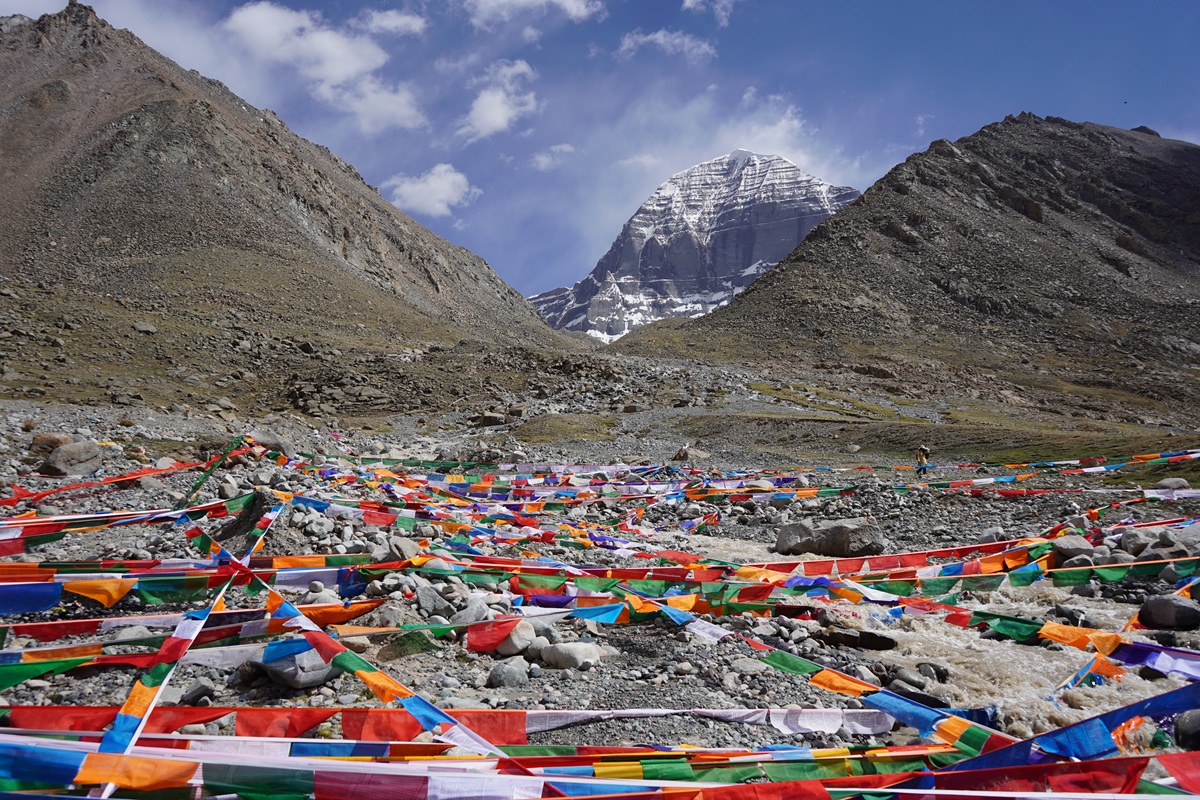
10:30 - 11:00 AM - At Dolma La Pass, thousands of prayer flags blanket a huge boulder known as the Dolma Rock, considered the abode of the Goddess Tara (Dolma in the Tibetan language, Durga in the Hindu faith)—time allowed for a photo stop & quiet reflection. Don’t linger long, as the combination of high altitude and cold poses a real risk at the pass.
11:00 AM - 2:00 PM - Long steep 600 m descent to the floor of the Lham-Chu valley. Descent over the loose stones impacts heavily on your knees; trekking poles are indispensable.
2:00 - 3:00 PM - Arrival at the guesthouse in Zuthul Puk (4790 m). Big Meal, Rest and medical examination.
Note: Anyone with signs of High Altitude Cerebral Edema (HACE), clumsiness, or severe headache which is unrelieved should descend the moment possible. The descent path from the pass goes one way; there are no good alternatives to turn around once you’ve committed to the final summit rise.
About Dolma La Pass and Its Spiritual Significance
Dolma La, perched at 5,636 meters, marks the highest point of the entire Kora circuit around sacred Kailash, and is also considered one of the most spiritually charged sites of a Himalayan pilgrimage.
Dolma La translates as "Tara's Pass" Dolma is the Tibetan name for Tara (often venerated as the female Bodhisattva of compassion and compassion). A giant rock at the summit of the pass, where millennia of pilgrims have placed thousands upon thousands of draped prayer flags, is known as Dolma Rock, and this serves as the central focus for rituals for passage.
Zuthul-Puk Monastery is at 4,790m, and it translates to 'miracle cave', relating to a competition once contested between Milarepa and the BON master Naro Bonchung for spiritual supremacy of the holy mountain Kailash.
With what is, without question, the best-known of the Tibetan accounts, Buddhist authority on the sacred mountain finally prevailed, with Milarepa miraculously triumphing. The Monastery is a small and remote complex, but, despite its relative isolation, it is still an active monastery attended by residing monks who always greet pilgrims.
Day 10: Zuthul-Puk to Darchen, Drive to Saga (4,450m)
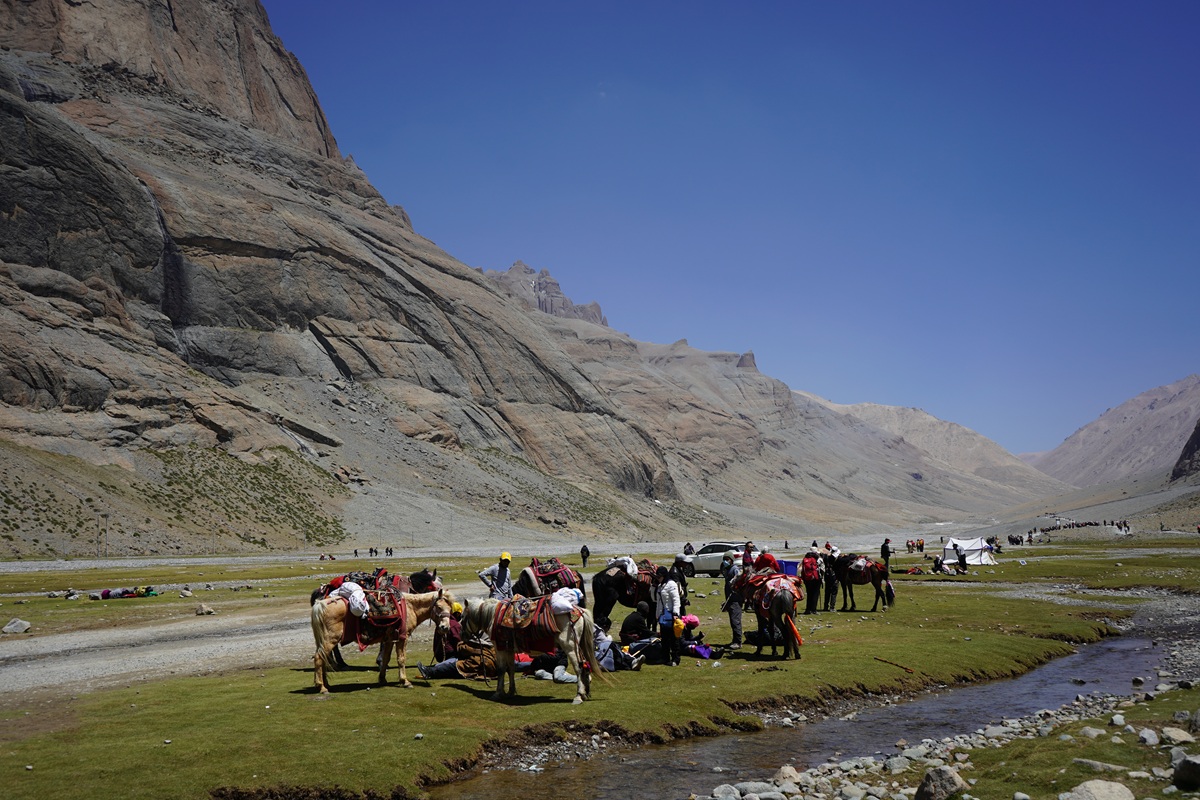
Poney We hired for Kailash Kora
Duration: Short Trek followed by Long Drive
Accommodation: Guesthouse in Saga, Tibet
Distance: Approximately 8 km trekking, then 350 km by road
Today marks your day of completion. An 8-kilometre descent from the Zuthul-Puk monastery down to the dusty town of Darchen, to finish the 52-kilometre Kailash Kora, completing the experience in ways that are hard to imagine until you do them.
This drive back to Saga traces the same high plateau and rock-strewn plains as was covered to get there, but with a perspective forever changed by what lies behind you.
Zuthul-Puk to Darchen and Drive to Saga: Highlights and Timing
7:00 AM - Wake up at Zuthul-Puk. Noticeably easier breathing than yesterday morning due to the significant altitude descent from Dolma La
7:30 AM - Breakfast and final packing at the guesthouse
8:00 - 11:00 AM - Last of the kora descent to Darchen along Lham-Chu River, with Gyangdrak Monastery located on the mountainside to the right bank of the valley
11:00 AM - 12:00 PM - Travel back to Darchen. Kora completed. Get back luggage from the guesthouse, and get back to Land cruisers.
12:00 - 1:00 PM - Lunch in Darchen. This meal seems unusually profound today; take your time and savor each morsel.
1:30 PM - Departure toward Saga
6:00 - 7:00 PM - Arrival in Saga. Dinner and rest
About Gyangdrak Monastery and Kora Completion
Gyangdrak Monastery is an old monastic site situated on the mountainside down at the end-most slope of Lham-Chu valley. It’s a prominent monastery in the Kailash area, and it is associated with Drigung Kagyu Tibetan Buddhism’s sub-sect.
The monastery has an important traditional administrative role as headquarters of Kora (circumambulation) for the holy circuit of Kailash, and a small community of monks still resides here, which is located at a height over 4800 metres above sea level.
Physical as well as mental effects of a full Kailash kora are well documented regardless of faith and ideology.
For high-altitude pilgrims, researchers have found that the stress created by the physiological factors of extreme exertion, the limitations on the senses associated with an isolated plateau and the consistent practice of religious observance results in demonstrable changes in perceived relative worth and methods of thinking.
The process of completing a kora gives many pilgrims - from their individual worldviews, whether that’s their own world of experience or their wider, organized view of religion - a new clarity of priorities, often to their great surprise prior to commencing.
Day 11: Saga to Kyirung (2,800m)
Completing Kora and Reachinf Mount Kailash Again
Duration: Full Travel Day
Accommodation: Guesthouse in Kyirung, Tibet
Distance: Approximately 480 km by road
The reverse journey across the Tibetan Plateau takes the same road (Day 05 - west to east). The time and the mileage are the same, but the sense of occasion is the antithesis. The dread of altitude, and the expectation you carried on the way out to the west, have gone.
What is usually experienced, on return, at once, by all returning pilgrims is a stillness.
Saga to Kyirung: Highlights and Timing
7:00 AM - Departure from Saga to Kyirung
7:00 AM - 12:00 PM - Driving over Changtang grasslands - the same kiangs, the same enormous sky, the same checkpoint towns roll by, but you see them in a new way after Kailash.
12:00 - 1:00 PM - Lunch at teahouse
1:00 - 4:00 PM - More eastwards driving on the plateaus. We will see some green vegetation as we get close to the Kyirong Valley.
4:00 - 5:00 PM - We descend into the valley of Kyirung. We’re back through the green forest, back with running water - an overwhelming shift of emotion after ten days plateau hiking.
5:30 - 6:00 PM - Arrival in Kyirung town. Check into guesthouse
Evening - Dinner time.
Note: Back to the 2800m elevation of Kyirung, oxygen saturations within hours improved upon getting back down to this height (down off the plateau). Tonight’s sleep is going to be better than any time since we left Nepal.
About Returning Through Kyirung Valley
When you are on your way back to Nepal, the Kyirung Valley has special meaning to high-altitude pilgrims, as this is the first true change in elevation and environment you’ll encounter in a great deal of time after being on the high plateaus.
For many pilgrims, the return of trees, sounds of birds singing, water running, and nighttime temps over freezing is a sensory re-immersion they do not appreciate until they get there.
The restaurants in Kyirung town have considerably better and more varied cuisine than you'll have a great deal of on your route down from the plateaus; fresh vegetables, an egg, and Chinese noodle cuisine can all seem incredibly exciting after days of tsampa and packet noodles.
And it’s a great, not insignificant point; refueling your body in Kyirung helps your body manage the crossing of the border the following day and your bus ride back to Kathmandu, and better quality sleep after extreme physical exertion at extreme elevation needs no explanation as to how recuperative you'll find it compared to a night on the plateaus.
Day 12: Kyirung to Kathmandu (1,400m)
Memorable Kailash yatra
Duration: Full Travel Day
Accommodation: Hotel in Thamel, Kathmandu
Distance: Approximately 30 km inside Tibet to border, then 170 km Kathmandu
It is your last border crossing and the final real driving day of the yatra. You’ll leave the Yarlung Tsangpo Valley via the Kerung-Rasuwagadhi border, enter Tibet one last time, turn around for the walk down into Nepal, and drive south back towards Kathmandu through the Langtang corridor. It's quite an altitude shift from over 2,800 metres to 1,400 metres over hours of gentle driving that is surprisingly quick and welcome relief to your system.
Kyirung to Kathmandu: Highlights and Timing
8:00 - 9:00 AM - Chinese entry formalities at Kerung immigration. The officer checked my exit stamps from my group visa and Tibet Travel Permit at Kerung Customs in China. Any equipment like cameras or mobile cameras was searched at this checkpoint to ensure no pictures of prohibited entities were stored in visible locations.
9:30 - 10:00 AM - Cross Friendship bridge on our way back to Nepal from Rasuwagadhi. (Re-entry immigration process to Nepal for about 20- 40 minute)
10:30 AM - Departure toward Kathmandu
10:30 AM–3:00 PM - Road ride from Dhunche and Trishuli Bazaar. The mountain road patches are still in poor condition. A few pilgrims going back on the trek feel the lag sickness symptoms on the drive: headache, unusual tiredness, irregular moods of adjustment in high altitude. That is normal when you walk down, and this is the usual adaptation.
4:00 - 5:00 PM - Arrival in Kathmandu. Check into hotel
Evening - Dinner at one of the restaurants in Thamel. Ensure you only use clean boiled water or bottled water as a drink. Nothing other than rest for tonight
Note: Do not plan for an international departing flight on the same date. Road conditions to Kathmandu form Rasuwagadhi, together with border delay are not fixed; it can cause of unpredictably long delay which may really jeopardise an same date international flight.
About the Rasuwagadhi-Kerung Border Crossing
Established as the main Nepal-Tibet road for Kailash Mansarovar since 2015 The Rasuwagadhi-Kerung border lies in the gorges of the Bhote Koshi River at about 1,800 m above sea level.
The Nepali side is a Rasuwagadhi site, on which still rests a former Nepali fortification for protection against trade from the north, along with a small immigration point on the Nepali aspect of the Bhote Koshi Gorge in Nepal.
The Tibetan facet is recognized as Kerung, or Kyirong Kou in Mandarin, on which there's been a modern Chinese customs infrastructure subsequent to the upgrading status.
Kathmandu at 1,400 meters is oxygen-rich after twelve days on the Tibetan Plateau and at Dolma Pass. All of our pilgrim clients who returned from Nepal and were in Tibet attest to a richness of the Kathmandu atmosphere where you can literally almost feel how physical it is - the opposite of what we experience on the Plateau.
Your appetite generally returns with a vengeance within 24 hours after arriving at 1,400 meters in Kathmandu, sleep is noticeably deeper, and your resting heart rate will return to baseline within 48-72 hours.
All but one of the pilgrims thought the chaotic, noisy, energetic aspect of Kathmandu would be way more shocking to their systems in reverse after living for two weeks on the Plateau. Give yourself the grace and time and quiet before you allow yourself to be all the way engulfed in Kathmandu.
Accommodation: Hotel in Thamel (checkout before departure)
Distance: Hotel to Tribhuvan International Airport, approximately 6 km
Today marks the official end of your Kailash Mansarovar Yatra. The morning of your departure to your home country (as dictated by the time of your international flight, which may necessitate travelling to Nepal a day before for an overnight flight) is unstructured: the first one since a blank in the calendar, at Kathmandu on Day 01.
Make the morning feel right, rather than in any prescribed format. As you board your return journey on your flight, the physical part of your travels ends, but internally, many pilgrims claim the process continues for weeks.
Departure Day from Kathmandu: Highlights and Timing
Morning (flexible) - First day with no itinerary after almost two weeks. After arriving in Kathmandu afternoon or evening, explore around Thamel; do something without aim. Try some cafes with real espresso for breakfast (with eggs!). Chat with other travelers and discuss plans without any objective.
Late morning - Some optional final buying If they are sincerely on your wish list. Authentic Tibetan singing bowls, Nepali Pashmina Shawls and thangka paintings made in Tibet can be meaningful buys; avoid airport impulse purchases.
90 minutes before departure - The driver will meet you in the lobby of the hotel before checkout time, and escort you to the vehicle for transfer to Tribhuvan International Airport. Our representative will help you for further assistance and onward departure process.
3 hours before international departure - Upon arrival at the airport in Kathmandu, Tribhuvan International Airport, you are required to arrive one to three hours earlier as per your flight timing for International Departure. Manual security check for departure.
Departure - International flight home
Note: At least one evening before, check and reconfirm your airport transfer booking time with the concerned operator of the booking. Kathmandu traffic is erratic, and often the airport road gets congested. Kathmandu airport's time is estimated at least two to three hours prior to your flight.
About Integration After the Kailash Mansarovar Yatra
The psychological effect that the Kailash Mansarovar Yatra imparts extends far into the future after the actual journey concludes. In general, about 9 out of 10 repatriating pilgrims, regardless of cultural and religious affiliations, will note an adjustment of “a few weeks” once back home. Their routine tasks at home will seem equally relaxing as they are void at the same time.
This is often studied with pilgrims who travel to the mountains on religious tours of great altitude.
The radical toll of such rigorous expeditions, along with physiological changes attributed to altitude plus continuous religious practice and a wild lifestyle, combine with altered states of consciousness that stick.
Every Required Document & Permit for the 13-Day Kailash Mansarovar Tour (2026 to 2028)
Since Kailash and Mansarovar are situated in Chinese territory (within the Tibetan Autonomous Region) and along strategically important international borders, each of us international pilgrims has to carry several permits with us.
These will be screened at several checkpoints by Chinese immigration and border guards, as well as Nepalese immigration, the military, military guards, and representatives of the Tibet Tourism Bureau throughout our trek. It goes without saying that you will only be able to proceed if you have the required permits for China and the region.
Chinese Group Visa
The Chinese Group Visa is the basic entry permit to Tibet for those coming from Nepal. Instead of a Chinese tourist visa, a single sheet for the entire group will be issued by the embassy in Kathmandu, and it has to be exactly in line with the travel dates specified on the visa.
Thus, individual travellers are unable to arrange one on their own. It has to be made via a tour operator when your Tibet permits (Tibetan visa permits) are ready.
Where Is It Checked?
Checkpoint
Checked?
Chinese Embassy (Kathmandu)
During processing
Nepal Immigration (Exit at Rasuwagadhi)
May verify
Chinese Immigration (Gyirong/Kerung Border)
Mandatory
Return Exit from Tibet
Usually verified again
Approximate Number of Checks: 2 - 4 times
Processing Time
4 - 7 working days in Kathmandu
Please arrive in Kathmandu at least five working days prior to departure, so that processing can be completed..
Approximate Cost
Government fee $50-125 typically applies to many nationalities. Holders of U.S. and Canadian passports might additionally incur higher surcharges.
Often, it may already be included in the itinerary within package pricing for high-end tour packages.
For more standard package travel, these costs should often also be itemised to the client.
Tibet Travel Permit (TTP)
TTP is the most fundamental travel permit of the Tibet Autonomous region which needs to be applied through registered travel agencies in Tibet. This is issued from the Tibetan Tourism Administration. With this permit, alone (without guides and transportation service provided from the local travel agent) tour is forbidden no matter if you have a valid group visa for China.
Where Is It Checked?
Checkpoint
Checked?
Chinese Immigration at Kerung Border
Yes
Security Check before entering Tibet
Yes
Highway Police Checkpoints
Yes
Hotel Check-in
Frequently
Random Police Checkpoints
Possible
Approximate Number of Checks: 5–8 times
Processing Time
Normally 10 - 21 working days
Passport copy required well before arrival in Kathmandu.
Approximate Cost
Your tour package usually comes with the government fee included.
Independently the government fee is approximately US$80-120 though solo travelers will not be able to buy for themselves.
Alien's Travel Permit
The Alien's Travel Permit (ATP) is needed for access to restricted areas in Tibet - Mt Kailash, Lake Mansarovar and Ngari prefecture, which PSB issues once your Tibet Travel Permit is processed, and this will be arranged by your travel agent.
Where Is It Checked?
Checkpoint
Checked?
Saga Security Checkpoint
Yes
Entry into Ngari Region
Mandatory
Darchen Police Check
Often
Kailash Region Security Check
Yes
Approximate Number of Checks: 3–5 times
Processing Time
Travel documentation will be coordinated with booking the trip by the agency for or on tour with.
Approximate Cost
Normally included in the package.
Standalone administrative value is roughly US$10–20.
Military Permit
As both Kailash and Mansarovar are quite near the borders with other nations, the travelers need to be equipped with a Military Permit as well. Such a military permit is granted via your travel agency in the related country by army officers, and it cannot be arranged independently by an individual directly.
Where Is It Checked?
Checkpoint
Checked?
Entry into Ngari (Ali) Region
Mandatory
Military Checkpoints
Yes
Border Security Checkpoints
Yes
Selected Highway Checkpoints
Possible
Approximate Number of Checks: 2 - 4 times
Processing Time
5-20 working days normally to complete subject to visa and subject to travel season.
Approximate Cost
Usually included in all organized tour packages.
Estimated administrative value: US$5–15.
Passport Requirements
Your passport is the single most personal travel document that you will carry during your entire pilgrimage.
Passport Requirements
Valid for at least 6 months from your travel date
Minimum 2 blank visa pages
Good physical condition (no major damage)
Must match all permit information exactly.
Where Will Your Passport Be Checked?
Kathmandu hotel during visa processing
Chinese Group Visa application
Nepal Immigration
Chinese Immigration
Hotel check-ins throughout Tibet
Police checkpoints
Return immigration
Approximate Number of Checks: 8–15 times
Cost
No additional fees apply, except your country’s actual costs to replace it with the passport authority.
Medical Certificate
Despite variations between operators and country of origin, the majority of organised Kailash Mansarovar tours ask for this to travel because the high-altitude destination exceeds 5,600 meters, you prove that you are medically able to withstand it, and in turn assess the risk level.
What Should the Certificate Include?
General health assessment
Blood pressure
Heart and lung examination
Fitness for high-altitude travel
Doctor's signature and hospital stamp
Where Is It Checked?
Location
Checked?
Tour Operator (Kathmandu)
Yes
During permit processing (if requested)
Sometimes
Before departure briefing
Often
Approximate Number of Checks: 1–2 times
Approximate Cost
Generally between USD $20 - USD $100 depends on which country hospital, and testing is necessary
Who Will Assist You During the 13-Day Kailash Mansarovar Tour? (Guide, Porter and Horse Services)
Professional Nepali Tour Leader and Sherpa Support Team
Your adventure starts in the capital of Nepal, Kathmandu. After your arrival, you'll meet a qualified Nepali guide and Sherpa who will stay with you right to the border and coordinate all aspects of your journey from there onwards.
Their responsibilities include:
Airport pickup and hotel check-in
Chinese Group Visa processing
Pre-departure briefing
Liaison of Permits & Traveling Documents
Handling of Baggage Facilities
Assistance during the Immigration processes
Assistance with baggage transfer from a Nepali to a Tibetan Vehicle at Kerung Border
Daily co-ordinating with the Tibetan Guide and Driver
Emergency communications link-up between Nepal and Tibet
Tour conductors should lead the Kailash Manasarovar trekking tours with at least 5-20+ years of experience, and the tour director should ideally be fluent in English, Nepali and Hindi.
Some of our tour leaders come with expertise in the management of high-altitude travelling, including knowledge of First Aid for remote Himalayan expedition challenges.
While not a requirement, several tours from premium tour organizers will insist that senior trekking staff have qualifications in Wilderness First Aid, CPR and/or comparable certifications, the scope and comprehensiveness of which depends on the tour organizer.
Licensed Tibetan Guide Throughout Tibet
Once we have passed the Kerung (Gyirong) Border, you will meet your own licensed Tibetan guide who will remain with us for our tour in the Tibet Autonomous Region.
International travelers to Tibet under Chinese guidelines must always employ a government-accredited Tibetan tour guide. These guides all have Tibet tour guide permits (issued by the regional authorities and considered official guides in Tibet).
They are allowed to escort overseas clients through certain border areas, including Saga, Lake Mansarovar, Darchen, Mount Kailash and some remote regions.
Your Tibetan guide will:
Permit & check at security points
To inform the hotel about the guest's arrival
Liaison between local Tibetan officials & us.
Introduce Tibetan culture & its religion, Buddhism and the Bon religion.
To guide you throughout the Kailash Kora.
Coordinate emergency service & health care in case of need.
Manage transportation on daily trips & the daily schedule.
Assist you in translation between Tibetan, Chinese & English
Our Tibetan guides have, on average, 8 to 20 years of experience and guidance of international religious delegations of pilgrims and knowledge of the Kailash Kora, adjustment to altitude and also of all temples and sacred spots.
Generally they have a command of Tibetan and Mandarin Chinese, along with understanding of written and also speaking in English with some knowing in Mandarin Indian by providing several tours in Hindi.
Porter Service During the Mount Kailash Kora
While your Overland transport is finished by vehicle, the 52 km journey around the Mount Kailash Kora requires you to complete it on foot unless you pay for additional support.
A porter helps to carry your personal duffel bag or rucksack throughout the three days so that you only have to walk with your own small daypack carrying necessary supplies, including water, food, snacks, medicine and your warmer layers.
Porters generally carry:
Backpack or duffel bag
Extra clothing
Sleeping bag
Personal items
Camera equipment
They do not carry people or provide medical assistance.
Porter Cost
Typical charges are:
CNY 1,200 - 1,500 per porter for the complete 3-day Kora.
It is paid for by you directly in Tibet; It’s unlikely this will feature in standard tour packages.
Tibetan Yak - The Traditional Pack Animal of the Kailash Kora
Tibetan yaks are the symbol of the Kailash Kora and the original pack animals of the Tibetan highlands. They are suited in the altitude of above 4,500m and able to carry not just backpacks, trekking gear and group-luggage, but all kinds of duffels and expedition camping equipment through paths, trails where cars can't reach.
Yaks don't ride the pilgrims in Mount Kailash, their strength, stamina and sure-footedness are more efficient in snow, loose rock and thin air over the Tibetan plateau.
Hiring Cost
Around USD $10–USD $20 per yak per day, which amounts to CNY 1,050 per yak for the entire Kora (3 days).
Each Yak Can Carry
30 - 40 kg (66 - 88 lbs) of luggage
Duffel bags
Sleeping bags
Camera equipment
Personal trekking gear
When You Hire a Yak, You Get
One pack yak
Loading and unloading assistance
Transport of your luggage between overnight stops
Note: One generally needs at least two yaks, as they are seldom let out to pasture alone and are usually herded.
Yak or Horse (Pony) Hire for the Kailash Kora But Once Hired refund is Not Possible
Riding Horses (Tibetan Ponies) for the Mount Kailash Parikrama
If walking the Kailash kora of three days is strenuous for you Tibetan ponies (horses) to hire them the whole round you can do. These hardy mountain horses are skilled at travelling through high mountains and can give the rider a ride along a good deal of the trek.
As ponies do not travel on some of the steep passes, particularly about Dolma Pass (5,645 m), the pony trek must then continue on foot.
Hiring Cost
Approximately US$15–25 per day
The whole package for Kora would cost about 3500 - 4000 CNY, subject to season and local prices..
When You Hire a Horse, You Get
One Tibetan pony
One dedicated horseman (handler)
Assistance with mounting and dismounting
Support throughout the 3-day Kora
Mules Used for Carrying Supplies During the Kailash Yatra
Though not as common as yaks or Tibetan ponies, local logistics outfits use a few mules to carry rations and cooking gear along parts of the trip where the paths are fit.
Pilgrims usually do not engage mules for themselves, and these are generally used for logistics purposes rather than being personal pack animals.
Typical Use
Group supplies
Kitchen equipment
Camping materials
Extra expedition luggage
Hiring Cost
Typically arranged with your local travel logistics expert.
Individual pack horses/mules cannot usually be hired; price by request..
Donkeys as Alternative Pack Animals on Certain Sections of the Route
In the smaller villages and some lower-altitude valleys on the Kailash, you may well find some donkeys, but they carry only a minimal load. Donkeys are not as prevalent as horses or yaks, and you are more likely to find a donkey that is native to the region. Donkeys are not utilized in transporting pilgrims around the Kora of Mount Kailash.
Typical Use
Small bags
Food supplies
Local transport of light equipment
Hiring Cost
No fixed standard rate.
Charges depend on the local owner and seasonal availability.
Yak Keepers (Yak-Men) - Professional Handlers for Your Luggage
There’s a rule of thumb: all hired yaks for the Kora must come with a Yak Keeper or Yak-Man. These are experienced Tibetan locals who will drive the yaks, load your gear on them securely and help lead them up the trail. As yaks are large animals used to the mountain climate, we are not allowed to interact with them ourselves. One Yak-Man can usually handle about three yaks.
Yak Keeper Charges
Approximately US$10 - 20 per day
Around CNY 1,150 for the full 3-day Kora (depending on local rates).
When You Hire a Yak Keeper, You Receive
Professional yak handling
Loading and unloading of luggage
Keeping safe control of the animals during the entire trek
Transporting all your belongings to each guest house
Helping you pack and unpack the donkey at the beginning and the end of the trek
Horsemen - Dedicated Handlers for Riding Horses
You will always have a professional rider, groom, or driver when riding a pony (horse) on Mount Kailash Kora. These locals from Tibet know where and how to control the pony and how to find the most appropriate trail for you to follow.
They are responsible for picking you up on the horse or dropping you off when you get off the horse.
You cannot ride a horse without a handler, and you can only cover certain portions of Mount Kailash Kora by horse. This section of the Kora passes through steep mountain passes with the use of treacherous and rocky roads, a handler always escorts the horse.
Horseman Charges
Approximately US$10 - 20 per day
Approximately CNY 1,150 for the full 3 days trip for the Kailash Kora (the prices can be a little different per season)
When You Hire a Horse, It Includes
One Tibetan riding horse (pony)
One dedicated horseman
Assistance throughout the whole journey of Kora
Horse care, feeding and trails
Help during the challenging ascents and descents .
Important: Horses can be used for some but not for negotiating the precarious descent from Dolma La Pass (5,645 m). All pilgrims are required to get off their mounts and walk for a section before getting on for part of the next section of the walk downhill.
Mule Handlers - Managing Supply Animals on the Trek
While you see yaks and Tibetan ponies during Kailash Kora (circumambulation), you do sometimes see local logistics teams use mules to carry food rations, cooking pots and other utensils, camping items, fuel, and other necessary materials for the trekking group.
There is a professional mule handler who is responsible for each animal - for the equipment carried on it, walking the animal up the path, overseeing its well being and ensuring the food etc.
The services of the handler (as opposed to just the mule) are usually not contracted by pilgrims directly but by the expedition or team support staff.
Mule Handler Charges
Typically included in the logistics/expedition costs.
If hired locally, then this cost varies according to the specific route, time of season, availability, etc.
When Mule Services Are Used, They Include
One trained mule handler
To transport supplies of the expedition (loaded and unloaded).
To ensure the food and equipment are delivered.
To take group logistic information from one camp or guesthouse to the others every day.
To take the mule of the trek throughout the whole trekking tour.
Note: Mules (as opposed to horses) are almost exclusively used in the operation to carry equipment and supplies, and this component makes it a crucial one in many organized trips to the Kailash.
Where Can I Stay Before and After the 13-Day Kailash Mansarovar Yatra?
Your official 13 Day Kailash Mansarovar Tour begins the day you arrive in Kathmandu and concludes on the day of your departure from Kathmandu. Travel and stay prior to tour commencement, and post tour conclusion, are typically not part of standard packages.
The reason for this is that a good many of our esteemed guests take several days to reach Kathmandu prior to the actual pilgrimage trip to permit adequate time for visa completion, sightseeing, shopping, and prior resting, just as others prefer to rest on their post-pilgrimage days prior to departure.
If this is your first tour to Nepal, do not worry for Nepal a country providing numerous hotels from cheap guesthouse, basic guesthouse up to world best 5 star luxury, of which mostly concentrated around the Thamel, Lazimpat, Durbar Marg, Boudha, Naxal regions etc.
They are conveniently situated within walking distance from restaurants, trekking agencies, ATM centers, hospitals, and prime attractions; these will be the most favorable to rest before and after your Kailash pilgrimage tours.
Luxury Hotels (5-Star)
If you’re searching for high-end comfort and top facilities, either for pre and post-pilgrimage leisure or relaxation, the hotels listed are the ultimate luxury choices for you.
Hotel
Best For
Hotel Yak & Yeti
Heritage luxury, central location
Aloft Kathmandu Thamel
Modern luxury in Thamel
Hyatt Regency Kathmandu
Luxury near Boudhanath (check current operating status before booking)
Typical facilities include:
Spacious luxury rooms
Multiple restaurants
Spa & wellness center
Swimming pool
Fitness center
Airport transfers
Concierge service
International dining options
Note: Hyatt Regency Kathmandu is temporarily closing, so ensure to check the status prior to booking a stay there.
Mid-Range Hotels (3 to 4 Star)
The hotel has a comfortable and budget-friendly price. It caters to lots of foreign customers.
Some recommended options include:
Fairfield by Marriott Kathmandu Thamel
Hotel Mulberry
Kumari Boutique Hotel
Hotel Barahi Kathmandu
Thamel Boutique Hotel
Most offer:
Comfortable rooms
Complimentary breakfast
Free Wi-Fi
Airport pickup (optional)
Restaurant
24-hour reception
Walking distance to Thamel markets and restaurants.
Budget Hotels & Guesthouses
There are numerous clean and inexpensive hotels in Kathmandu if you arrive early to process your visa or spend a few nights in Kathmandu before or after the tour.