Why You Should Visit Pashupatinath Before You Go for Mount Kailash Yatra?
Visiting the Pashupatinath Temple in Nepal before the Mount Kailash Mansarovar Yatra is an important spiritual experience for Hindus, representing the onset of their meditation journey. Pashupatinath is the most important shrine for Hindus and is situated on the banks of the holy Bagmati River in Kathmandu. In the Hindu religion, this place is considered to be extremely sacred due to the reason that mount kailash is said to be the home of lord shiva.
1. Begin Your Kailash Yatra With Lord Shiva's Darshan
Pashupatinath holds great significance to Shiva worshippers all over the globe. Pilgrims can worship the revered Shiva Lingam and move ahead on their Journey with their own spiritual purpose called Sankalp. The temple is recognized as a UNESCO heritage site because of its religious significance.
2. Connect Pashupatinath With Shiva's Sacred Himalayan Abode
Understanding the connection is easy: Pashupatinath represents the image of the Lord Shiva in the form of the deity worshipped in the temple, while Mount Kailash has always been revered as the sacred abode of Lord Shiva. Therefore, the entire Journey is about praying before Shiva, and then moving into the Himalayan surroundings associated with him.
3. Prepare Yourself for a High-Altitude Pilgrimage
Kailash Yatra or Kailash Mansarovar Yatra is a hard pilgrimage; traditional Kailash Parikrama goes up to 5,630 meters (at Dolma La Pass). Therefore, starting with praying at Pashupatinath would equip a devotee mentally for the tough yatra that lies ahead.
4. Continue From Pashupatinath to Mansarovar and Kailash
The spiritual advancement of the pilgrimage becomes profound when traveling from Pashupatinath → Tibet → Lake Mansarovar → Darchen → Kailash Kora. Hence, Pashupatinath can be a pious beginning of one’s journey to Mansarovar and a way to the holy circumambulation of Mount Kailash.
Sacred Places of the Kailash Yatra and Their Connection With Pashupatinath
|
Sacred Place
|
Why It Matters in Kailash Yatra
|
Connection With Pashupatinath
|
|
Pashupatinath Temple
|
Shiva worship & blessings
|
Starting point of devotion
|
|
Kerung
|
Gateway toward Tibet
|
Himalayan transition after Kathmandu
|
|
Saga
|
Major pilgrimage halt
|
Journey deeper into sacred Himalaya
|
|
Lake Mansarovar
|
Sacred lake of Kailash
|
From Shiva worship to sacred waters
|
|
Rakshas Tal
|
Sacred lake beside Mansarovar
|
Shiva–Ravana traditions
|
|
Darchen
|
Base of Kailash Kora
|
Gateway to Shiva's sacred mountain
|
|
Yam Dwar
|
Beginning of Kora
|
Spiritual entry into Kailash Parikrama
|
|
Dirapuk
|
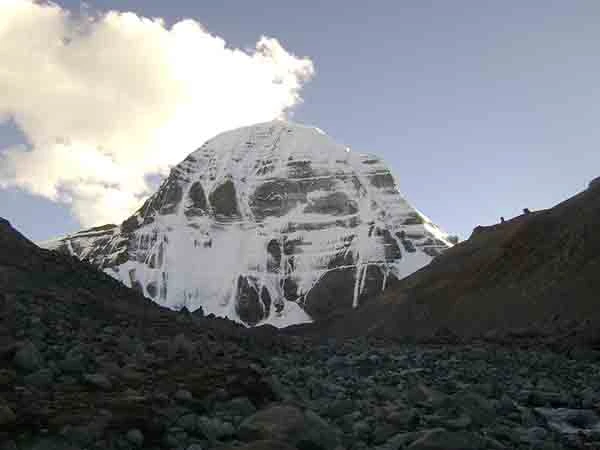
North Face of Kailash
|
Closer view of Shiva's sacred abode
|
|
Shiva Sthal
|
Symbolic place of letting go
|
Spiritual transformation
|
|
Dolma La Pass
|
Highest point of Kora
|
Faith, surrender & transformation
|
|
Gauri Kund
|
Associated with Goddess Parvati
|
Shiva - Parvati connection
|
|
Zutulpuk
|
Sacred monastery & meditation site
|
Spiritual reflection after Dolma La
|
|
Mount Kailash
|
Heart of the pilgrimage
|
Traditional abode of Lord Shiva
|
|
Kailash Kora
|
Circumambulation of Kailash
|
Devotion expressed through Parikrama
|
What Is the Connection Between Pashupatinath and Mount Kailash?
Both are associated with Shiva. Pashupatinath is a Hindu temple and shrine in Kathmandu. Lord Shiva is worshiped there in his representation as the Shiva Linga.
The sacred Pashupati Area Development Trust, responsible for protecting the Pashupatinath temple, states that the site serves as the focal point of Hindu devotion and mentions Pashupati as a major expression of Shiva.
Pashupatinath: A Sacred Temple of Lord Shiva
Pashupatinath has special importance for Hindu visitors because they come here to pray, to worship God and to see Shiva. This temple is located next to the holy river Bagmati and is still a place of worship for people, not just a historic site.
Mount Kailash: The Sacred Abode of Shiva
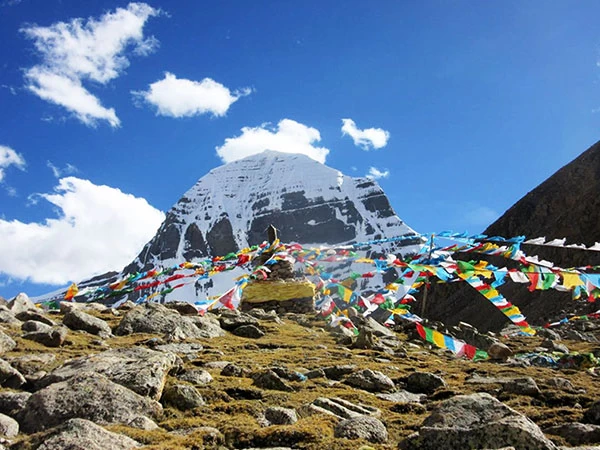
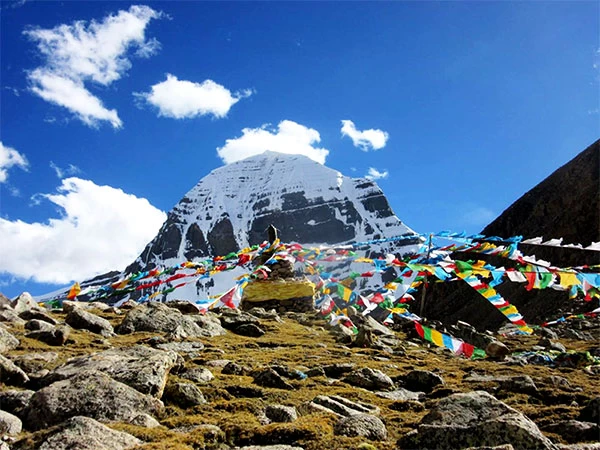
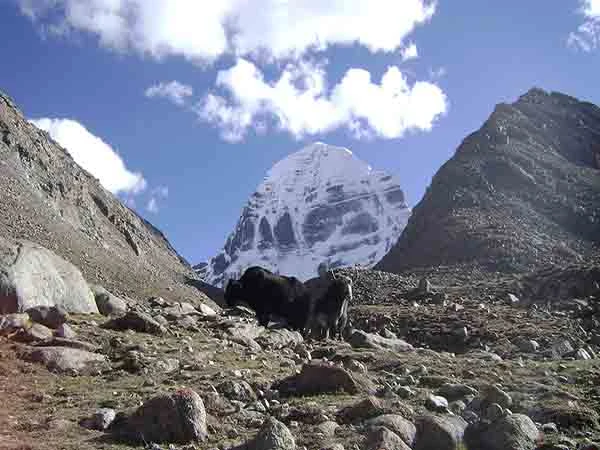
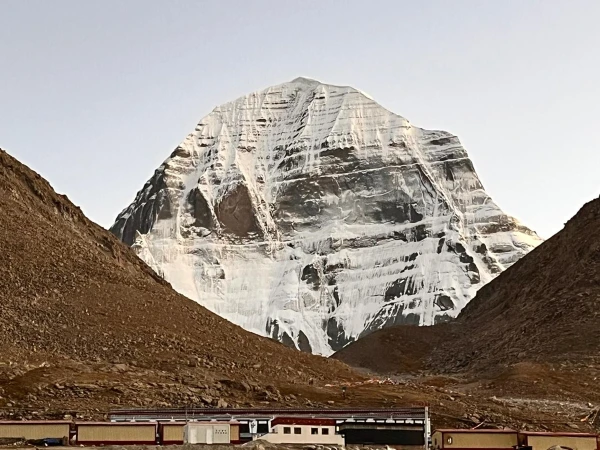
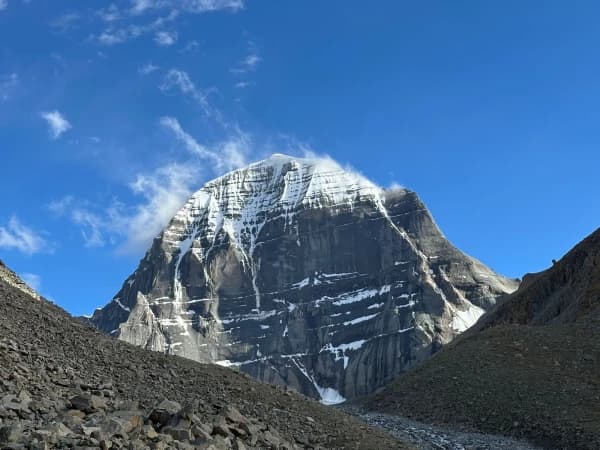
Mount Kailash is considered the other, yet equally important place in Hinduism, as it is known as the holy place of God Shiva. This mountain therefore becomes the place to which devotees come on pilgrimage.
From Pashupatinath to Kailash
There is some significance to speak about the link between the two. Pashupatinath is where people pray to Shiva, while Kailash is the mountain where Shiva’s residence is. Therefore, starting the Yatra with visiting Pashupatinath and continuing with Lake Mansarovar, Darchen, and Kailash Kora seems to be a sequence of the trip where people travel from praying to Shiva and visiting the mountain of God.
Pashupatinath, Lake Mansarovar and Mount Kailash: Exact Locations, Coordinates
Pashupatinath Temple Location
Pashupatinath Temple lies in the Kathmandu District of Bagmati Province in Nepal on the western bank of the Bagmati River. This is the initial sacred place on this list; it is a holy site associated with Pashupati, a form of Lord Shiva. The approximate map coordinates are 27.7107 N, 85.3481 E, and it has an altitude of 1313 meters (4308 feet) above sea level.
- Country: Nepal
- Province: Bagmati
- City: Kathmandu
- Latitude: 27.7107° N
- Longitude: 85.3481° E
- Elevation: ~1,313 m
- River: Bagmati River
- Significance: Major Hindu Shiva pilgrimage centre
Lake Mansarovar Location
Lake Mansarovar is situated in Purang County in Ngari Prefecture of Tibet Autonomous Region of China, near Mount Kailash. It is one of the major holy places of Kailash Mansarovar Yatra. The lake is situated at a height of approximately 4585 meters (15040 feet) above sea level. Coordinates of the lake vary according to the point selected. One of the commonly stated points is 30.68734° N 81.47916° E.
- Country: China
- Region: Tibet Autonomous Region
- Prefecture: Ngari
- County: Purang/Burang
- Latitude: ~30.6873° N
- Longitude: ~81.4793° E
- Elevation: ~4,585 m
- Significance: Sacred lake of the Kailash pilgrimage
Mount Kailash Location
Mount Kailash is located in Ngari Prefecture, Tibet Autonomous Region, in China and belongs to the Gangdise mountain range. Its location is given as 31.0678° N, 81.3119° E, elevation 6,638 meters (21,778 ft). The country is China.
- Country: China
- Region: Tibet Autonomous Region
- Prefecture: Ngari
- Latitude: ~31.0678° N
- Longitude: ~81.3119° E
- Elevation: 6,638 m
- Mountain range: Gangdise
Significance: Sacred mountain and abode of Lord Shiva
In geographic terms, Pashupatinath is in Kathmandu, Nepal, while Mansarovar and Kailash are in Ngari, Tibet, and the pilgrimage connects them due to their religious significance, according to the Yatra route based in Kathmandu and not regarding their location or geography.
Pashupatinath Is in Nepal and Mount Kailash Is in Tibet - So Why Visit Both on the Same Yatra?
Though Pashupatinath and Mount Kailash belong to two different places in two distinctive areas, they can still form a very strong spiritual order for the traveler from the Hindu faith. Pashupatinath Temple is situated in Kathmandu, Nepal, on the shores of the beautiful river Bagmati, while Mount Kailash can be found in Tibet, far inside the Himalayas.
|
Place
|
Location
|
Approx. elevation
|
Spiritual role
|
|
Pashupatinath
|
Kathmandu, Nepal
|
~1,400 m
|
Shiva worship & darshan
|
|
Lake Mansarovar
|
Tibet
|
~4,590 m
|
Sacred pilgrimage lake
|
|
Darchen
|
Tibet
|
~4,670 m
|
Kailash Kora base
|
|
Mount Kailash
|
Tibet
|
~6,638 m
|
Sacred Himalayan mountain
|
Thus, the significance has nothing to do with geographical location. Pashupatinath is at the beginning of the pilgrimage, and Kailash is located in the Himalayas. A pilgrim can start the trip from Kathmandu, visiting Pashupatinath to seek blessings from Shiva and go to Tibet, then to Mansarovar and the Kora around Kailash.
Such differences make the journey special: Pashupatinath is a working temple in Nepal while Kailash is a holy mountain in Tibet. Distances and change of the landscape make up the process of the pilgrimage itself, starting from the temple visit in Pashupatinath, then going to Mansarovar and to the Kora.
Is Pashupatinath the Starting Point of the Kailash Mansarovar Yatra?
While Pashupatinath can be referred to as a sacred starting point for pilgrims undertaking the Kailash Mansarovar Yatra from Kathmandu, it is not an official beginning point for the journey. Therefore, it should be noted that the starting point and the route vary depending on your itinerary, border crossing, and traveling arrangements.
Pashupatinath as the Spiritual Starting Point
For Hindus, the visit to the Pashupatinath temple gives them a chance to seek the blessings and blessings of Lord Shiva before undertaking the challenging Himalayan pilgrimage. Since Pashupatinath is one of the leading places of pilgrimage for Shaivites in Kathmandu, it is naturally seen as a devotional start of the Yatra for most pilgrims.
Therefore, a private itinerary for the Kailash pilgrimage from Kathmandu can include a Darshan at the Pashupatinath temple.
The Official Kailash Yatra Starts According to the Route
In terms of logistics for the trip, it should be noted that Pashupatinath is not, in fact, a necessary stop on the way to entering Tibet. For those travelling through Nepal, the route may involve crossing into Tibet at a place like Rasuwagadhi/Kerung or another location, depending on the status of the international border and operational matters.
As specified by the Embassy of India in Kathmandu, pilgrims must also be in possession of the necessary Chinese visa and Tibet Travel Permit, as well as the relevant Nepal restricted area permit.
So, Do You Have to Visit Pashupatinath Before Kailash?
You don't have to. Pashupatinath is a religious site but is not a must-visit spot for anyone taking the trip. However, if you go on a Kailash Yatra from Kathmandu, making a visit to Pashupatinath beforehand can be an amazing experience: Pashupatinath → Nepal–Tibet border → Mansarovar Lake → Darchen → Kailash kora.
How Far Is Pashupatinath Temple From Mount Kailash?
Pashupatinath Temple and Mount Kailash are located at quite some distance from each other. Pashupatinath is located in Kathmandu, Nepal, while Mount Kailash is situated in Ngari Prefecture, western Tibet, China. The entire journey is carried out through the Himalayan range and therefore is longer rather than shorter. Pashupatinath is located at around 27.7107° N, 85.3481° E, and Mount Kailash is approximately located at 31.0678° N, 81.3119° E.
While undertaking a Kathmandu–Kerung Kailash Yatra, one has to travel through the Nepal–Tibet border, Kerung, Saga, Paryang, Lake Mansarovar, Darchen, and finally to Kailash Kora. Therefore, the distances given below should only be seen as approximate travel distances. The Kailash Kora measures about 52 km long, with Darchen as the starting point and Yam Dwar as the traditional starting place for walking.
|
Sacred Place / Yatra Point
|
Location
|
Approx. Distance From Pashupatinath
|
Role in Yatra
|
|
Pashupatinath Temple
|
Kathmandu, Nepal
|
0 km
|
Spiritual beginning
|
|
Kerung Border
|
Tibet - Nepal border
|
~170 - 180 km
|
Enter Tibet
|
|
Saga
|
Tibet
|
~500 - 600 km
|
Major acclimatization halt
|
|
Paryang
|
Tibet
|
~750- 850 km
|
En route to Mansarovar
|
|
Lake Mansarovar
|
Ngari, Tibet
|
~1,000- 1,100 km
|
Sacred pilgrimage lake
|
|
Darchen
|
Ngari, Tibet
|
~1,050- 1,150 km
|
Kailash Kora base
|
|
Yam Dwar
|
Kailash region, Tibet
|
~1,060- 1,160 km
|
Kora starting point
|
|
Dirapuk
|
Kailash Kora
|
~1,070- 1,170 km
|
North Face of Kailash
|
|
Dolma La Pass
|
Kailash Kora
|
~1,075- 1,175 km
|
Highest point of Kora
|
|
Gauri Kund
|
Kailash Kora
|
~1,075- 1,175 km
|
Sacred Parvati-associated site
|
|
Zutulpuk
|
Kailash Kora
|
~1,080–1,180 km
|
Final Kora section
|
|
Mount Kailash
|
Ngari, Tibet
|
~1,050–1,150 km
|
Sacred destination
|
Important: This should not be treated as exact GPS distances on the road because actual distances from Pashupatinath depend on the specific itinerary you follow on your trip between Kathmandu and Kerung (road conditions, border clearance, and the particular point of measurement in either location).
The actual distance traveled along the pilgrimage route is much longer than the direct point-to-point distance due to the situation where the road must follow the shape of the Himalayas.
Pashupatinath Temple History With Mount Kailash History
History of Pashupatinath Temple in Nepal
The history of Pashupatinath is composed of archaeological findings, historical records, and Hindu beliefs. The Pashupati Area Development Trust claims that the name Pashupati has its origins in the Vedic tradition and defines Pashupati as “God of living creatures”.
Legends say that the holy Shiva Linga of Pashupatinath was discovered due to a miraculous cow constantly pouring its milk on that certain place. Historical evidence indicates that the Pashupati area had already become a sacred site during the Licchavi era, as there were inscriptions and archaeological findings proving its ancient religious history. According to the UNESCO database, the history of the Pashupati area dates back to antiquity, as the inscriptions from the 5th century AD serve as its first records.
The establishment and upkeep of the temple complex occurred over several eras in Nepalese history. The Licchavi dynasty of kings played a crucial role in the construction of the temple, while the Malla dynasty contributed considerably to its upkeep. The oldest main temple at Pashupatinath is believed to have originated around 1697 CE. Pashupatinath was included on the UNESCO World Heritage List in 1979, thereby confirming its exceptional religious, cultural and historic importance.
History and Sacred Tradition of Mount Kailash
Mount Kailash is different from Pashupatinath in terms of its history. While Mount Kailash matters mainly because of its significance in terms of religious traditions, Pashupatinath’s importance can be described in terms of the building of the temple.
According to Hindu culture, Mount Kailash is believed to be the spiritual abode of Lord Shiva and Goddess Parvati. The Hindu scriptures link the mountain with the meditation and divine presence of Shiva, thus giving the mountain significance in pilgrimage.
However, Mount Kailash has great significance in other traditions as well. In Tibetan Buddhism, this mountain is associated with Demchok, while in Jainism, it represents Ashtapada and the liberation of Rishabhadeva. The Bon tradition ascribed great sanctity to the mountain too.
The Deeper Meaning of the Name Pashupatinath
Pashupati - The Lord of All Beings
The name Pashupatinath comes from the term Pashupati, a title of Lord Shiva whose origins are in the earlier Vedic age. Pashu, which means an "animal" or "a living being", is combined with pata, signifying "a master" or "a lord." According to the Pashupati Area Development Trust, pashu has a deeper philosophical connotation: it refers to an ignorant human bondaged with worldly life, while Pashupati indicates the man who lets his devotees tread the path to wisdom and liberation.
Therefore, Pashupatinath is more than simply the name of a temple. It conveys the essence of Shiva as the one who helps living beings go beyond their ignorance, attachment and worldly limitations.
Shiva Linga - The Central Form of Pashupatinath
This form of Shiva is known as the Shiva Linga and is located right in the center of the Pashupatinath Temple, and is the most important object in Pashupati worship. The Pashupati Area Development Trust mentions that Pashupatinath is one of the forms of Shiva worshipped through the Shiva Linga.
In the description given by Nepal Tourism Board, the principal Jyotirlinga is said to be made of black stone. It has four visible faces in addition to another face looking upwards. Thus, the iconography of Pashupatinath differs from that of the Shiva Linga.
Five Faces - Five Expressions of Shiva
Pashupatinath is depicted in its five-headed form, meaning that this image adds another dimension to Pashupatinath. The five heads are commonly recognized in terms of particular names, which are Tatpurusha, Aghora, Vamadeva, Sadyojata and Ishana. The Pashupati Area Development Trust offers its own definition of these forms by saying that they signify the omnipresence of Pashupati.
In the same way, Nepal Tourism Board links the five forms with their five directions and explains that Ishana signifies the highest point and connects the image of Shiva with the idea of omnipresence.
Shaiva Tradition - A Living Centre of Shiva Worship
The tradition of Pashupatinath forms part of the broader Shaiva tradition, which is a practice of worshipping and revering the God Shiva. The entire Pashupati area is full of shrines, monasteries, and sacred sites, and thus creates a religious complex rather than just an isolated temple. According to the Pashupati Area Development Trust, the area comprises around 264 hectares of land, which houses numerous temples, shrines, and heritage buildings.
Darshan - Seeing and Being in the Presence of the Deity
The act of darshan is significant to those who are pilgrims. It is the view of the divine image and not just looking at it. Devotees come here to offer prayers, do pooja and ask for strength. The Trust mentions that "the people pray and meditate here to get strength and develop awareness".
A Pilgrimage That Extends Beyond Nepal
The significance of the term "Pashupatinath" is an explanation for the reason that devotees come to the temple from places very distant from Kathmandu. Worship of Shiva takes place in the majority of countries in South Asia, and Pashupatinath has become a famous destination for worshippers from the land of the Himalayas, the Indian subcontinent and other places. The establishment mentions that the temple is a place of major Hindu religious activities.
For a pilgrim travelling to Lake Mansarovar, this connotation gets special meaning: the religious beliefs, manifested in the temple of Pashupatinath, could be held along the route to Lake Mansarovar and Mount Kailash.
How to Perform Puja at Pashupatinath for Your Mount Kailash Yatra?
When going to Pashupatinath before the Mount Kailash Mansarovar Yatra, it is important to remember that puja should not be regarded as a means to obtain a certain “advantage” from Kailash. Instead, devotees will turn to worship for gaining the grace of Lord Shiva, spiritual power, protection, and a clear mind before starting their pilgrimage. The Pashupati Area Development Trust points out a number of pujas, such as Panchamrit Puja, Rudrabhishek, Laghurudrabhishek, and Maharudri.
Panchamrit Puja
Panchamrit Puja is listed in the list of the pujas at Pashupatinath. In the case of a pilgrim to Kailash, this puja may serve merely as a sincere offering before setting out on the pilgrimage journey. Currently, the price of the puja at the PADT is NPR 2,100.
Rudrabhishek
Rudrabhishek is a particularly relevant choice for devotees undertaking a Shiva pilgrimage. At Pashupatinath, the official puja schedule includes Panchamrit Puja with Rudrabhishek, allowing devotees to combine the two. PADT currently lists this service with Balbhog at NPR 7,500.
Laghurudrabhishek
The devotees who wish to experience a sophisticated way of worshiping Shiva may resort to Laghurudrabhishek. According to the information provided by PADT, Panchamrit Puja with the Laghurudrabhishek and Purabhog is priced at NPR 15,100. This price is suited for the pilgrims who plan to spend some time in rituals before embarking on their journey to Kailash.
Make a Personal Sankalpa for the Kailash Yatra
While carrying out the puja, there is an opportunity for each pilgrim to make their personal sankalpa, a vow made with utmost sincerity. One may pray for safe travels, enough energy to be physically fit, the necessary spirit to be protected from any other visitors along the way and wish to accomplish the Kailash Kora successfully. According to Pashupati’s description, devotees look for spiritual strength and self-realization through prayer and meditation there.
Seek Darshan Before Leaving Kathmandu
Last, but not least, it is necessary to obtain the darshan of Pashupatinath in accordance with his latest regulations. It should be noted that the idea behind this is not to ensure some miraculous outcome. Instead, it is quite important to start the Yatra with a sense of faith, devotion and humbleness before moving toward Lake Mansarovar and Mount Kailash.
Can You Touch the Pashupatinath Shivling and Mount Kailash During the Yatra?
Can You Touch the Pashupatinath Shivling?
Touching the main Shivling at Pashupatinath is impossible during direct viewing (darshan) because of restrictions imposed on its touch according to the temple's regulations. Nevertheless, certain puja practices might give you a wider opportunity to participate in a puja ceremony, but nevertheless pilgrims should differentiate between only visiting the temple and performing puja services there. There are several pujas according to the official website of Pashupati Area Development Trust, like Panchamrit Puja, Rudrabhishek, Laghurudrabhishek, and Maharudri.
It is worth mentioning that Panchamrit Puja with Rudrabhishek and Panchamrit Puja with Laghurudrabhishek are some of the services available at the Pashupatinath temple. You should check with the Puja Booking Office/Pashupati Area Development Trust whether you would be allowed to touch the Shivling at a particular puja because permission may vary according to the particular service and the present rules of the temple.
Can You Touch Mount Kailash During the Yatra?
Charan Sparsh may be attempted in the Mount Kailash region, subject to the relevant guidelines and regulations applicable within Tibet. Charan Sparsh does not involve actually climbing Mount Kailash; it only means reaching a permissible point near Mount Kailash in the vicinity of the sacred mountain to perform a symbolic touching of feet or Charan Sparsh ceremony.
The normal route to do this is to visit the Kailash pilgrimage region instead of going across the Kora route to reach Mount Kailash, because the area is controlled and sensitive in terms of the environment. Access to this route may be changed or restricted by those in authority because of the present environmental regulations.
Thus, it is recommended to check with your Kailash tour agent and local Tibetan guides before implementing Charan Sparsh and to make sure that it is allowed at the time of your travel, what routes can be used, and if there are any travel restrictions for the time of the journey.
Charan Sparsh Route
Darchen → Yam Dwar → Dirapuk → North Face Trail → Charan Sparsh Point → Return to Dirapuk
|
Section
|
Route
|
Approx. distance
|
|
1
|
Darchen → Yam Dwar
|
Part of Kora approach
|
|
2
|
Yam Dwar → Dirapuk
|
~12- 20 km, depending on itinerary
|
|
3
|
Dirapuk → Charan Sparsh Point
|
~3- 7 km one way
|
|
4
|
Charan Sparsh → Dirapuk
|
Same trail back
|
|
5
|
Dirapuk → Dolma La → Zutulpuk
|
Continue main Kora
|
Are Puja veedhis for Pashupatith and Mount kailash same?
No, the Puja ritual at Pashupatinath and religious rituals in the process of the holy Khelasha and Mansrover Yatra aren't the same. It has same type of connecting Shaiva cult. But rituals, deity practice, methodology, location and rules at the site are different.
|
Point
|
Pashupatinath Temple
|
Mount Kailash Yatra
|
|
Location
|
Kathmandu, Nepal
|
Ngari, Tibet
|
|
Main focus
|
Worship of Pashupatinath/Shiva
|
Pilgrimage around sacred Kailash
|
|
Main ritual
|
Puja, Abhishek, Rudrabhishek, Panchamrit
|
Puja, prayer, Parikrama/Kora
|
|
Shiva Linga
|
Main deity is worshipped as a Shiva Linga
|
No temple Shivling at Kailash for ordinary puja
|
|
Puja booking
|
Formal pujas are available through PADT
|
Rituals depend on the pilgrimage arrangement
|
|
Abhishek
|
Specific Abhishek/Rudrabhishek services available
|
Not the same temple-style Abhishek
|
|
Darshan
|
Darshan of Pashupatinath
|
Darshan of Mount Kailash and sacred landscape
|
|
Circumambulation
|
Temple worship is not the Kailash Kora
|
Kailash Kora/Parikrama is central
|
|
Mansarovar
|
Not applicable
|
Pilgrims may perform prayers/rituals at the sacred lake
|
|
Rules
|
Governed by Pashupati Area Development Trust and temple rules
|
Governed by applicable Tibetan/Chinese regulations and local pilgrimage arrangements
|
At Pashupatinath, people may choose among various religious services on the official Pashupati Area Development Trust list currently provided. These include Panchamrit Puja, Panchamrit along with Rudrabhishek, Lughurudrabhishek, Maharudri, and some other religious services.
The Kailash Yatra is different. Here, the main religious action is the pilgrimage to the lake known as Mansarovar and the mountain called Kailash, followed by the ritual Kora/Parikrama around the holy mountain. In the information by the Government of India about Kailash Mansarovar, it is stated that the Yatra is a religious pilgrimage to the Kailash-Mansarovar area and that Kora is a highly elevated trekking.
To conclude, the simplest distinction could be presented in such a manner:
Pashupatinath = formal practice of Shiva worship and Abhishek
Mansarovar = prayers and sacred lake rituals
Mount Kailash = Darshan, Kora/Parikrama and pilgrimage
Although the religious intention seems to be approximately the same (devotion to Shiva), the actual Vidhi is not the same. In the case of Pashupatinath, puja is conducted within the temple system, and with Kailash, ritual experience is influenced by the pilgrimage way, Tibetan traditions, and restrictions on the Kailash region.
Why Are Both Pashupatinath and Mount Kailash Related to Lord Shiva, and Not Just Other Deities?
The unique link of both Mount Kailash and Pashupatinath with Lord Shiva arises from their unique placement in the Shaiva tradition. Pashupatinath represents a specific manifestation of Shiva, while Mount Kailash has been affirmed as the sacred abode of both Shiva and Goddess Parvati. This does not necessarily mean that other deities cannot be found in both places but indicates that the main God associated with these two places remains Shiva.
Pashupati Is Specifically a Form of Shiva
The term "Pashupati" is one of the names traditionally used to refer to Shiva. The Pashupati Area Development Trust confirms that Pashupatinath is one of the significant forms of Shiva worshiped as a Shiva Linga. The image of the God that has five faces also expresses the variety of aspects of Pashupati.
It is worth noting, though, that the region of Pashupati is not limited to Shiva only. As indicated by the Nepal Tourism Board, there are temples dedicated to other deities as well, such as Bhuwaneshwori, Dakshinamurti or Tamreshwor, among others.
Kailash Is the Sacred Mountain of Shiva and Parvati
Different from any other temple, Mount Kailash is a natural holy mountain. Kailash is recognized as the sacred residence of the divine couple Parvati and Shiva in Hindu mythology. Hence, Lord Shiva becomes the god associated with this mountain, while Parvati, being Shiva's wife, also plays an equal role in Kailash's traditions.
Shiva's Family Is Also Connected With Kailash
Hindu myths linking Kailash also relate to Ganesha and Kartikeya, sons of Shiva and Parvati. So, it would be wrong to say that Kailash is just about Shiva, but that's incorrect; while Shiva is the main character at Kailash, the mountain represents the abode of Shiva's family as well.
The Difference Is in the Religious Focus
Very simply, here's the differentiation:
- Pashupatinath: Shiva as Pashupati is worshiped.
- Mount Kailash: Shiva as the lord who is thought to inhabit Mount Kailash.
- Parvati: Shiva's divine consort, very much related to Kailash.
- Ganesha & Kartikeya: Part of the traditions related to the Kailash family.
- Other deities: Existing within the larger Pashupatinath sacred area and within the wider Hindu tradition of pilgrimage.
In this way, the Pashupatinath-Kailash link is primarily a Shiva-based link. However, Hinduism does allow other gods to exist in the sacred sites. The Pashupati Area Development Trust states that the area, which covers 264 hectares, has several temples, shrines, and monasteries, including Buddhist stupas.
A Spiritual Preparation for the Kailash Yatra Through Pashupatinath
Before starting the Kailash journey, the pilgrims regard their visit to Pashupatinath as spiritual preparation rather than a compulsory prerequisite for performing the Yatra. According to the Pashupati Area Development Trust, this holy site serves as a location for those who call upon the divine for strength and engage in meditation for self-realization.
Beginning With Shiva Darshan
The first thing to do is to obtain the darshan of Pashupatinath, marking the commencement of the pilgrimage with devotion. For a follower of Shiva, this creates a deep association with the deity before going to the mountains of Kailash. The experience of obtaining darshan at the temple is not just about seeing it; it is rather the arrival at the Yatra with pure spiritual intention.
Making a Sankalpa for the Kailash Yatra
The pilgrim is able to take a personal sankalpa, or vow, with the intention to proceed with the Kailash pilgrimage with full faith, discipline and sincerity. During the pilgrimage, one can pray for a safe journey, physical energy, successful Kora and wellbeing of fellow pilgrims, etc.
Leaving Behind Everyday Distractions
The Pashupati region provides an area for prayer, contemplation and consideration. Its larger sacred compound has an approximate length of 264 hectares and contains temples, shrines, monasteries, ashrams and other spiritual cultural sites. Being in such a social setting may help a pilgrim switch their thoughts from the everyday routine to a more contemplative state of mind.
Preparing the Mind for a Difficult Pilgrimage
The Kailash trip is a serious journey at a great height, but not just a regular sightseeing trip. The official Indian Kailash Mansarovar Yatra advisory includes information about hiking at an altitude of up to 19500 feet, difficult terrain and adverse weather conditions; therefore, mental preparation, patience and respect for the nature of the mountains are of great significance.
Entering the Yatra With Devotion Rather Than Tourism
The trip can be taken as a pilgrimage instead of just a simple tour to Tibet, starting from Pashupatinath with the spiritual aim of continuing in the Himalayan journey to Mansarovar Lake and Mount Kailash, which is traditionally considered to be holy by Shiva. The journey involves long days of travel and difficult topography, but the spiritual purpose is centered.
Which Sacred Places Near Pashupatinath Can You Visit Before Kailash?
It is possible to add a wider Hindu pilgrimage circuit in Nepal after visiting Pashupatinath and before starting for Kailash. The sites given below have different religious backgrounds, so they can’t be categorized as being Shiva temples. Guhyeshwari is related to Shakti, Bagmati is associated with sacred river traditions, while Muktinath is primarily attributed to Vishnu for Hindus and Avalokiteshwar for Buddhists. The list of the important pilgrimage sites in Nepal given by Nepal Tourism Board includes these sites, as well.
Guhyeshwari Temple
Guhyeshwari Temple is one of the significant Shakti Peethas in Nepal, located near Pashupatinath on the banks of the Bagmati River. According to the traditional narration provided by the Nepal Tourism Board, the place is associated with a part of the body of Sati falling at the given site, making it a Shakti Peetha.
Visiting Guhyeshwari for a Kailash pilgrim creates a Shakti element in a pilgrimage that is mainly Shiva-oriented. It is important because in Hindu traditions it is believed that Shiva and Shakti are forever united.
Bagmati River
The Bagmati River runs by Pashupatinath and is considered a crucial component of the sacred environment. It is called holy by the Nepal Tourism Board, and its significance within the Pashupati Bagmati Aarati is acknowledged, where a ritual of evening worship is performed by priests using lamps, mantras and various other ritualistic elements.
Thus, the Bagmati River serves as a natural spiritual setting before moving on to the Kailash pilgrimage because it enriches the experience of the pilgrims as it introduces them to the religious atmosphere surrounding Pashupatinath instead of visiting only the temple.
Pashupati Area
The pilgrimage journey does not end at the main Pashupatinath temple; it extends to the larger Pashupati Kshetra toward Guhyeshwari that contains various temples and shrines, monuments, ashrams and ghats. The temples of Bhuwaneshwori, Dakshinamurti, Tamreshwor, Panchdewal, and Bishwarupa are mentioned by the Nepal Tourism Board as being part of the area.
This makes the Pashupati area particularly interesting for pilgrims who would like to stay in the environment where religious life takes place before proceeding to Tibet.
Kirateshwar Mahadev Temple
The Kirateshwar Mahadev Temple is a prime example of a location devoted to Lord Shiva in the Kathmandu Valley. The Nepal Tourism Board describes Kirateshwar as one of the Shiva temples and its atmosphere as religious and cultural in essence. The visit to one more Shiva temple before going for Kailash Yatra may boost the spiritual aspect of the journey for pilgrims visiting a temple in Nepal. However, it is important to mention that a visit to the temple is not obligatory for pilgrimage.
Muktinath
Muktinath is not the same as Pashupatinath, and there is no need to present it simply as another Shiva temple. The Muktinath temple is situated at the height of approximately 3850 meters above sea level in Mustang, and it is important for Hindus and Buddhists. This temple is actually dedicated to Lord Vishnu. On the other hand, Buddhists pray here and consider this site to be dedicated to Avalokiteśvara.
Besides that, the location is famous for its water spouts and Shaligrams associated with Vishnu. Many pilgrims heading towards the Mount Kailash yatra also visit this location along with Pashupatinath.
Why Do Pilgrims Visit Lake Mansarovar After Pashupatinath?
The Pilgrimage of Kailash often begins at Pashupatinath, which is a holy site for the devotees of Lord Shiva. After this, the next stop on the pilgrimage after Pashupatinath is Lake Mansarovar. The lake is considered to have spiritual attributes in Hinduism, wherein it is said that Mansarovar symbolizes purity and spiritual cleansing. The direct connection of the lake to Lord Shiva makes it one of the crucial destinations to visit during the journey.
Mansarovar is located close to Kailash, with some reports claiming that the lake is located only 30 kilometers away from the mountain. For most devotees, the lake marks the transition from the first section of the Yatra to the most sacred one. Pilgrims can bathe in the lake, perform puja and pray, provided that the local regulations permit.
Consequently, the spiritual journey progresses from Pashupatinath → Lake Mansarovar → Mount Kailash: worship and prayer in the capital of Nepal, cleansing and contemplation at Mansarovar, and finally the Kora around the holy peak of Shiva.
Is Visiting Pashupatinath Before Kailash a Religious Requirement?
There is no specific requirement for people to visit Pashupatinath before starting the Kailash Mansarovar Yatra. It’s just a way of religious worship that a good many Hindu pilgrims would adopt while commencing the Yatra from Kathmandu.
The significance of the distinction lies in the fact that the formalities required for Kailash Yatra are different from those required for a visit to Pashupatinath. It can be said that the regulations relating to Kailash Yatra emphasize sufficient parameters regarding eligibility, passports, medical fitness, and travel routes, but do not consider Pashupatinath as a necessary requirement as per the Government of India.
However, in accordance with the itinerary prepared for the Kailash trip from Kathmandu, it is possible to include Pashupatinath as part of the journey. A pilgrim can perform puja, take a darshan, and make a personal sankalpa before proceeding to Tibet, Mansarovar Lake, and Mount Kailash. In summary, visiting Pashupatinath can be regarded as a spiritual initiation or choice rather than a prerequisite for making the Kailash Mansarovar Yatra a success.
What Should You Pray for at Pashupatinath Before the Kailash Yatra?
The prayer that all Kailash pilgrims at Pashupatinath say is not of a single kind. Each one can do so as per his own faith and belief with regard to the trek. According to the Nepal Tourism Board, Pashupatinath is a holy site where people come for ‘darshan’ and spiritual purposes.
For instance, one may pray for:
- Safe journey - ensuring protection all the while during the trek.
- Physical strength - stamina for completing a high-altitude journey.
- Inner discipline - having the willpower to persevere throughout the trek.
- Protection for fellow pilgrims - ensuring good health and safety while on the journey.
- Patience - figuring to remain calm while travelling through challenging terrains.
- Peace of mind - being able to see Kailash mostly only for tourism purposes.
- Successful completion - having a successful journey in whole, as well as in the Kora trek.
- Gratitude - being thankful to have been able to go on this trip.
Pashupatinath is described by the official information provided about it as a place of spiritual realization through prayers.
Should You Visit Pashupatinath Again After Returning From Kailash?
The act of coming back to Pashupatinath after conquering Kailash can be perceived as a personal devotion and not as a religious obligation. This notion makes the journey of the pilgrim appear very amazing spiritually as it creates the cycle of spirituality.
- Before Kailash: Prayer → Sankalpa → Blessings
- During Kailash: Journey → Toughness → Kora → Reflection
- After Kailash: Return → Gratitude → Prayer → Remembering
A pilgrim can visit Pashupatinath to show gratitude after the Yatra, go through some reflections about the experience and pray in gratitude. The temple is an active place for Shiva worship where one can see puja and evening aarti offered regularly.
Thus, this return can be regarded as completion of the spiritual cycle as this activity begins with the pilgrimage at Pashupatinath, continues with the travelling to Mansarovar and finally back to the starting point after Kailash.
Which Packages Lets You Visit Both in Just One Trip?
Overland to Mt. Kailash and Lake Mansarovar-10 Days
Mount Kailash Mansarovar Tour Full Moon 16 Days
Kailash Charan Sparsha Tour Package- 15 Days
Kailash Mansarovar Yatra By Helicopter
Kailash Yatra With Muktinath Darshan
Mount Kailash Trek Tour 13 Days