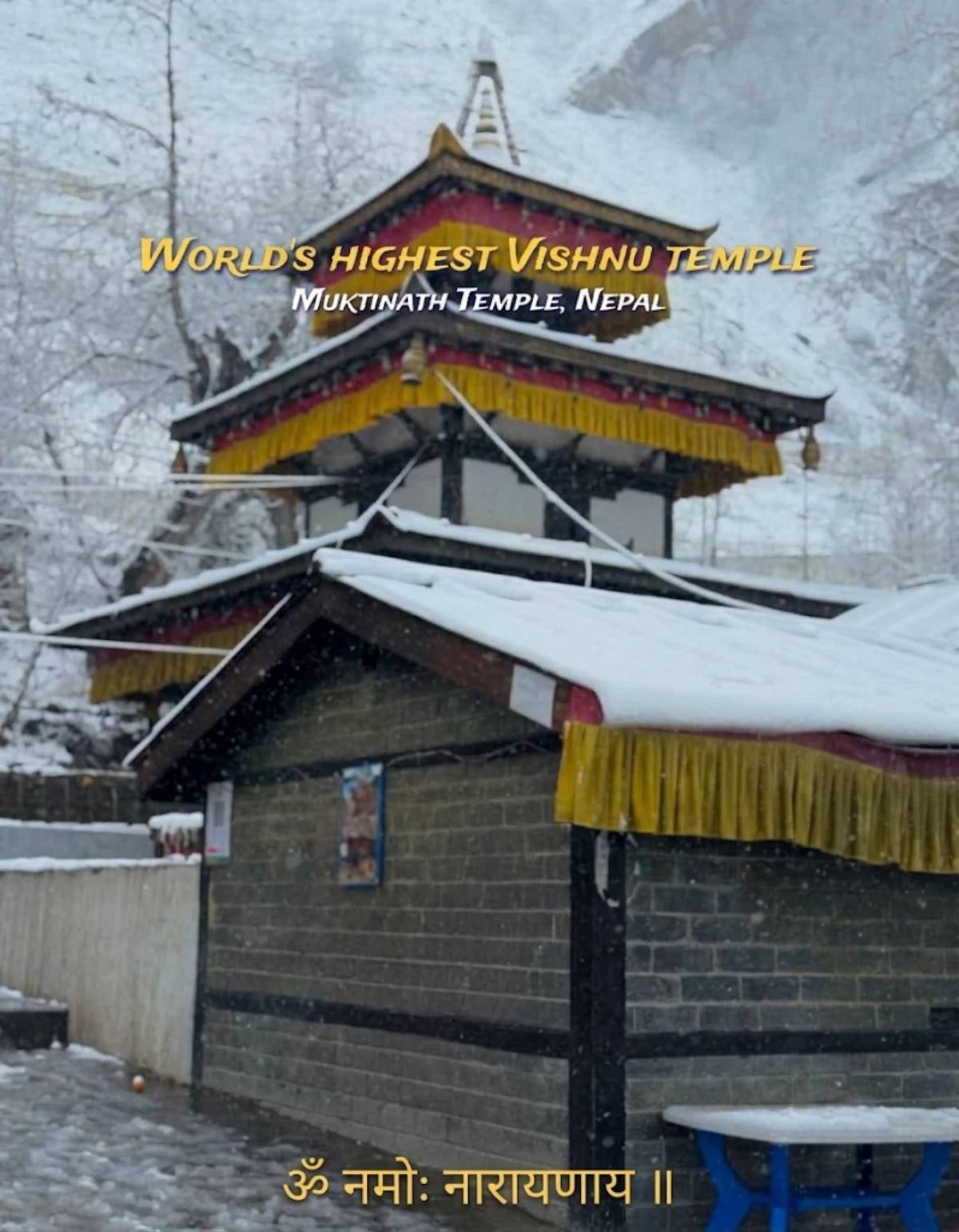
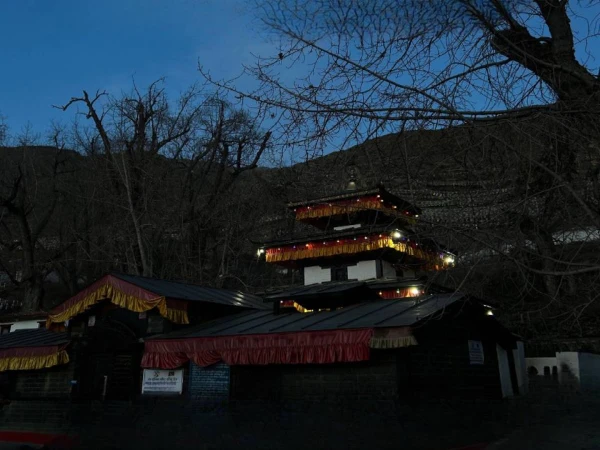
Muktinath Temple is a pagoda-style temple situated on the hills of Mustang region in Nepal, which serves as the venue for devotees of Lord Vishnu in Hinduism and Avalokiteshvara in Buddhism, as well as an abode of salvation for pilgrims hailing from various parts of India. Muktinath is one of the most significant religious destinations in the Nepal Himalayas.
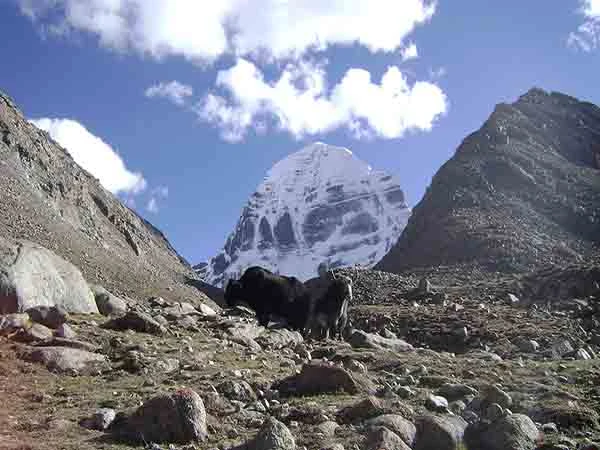
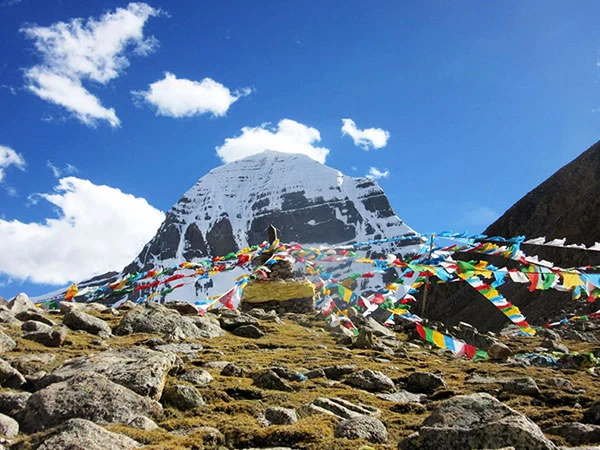
Many Hindus do not consider their pilgrimage to have ended at Muktinath because there is another destination north of Muktinath in Tibet: Mount Kailash, which is considered to be the home of Lord Shiva, and the Lake of Manasarovar.
While the association between these two destinations may lie in the fact that they are both situated in the mountains, Muktinath symbolizes the grace of Lord Vishnu. In contrast, Kailash symbolizes the manifestation of Lord Shiva.
However, there is yet another fascinating story regarding Buddhism about the connection of the holy water at Muktinath and the sacred Mount Kailash, which is less known for its religious significance.
If you are traveling for a Kailash Mansarovar Yatra, then knowing about Muktinath will surely bring another perspective to your journey. However, it brings up certain considerations: Should one visit Mustang before traveling to Tibet? How challenging would it be to reach the temple? Would visiting Muktinath be good for your body before climbing Kailash? And would old relatives be able to make the trip to both places?
Muktinath Temple Is of Which God?
Muktinath Temple
Muktinath Temple is the temple of Lord Vishnu and is believed to be the place where Lord Vishnu bestows liberation on devotees and protects the universe. This temple of Muktinath in Mustang, Nepal, is called Mukti Kshetra, which means the place of salvation according to Hindu mythology.
The worshiped God in this temple is known as Shri Muktinath or Mukti Narayan. This temple is very significant for Vaishnava devotees due to its association with the Shaligram stone and Divya Desam – the 108 temples of Lord Vishnu.
Similarly, Buddhist devotees consider it an important pilgrimage center, and the God worshipped in this temple is considered Avalokiteshvara.
Which God Is Worshipped Inside Muktinath Temple?
The main temple contains the holy image of Lord Vishnu. This is important as he is a preserver and protector and represents spiritual grace, therefore making Muktinath important to those wishing to be freed from suffering and attachments.
Unlike other temples created with only one religion in mind, Muktinath was created due to the coexistence of both Hindus and Buddhists over hundreds of years.
Religious Tradition
Deity or Sacred Association
Significance
Vaishnavism
Lord Vishnu, Mukti Narayan
Divine grace and liberation
Tibetan Buddhism
Avalokiteshvara, Chenrezig
Compassion and spiritual awakening
Shakta tradition
Gandaki Chandi
Association with the sacred feminine
Shaiva tradition
Shiva-related sacred associations
Worship within the wider religious landscape
A key difference is that although there are shrines and traditions associated with Shiva, Lord Vishnu is the main God of Hinduism represented at the Muktinath Temple.
Why Is Muktinath Temple Connected to Kailash Mansarovar Yatra?
Muktinath's link to Kailash Mansarovar Yatra is explained by the bond of religion existing between Lord Vishnu and Lord Shiva, the sanctity of Himalayan water, and the quest for salvation.
In Hindu tradition, such holy sites signify various forms of divinity. The Muktinath temple is a place where devotees receive blessings from Lord Vishnu, while the Kailash pilgrimage is a site where people worship and circle the mountain of Lord Shiva. In addition, Mansarovar lake gives yet another meaning through the process of ritual cleansing.
Thus, a devotee might consider the visit to Mustang as the starting point for a greater Himalayan journey.
A Lesser-Known Buddhist Connection Between Muktinath and Kailash
There are other links unrelated to the Hindu connection between Vishnu and Shiva.
In the September 2026 edition of the Nepali newspaper Rising Nepal, there is a mention of ‘a local legend’ surrounding the infrastructural development at Muktinath. This is about a Buddhist monk who travelled from Tibet to Mount Kailash to collect holy water and then made the 108 water spouts found at Muktinath.
This legend can be interpreted and is not proof of when the temple was built or where the water came from.
It does show how the sacred places in Mustang and Tibet are all connected by local religious beliefs. The water from the temple at Muktinath comes from natural springs; however, the legend connects it to Kailash.
Is Muktinath a Compulsory Part of Kailash Yatra?
No! It's not a religious or administrative requirement. Pilgrims are not required to go to Muktinath and then travel to Kailash through Mustang. It really is just about your devotion. Depending on individual religious desires or family traditions, you may wish to do both.
Lord Vishnu (Muktinath) and Lord Shiva (Mount Kailash) Connection
Understanding the relationship between Lord Vishnu and Lord Shiva helps to understand why a combined pilgrimage may be so spiritually significant.
From a Hindu perspective, Lord Vishnu is known as the god of preservation and keeping things in order. Lord Shiva is known as the god of change, destruction, meditation and detachment.
Sometimes this can be put down to the Trimurti. This includes Lord Brahma, who is the creator. However, alternative explanations are depending on the different Hindu philosophies.
One philosophy states that Vishnu is the supreme divine truth. Another philosophy states that Shiva is the supreme divine truth.
What Does Harihara Represent?
Harihara is a fusion deity of Vishnu and Shiva. Hari is another name for Vishnu, whereas Hara is another name for Shiva.
This symbol implies the notion that the two deities do not have to be seen as two opposite forces. The fact of their coexistence symbolizes the connection between various ways of worshiping.
This principle can provide an appropriate framework for a pilgrim who goes on a journey to Muktinath and Kailash.
In Muktinath, the process of taking darshan from Vishnu can symbolize submission and reverence. In Kailash, the process of circumambulation of the sacred mountain can symbolize self-control and reverence for Shiva.
Each of the experiences does not have to exclude each other. The family that worships Vishnu can go on Kailash Yatra, just as the Shiva followers can travel to Muktinath. For many years, Hindu pilgrimage has given people an opportunity to pay homage to several sacred manifestations.
The history of the Muktinath Temple goes back even further than the age of its current structure. One of the most frequent errors in the description of the temple is equating the date of construction of the existing structure with the start of the religious significance of the site. The holy place existed many years before the temple in the pagoda style currently standing there.
According to Nepal Tourism Board, the current structure of the temple was built at the beginning of the nineteenth century. In addition, the picture of Vishnu might go back to the sixteenth century. In the local religious history described on the web resource Muktinath.org, the construction of the current temple in 1815 was initiated by Queen Subarna Prabha of Nepal. This information provides a good understanding of the history, but not the age of all the religious artifacts in the temple.
Muktinath in Ancient Hindu Scriptures
The larger sacred space linked with the temple is known in Hindu tradition by names such as Mukti Kshetra or Salagrama. The Ramayana, Varaha Purana and Skanda Purana are just some of the literary sources related to the religious geography of the area.
There is an important academic distinction to be made, however. When talking about Salagrama or Mukti Kshetra, one might be referring not specifically to the present-day structure, but rather to the larger Gandaki region.
Holly Walters' research on the Shaligram pilgrimage, published by Cambridge University Press, touches upon the problem of correlating the sacred geography of the ancient period with precise modern locations.
It is thus more appropriate to talk about Muktinath as a sacred site in the context of an ancient sacred geography rather than as a structure built thousands of years ago.
Why Muktinath Matters to South Indian Vaishnava Devotees
Muktinath has connections with the Deva Desams worshipped by the Alvars in Tamil tradition.
The uniqueness of the temple lies in its being located outside the territory of current India. In this way, pilgrims making pilgrimages to the abodes of Lord Vishnu will have to go on an unusual expedition combining international travel with mountain pilgrimage.
The significance of the temple cannot be assessed based on its structure. Its position in the religious landscape of Vaishnavism is much more significant than the appearance of the temple itself.
What Is Special About Muktinath Temple?
Muktinath is unique in that multiple religions of worship have been brought together in one relatively small and holy place. What makes Muktinath different from many other places of pilgrimage is that the very landscape itself plays a part in worship.
Water in Muktinath is not just decoration; it is used in rituals of purification. Black fossil stones of the Kali Gandaki River are not just rocks, but they are worshipped as incarnations of Vishnu. Flame in Muktinath is not just a lamp; it comes out of the landscape.
Sacred Elements of the Muktinath Complex
Sacred Feature
What Pilgrims Encounter
Main Vishnu shrine
Darshan of the principal Hindu deity
Mukti Dhara
A sequence of 108 sacred water outlets
Two bathing pools
Areas associated with ritual purification
Jwala Mai
A natural flame revered by Hindu and Buddhist pilgrims
Shaligram
Sacred fossil stones associated with Vishnu
Buddhist shrines
Places of prayer within the wider religious complex
Himalayan surroundings
The sacred landscape in which pilgrimage takes place
The individual elements need to be seen in light of the religious significance rather than as a list of things to do.
It is possible for the devotee to take more time praying to Vishnu than bathing at the temple. For the Buddhist, the approach to the site can be through meditation and religion of the locale. All don't have to have the same ritual.
Why Is Muktinath Called the Land of Salvation?
The name Muktinath comprises two terms: mukti, which stands for liberation, and nath, which means lord or master. According to Hinduism, the concept of moksha has to do with liberation from the cycle of birth, death and rebirth.
Various philosophical schools give different definitions for such liberation and methods of gaining the same.
Does Visiting Muktinath Guarantee Moksha?
Going to Muktinath has deep religious importance for the believers. Traditional views hold that performing the religious rituals will help purify and liberate oneself.
It would be dishonest, however, on the part of the travel company to promise customers moksha as a result of buying their package tours. Moksha is something which one cannot promise or guarantee. Going on the pilgrimage might be an opportunity for prayer and meditation, a chance to make offerings to the dead and to remember them.
What Changes When Pilgrimage Becomes Personal?
Some people will visit Muktinath after having lost someone close to them, whilst others will have had a parent who wanted to go on this pilgrimage for many years. Some may also visit out of thanks to a deity.
This is why visiting this place can be so meaningful to some people, even if they are only at the temple for a few hours. The reason the pilgrimage holds such spiritual value is because of the pilgrims' intention.
The 108 Sacred Water Spouts of Muktinath and the Holy Waters of Lake Mansarovar
At the back of the principal shrine, pilgrims face a series of 108 holy water fountains, which are referred to as Mukti Dhara.
The water comes out of the traditionally styled outlets, and pilgrims can pass from one flow to another as they go through their purification process. The number 108 is considered holy in a variety of religious practices in India through prayer beads, recitation of holy verses and classifications.
For Hindus, getting bathed under the fountains is a symbolic washing of sins and purifying the body for the process of worship.
However, Lake Mansarovar is an alternative water experience which is related to purity and creation by the divine being. Unlike the series of springs in the Mukti Dhara, the devotees come close to a huge freshwater high-altitude lake.
Muktinath's Waters vs Lake Mansarovar
Feature
Muktinath
Lake Mansarovar
Type of water source
Local natural springs
High-altitude freshwater lake
Traditional ritual
Bathing beneath sacred spouts
Prayer, offerings and permitted water rituals
Religious focus
Purification and Vishnu worship
Sacred lake worship and the Kailash pilgrimage
Physical setting
Temple courtyard and bathing areas
Exposed Tibetan plateau
Practical concern
Cold water and slippery surfaces
Cold, wind and environmental restrictions
The two rituals should not be treated as interchangeable.
Should Every Pilgrim Bathe Under All 108 Spouts?
The act of ritual bathing is a form of worship and doesn’t require any physical strength. The water can be very cold so if you suffer with heart/lung disease or don’t have any tolerance to cold weather you should consult a doctor.
Those who cannot participate in the ritual can still worship in other ways such as drinking holy water or darshan depending on your beliefs. When visiting Mansarovar Lake you must abide by local regulations. Ritual bathing may not be possible as it is mentioned in some pilgrimages but there are regulations in place.
The Eternal Flame of Jwala Mai Temple: Where Fire and Water Meet
Inside the temple complex is another area called Jwala Mai.
This is a unique site where there is a constant flow of fire from natural gases. It is said that this is a sign of divine presence as the natural elements combine. In scientific terms this can be explained by saying that natural flammable gases are flowing through the rock strata beneath.
This makes it an important pilgrimage site and many devotees consider it sacred due to the way the natural elements interact.
Has the Flame Really Burned Without Interruption for Thousands of Years?
Whilst the eternal flame is an important part of this site it doesn’t mean that every vent has been flaming for a noticeable amount of centuries. There have been records of different natural flame vents and how long they have been active.
It is more appropriate to consider it as a natural holy flame. It is best to be respectful whilst at the shrine and follow instructions from those looking after it.
Muktinath and the Sacred Shaligram Stones
The pilgrimage to Muktinath holds a special importance to followers of Vishnu due to its connection with the Kali Gandaki River and Shaligram stones. Shaligrams are naturally formed stones with fossils embedded within them. They can be identified by their unique pattern and shape.
The fossils found in these stones are from ammonites; these were creatures that lived in the area a long time ago, when it was underwater. Amazingly, these fossils can be found in the Himalayan region, showing how the stones from ancient seas have become part of the mountain.
Within Hinduism, there are many different types of Shaligram, each one being a representation of Vishnu.
Why Are Shaligrams Worshipped?
Most religious items are artificial; however, Shaligrams are sacred as they are naturally formed. Some of the patterns and shapes can be seen to take on divine qualities, such as the Sudarshana Chakra of Lord Vishnu.
There are many traditions which categorise different types of Shaligrams. Many people place a lot more religious importance on the easy path to Muktinath along the Kali Gandaki River.
Can You Collect a Shaligram During Your Visit?
One should not assume that one can freely collect any fossils discovered in the river valley, sell or transport them outside the country. Conservation laws, local laws, and regulations on cultural property might impact the collection and transportation of natural or religious objects.
Travelers planning to buy a Shaligram should get proper recommendations rather than trust the assurances made by a roadside seller. One can make a pilgrimage in honor of the sacred rocks without collecting them from their habitat.
Is Muktinath Temple Hindu or Buddhist?
Muktinath is sacred for Hindus as well as for Buddhists.
For Tibetans, it is called Chumig Gyatsa, meaning the place of many sacred waters. It is an especially important place for Himalayan Buddhist tradition and Guru Rinpoche (Padmasambhava). There are Buddhist traditions that associate the religious landscape with dakinis, or female spirits of enlightenment.
All this is quite interesting in the context of Kailash, another Himalayan pilgrimage site venerated by various religions.
The Role of Buddhist Nuns and Hindu Priests
The administration and worship practices at Muktinath have always incorporated Hindu priests from the Brahmin community and Buddhist nuns. There is local lore regarding the participation of the Lama Domar lineage in the larger sacred complex.
It is not only a marketing slogan but represents the religious relations of Muktinath Valley in its history. One may find different ways of praying, clothes, ritual paraphernalia, and religious language in the same place.
Such diversity must not be treated as a contradiction that has to be reconciled.
How Should Visitors Respect Both Traditions?
Adhere to the traditions of the specific shrine you are visiting.
Do not bother people who pray there while asking to take pictures. Ask permission to record the ceremony. Follow instructions of religious practitioners regarding your behavior, such as wearing special clothes or shoes, movements, etc.
The importance of Muktinath also lies in its capability to unite different approaches to sacredness. One must not try to interpret Muktinath in terms of one tradition as an explanation for others.
Where Is Muktinath Temple Located?
Muktinath Temple is situated in Mustang District, Gandaki Province, Nepal, in Varagung Muktichhetra Rural Municipality. The temple is found above the village of Ranipauwa on the west side of the Annapurna Mountain range, below the Thorong La Pass.
The broader region comes under the Lower Mustang region.
Jomsom is the main transportation center and has an airport link to the district of Pokhara. One reaches Muktinath by traveling from Jomsom via the Kali Gandaki region towards the Muktinath region.
Kagbeni is an important location within Mustang’s geographical setting.
Muktinath Temple Location: Nearby Destinations
Place
Role in the Journey
Kathmandu
International arrival and pilgrimage planning
Pokhara
Major gateway for travel to Mustang
Beni
Road access toward the Kali Gandaki Valley
Jomsom
Airport and regional transportation hub
Kagbeni
Historic settlement near the approach to Muktinath
Ranipauwa
Main lodging and visitor area below the temple
Thorong La
High mountain pass connecting the Annapurna Circuit with Mustang
However whilst both Muktinath and Kailash are part of the larger Himalayan pilgrimage site they aren’t close to each other with no normal route between them. Kailash Mountain is located in the Tibet region of China so you will have to organise a whole new international trip.
This information will help you avoid making an expensive mistake by thinking you could travel to Kailash by going north from Muktinath.
Muktinath Temple Altitude and Height
The Muktinath Temple sits at an altitude of 3710m (12172ft) above sea level according to the Muktinath Development Committee. The Nepal Tourism Board estimates the temple sits at an elevation of 3800m.
There may be a difference in these numbers due to rounding and different measuring points across the Muktinath region. We will use 3710m in this guide.
Altitude Comparison With Kailash Pilgrimage Destinations
The difference is quite significant. Although the temple is at such an elevation that altitude sickness is likely to occur, pilgrims to Kailash are known to spend several nights in places that exceed the elevation of Muktinath.
That is why measuring both pilgrimages solely on the basis of the distance walked is insufficient.
Although the distance walked in Muktinath may be rather short, it is still quite challenging for somebody who is coming from a low-elevation city.
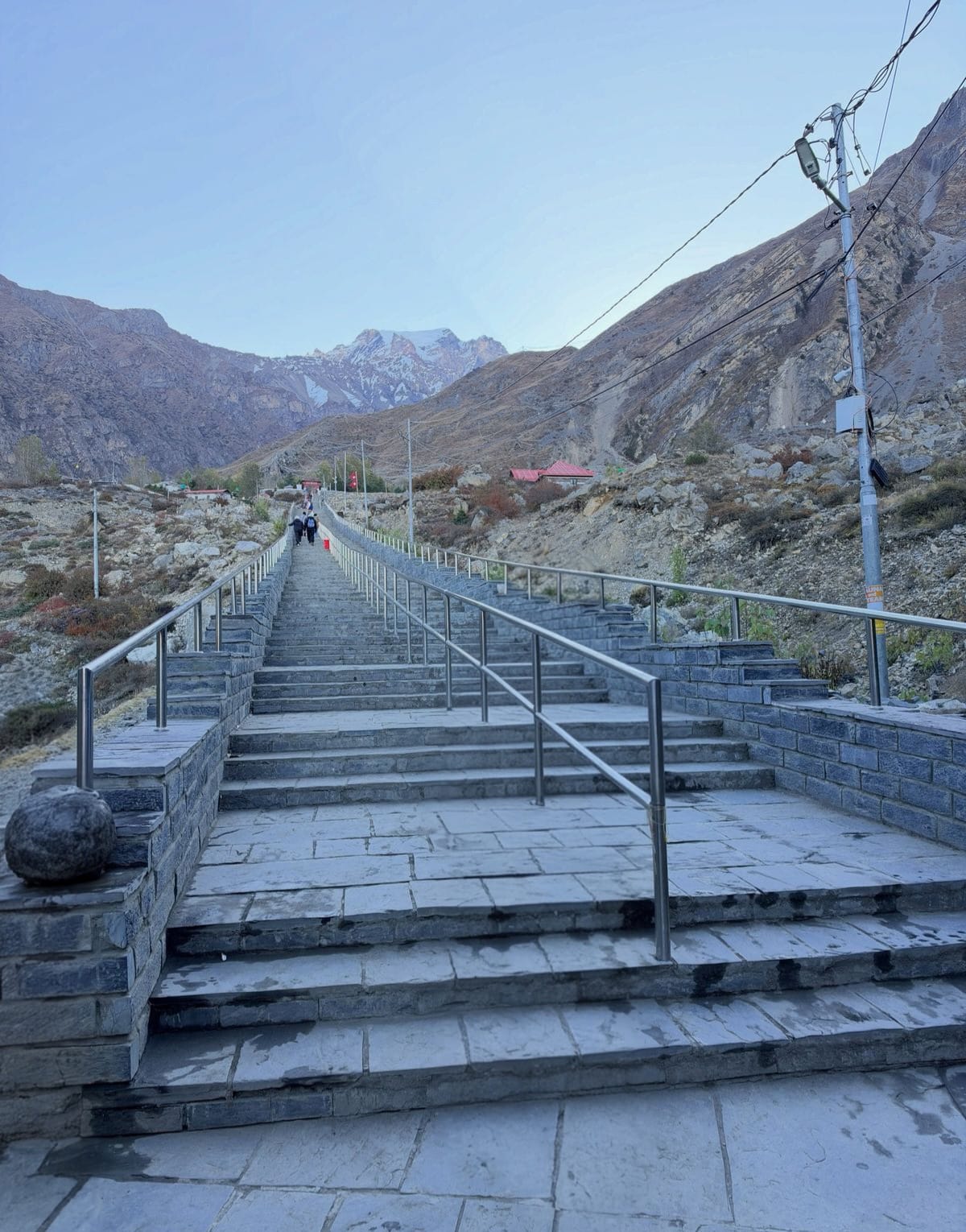
How Many Steps Are There to Climb Muktinath Temple?
Steps to Muktinath
To reach the Muktinath Temple from the footpath entrance you would have to climb approximately 300-350 steps. Halfway down the middle of the steps there is a railing to help separate the two sides; one side is used to walk up to the temple whilst the other side is used to walk back.
The steps are split into two sides. It is important that you know which way to walk as there will be pilgrims walking up and down constantly due to it being a very busy pilgrimage site. You will start your walk from the car park area which is situated in an area called Ranipauwa. On the first part of your walk you will walk past a small market selling a variety of puja items, religious memorabilia, snacks and woolly clothing.
Although it may seem like a small amount of steps, at this high altitude (3710m) the amount of steps can feel very different due to the lack of air pressure. It can be difficult to breathe when doing any physical activity at this height, especially if you have come from a lower altitude.
How Much Walking Should Pilgrims Prepare For?
It usually takes about 30 to 45 minutes to reach the Muktinath Temple from the Ranipauwa Bus Park. This walk can take less time for physically active pilgrims and much longer for older people and those who are ill.
On the way up the stairs, pilgrims climb about 40 to 50 stairs and then stand by the side railings to rest. Having rested for some time, pilgrims continue climbing uphill and repeat the same cycle a few times until they reach the temple gate.
Your heartbeat can start beating faster, and your breathing can be heavier despite the shortness of the path. This is especially true when you try to walk at the same pace as usual at low altitudes.
Pilgrim's Walking Condition
Approximate Walking Time
Physically active pilgrims
20 - 30 minutes
Pilgrims taking occasional breaks
30 - 45 minutes
Elderly pilgrims or slow walkers
45 - 60 minutes or longer
We suggest going slowly as opposed to taking the first 100 stairs quickly. Grab the railings for support and take breaks that do not impede the passage of other pilgrims. The staircase provides an opportunity for people who are preparing for the Kailash Mansarovar Yatra to understand the bodily reactions due to physical activity at altitude.
However, conquering the stairs comfortably does not imply that one is prepared for the high altitudes of Kailash.
Are Horses or Doli Services Available for Elderly Pilgrims?
Indeed, horse rides and doli services are provided at Muktinath Temple to assist senior pilgrims, those with physical disabilities and pilgrims who are unable to climb up to the temple.
Horse Ride to Muktinath Temple
While horse riders travel along a different side path leading to the temple instead of ascending through the main staircase, an assistant rides along with the horse. A normal horse ride costs approximately NRS 400 for each individual, while local quotes vary from NRS 200 to NRS 500.
Passengers are dropped off near the entrance of the temple to walk into the holy place on foot. This mode of transport proves very useful to pilgrims with knee trouble or an inability to walk or ascend stairs.
Doli or Palanquin Service to Muktinath Temple
Those who find it difficult to travel on a horse have an alternative method called a doli. The doli is a chair or stretcher carried by four local men.
The pilgrim sits on the doli, and it is taken uphill to the temple by the carriers. This mode of travel involves a lot of workforce, which is the reason for the higher price. The price of a doli is normally NRS 4,000 to 5,000 per individual.
Those visiting the temple with aged parents can take this mode if the parent finds it difficult to balance on a horse, stand for a long time, or climb the stairs.
What Is the Oxygen Level in Muktinath Temple? Is It Safe for Senior Citizens?
The oxygen content in the atmosphere in Muktinath continues to stay at 20.9%, similar to that at sea level. However, atmospheric pressure changes. At an altitude of 3,710 m, the drop in pressure means that less oxygen is present in every breath.
By using standard atmospheric models, the air pressure in Muktinath amounts to 63- 64% of the air pressure at sea level. This translates into two-thirds of sea-level air oxygen partial pressure.
However, it should not be interpreted as the pilgrim’s oxygen blood saturation being 63%.
These are theoretical atmospheric calculations. The actual values will depend on the weather, and one cannot predict the amount of oxygen in a person’s blood based on this chart.
Is Muktinath Suitable for Senior Citizens?
Older tourists visit Muktinath all the time, but age alone cannot determine whether the trip is right for a particular tourist. If a person is in good health and has prepared adequately for the trip, they will do better than a young person with a preexisting medical condition.
People who have heart problems, lung conditions or have experienced acute altitude sickness in the past need to seek individual medical consultation. Beware of the appearance of new headaches with nausea, unusual fatigue, increasing difficulty breathing or dizziness.
Loss of consciousness, inability to walk normally and difficulty breathing while resting are emergency signs necessitating medical care and descent as soon as possible. We would not suggest ascending the temple just because the family has spent money or traveled a great distance to Mustang.
Muktinath Temple Timings, Darshan Hours, Puja and Entry Rules
It is particularly necessary to plan around the schedule of Muktinath Temple timings for pilgrims who have come from Jomsom, as a delayed vehicle could disrupt the timings to reach the temple itself.
The Muktinath Development Committee has released a season-wise schedule of darshan timings which includes early morning opening, mid-day closure, and afternoon re-opening.
The latest date-wise schedule available at the time of preparing this guide was from March 2025 to March 2026. This should be considered as planning information only and not as the exact time schedule at present.
Activity
Previously Published Schedule
Morning darshan
7:00 AM–12:00 PM
Midday closure
12:00 PM - 1:00 PM
Summer afternoon darshan
1:00 PM - 6:00 PM
Winter afternoon darshan
1:00 PM - 5:00 PM
Aarati
Seasonal evening schedule; confirm locally
The listed aarati times are inconsistent between the published lists. Visitors to a specific aarati may want to verify the real time before going.
Morning or Afternoon Darshan?
Visits in the morning are always preferable for visitors who stay close to the shrine.
The availability of extra time in case of delays in transportation is an added advantage, as the visitors will have enough time to bathe, perform rituals, and come back home without feeling rushed. But low temperatures in the morning make the ritual of taking a bath difficult.
Travelers who are accompanied by their parents should let the temperature increase rather than forcing everyone to visit the shrine in the early morning hours.
Puja, Dress and Entry
Wear clothes suitable for worship and take off your shoes if necessary. Do not presume that offerings, rituals led by priests, or puja will automatically be provided as part of any package deal.
Find out what will cost you extra money and arrange your ceremony ahead of time.
Muktinath Temple vs Mount Kailash: Religious Experience and Pilgrimage Difficulty
Selecting one between Muktinath and Kailash is not only about choosing the destination that is holier. The journeys in question differ in time required, physical activity, permissions, and interaction with the holy site.
Comparison
Muktinath Temple
Kailash Mansarovar Yatra
Sacred setting
Hindu-Buddhist temple complex
Sacred mountain, lake and pilgrimage circuit
Main devotional experience
Darshan at a shrine
Worship, contemplation and circumambulation
Physical demands
Uphill temple access
Extended high-altitude travel and potentially strenuous walking
Accommodation
Hotels and lodges around Ranipauwa or Jomsom
Hotels, guesthouses and basic pilgrimage lodging
Travel documentation
Nepal entry and applicable conservation arrangements
Passport, relevant Chinese entry and Tibet travel permissions
Shortest practical visit
A temple excursion within a Nepal itinerary
A separate multi-day international pilgrimage
Optional assistance
Local mobility services where available
Porters or ponies subject to route conditions and regulations
Main scheduling concern
Mountain road and flight disruptions
Border access, permits, altitude and weather
Those who require an easier and shorter religious journey will prefer Muktinath. Those who want the specific experience of performing the Kailash Parikrama will be looking at a journey that takes days and requires being at high altitudes.
There is no need for any marketing efforts presenting one of the destinations as an equal alternative to the other.
Should You Visit Muktinath Before or After Kailash Mansarovar Yatra?
There is no general recommendation to perform the Muktinath journey before the Kailash one. It all depends on one’s health conditions, time available, and the purpose of visiting Mustang.
Visiting Muktinath Before Kailash
Some people opt to have their first Darshan in the temple of Vishnu prior to ascending to the sacred mountain of Shiva.
This will make the Nepal segment of the pilgrimage trip meaningful in its own right. This will enable one to gauge the feelings during the first ascent of the mountains prior to going into the Tibetan plateau.
The downside is the logistics involved. Any problems in terms of road blockage and mountain flights will affect the departure from Kathmandu and could upset the departure for Kailash. It is better to leave a time gap between the Mustang trip and the trip to the border of Tibet.
Visiting Muktinath After Kailash
There is a lot of benefit in having a visit after the Yatra is done. Pilgrims who have already done their Kailash trip may want to have darshan at Muktinath before leaving Nepal.
The only thing is, pilgrims who have been ill, injured, or very tired from the trip cannot just take another trip to high altitudes.
Which Sequence Would We Recommend?
Where families have a narrow window for holidays, it is advised to secure the fixed Kailash trip schedule first.
It would be wise not to organize a tightly scheduled Mustang trip just prior to a border crossing. The consequence of missing an international group trip might outweigh the inconvenience of canceling a hotel booking in a domestic location.
A trip requiring flexibility should not only maximize the number of holy sites visited within the shortest span of time.
Can Muktinath Darshan Help You Acclimatize for Kailash Yatra?
It is likely that a visit to Muktinath will help with acclimatization. Still, it all depends on the time travelers will spend at altitude and the pattern of exposure and ascent.
A visit to the temple with a quick descent is not the same as staying for several days at moderate altitude.
According to the CDC Yellow Book, gradual altitude exposure helps the body adapt. Relevant prior exposure is useful, especially if it happens before the high-altitude trip.
Why a Short Visit Is Not an Acclimatization Guarantee
Just because one feels fine visiting Muktinath and returning to Pokhara after darshan doesn’t mean it is safe for the person to sleep at 4,600 meters in Tibet. Exposure time and sleeping altitude matter.
One may feel fine about the short visit, but get sick after spending a longer time at a higher altitude. Similarly, just because one faces issues in Mustang doesn’t mean that the issue would not be there during the Kailash Yatra.
What About Pilgrims Using Helicopters?
Helicopter journeys can save travelers from walking, but rapid increase in altitude doesn’t let the body acclimate gradually. For that reason, traveling faster to the holy place isn’t necessarily a better choice.
The main route to Kailash should maintain proper altitude gain, irrespective of visiting Muktinath. Don’t cut rest days in Tibet thinking that the Nepal temple journey is done with acclimatization process.
How to Reach Muktinath Temple From Kathmandu, Pokhara and Jomsom
There are various ways one can arrange to travel to Muktinath. The main factor is how much overland travel there will be, as well as height gain and scheduling uncertainties associated with each choice.
Kathmandu to Muktinath by Road
The overland journey will usually start in Kathmandu, proceed to Pokhara, and continue on to Beni via the road to Jomsom and Ranipauwa. The advantage of this travel option is that you do not need to take an internal mountain flight.
The overland trip is rather long, and parts of it may be bumpy or under construction due to rain and landslides.
Pokhara to Jomsom by Flight
The flight from the mountain to Jomsom is going to shorten the drive significantly. From there, passengers proceed by local transport to Muktinath.
Dependability of the flights depends upon the weather conditions and visibility. The strong winds in the area of Kali Gandaki may impact the schedule. Never book a nonrefundable next flight on the premise that the Jomsom flight is going to work out as expected.
Muktinath Travel Options
Route
Planning Estimate
Main Consideration
Kathmandu - Pokhara by road
7 - 10 hours
Traffic and road works
Kathmandu - Pokhara by flight
Around 25 - 30 minutes flying time
Airport transfers and flight delays
Pokhara - Jomsom by flight
Around 20 minutes flying time
Weather and mountain wind
Pokhara - Jomsom by road
Approximately 7 - 10 hours
Variable road conditions
Jomsom - Ranipauwa by road
Approximately 1 - 2 hours
Local vehicle access and road conditions
Pokhara - Muktinath helicopter arrangement
Operator-dependent
Rapid altitude gain and landing permissions
All times are indicative, not confirmed journey durations.
Does Every Muktinath Visitor Need a Trekking Permit?
Muktinath is located inside the Annapurna Conservation Zone.
The entry requirements will vary according to nationality and purpose of visit. Travelers who are doing a trekking course will require different documents as opposed to travelers visiting the place by car.
Get the entry requirements for the conservation zone depending on your particular visit and not just assume that because you want to visit a temple you are free of entry requirements.
Best Time to Visit Muktinath Temple Along With Kailash Mansarovar Yatra
In case of combined pilgrimage, it is best if you plan to visit the area during late spring to early fall, contingent upon your confirmation of Tibet departure and prevailing conditions.
The climate of Mustang area and the overall access routes do not necessarily experience the same climatic conditions.
Lower Mustang lies in part of the Himalayan rain shadow zone; however, getting to the area from Pokhara will involve moving through the rainy summer areas.
Period
Muktinath Considerations
Combined Pilgrimage Considerations
April–May
Spring weather and possible remaining cold
Check the opening of Kailash departure arrangements
June
Warmer conditions with monsoon development
Monitor road access and Tibet travel confirmations
July–August
Relatively dry Mustang conditions may contrast with wet approach roads
Keep domestic transport contingency time
September
Improving conditions after the main monsoon
A useful period for combined planning
October
Popular pilgrimage and trekking month
Colder conditions at higher Tibetan elevations
November–March
Increasing winter limitations
Usually unsuitable for a conventional combined Yatra without exceptional arrangements
Is the Full Moon the Best Time for Both Destinations?
Full moon departures have special religious significance for some of the Kailash pilgrims. Nonetheless, lunar calendar cannot be mistaken for good weather or convenient transport.
When the full moon is the issue, start by planning the dates of your Kailash trip first, and then organize your Nepal tour schedule around that. The same full moon cannot guarantee you optimal travel conditions in both Muktinath and Kailash.
How Many Days Do You Need for Muktinath and Kailash Mansarovar Yatra Together?
Combination of the two destinations usually requires a few extra days over and above any Kailash tour chosen.
For instance, Dream Tibet's 10-day Overland Kailash Mansarovar Yatra offers a separate Muktinath pilgrimage tour schedule starting from Kathmandu. The addition of Muktinath must be considered as one more travel module and not as days cut off from your Tibetan tour.
Continue toward Jomsom with suitable overnight arrangements
4
Muktinath Darshan and return to a suitable overnight location
5
Return toward Pokhara
6
Return to Kathmandu
7
Preparation, rest and transport contingency
8–17
Selected 10-day Kailash Mansarovar program
18
Post-Yatra recovery or onward travel preparation
19
International departure
This is an example of what could be done in 19 days. You may prefer to do a relaxed version of this tour to Muktinath. Your actual itinerary will depend on medical issues, visa requirements per nationality, your accommodation and road conditions.
What If You Have Only Two Weeks?
A two week holiday is not long enough to cover both locations. Ten days will be spent at Kailash.
The obvious answer is to try and reduce the amount of time you are travelling between locations within the country and eliminate any free days. This will however create an unstable itinerary.
We would strongly recommend opting for a shorter pilgrimage itinerary or extending the tour after considering how feasible this would be. We don’t want to sell you an overcrowded itinerary where everything needs to run perfectly including vehicles, flights and border crossings.
If you’re looking for a cultural itinerary throughout Tibet we recommend looking at our Mount Kailash Tour via Lhasa. Travel type needs to be decided before booking an extension to Nepal.
Muktinath Temple, Pashupatinath and Kailash Mansarovar: Three Sacred Destinations in One Pilgrimage
Such a tour of the three places will make the religious experience of Nepal and Tibet distinct. Pashupatinath Temple will expose the devotee to the worship of Shiva at an active urban site.
Muktinath will offer the worship of Vishnu and the sacred geography of Mustang, including important springs and the Gandaki River.
Kailash will expose the devotee to Shiva through the sacred geography of the mountain itself. There is no need to seek out the central deity within the temple, but rather to make the circuit of the sacred landscape itself.
Why Include Pashupatinath?
Pashupatinath is a place that can easily fit into a larger pilgrimage tour in Kathmandu without having to undertake a separate mountain pilgrimage. Pashupatinath is linked to Shiva, who is known as Pashupati, or lord of living things.
Non-Hindus should note that access to the central temple of Pashupatinath will be restricted according to religious rules. It cannot be assumed that non-Hindus will have access to the central temple.
There will therefore be provisions for pilgrims' companions and relatives depending on their religion.
A Suggested Spiritual Sequence
If you want to pay homage to both Vishnu and Shiva, then a good option is to visit Pashupatinath in Kathmandu, head to Muktinath and come back for the journey to Kailash.
Some people may prefer to visit Pashupatinath on their return from Tibet. It is a personal thing, and no pilgrimage would be considered incomplete if you only do one of the three.
Plan Your Muktinath and Kailash Mansarovar Pilgrimage With Dream Tibet Travel and Tours
Dream Tibet Travel and Tours provide services including tours to Nepal, Tibet and Bhutan. We have offices located in Kathmandu and Lhasa.
The Muktinath and Kailash tour is an important part of our company as it includes both domestic tourism and a tour to Tibet. The Mustang extension will include transport to the area (either by road or air), accommodation and temple entry.
The Kailash extension will include international documentation, determined route and arrangements within Tibet. Our Founder and Managing Director is Ram Chandra Lamichhane, and our Manager is Bikram Bhandari. Bikas Lamichhane helps with office and airport duties. Tenzin Nyima, Mr Puchung and Chime Tasi are our guides in Tibet.
What Should We Establish Before Confirming Your Journey?
In the first place, we have to know whether you would like to continue from the existing reservation to Muktinath or want to create a new pilgrimage to Kailash-Muktinath. It is also crucial for us to know your citizenship, the date of pilgrimage, physical condition, and whether you would like to make Parikrama of Kailash on foot.
It depends on this information on which travel plans are more suitable for you. If some families are going for temple tours and lakeside prayer, then they might need completely different travel conditions.
Travelers prioritizing accommodation comfort where available
We believe that increasing the number of places to visit will not improve your pilgrimage at all. In case of visiting another temple, it should add value to your journey and cause no trouble for you physically or with transportation, and it should be part of your first day of travel.
We suggest asking for an itinerary on paper for your travel to Nepal, accommodation, permits, and additional costs in case of visiting Tibet.
Frequently Asked Questions About Muktinath Temple and Kailash Mansarovar Yatra
Can I visit Muktinath without doing the Annapurna Circuit Trek?
Yes you can visit Muktinath by simply taking the road corridor to Jomsom. You do not need to do Thorong La Pass or the Annapurna Circuit.
Is there a flight from Muktinath to Mount Kailash?
No, there are no passenger flights from Muktinath to Mount Kailash. You must take an authorised international route and have the correct documentation.
Can I visit Muktinath if I cannot do the Kailash Parikrama?
Yes you can visit Muktinath provided you are fit to travel there. As both are separate pilgrimages they can be planned separately. You can still worship at the temple even if you have not completed your trekking on Kailash.
Can Pilgrims do ancestor rituals at Muktinath?
Some Hindus will do ancestor prayers and rituals whilst visiting the Kali Gandaki. These rituals will need to be done by a priest according to your family's traditions.
Are the 108 water spouts linked to Lake Mansarovar?
No, there is no physical link. The water comes from natural springs around the area. The connection of the holy water is a religious tradition.
Can I stay overnight in the Muktinath Temple?
Most tourists will stay in Ranipauwa or another village nearby. Hotel arrangements can be put in place in advance.
Do Indian Pilgrims require the same documentation for Muktinath and Kailash?
No, as Nepal and China have different entry/exit requirements. Indian citizens visiting Nepal and doing the Kailash Yatra will need to follow the documentation process for each country.
Can I take some of the sacred water home?
It is common for pilgrims to take some holy water from the lake. Please ensure you have a sealed bottle and check with your airline.
Is there vegetarian food available near the temple?
Normally yes there will be vegetarian options in hotels and specialist pilgrimage restaurants. If you have any religious dietary requirements please check in advance how the food is cooked and what ingredients are used.
Will I have one guide for the whole of Nepal and Tibet?
The local arrangements for Nepal and Tibet will differ. Dream Tibet will organise all local arrangements including Tibetan guide.